Feature/OPED
Nigeria 2019 Governorship Election: Appraising the Verdict
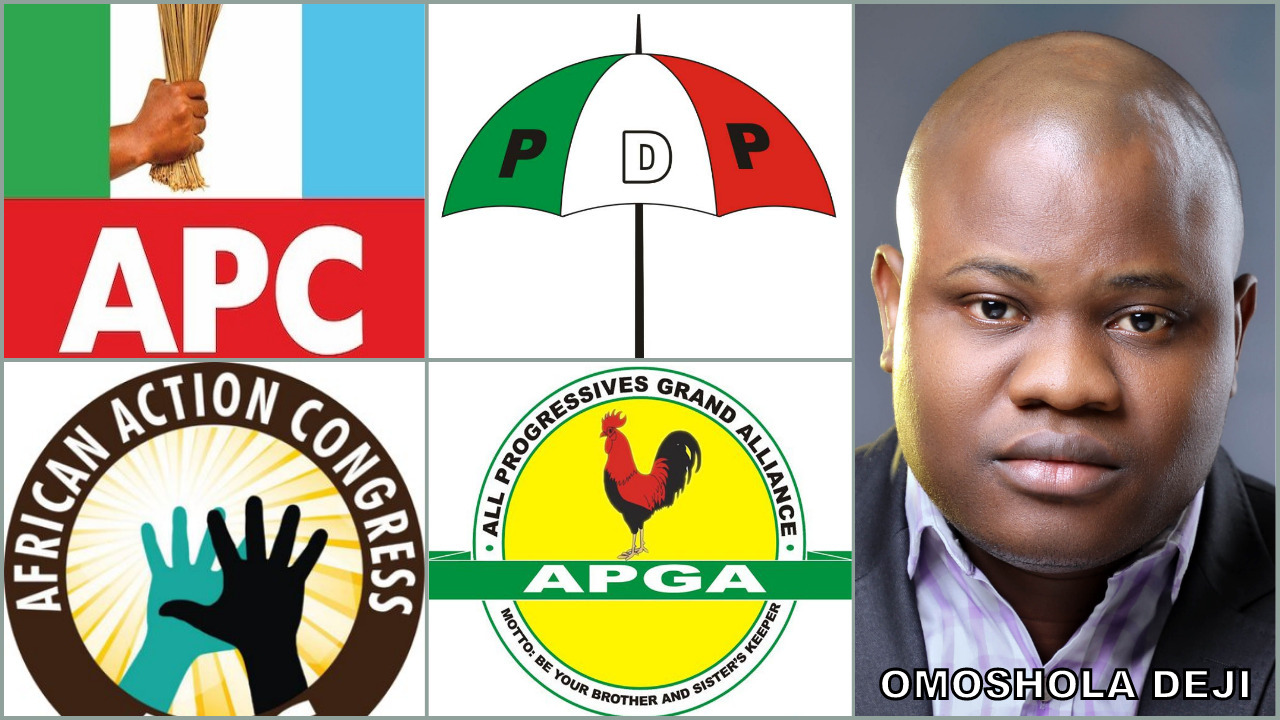
By Omoshola Deji
Election in Nigeria is a battle of fists rather than a game of wits. The nation has gotten almost nothing right since independence and still cannot conduct free, fair and credible elections. The insatiable thirst for power has made the leadership recruitment process a battle; turning properties to ashes and beings to corpse. Shame on the leaders and politicians. Shame on the Independent National Electoral Commission (INEC) and the security agencies. Shame on Nigeria.
The 2019 general election is the worst in Nigeria’s history. It is the most protracted and onerous, despite being the most expensive. The polls scheduled to wind-up in three weeks has dragged on for six and still counting. Do the arithmetic. The presidential election initially slated for February 16 was postponed to 23 for ‘logistics reasons’ and the governorship election conducted on March 9 is yet to be concluded.
The must-win approach of politicians and the incompetence of the security agencies and INEC rendered the governorship election inconclusive in Kano, Benue, Plateau, Bauchi, Sokoto, Adamawa and Rivers State. The electoral process in Kano, Benue, Plateau and Sokoto has been completed while that of Bauchi, Adamawa and Rivers are still on hold.
Nigeria is the den of negative politicking. The misconducts that rendered the governorship elections inconclusive also made the supplementary elections held on 23 March unfree and unfair and un-credible, especially in Kano State. Desperate candidates unleashed thugs to kill and destroy, while the police looked on. The prevailing either-me-or-nobody politics is endangering our hard-earned democracy and may return Nigeria into the hands of the men in uniform.
The 2019 general election has been an intriguing one. Politicians who were before now seen as undefeatable were defeated. The mighty fell and new ones emerged. Godfathers such as Bukola Saraki (Kwara State) Godswill Akpabio (Akwa-Ibom State), Aliyu Wammako (Sokoto State) and George Akume (Benue State) have been decimated. The death guzzling one’s mate is relaying a message that one’s turn is near. Bola Tinubu should start preparing. 2023 may be his turn.
Over 90 political parties participated in the governorship elections, but Nigerians mainly voted the ruling All Progressives Congress and the main opposition Peoples Democratic Party (PDP). In a piece titled “Nigeria 2019 Governorship Election: Foretelling the Outcome”, the writer, hereafter titled Pundit, foretold who’ll triumph in the 29 (out of 36) states where elections were conducted. Governorship election in the remaining 7 states is off-cycle.
Independently foretelling the outcome of governorship elections in a vast and plural nation like Nigerian is a difficult, almost impossible task. It entails a rigorous research into the election winning determinants in each state. Such research is usually sponsored and carried out by a team of leading Political Scientists.
Unaided, the pundit singly foretold the outcomes and did not perform poorly. He made accurate predictions, achieved his target of scoring high, but some predictions failed. The next section of this piece is an analysis of the election controversies, the landmarks, and what the future holds. The pundit’s prediction accuracy and shortcomings in the six geopolitical regions is also appraised.
North West
The region comprises of seven states, including Kano, Katsina, Kaduna, Kebbi, Sokoto, Jigawa, and Zamfara State. Elections were conducted in all.
Kano State: Governor Abdullahi Ganduje of the APC’s win was foretold and it came to pass, even though the Pundit never thought the election would be a keenly contested one. Ganduje garnered 1,033,695 votes to defeat PDP’s Abba Yusuf, who garnered 1,024,713 votes. Ganduje allegedly won via electoral fraud. The supplementary election was a farce and brazen murder of democracy. It was characterized by voter harassment, vote buying, underage voting and violence. Political thugs unleashed mayhem without being resisted by the police. The evidence of electoral infractions is so mammoth that it’ll be difficult for Ganduje to complete his tenure, if the result is challenged at the tribunal.
Observers of the ruling APC’s antecedent and political behaviour knows the party would never allow PDP take control of Kano. The state has the highest number of registered voters and needs to be kept in the bag for 2023. APC also went all out to retain Kano in order to bury arguments that the presidential election was rigged in the state for President Muhammadu Buhari.
Katsina State: Aminu Masari of the APC’s win was foretold and it came to pass. He scored 1,178,868 votes to defeat PDP’s Yakubu Lado who scored 488,705 votes.
Kaduna State: Nasir El-Rufai of the APC’s win was foretold and it came to pass. He garnered 1,044,710 votes to defeat PDP’s Isah Asiru who garnered 814,168 votes. Balancing religion equation is an unconstitutional rule politicians obey, except El-Rufai. He took the risk of running with a fellow Muslim and won. That it works for him doesn’t mean it’ll work for others. Nigeria’s prevailing ethno-religious sensitivity will deny others who copy him a win.
Kebbi State: Abubakar Bagudu of the APC’s win was foretold and it came to pass. He defeated PDP’s Isa Galaudu with 571,092 votes.
Sokoto State: the pundit wrongly predicted a win for APC’s Ahmad Aliyu. He was ticked to win by a small margin, but that happened the other way round. Aminu Tambuwal of the PDP defeated him with 341 votes.
Jigawa State: Mohammad Badaru of the APC’s win was foretold and it came to pass. He garnered 810,933 votes to defeat PDP’s Aminu Ibrahim who polled 288,356 votes.
Zamfara State: the Pundit wrongly predicted a narrow win for PDP’s Bello Mutawalle. His selection of Mutawalle was based on the lingering intra-party crisis in Zamfara APC before the election. Mukhtar Shehu of the APC defeated PDP’s Mutawalle with 345,089 votes.
Overall, the pundit made 4 right and 2 wrong predictions in the North West.
South South
The six states in the region are Edo, Bayelsa, Delta, Rivers, Cross River and Akwa Ibom State. Edo and Bayelsa State governorship election are off-cycle.
Delta State: Ifeanyi Okowa of the PDP’s win was foretold and it came to pass. He defeated APC’s Great Ogboru with 710,236 votes.
Rivers State: PDP’s Nyesom Wike was ticked to win, but the electoral process was suspended due to military interference and human rights abuses. The court restrained APC from appearing on the ballot. Wike’s main opponent, Biokpomabo Awara of the AAC rose to prominence after securing the backing of the APC bigwigs. The Pundit maintains that Wike will defeat Awara.
Cross River State: Ben Ayade’s win was foretold and it came to pass. The PDP candidate defeated APC’s John Owan-Enoh with 250,323 votes.
Akwa Ibom State: PDP’s Udom Emmanuel’s win was foretold and it came to pass. He scored 520,163 votes to defeat APC’s Nsima Nkere who scored 172,244 votes. APC overrated ex-Governor Godswill Akpabio’s political capacity when he joined the party. His senatorial reelection loss and inability to deliver Akwa Ibom for the party has sent him into political oblivion, but he is yet to realize that. The party will relegate him after those elected are sworn-in on May 29.
Overall, out of the four states were election held, the Pundit made 3 right predictions, while the result of Rivers State is being awaited.
North East
The region comprises of six states including Adamawa, Yobe, Borno, Bauchi, Taraba and Gombe State. Elections were conducted in all.
Adamawa State: Ahmadu Fintiri of the PDP’s win was foretold, although the election remains inconclusive. The electoral process was suspended based on court order. The already declared results indicate that PDP’s Ahmadu Fintiri has 367,611 votes, while Governor Jibrilla Bindo of the APC has 334,995 votes. With a winning margin of 32,616 votes and the low number of voters in areas where the supplementary election will hold, PDP’s Fintiri will most likely defeat APC’s Bindo as initially predicted.
Yobe State: Mai Mala Buni of the APC was predicted to win by a landslide and it came to pass. He polled 444,013 votes to defeat PDP’s Umar Damagun who polled 95,803 votes.
Borno State: Babagana Zullum of APC’s wide margin win was foretold and it came to pass. He polled a staggering 1,175,445 votes to defeat PDP’s Mohammed Imam who garnered a paltry 66,117 votes. The large number of votes recorded in Borno state is surprising. The state has been ravaged by Boko Haram insurgents and many of the voting population are displaced. How elections across the state were so organized that many people voted, but residents of a peaceful state like Kano were attacked and prevented from voting during the supplementary poll is bewildering. APC’s interest is the switch that determines the operational effectiveness of the security agencies. They protect the votes in APC strongholds and let thugs destroy the ballot in PDP’s own.
Bauchi State: election is inconclusive. The court restrained INEC from proceeding with the collation of results, but the order has been vacated. Governor Mohammed Abubakar of the APC’s win was foretold, but that may not happen. PDP’s Bala Mohammed is leading in the main and supplementary election results. PDP has a total of 469,512 votes, while APC has 465,456 votes. Bauchi is amiss for the pundit as victory is most certain for PDP’s Mohammed.
Taraba State: Darius Ishaku’s (PDP) win was foretold and it came to pass. He garnered 520,433 votes to defeat APC’s Sani Danladi who scored 362,735 votes.
Gombe State: Inuwa Yahaya’s (APC) win was foretold and it came to pass. He defeated PDP’s Usman Nafada with 141,311 votes.
Overall, out of the six states were election held, the Pundit made 4 right predictions, while the results of Adamawa and Bauchi State is being awaited.
South East
The five states in the region are Anambra, Abia, Enugu, Ebonyi and Imo state. Anambra’s governorship election is off-cycle.
Abia State: Okezie Ikpeazu’s win was foretold and it came to pass. The PDP candidate defeated APC’s Uche Ogah with 161,553 votes.
Enugu State: Ifeanyi Ugwuanyi’s win was foretold and it came to pass. The PDP candidate garnered 449,935 votes to defeat APC’s Ayogu Eze, who garnered 10,423 votes.
Ebonyi State: David Umahi win was foretold and it came to pass. He defeated APC’s Sonni Ogbuoji with 257,146 votes.
Imo State: is a big plus for the Pundit. Many doubted him, but PDP’s Emeka Ihedioha won as foretold. He scored 273,404 votes to defeat Uche Nwosu of AA who scored 190,364 votes. Ifeanyi Ararume of APGA came third, while APC’s Hope Uzodinma came fourth. The former scored 114,676 votes, while the latter scored 96,458 votes.
Overall, PDP’s win was foretold in all the four states where elections held and it came to pass.
North Central
The region, also called the Middle Belt, comprises of six states, including Kogi, Benue, Kwara, Niger, Nassarawa and Plateau State. The governorship election in Kogi State is off-cycle.
Benue State: Samuel Ortom of the PDP’s win was foretold and it came to pass. He defeated APC’s Emmanuel Jime with 89,318 votes.
Kwara State: AbdulRahman Abdulrasaq of the APC’s win was foretold and it came to pass. He defeated PDP’s Rasak Atunwa with 216,236 votes.
Niger State: Abubakar Bello of the APC’s win was foretold and it came to pass. He garnered 526,351 votes to defeat PDP’s Umar Nasko who garnered 298,056 votes.
Nassarawa State: Abdullahi Sule of the APC’s win was foretold and it came to pass. He defeated PDP’s David Ombugadu with 142,970 votes.
Plateau State: the Pundit wrongly predicted a win for PDP’s Jeremiah Useni, but APC’s Simon Lalung defeated him with a meagre 2,672 votes.
Overall, out of the five states were election held, the Pundit made 4 right predictions and 1 wrong.
South West
The governorship election was conducted in only three (Oyo, Ogun, Lagos) out of the six states in the region. Ondo, Osun and Ekiti State governorship elections are off-cycle.
Oyo State: the Pundit wrongly predicted a narrow win for APC’s Bayo Adelabu. Seyi Makinde of the PDP however defeated him with 157,639 votes.
Ogun State: the pundit predicted a win for APM’s Adekunle Akinlade, but he lost. APC’s Dapo Abiodun defeated him with 19,517 votes. The pundit’s prediction was wrong in Oyo and Ogun state because of the intense last minute political horse-trading and alignments that occurred before the election. This made the pundit declare during prediction that “a lot of last minute endorsement and permutation is going on in the state and it’s quite different to state where the pendulum would swing”.
Lagos State: Babajide Sanwoolu of the APC’s win was foretold and it came to pass. He garnered 739,445 votes to defeat PDP’s Jimi Agbaje who garnered 206,141 votes.
Overall, the Pundit made 1 right and 2 wrong predictions in the South West region.
Accuracy Rate
Out of the 29 states where governorship elections were conducted, a winner is yet to be declared in Rivers, Bauchi and Adamawa State. Out of the 26 states where winners have been declared, the pundit made:
4 right and 2 wrong predictions in the North West;
3 right (out of 4) predictions in the South South, (Rivers is pending);
4 right (out of 6) predictions in the North East (Bauchi and Adamawa are pending);
4 right predictions in the South East, no wrong;
4 right and 1 wrong prediction in the North Central;
1 right and 2 wrong predictions in the South West.
In total, the pundit made 20 right predictions and got it wrong in 6.
In the election outcome prediction piece, the Pundit stated that he hopes to get it right in over 20 states and he succeeded as his prediction is about to come to pass in two out of the three pending states. Even though it’s difficult and looks impossible, the Pundit aims to foretell the right outcome in all the states in 2023.
For the Records
Across the country, Babagana Zullum, the APC candidate in Borno State won the 2019 governorship election with the highest margin of 1,109,230 votes. PDP’s Aminu Tambuwal of Sokoto State won with the lowest margin of 341 votes. Mohammed Imam, the PDP governorship candidate in Borno State scored the lowest votes: 66,117. Aminu Masari, the APC governorship candidate in Katsina State (President Buahri’s home state) scored an overall highest vote of 1,178,868. APC did not win any state in the South East but PDP won in all the six regions of the country. Power changed hands in four states: Oyo and Imo that are currently being ruled by the APC were won by the PDP, while Gombe and Kwara State being ruled by the PDP were won by the APC.
End Note
The 2019 general election brought joy to the winners and pain to those who lose, especially those who spent their life savings or borrowed money to campaign. It is difficult for credible candidates to win election in our violence prone and money based political system.
The monetization of politics is denying the best an opportunity to lead the rest. If this is not contained, Nigeria will in a few years be governed by fraudsters and drug barons. They’re the only ones who can afford to fund our expensive campaigns and politicking.
None or only one in a billion men of honest earnings can. In no distant time, the intellectuals would be relegated or at best be political godsons to those who have acquired enormous wealth through dishonest means. Vice President Yemi Osibajo is a case in point.
Declaring elections inconclusive is a recipe for electoral fraud as the supplementary polls are often marred with voter harassment and violence. Politics should be made less rewarding to discourage politicians from making elections a do or die affair. President Buhari needs to liaise with the national assembly to re-pass the amended electoral law and assent it. As long as electoral offenders remain unpunished, people will not desist from perpetrating crime and fraud during elections. A strict penalty such as jail terms with no option of fine should be enacted.
Leadership is service. Politicians offering money for votes are thieves seeking the power to steal, not serve. Politics is the most profitable investment in Nigeria and politicians don’t play to lose. We must stop rewarding failure and incompetence with our votes, if we wish to live the Nigeria of our dreams. 2019 is gone and we have no choice than to endure the pains — or enjoy the gains — of our political choice till 2023. May God help us!
Omoshola Deji is a political and public affairs analyst. He wrote in via [email protected]
Feature/OPED
Navigating Nigeria’s $1 Trillion Roadmap: Growth Indexes and PR Intelligence That Define Success in 2026
By Nosa Iyamu
As we navigate the threshold of 2026, the Nigerian economic landscape is finally shedding the “survivalist” skin that defined the previous two years. The data from 2025 paints a compelling picture of a nation pivoting toward stability. Headline inflation, which sat at a staggering 34.8% in December 2024, underwent a significant decline through 2025, cooling to 14.45% by November. This disinflationary trend, paired with economic reforms such as the Nigerian Electricity Regulatory Commission’s (NERC) aggressive reforms and strategic shifts in the Oil and Gas sector, has effectively reopened the floodgates for Foreign Direct Investment (FDI). The narrative has shifted from a desperate scramble for survival to a strategic quest for sustainability. Investors who were once hesitant are now looking at Nigeria not as a volatility risk, but as a market undergoing profound structural re-engineering. This transition is marked by a renewed focus on transparency and a commitment to market-driven policies that reward institutional resilience and long-term planning.
Building on the stability achieved last year, 2026 is projected to be a period of “Growth Consolidation.” With GDP expansion forecasted between 4.1% and 4.2% and headline inflation expected to settle into a manageable range of 12.5% to 20%, the mandate for brands should shift. It is no longer about merely surviving the storm of volatility; it is about scaling within high-impact corridors that have been cleared by these macroeconomic reforms. Strategic opportunities are ripening in four key sectors: Energy, driven by the Electricity Act 2023 and NERC’s cost-reflective market reforms; Healthcare, anchored by the landmark $5.1B Bilateral MOU between the U.S. and Nigeria; Financial Services, fueled by post-recapitalization lending power; and the Digital Economy, accelerated by the 5G rollout and the maturity of social commerce. Brands playing in these spaces and other industries must recognize that the consumer of 2026 is more discerning, having been refined by the economic hardships of the past, and will only reward businesses that offer clear value and authentic connection.
Perhaps the most pivotal anchor for 2026 is that $2 billion bilateral health Memorandum of Understanding (MOU) signed between the U.S. and Nigeria. This five-year agreement, which began its full implementation cycle in early 2026, is far more than a healthcare play; it is a massive economic stimulus and a resounding vote of global confidence in Nigeria’s institutional reforms. It signals that Nigeria is ready for high-level international cooperation and that the groundwork for a stable, productive economy is being laid. As we march toward the ambitious goal of a $1 trillion economy by 2030, visibility is no longer the endgame for any serious brand. To survive and thrive during this transition from subsistence to high productivity, brands must be deeply understood. It is about moving from the “top of mind” awareness to “top of heart” resonance, where the brand’s purpose aligns with the aspirations of a nation on the move.
In the fast-evolving communications landscape of 2026, visibility has become a cheap commodity, but clarity is a premium asset. The Public Relations industry has officially entered the era of Narrative Intelligence. Traditional Search Engine Optimization (SEO) is being rapidly superseded by Generative Engine Optimization (GEO). As consumers increasingly rely on AI agents and large language models (LLMs) rather than scrolling through pages of search results, brands must ensure they aren’t just “present” on the web—they must be cited as authoritative, credible voices by AI models. This requires a shift from keyword stuffing to high-context storytelling and data-backed authority. If an AI agent cannot summarize your brand’s value proposition accurately in two sentences, you are effectively invisible to the next generation of digital consumers. Narrative Intelligence is about ensuring your brand’s story is coherent, consistent, and machine-readable across all digital touchpoints.
However, this AI-driven world brings a darker side – the proliferation of Deepfakes and hyper-realistic misinformation. As the 2027 political cycle begins to warm up in late 2026, the Nigerian digital space could become a minefield of synthetic media designed to manipulate public opinion. For brands, this represents a significant reputational risk. PR professionals must now act as “Narrative Bodyguards,” deploying advanced AI detection tools to monitor, detect, and neutralize synthetic media before it erodes brand equity. Authenticity is no longer a buzzword or a marketing slogan; it is a defensive necessity. Brands must lean into “Responsible Communication,” ensuring that every piece of content is verifiable and that their response mechanisms for crisis management are faster than the speed of a viral deepfake. Trust, once lost in this high-speed environment, is nearly impossible to regain.
The era of the “Press Release for the sake of it” is officially dead. In 2026, Nigerian boardrooms are demanding a direct, quantifiable line between PR activity and business impact. This marks the definitive death of vanity metrics. Success is no longer measured by the thickness of a press clipping file or the number of generic “likes” on a social media post. Instead, we are seeing a shift from volume to impact, where the primary KPIs are how a campaign drives customer acquisition, increases investor interest, or improves employee retention. Measurement has shifted focus to quality over quantity; it is about the sentiment of the conversation and the conversion rate of the audience. If your PR strategy does not move the needle on the set measurable objectives, it is considered mere noise. PR is now a performance-driven discipline, integrated deeply into the sales and growth funnels of the modern Nigerian enterprise.
The age of the N100 million celebrity brand ambassador is also rapidly fading. Battle-hardened by years of economic shifts and broken promises, Nigerian consumers are increasingly skeptical of high-gloss, low-substance celebrity endorsements. In 2025, the Creator Economy has professionalized and matured. We will see the ascendancy of Niche Creators—the personal finance expert on TikTok, the sustainable farmer on YouTube, or the tech-policy analyst on Instagram. These voices offer what traditional celebrities cannot: community, deep credibility, and a mastery of their craft. Brands in 2026 will pivot toward long-term “Responsible Communication” partnerships with these creators who speak the hyper-local language of their audience. The “next big creator” is no longer a movie star; they are a subject matter expert with a loyal, high-intent community that values authentic insight over superficial fame.
While we must continue to support and prioritize independent media platforms to maintain democratic health, the reality is that traditional newsrooms continue to shrink under the weight of digital disruption. In response, savvy brands are increasingly becoming their own media houses. “Owned Media”—newsletters, podcasts, proprietary research reports, and custom-built community platforms—is the new frontier for brand storytelling. By owning the platform, brands can ensure their story is not diluted or lost in the noise of a fragmented media landscape. This allows for Direct Empathy, speaking to the consumer’s daily reality without a third-party filter. It provides Narrative Control, which is essential in an era of deepfakes, and grants Data Ownership, allowing brands to deeply understand who is engaging with their story and why. Owned media is the bridge that moves a brand from being seen to being truly understood and must be a strategy for 2026.
The 2026 landscape is a high-stakes arena of immense complexity and opportunity. With the active involvement of global powers like China, Russia, and the USA in trade and commerce, and a renewed national commitment to fighting insecurity to protect the $1 trillion goal, Nigeria is a land of profound transformation. But for a brand to capture this opportunity, it must move beyond the surface-level metrics of the past. Brands must empathize through genuine partnerships, drive cross-sector collaboration, and tell stories that resonate with the Nigerian spirit of resilience. The verdict for the year is clear: Trust is the new currency. In a world of AI-generated noise and economic restructuring, the brands that win will be those that have spent the time to build a foundation of understanding. The mandate for 2026 is simple: Don’t just show up. Ensure your audience knows exactly who you are, what you stand for, and why you are essential to their future.
Nosa Iyamu is the CEO of IVI PR
Feature/OPED
On the Gazetted Tax Laws: What if Dasuki Was Indifferent?
By Isah Kamisu Madachi
For over a week now, flipping through the pages of Nigerian newspapers, social media, and other media platforms, the dominant issue trending nationwide has been the discovery of significant discrepancies between the gazetted version of the tax laws made available to the public and what was actually passed by the Nigerian legislature.
Since this shocking discovery by a member of the House of Representatives, opinions from tax experts, public affairs analysts, activists, civil society organisations, opposition politicians, and professional bodies have been pouring in.
Many interesting events capable of burying the tempo of the debate have recently surfaced in the media, yet the tax law discussion persists due to how deeply entrenched public interest is in the contested laws.
However, while many view the issue from angles such as a breach of public trust, a violation of legislative privilege by the executive council, the passage of an ill-prepared law and so on, I see it from a different, narrower, and governance-centred perspective.
What brought this issue to public attention was an alarm raised by Abdulsammad Dasuki, a member of the House of Representatives from Sokoto State, during a plenary on December 17, 2025. He called the attention of the House to what he identified as discrepancies between the gazetted version of the tax laws he obtained from the Federal Ministry of Information and what was actually debated, agreed upon, and passed on the floors of both the House and the Senate.
He requested that the Speaker ensure all relevant documents, including the harmonised versions, the votes and proceedings of both chambers, and the gazetted copies, are brought before the Committee of the Whole for careful scrutiny. The lawmaker expressed concern over what he described as a serious breach of his legislative privilege.
Beyond that, however, my concern is about how safe and protected Nigerians’ interests are in the hands of our lawmakers at the National Assembly. This ongoing discussion raises a critical question about representation in Nigeria. Does this mean that if Dasuki had also been indifferent and had not bothered to utilise the Freedom of Information Act 2011 to obtain the gazetted version of the laws from the Federal Ministry of Information, take time to study it, and make comparisons, there would have been no cause for alarm from any of Nigeria’s 360 House of Representatives members and 109 senators? Do lawmakers discard the confidence we reposed in them immediately after election results are declared?
This debate should indeed serve a latent function of waking us up to the reality of the glaring disconnect between public interest and the interests of our representatives. The legislature in a democratic setting is a critical institution that goes beyond routine plenaries that are often uninteresting and sparsely attended by the lawmakers. It is meant to be a space for scrutiny, deliberation, and the protection of public interest, especially when complex laws with wide social consequences are involved.
We saw Ali Ndume in a short video clip that recently swept the media, furiously saying during a verbal altercation with Adams Oshiomhole over ambassadorial screening that “the Senate is not a joke.” The Senate is, of course, not a joke, and either should the entire National Assembly be.
Ideally, it should not be a joke to us or to the legislators themselves. Therefore, we should not shy away from discussing how disinterested those entrusted with the task of representing us, and primarily protecting our interests, appear to be in our collective affairs.
It is not a coincidence that even before the current debate around the tax reform law, it had continued to generate controversy since its inception. It also does not take quantum mechanics to understand that something is fundamentally wrong when almost nobody truly understands the law. Thanks to social media, I have come across numerous skits, write-ups, and commentaries attempting to explain it, but often followed by opposing responses saying that the authors either did not understand the law themselves or did not take sufficient time to study it.
The controversy around the gazetted Tax Reform Laws should not end with public outrage or media debates alone. It should force a deeper reflection on how laws are made, checked, and defended in Nigeria’s democracy. A system that relies on the alertness of one lawmaker to prevent serious legislative discrepancies is not a resilient or reliable system. Representation cannot be occasional and vigilance cannot be optional.
Nigerians deserve a legislature that safeguards their interests, not one that notices breaches only when a few individuals choose to be different and look closely. If this ongoing debate does not lead to formidable internal checks and a renewed sense of responsibility among lawmakers, then the problem is far bigger than a flawed gazette. When legislative processes fail, it is ordinary Nigerians who bear the cost through policies they did not scrutinize and consequences they did not consent to.
Isah Kamisu Madachi is a public policy enthusiast and development practitioner. He writes from Abuja and can be reached via: [email protected]
Feature/OPED
After the Capital Rush: Who Really Wins Nigeria’s Bank Recapitalisation?
By Blaise Udunze
By any standard, Nigeria’s ongoing bank recapitalisation exercise is one of the most consequential financial sector reforms since the 2004-2005 consolidation that shrank the number of banks from 89 to 25. Then, as now, the stated objective was stability to have stronger balance sheets, better shock absorption, and banks capable of financing long-term economic growth.
The Central Bank of Nigeria (CBN), in 2024, mandated a sweeping recapitalisation exercise compelling banks to raise substantially higher capital bases depending on their license categories. The categorisation mandated that every Tier-1 deposit money bank with international authorization is to warehouse N500 billion minimum capital base, and a national bank must have N200 billion, while a regional bank must have N50 billion by the deadline of 31st March 2026. According to the apex bank, the objectives were to strengthen resilience, create a more robust buffer against shocks, and position Nigerian banks as global competitors capable of funding a $1 trillion economy.
But in the thick of the race to comply and as the dust gradually settles, a far bigger conversation has emerged, one that cuts to the heart of how our banking system works. What will the aftermath of recapitalisation mean for Nigeria’s banking landscape, financial inclusion agenda, and real-sector development?
Beyond the headlines of rights issues, private placements, and billionaire founders boosting stakes, every Nigerians deserve a sober assessment of what has changed, and what still must change, if recapitalisation is to translate into a genuinely improved banking system.
The points are who benefits most from its evolution, and whether ordinary Nigerians will feel the promised transformation in their everyday financial lives, because history has taught us that recapitalisation is never a neutral policy. The fact remains that recapitalization creates winners and losers, restructures incentives, and often leads to unintended outcomes that outlive the reform itself.
Concentration Risk: When the Big Get Bigger
Recapitalisation is meant to make banks stronger, and at the same time, it risks making them fewer and bigger, concentrating power and risks in an ever-narrowing circle. Nigeria’s Tier-1 banks, those already controlling roughly 70 percent of banking assets, are poised to expand further in both balance sheet size and market influence. This deepens the divide between the “haves” and “have-nots” within the sector.
A critical fallout of this exercise has been the acceleration of consolidation. Stronger banks with ready access to capital markets, like Access Holdings and Zenith Bank, have managed to meet or exceed the new thresholds early by raising funds through rights issues and public offerings. Access Bank boosted its capital to nearly N595 billion, and Zenith Bank to about N615 billion.
In contrast, banks that lack deep pockets or the ability to quickly mobilise investors are lagging. The results always show that the biggest banks raise capital faster and cheaper, while smaller banks struggle to keep pace.
As of mid-2025, fewer than 14 of Nigeria’s 24 commercial banks met the required capital base, meaning a significant number were still scrambling, turning to rights issues, private placements, mergers, and even licensing downgrades to survive.
The danger here is not merely numerical. It is systemic: as capital becomes more concentrated, the banking system could inadvertently mimic oligopolistic tendencies, reducing competition, narrowing choices for customers, and potentially heightening systemic risk should one of these “too-big-to-fail” institutions falter.
Capital Flight or Strategic Expansion? The Foreign Subsidiary Question
One of the most contentious aspects of the recapitalisation aftermath has been the deployment of newly raised capital, especially its use outside Nigeria. Several banks, flush with liquidity from rights issues and injections, have signalled or executed investments in foreign subsidiaries and expansions abroad, like what we are experiencing with Nigerian banks spreading their tentacles to the Ivory Coast, Ghana, Kenya, and beyond. Zenith Bank’s planned expansion into the Ivory Coast exemplifies this outward push.
While international diversification can be a sound strategic move for multinational banks, there is an uncomfortable optics and developmental question here: why is Nigerian money being deployed abroad when millions of Nigerians remain unbanked or underbanked at home?
According to the World Bank, a large number of Nigeria’s adult population still lack access to formal financial services, while millions of SMEs, micro-entrepreneurs, and rural households remain on the edge, underserved by traditional banks that now chase profitability and scale.
Of a truth, redirecting Nigerian capital to foreign markets may deliver shareholder returns, but it does little in the short term to advance domestic financial inclusion, poverty reduction, or grassroots economic participation. The optics of capital flight, even when legal and strategic, demand scrutiny, especially in a nation still struggling with deep regional and demographic disparities.
Impact on Credit and the Real Economy
For the ordinary Nigerian, the most important question is simple: will recapitalisation make credit cheaper and more accessible?
History suggests the answer is not automatic. The tradition in Nigeria’s bank system is mainly to protect returns, and for this reason, many banks respond to higher capital requirements by tightening lending standards, raising interest rates, or focusing on low-risk government securities rather than private-sector loans, because raising capital is expensive, and banks are profit-driven institutions. Small and medium-sized enterprises (SMEs), often described as the engine of growth, are usually the first casualties of such risk aversion.
If recapitalisation results in stronger balance sheets but weaker lending to the real economy, then its benefits remain largely cosmetic. The economy does not grow on capital adequacy ratios alone; it grows when banks take measured risks to finance production, innovation, and consumption.
Retail Banking Retreat: Handing the Mass Market to Fintechs?
In recent years, we have witnessed one of the most striking shifts, or a gradual retreat of traditional banks from mass retail banking, particularly low-income and informal customers.
The question running through the hearts of many is whether Nigerian banks are retreating from retail banking, leaving space for fintech disruptors to fill the void.
In recent years, players like OPAY, Moniepoint, Palmpay, and a host of digital financial services arms have become de facto retail banking platforms for millions of Nigerians. They provide everyday payment services, wallet functionalities, micro-loans, and QR-enabled commerce, areas traditional banks once dominated. This trend has accelerated as banks chase corporate clients where margins are higher and risk profiles perceived as more manageable. The true picture of the financial landscape today is that the fintechs own the retail space, and banks dominate corporate and institutional finance. But it is unclear or uncertain if this model can continue to work effectively in the long term.
Despite the areas in which the Fintechs excel, whether in agility, product innovation, and customer experience, they still rely heavily on underlying banking infrastructure for liquidity, settlement, and regulatory compliance. Should the retail banking ecosystem become split between digital wallets and corporate corridors, rather than being vertically integrated within banks, systemic liquidity dynamics and financial stability could be affected.
Nigerians deserve a banking system where the comforts and conveniences of digital finance are backed by the stability, regulatory oversight, and capital strength of licensed banks, not a system where traditional banks withdraw from retail, leaving unregulated or lightly regulated players to carry that mantle.
Corporate Governance: When Founders Tighten Their Grip
The recapitalisation exercise has not been merely a technical capital-raising exercise; it has become a theatre of power plays at the top. In several banks, founders and major investors have used the exercise to increase their stakes, concentrating ownership even as they extol the virtues of financial resilience.
Prominent founders, from Tony Elumelu at UBA to Femi Otedola at First Holdco and Jim Ovia at Zenith Bank, have all been actively increasing their shareholdings. These moves raise legitimate questions about corporate governance when founders increase control during a regulatory exercise. Are they driven by confidence in their institutions, or are they fortifying personal and strategic influence amid industry restructuring?
Though there might be nothing inherently wrong with founders or shareholders demonstrating faith in their institutions, one fact remains that the governance challenge lies not simply in who holds the shares, but how decisions are made and whose interests are prioritised. Will banks maintain robust internal checks and balances, ensuring that capital deployment aligns with national development goals? The question is whether the CBN is equipped with adequate supervisory bandwidth and tools to check potential excesses if emerging shareholder concentrations translate into undue influence or risks to financial stability. These are questions that transcend annual reports; they strike at the heart of trust in the system.
Regional Disparity in Lending: Lagos Is Not Nigeria
One of the persistent criticisms of Nigerian banking is regional lending inequality. It has been said that most bank loans are still overwhelmingly concentrated in Lagos and the Southwest, despite decades of financial deepening in this region; large swathes of the North, Southeast, and other underserved regions receive disproportionately smaller shares of credit. This imbalance not only undermines inclusive growth but also fuels perceptions of economic exclusion.
Recapitalisation, in theory, should have enhanced banks’ capacity to support broader economic activity. Yet, the reality remains that loans and advances are overwhelmingly concentrated in economic hubs like Lagos.
The CBN must deploy clear incentives and penalties to encourage geographic diversification of lending. This could include differentiated capital requirements, credit guarantees, or tax incentives tied to regional loan portfolios. A recapitalised banking system that does not finance national development is a missed opportunity.
Cybersecurity, Staff Welfare, and the Technology Deficit
Beyond balance sheets and brand expansion, there is a human and technological dimension to the banking sector’s challenge. Fraud remains rampant, and one of the leading frustrations voiced by Nigerians involves failed transactions, delayed reversals, and poor digital experience. Banks can raise capital, but if they fail to invest heavily in cybersecurity, fraud detection, staff training, and welfare, the everyday customer will continue to view the banking system as unreliable.
Nigeria’s fintech revolution has thrived precisely because it has pushed incumbents to become more customer-centric, agile, and tech-savvy. If banks now flush with capital don’t channel a portion of those funds into robust IT systems, workforce development, fraud mitigation, and seamless customer service, then the recapitalisation will have achieved little beyond stronger balance sheets. In short, Nigerians should feel the difference, not merely in stock prices and market capitalisation, but in smooth banking apps, instant reversals, responsive customer care, and secure platforms.
The Banks Left Behind: Mergers, Failures, or Forced Restructuring?
With fewer than half the banks having fully complied with the recapitalisation requirements deep into 2025, a pressing question is: what awaits those that lag? Many banks are still closing capital gaps that run into hundreds of billions of naira. According to industry estimates, the total recapitalisation gap across the sector could reach as much as N4.7 trillion if all requirements are strictly enforced.
Banks that fail to meet the March 2026 deadline face a few options:
– Forced M&A. Regulators could effectively compel weaker banks to merge with stronger ones, echoing the consolidation wave of 2005 that reduced the sector from 89 to 25 banks.
– License downgrades or conversions. Some banks may choose to operate at a lower license category that demands a smaller capital base.
– Exits or closures. In extreme cases, banks that can neither raise capital nor find a merger partner might be forced out of the market.
This regulatory pressure should not be construed merely as punitive. It is part of the CBN’s broader architecture of ensuring that only solvent, well-capitalised, and risk-prepared institutions operate. However, the transition must be managed carefully to prevent contagion, protect depositors, and preserve confidence.
Why Are Tier-1 Banks Still Chasing Capital?
Perhaps the most intriguing puzzle is why some Tier-1 banks, long regarded as strong and profitable, are aggressively raising capital. Even banks thought to be among the strongest, such as UBA, First Holdco, Fidelity, GTCO, and FCMB, have struggled to close their capital gaps. UBA, for instance, succeeded in raising around N355 billion toward its N500 billion target at one point and planned additional rights issues to bridge the remainder.
This reveals another reality that capital is not just numbers on paper; it is investor confidence, market appetite, and macroeconomic stability.
One can also say that the answer lies partly in ambition to expand into new markets, infrastructure financing, and compliance with stricter global standards.
However, it also reflects deeper structural pressures, including currency depreciation eroding capital, rising non-performing loans, and the substantial funding required to support Nigeria’s development needs. Even giants are discovering that yesterday’s capital is no longer sufficient for tomorrow’s challenges.
Reform Without Deception
As the Nigerian banking sector recapitalization exercise comes to a close by March 31, 2026, the ultimate test will be whether the reforms deliver on their transformational promise.
Some of the concerns in the minds of Nigerians today will be to see a system that supports inclusive growth, equitable credit distribution, world-class customer service, and resilient financial intermediation. Or will we see a sector that, despite larger capital bases, still reflects old hierarchies, geographic biases, and operational friction? The cynic might say that recapitalisation simply made big banks bigger and empowered dominant shareholders.
But a more hopeful perspective invites stakeholders, including regulators, customers, civil society, and bankers themselves, to co-design the next chapter of Nigerian banking; one that balances scale with inclusion, profitability with impact, and stability with innovation. The difference will be made not by press releases or shareholder announcements, but by deliberate regulatory action and measurable improvements in how banks serve the economy.
For now, the capital has been raised, but the true capital that counts is the confidence Nigerians place in their banks every time they log into an app, make a transfer, or deposit their life’s savings. Only when that trust is visible in everyday experience can we say that recapitalisation has truly succeeded.
Blaise, a journalist and PR professional, writes from Lagos and can be reached via: [email protected]
-
Feature/OPED6 years agoDavos was Different this year
-
Travel/Tourism9 years ago
Lagos Seals Western Lodge Hotel In Ikorodu
-
Showbiz3 years agoEstranged Lover Releases Videos of Empress Njamah Bathing
-
Banking8 years agoSort Codes of GTBank Branches in Nigeria
-
Economy3 years agoSubsidy Removal: CNG at N130 Per Litre Cheaper Than Petrol—IPMAN
-
Banking3 years agoFirst Bank Announces Planned Downtime
-
Banking3 years agoSort Codes of UBA Branches in Nigeria
-
Sports3 years agoHighest Paid Nigerian Footballer – How Much Do Nigerian Footballers Earn