Connect with us

Banking

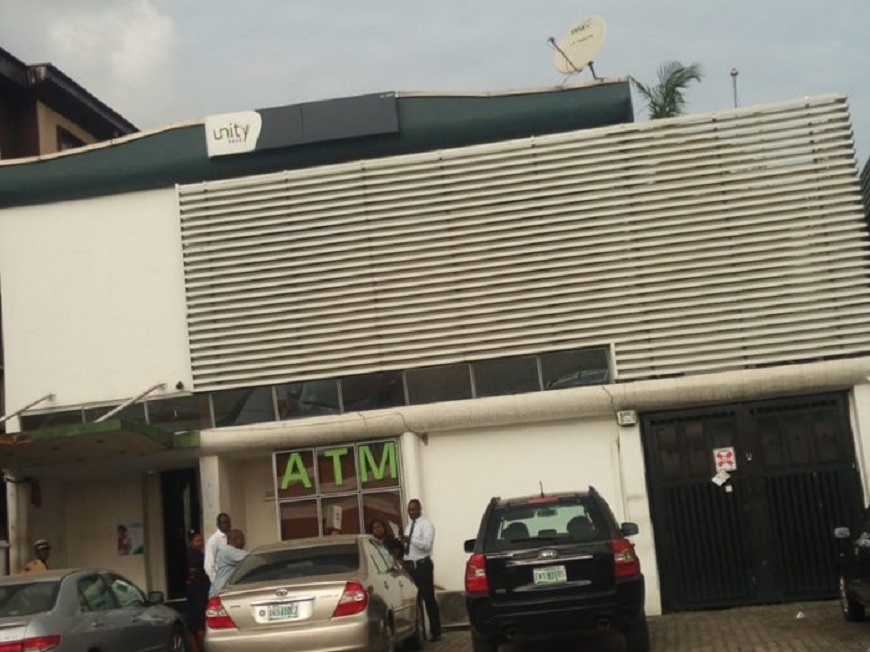
FY 2018: Unity Bank Returns to Profitability, Nets N1.3bn Profit

Published

on

By Modupe Gbadeyanka

After being underwater for a while, Unity Bank Plc has bounced back to profitability, its result for the 2018 financial year have revealed.

On Friday, the lender released its audited financial statements for the year ended December 31, 2018 and the balance sheet grew by 50.8 percent during the year.

The bank’s balance sheet size increased from N156.51 billion in 2017 to N235.98 billion, culminating in gross earnings of N37.33 billion for the year.

Similarly, in the period under review, the bank grew its bottom-line by 109.9 percent as Profit Before Tax (PBT) moved in a positive trajectory to close at N1.41 billion, with the bank recording a Profit After Tax (PAT) of N1.27 billion, shaking off the negative position it posted in 2017FY.

The year’s performance is supported by noticeable fundamentals derived from the bank’s corporate action to clean up its book by eliminating all the legacy non-performing loans (NPLs) which resulted in full de-risking of its balance sheet and creating a new lease of life for the Bank

A cursory review of the bank’s performance showed significant growth across key financial metrics, with Net Operating Income for the year ended December 31, 2018 growing by 112 percent to N21.63 billion from N10.22 billion in the corresponding period of 2017, Non-Interest Income also increased to N6.3 billion from N1.61 billion recorded in 2017 and earnings per share (EPS) for the year 2018 stood at N13.03k, up from negative of 127 kobo recorded in 2017 FY.

The bank’s improved performance was attributable to the reinvigorated business transformation initiatives implemented during the year, in addition to strategic corporate actions taken by the management of the bank to prioritize customer service, product delivery as well as optimize its operations for operational efficiency, thus setting a stage for its sustainable business growth model.

The bank’s strong performance feat was achieved through composite strategic focus involving the complete revamp of its service delivery channels, products revamp and profiling as well as building structured and secured operating environment to protect customers’ businesses.

In this regard, the bank, not only aggressively pushed out its USSD platform (the newly introduced customer-centric platform for easy banking), but also launched its youth-focused UniFi app – a robust omni-channel app that goes beyond banking services but also offers lifestyle services including gamification for increased customer satisfaction.

These, along with aggressive transaction push led to a 290 percent increase in non-interest income (income from transactions, cards, mobile, ATMs, commissions & fees, FX etc.).

Furthermore, the bank also optimized its operations and services through process simplification and automation while promoting cost efficiency across the entire value-chain.

The bank rolled out its Central Processing Centre (CPC) for standardized operations and operational risks mitigation thus improving service delivery to customers in the bank.

In effect, these and several modest initiatives led to the huge 17.3 percent reduction in total operating expenses and a major improvement in the efficiency ratios.

Unity Bank also leveraged on its core competence and strategic advantage in deepening its reach in Agribusiness and attendant value-chain, driving the over 360 percent growth in loan portfolio in this segment of the market.

A major feat achieved without material increase in loan quality – with NPL ratio closing the year at 0.69 percent (the best in the industry).

On cost optimization, Unity Bank’s focus yielded positive results as the lender brought down its total operating expenses by 17.3 percent from N24.46 billion in 2017 to N20.22 billion in 2018FY. This reduction is primarily as a result of the management drive to build strong processes in its operations by leveraging on key business alliances that attract better efficiency in resource allocation and growing scales in the network.

Commenting on the result, the MD/CEO, Mrs Tomi Somefun said: “The most gratifying aspect of our 2018 performance is that the bank has made a dramatic turnaround from losses in the previous year to a promising profit position in 2018FY.

“This was made possible by growth in the business throughputs and transaction-based banking with its attendant strong non-interest income.

“We equally recorded significant growth in our customer acquisition through enhanced customer-centric products that we rolled out during the year riding on our rebranded channels and platforms which were well accepted by the youth.

“We leveraged on our exceptional competencies in agribusiness and rural economy niche market which contributed to substantial growth in loans through on-lending schemes to farmers in the last quarter of 2018, all of which buoyed our performance for the year under review”.

“Also, the two-prong customer-centric banking approach being deployed to deliver quality banking services to emerging sectors in Retail/Small and Medium Enterprises and the Agricultural value chain are impacting positively on the bank’s bottom-line. In furtherance of our vision to be the Retail Bank of Choice, the bank revamped its digital strategy to provide convenient, simple and efficient platforms that are already attracting the next generation of Nigerians and expand the volume of loyal customers that have kept faith with us through the years. These are designed to guarantee double digits growth in both earnings and profits for the bank in the near future,” she stated.

The bank is aggressively and creatively pushing the frontiers of its business by creating robust platforms to support emerging digitalization of strategic businesses as well as corporate service units aimed at unlocking inherent potentials that will enable the bank effectively ride on economic headwinds and target opportunities in the markets.

Analysts are of the view that the full impact of the initiative on the account and shareholder’s value began to manifest at the fourth quarter of 2018 and early 2019, thereby gradually regaining investors’ confidence in the mid-tier lender after a period of uncertainty prevailed in the preceding year.

A statement from the bank further adds that the board of the bank expects that barring unforeseen circumstances, the trend of the results achieved in 2018 would be surpassed in 2019.


With the margins steadily looking up, the outlook for the future holds even brighter prospects for the bank even at this period that the bank closes its recapitalization programme and sets a new phase of its strategic pursuit.

The bank’s board further expects that barring unforeseen circumstances, the trend of the results achieved in 2018 would be surpassed in 2019.

Modupe Gbadeyanka is a fast-rising journalist with Business Post Nigeria. Her passion for journalism is amazing. She is willing to learn more with a view to becoming one of the best pen-pushers in Nigeria. Her role models are the duo of CNN's Richard Quest and Christiane Amanpour.

Advertisement
Click to comment

Leave a Reply

Your email address will not be published. Required fields are marked *

Banking

Yuletide: Ecobank Urges Vigilance Against Fraudsters, Assures Seamless Services

Published

on

Ecobank Business Account

By Aduragbemi Omiyale

Customers of Ecobank Nigeria, a member of Africa’s leading pan-African banking group, have been assured of uninterrupted access to banking services throughout the year-end holiday period.

They can continue to carry out their financial transactions via the lender’s secure and robust digital platforms.

Ecobank also urged customers to remain vigilant against fraud and scams during the festive season, as fraudsters are looking to pounce on any gap.

“Before you wrap up the year, tighten your security. December brings online sales, travel, and year-end distractions—this is exactly when scammers are most active.

“From fake festive deals to cloned merchant sites and suspicious messages, staying vigilant helps keep your money safe,” the Head of Products & Analytics, Consumer & Commercial Banking at Ecobank Nigeria, Mr Victor Yalokwu, said in a statement.

He advised customers to shop only on trusted websites, never share their PINs, passwords, or one-time passwords (OTPs), avoid banking on public Wi-Fi networks, be cautious of urgent or emotionally charged messages, and regularly review their account activity.

He also disclosed that the bank’s digital channels — including Ecobank Cards, the Ecobank Mobile App, USSD *326#, Ecobank Online, OmniPlus, Omnilite, EcobankPay, RapidTransfer, ATMs, PoS terminals, and over 35,000 Ecobank Xpress Point (agency banking) locations nationwide — will remain fully available to support customers throughout the yuletide and year-end holiday period.

He noted that customers will continue to enjoy a wide range of services during the period, including local and international funds transfers, bill payments and airtime top-ups, merchant and QR payments, balance inquiries and account statements, as well as cardless cash withdrawals via ATMs.

According to Mr Yalokwu, “Ecobank encourages customers to leverage these digital solutions for safe, fast, and efficient banking, especially during the festive season when convenience and reliability are essential. While physical branch operations may be subject to adjusted working hours in line with public holidays, customers can be assured that Ecobank’s digital platforms are designed to deliver uninterrupted service and enhanced security at all times.

“Ecobank remains committed to providing innovative financial solutions and exceptional customer service, and we wish all our customers a joyful festive season and a prosperous New Year.”

Continue Reading

Banking

5 Smart Moves to Wrap Up Your Year in Financial Style

Published

on

FairMoney

By Margaret Banasko

“Detty December,” Nigeria’s unofficial end-of-year spectacle, is an annual economic boom of concerts and parties, amplified by the return of the “IJGB (I Just Got Back) crowd. This celebration drives massive discretionary spending and consumer euphoria.

However, this festive high often leads to a financial low; the “Long January.” This is when critical non-negotiable expenses like rent and school fees hit hard.

Do not treat December as a financial free-for-all. Savvy individuals and business leaders must reframe it as the final, crucial financial quarter. The goal is to shift from emotional spending to deliberate, strategic saving.

Here are five smart, actionable financial moves that are critical for maintaining fiscal discipline that will enable you to maximize the festive season’s enjoyment while effortlessly de-risking and prepping your finances for a strong Q1 trajectory.

  • Capitalize on Discounted Bill Payments: The increased consumption of utilities, airtime, and data during this period necessitates higher essential recurring costs. Smart financial governance dictates actively seeking value on these high-frequency expenditures. Pay all essential bills from electricity tokens to data bundles and Cable TV subscriptions through a platform, such as the FairMoney app, that provides a direct financial incentive or cashback on purchases. This ensures that operational necessity does not unduly drain capital, as every percentage saved on recurring utilities is capital effectively preserved for critical Q1 requirements.
  • Implement the 50/30/20 Rule Strategically: Acknowledge the inevitable social expenditure of Detty December by imposing a clear framework for resource allocation. This strategic rule dictates how your income must be distributed to ensure financial security. Divide your December income into three non-negotiable categories: Allocate 50 percent of your income directly to critical January financial requirements like rent, transportation, and structured debt payments; this sum must not be compromised. Allocate 30 percent to your discretionary December wants, covering social activities, gifts, and controlled splurges; once this budget threshold is met, spending must cease. Crucially, assign the remaining 20 percent to structured savings and investment.

    This 20 percent is non-negotiable and serves as the anchor for long-term wealth creation and a buffer against the Long January strain. You can automate this crucial 20 percent deduction before you even begin spending using the FairSave feature on the FairMoney App, which enables instant autosave while you earn daily interest and retain the flexibility to withdraw anytime.

  • Convert Festive Windfalls into Capital: Do not view every incoming festive cash gift or unexpected bonus as mere spending money. Instead, strategically treat any financial “windfall” as a direct deposit into your future wealth accumulation. The 100 Percent Rule applies here: commit to saving or investing 100 percent of any financial gift, as this capital was not part of your planned income, offering a critical opportunity to grow your savings effortlessly. Immediately isolate any unexpected cash injections and categorize them as investment capital rather than disposable income.

By leveraging FairLock on the FairMoney App, you can save 100 percent of the festive cash into a fixed deposit. This ensures the funds are secure and illiquid, accruing interest over the stipulated savings period, which can then be released on maturity to sort out major Q1 projects or investments.

  • De-Risk Your December Savings Strategy: FairMoney’s premium, revolving credit line up to ₦5,000,000, FlexiCredit, serves as a crucial liquidity shield over your protected capital. Instead of being forced to prematurely break fixed deposits or liquidate interest-earning savings accounts to cover sudden, urgent expenses such as an unexpected repair or a short-notice business need, you can immediately draw the required funds from your FlexiCredit limit.

This allows critical, ring-fenced funds to remain untouched, continue accruing interest, and maintain their full readiness for the inevitable “Long January” obligations like rent and school fees. FlexiCredit empowers the savvy individual who earns a minimum of ₦250,000 as salary to strategically manage cash flow and capture short-term high-return opportunities without depleting their primary savings or operational capital, offering immediate bridge financing, charged at a competitive 0.25 percent per day only on the amount utilized.

  • Prioritize High-Value, Low-Cost Experiential Activities: While Detty December’s allure often stems from high-ticket social events and luxury venues, truly impactful celebrations are measured by the quality of connection, not the cost of admission. Instead of defaulting to expensive restaurant dinners, exclusive concerts, or impulse travel, strategically redirect your social budget toward creative, high-value experiential activities.

Organize themed potlucks with friends, host a family Christmas hangout at home, or explore local attractions like parks and museums that offer rich experiences without the premium price tag. By substituting generic, high-cost outings with thoughtful, collective events, you significantly slash discretionary spending while often increasing the depth and enjoyment of the festive season, guaranteeing maximum emotional return on minimum financial investment.

By applying these five smart moves, you assert control over your finances, ensuring you do not just survive Detty December and the Long January, but wrap up the year not just in celebration, but in financial style, positioning yourself for an empowered and prosperous New Year.

Margaret Banasko is the Head of Marketing at FairMoney MFB

Continue Reading

Banking

Stanbic IBTC Bank Assures Continued Strategic Investment in Artists, Designers

Published

on

stanbic ibtc 2207bytbally

By Aduragbemi Omiyale

The creative industry in Nigeria may have nothing to worry about with the likes of Stanbic IBTC Bank around the corner.

The financial institution, which has not hidden its love for the sector, has promised to continue with its strategic investment in the country’s designers and artists.

Speaking at an event, An Evening of Fashion, Art & Lifestyle, the Executive Director for Personal and Private Banking at Stanbic IBTC Bank, Mr Olu Delano, represented by the Head of its Private Banking Segment, Ms Layo Ilori-Olaogun, said the company was proud to be associated with the programme, which it also sponsored.

“At Stanbic IBTC, we recognise Nigeria’s creative sector as a vital driver of economic diversification, employment, and global cultural influence.

“We are proud to support the individuals behind these platforms that elevate African excellence and provide visionary talents the visibility that they deserve.

“Nights like this reaffirm our commitment to continued strategic investment in our artists and designers,” he stated.

The invitation-only ceremony, which was held at The Garden, Federal Palace Hotel, Victoria Island, Lagos, hosted by Africa’s leading luxury fashion house, 2207bytbally, in collaboration with the acclaimed art collective Torrista, brought together high-net-worth individuals, art collectors, designers, media personalities, and luxury brand executives for an unparalleled showcase of creativity and sophistication.

The evening opened with a breathtaking runway presentation featuring three signature segments from the Evolve collection by 2207bytbally: Denim, Ethnic, and 2207 Prints. Each piece exemplified the meticulous craftsmanship, bold innovation, and cultural storytelling that has established the brand as a standard-bearer in African luxury fashion.

Complementing the couture was a curated exhibition by Torrista, transforming the venue into an immersive gallery. Commissioned artworks exploring themes of culture, femininity, and evolution created a robust visual dialogue with the collections, demonstrating the seamless harmony that can result when fashion and fine art converge.

“This evening was about more than clothes or canvases; it was about showing the world that African creativity is limitless. When fashion and art share the same space, magic happens, and tonight, Lagos felt that magic,” the Creative Director of 2207bytbally, Tolu Bally, stated.

Continue Reading

Trending