Jobs/Appointments
14,000 May Lose Job on Exit of Oriental Hotel Owners from Nigeria
By Modupe Gbadeyanka
There are strong indications that the number of job loss in Nigeria under the present administration of President Muhammadu Buhari may further increase anytime soon.
This is because owners of the popular Oriental Hotel in Lagos, Western Metal Products Company Limited (WEMPCO) Group, are planning to leave the country after over four decades doing business in the Africa’s largest economy.
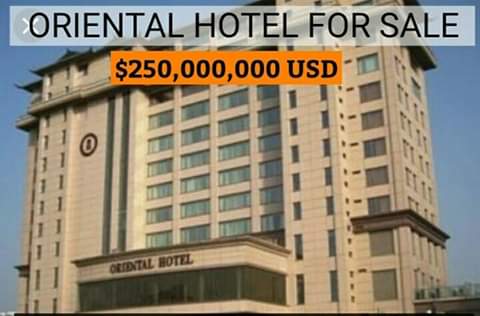
Few days ago, there were reports that WEMPCO was offering to sell its flagship hospitality business, Oriental Hotel for $250 million (about N90 billion).
In a report posted a moment ago, Business Day said WEMPCO wants to sell the company because of some issues, including unfavourable business environment, corporate governance, debts and others.
It was reported that the group has fallen on hard times and is considering an exit from Nigeria along with its steel plant, which has 700,000 tonnes-capacity and employs about 14,000 people, mostly Nigerians.
“When deep, long-term guys like these are exiting, then it is a very worrying sign. People like these are not supposed to exit,” an economic analyst, who asked not to be quoted, said.
Founded by Lewis Tung and his brother Robert Tung, WEMPCO Group has been in Nigeria for over 40 years with established manufacturing companies that produce roofing sheets, galvanised pipes, wire nails, plywood, ceramic tiles and sanitary ware. It is also actively involved in agricultural and hospitality sectors through which it currently employs over 13,000 workers across its 11 subsidiaries.
The Tungs were among the four Chinese families that came to Nigeria in the 60s.
“If they leave there will be only one left,” an industry expert said on the condition of anonymity.
Chaired by Lewis Tung, a Chinese-born, US-trained entrepreneur, WEMPCO has made some of the biggest foreign direct investments in Nigeria in recent years.
Top directors in the steel and hospitality sectors who are familiar with the situation, however, told BusinessDay that the reasons for the group’s ordeal are poor corporate governance, over-dependence on government policy, inability to consider Nigerian realities before making key decisions, and harsh business environment.
They say there is poor corporate governance at the Luxury Oriental Hotel as directors’ children interfere in the financial operations of the business.
More so, the group relied so much on government policy and Olusegun Aganga, the then minister of industry, trade and investment, for its survival. This has turned out to be part of its Achilles Heel.
In 2015, BusinessDay exclusively reported that the then outgoing government of Goodluck Jonathan, under the supervision of Aganga, classified WEMPCO, Midland and Kam Wire as upstream manufacturers of cold-rolled steel. They were to produce for the downstream segment which would use the cold-rolled steel for further production.
These companies were granted import waivers that would allow them to import any shortfall (the demand gap) to complement what they would produce locally to meet the demands of the downstream segment.
Downstream manufacturers wishing to import the cold rolled steel coils were mandated to pay 20 percent import duty.
At some point, WEMPCO and co raised prices of cold-rolled steel, forcing some of the manufacturers in the downstream segment to set up cold-rolled plants.
“WEMPCO had invested heavily in this segment. So when the manufacturers who were supposed to buy from them set up cold-rolled lines, it became a problem for the likes of WEMPCO. As this was happening, a new government of Muhammadu Buhari came and cancelled the waivers,” a reliable source in the steel sector said.
Sources added that WEMPCO calibrated a production line in its N236 billion rolling mill in Lagos to produce a thick cold-rolled of 0.2mm, which is more expensive than the 0.8mm or 0.4 mm seen in the West African market.
“It became difficult for them to be competitive in a market where low-quality products are rife,” another industry source said.
However, some analysts say the company’s problem shows Nigeria’s weak business environment.
Babatunde Paul Ruwase, president, Lagos Chamber of Commerce and Industry (LCCI), recently said businesses are generally burdened with the challenges of infrastructural deficiencies and macroeconomic blows, as most investors are saddled with huge cost of providing electricity, poor access to good roads, insecurity and other industry-specific issues amid poor access to affordable credit, high exchange rates and multiple taxation.
Ken Udoh, a Lagos-based public affairs analyst, said the sale of the hotel by its owners could be as a result of a tough operating environment and the increase in the cost of doing business in the country.
“This further confirms our fears about the economy and the decrepit infrastructure in the country,” Udoh said.
Ademola Feranmi, an economist, said the service industry is really struggling currently. The shrinking consumer wallet has reduced the patronage and the profitability of these companies while the cost of operation keeps rising.
“Most hotels now have large halls to host social events on weekends and corporates to boost their revenue,” he said.
The Manufacturers CEOs Confidence Index (MCCI) report released on Tuesday by the Manufacturers Association of Nigeria (MAN) shows that confidence of business owners in Nigeria’s manufacturing sector stands at 51.3 percent in the first quarter of 2019 as 200 CEOs interviewed said access to dollars, credit, electricity and fair taxes were major drawbacks.
The sale of Oriental Hotel is coming after Four Points by Sheraton was acquired in 2018 by Actis, an investment firm, and Westmont Hospitality Group. The 231-room hotel is targeted towards business travellers and small conventions. It was owned by Starwood Hotels & Resorts, which is a subsidiary of Marriott International.
An imminent exit of WEMPCO Steel, commissioned in 2013 by President Jonathan, could mean loss of 14,000 jobs after Procter&Gamble shut down its $300 million diaper plant, with Kimberly Clark also exiting.
The CBN in 2015, as part of its initiative to resuscitate local industries and improve employment generation, released a list of items not eligible for foreign exchange in the government-created Importers & Exporters window. Among the 41 items on the list are cold-rolled steel sheets, galvanised steel sheets, and roofing sheets.
Business Post reports that some Nigerians had before linked ownership of Oriental Hotel to the national leader of the ruling All Progressives Congress (APC), Mr Ahmed Tinubu.
Jobs/Appointments
Binance Names Co-Founder Yi He as Co-CEO Amid Ongoing Restructuring
By Adedapo Adesanya
Global blockchain ecosystem behind the world’s largest digital asset exchange by trading volume and users, Binance, has appointed its co-founder, Ms Yi He, as its co-CEO.
“Yi has been an integral part of the executive leadership team since the launch of Binance. Her innovative and user-focused approach has been instrumental in shaping the company’s vision, culture, and bottom-up business strategy,” said Binance CEO, Mr Richard Teng. “This appointment is a natural progression and she will continue to guide the organization from strength to strength.”
“We remain dedicated to being the most trusted and regulated exchange in the world, always putting our users first. Yi plays a critical role in growing our community and driving product innovation as we work to reach one billion users. Together, we are focused on building the Web3 infrastructure and promoting financial freedom, empowering people to participate in a more open and fair financial system,” added Mr Teng.
“I am honored to build alongside Richard, who brings decades of experience in regulated financial markets and was among the first to regulate crypto in its early days,” said Ms He. “Together, we bring diverse perspectives and are confident in leading the future of the industry during this pivotal time, as we responsibly expand our global presence and drive sustainable innovation with our users always at the center.”
Binance remains one of the world’s largest players in crypto trading, and leadership changes within the company continue to draw attention due to its scale and influence.
The appointment of a co-CEO adds structure during a period when global exchanges emphasize compliance, operational clarity and more formal management frameworks.
The company did not announce changes to its product lineup or platform priorities alongside the leadership update, and no financial terms were disclosed. The addition of a co-CEO role reflects an internal effort to distribute responsibilities as the firm works with regulators and seeks stability in a competitive and closely watched industry.
Jobs/Appointments
AFRIPERF Adopts Nigeria as Headquarters, Picks Komolafe as Chairman
By Adedapo Adesanya
The African Petroleum Regulators Forum (AFRIPERF) has chosen Nigeria as its official headquarters and also elected the chief executive of the Nigerian Upstream Petroleum Regulatory Commission (NUPRC), Mr Gbenga Komolafe, as its chairman.
Recall that in September, 16 countries, led by Nigeria, gathered in Accra, Ghana, to witness the signing of the charter establishing the forum, which seek to harmonise oil regulation in Africa.
Others include Ghana, Somalia, Gambia, Madagascar, Sudan, Guinea, and Togo among others.
The decisions were announced at the inaugural executive committee meeting of the forum which took place virtually on December 2, 2025. The meeting which was attended by the 16 African countries, was convened to pick its leadership, headquarters and logo.
Prior to his endorsement as the substantive pioneering chairman, Mr Komolafe acted in interim capacity.
Also, Mrs Eyoanwan Ndiyo-Aiyetan also emerged as the secretary of AFRIPERF.
According to a statement on Wednesday, NUPRC notes that the development affirms Nigeria’s central role in the African petroleum regulatory space and as Africa’s largest producer of crude oil.
In his acceptance speech, Mr Komolafe thanked his African counterparts for the trust and honour, promising to ensure that no member country is left behind.
AFRIPERF aims to strengthen regional petroleum governance by fostering collaboration, cooperation and coordination among member regulators.
Its mission includes creating standards, enhancing transparency and addressing cross-border challenges such as gas trade, emissions, and digitalisation while making the African continent energy sector attractive for crucial investments.
Jobs/Appointments
Tinubu Nominates General Christopher Musa as New Defense Minister
By Adedapo Adesanya
The immediate past Chief of Defence Staff (CDS), General Christopher Gwabin Musa, has been nominated by President Bola Tinubu as the new Minister of Defence, replacing Mr Mohammed Badaru Abubakar.
The erstwhile minister resigned from his position with immediate effect for health reasons, the president’s spokesman, Mr Bayo Onanuga, had said on Monday night.
The 63-year-old’s departure coincides with a period of heightened security challenges across Nigeria, with the government under pressure to deal with a spate of mass kidnappings.
In a letter to Senate President, Mr Godswill Akpabio, President Tinubu conveyed Mr Musa’s nomination as the successor to Mr Abubakar, according to statement on Tuesday by Mr Onanuga, the Special Adviser to the President on Information and Strategy.
The 58-year-old retired military chief is described as a distinguished soldier who served as the CDS from 2023 until October 2025. He won the Colin Powell Award for Soldiering in 2012.
Born in Sokoto in 1967, Mr Musa received his primary and secondary education there before attending the College of Advanced Studies in Zaria. He graduated in 1986 and enrolled at the Nigerian Defence Academy the same year, earning a Bachelor of Science degree upon graduation in 1991.
He was commissioned into the Nigerian Army as a Second Lieutenant in 1991 and has since had a distinguished career. His appointments included General Staff Officer 1, Training/Operations at HQ 81 Division; Commanding Officer, 73 Battalion; Assistant Director, Operational Requirements, Department of Army Policy and Plans; and Infantry Representative/Member, Training Team, HQ Nigerian Army Armour Corps.
In 2019, he served as Deputy Chief of Staff, Training/Operations, Headquarters Infantry Centre and Corps; Commander, Sector 3, Operation Lafiya Dole; and Commander, Sector 3 Multinational Joint Task Force in the Lake Chad Region.
In 2021, Mr Musa was appointed Theatre Commander, Operation Hadin Kai. He later became Commander of the Nigerian Army Infantry Corps before being appointed CDS by President Tinubu in 2023.
In the letter to the Senate, Mr Tinubu expressed confidence in Mr Musa’s ability to lead the Ministry of Defence and further strengthen Nigeria’s security architecture.
If confirmed by the upper legislative chamber, he will take up the ministry at a crucial time when security challenges including terror and kidnappings are plaguing the country.
-
Feature/OPED6 years agoDavos was Different this year
-
Travel/Tourism9 years ago
Lagos Seals Western Lodge Hotel In Ikorodu
-
Showbiz3 years agoEstranged Lover Releases Videos of Empress Njamah Bathing
-
Banking7 years agoSort Codes of GTBank Branches in Nigeria
-
Economy3 years agoSubsidy Removal: CNG at N130 Per Litre Cheaper Than Petrol—IPMAN
-
Banking3 years agoFirst Bank Announces Planned Downtime
-
Banking3 years agoSort Codes of UBA Branches in Nigeria
-
Sports3 years agoHighest Paid Nigerian Footballer – How Much Do Nigerian Footballers Earn