

World
Meet Two Men That Got $9bn Court Judgment Against Nigeria

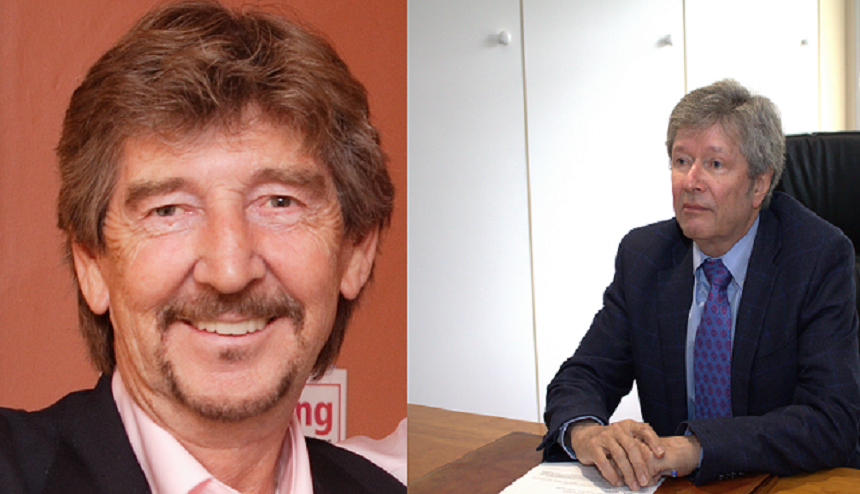
On February 15, 2015, members of the Irish music scene gathered in Dublin to pay their last respects to Michael Quinn, a long-time music impresario. Quinn was a well-known and colourful character. He partied and hob-knobbed with the who’s who in music, from the American band ‘The Supremes’ to the Irish folk band ‘The Dubliners’, until his death. Yet, it wasn’t the music stars who really attracted attention at the funeral; it was the large number of Nigerians in attendance, along with a Nigerian TV crew, that turned the heads of those gathered to say their farewells to Quinn.
Nigeria has, of course, seen its fair share of larger-than-life characters, but Michael Quinn deserves an honourable mention on any list. His rock-n-roll heritage led to a career in business, commodities, project management, and involvement in some of Nigeria’s most ambitious – and controversial – infrastructure deals of the past 30 years.
Quinn may be best known in Nigeria for being the co-founder of P&ID, involved in a gas flaring project that collapsed following the Nigerian government’s failure to uphold the terms of the agreement. This has led to Nigeria’s most difficult overseas investor challenge in its history: namely, the world’s largest arbitration award of over $9.5 billion.
What’s not really understood by most Nigerians is the full story on Michael Quinn – and his business partner, Brendan Cahill – and their business adventures here in Nigeria. BWN set out to investigate their business exploits, spanning Nigeria, Ireland, the British Virgin Islands, Cyprus and the United Kingdom, among others.
Where It All Began: ‘The Butanisation’ Project
BWN has established that Quinn and Cahill ran an international consulting company called Industrial Consultants (ICIL).
They got their first real start in Nigeria having won a contract from NNPC to establish Africa’s first-ever gas pressure vessel manufacturing facility – including installation at nine sites across Nigeria – known as the “Butanisation Project.”
In the early 1990’s, NNPC wanted to capture the Butane gas produced throughout the country at the oil refineries. Their plan was to install 1,000 tonne high pressure vessels at 9 sites across Nigeria with a total of 48 individual vessels to store this Butane.
At the time, the NNPC envisaged that international vessel manufacturers in the West (Europe, US) would tender for and export completed vessels into Nigeria. However, Quinn and Cahill had other ideas. They wanted to build the vessels in Nigeria. But they faced steep challenges in doing so, including the challenge of identifying qualified workers (welders and engineers) with the necessary skills.
To overcome this challenge, they pursued a technology transfer partnership with Babcock Robey, a long-established UK company, to consider setting up a factory, bringing in world-class welders and manufacturing the vessels in Nigeria whilst training up an entire cadre of Nigerian welders and engineers. This was not ordinary welding – an explosion at such a vessel would be devastating.
The technology transfer arrangement with Babcock Robey agreed that after completion of the project the factory and equipment would remain operative in Nigeria. As a direct result of that technology transfer, there are now a number of indigenous manufacturers in Nigeria, not only of pressure vessels, but of many other associated products used across the entire oil and gas industry. This industry as a whole is now worth billions of dollars to the Nigerian economy.
This technology transfer strategy would later become a signature strategy of the Quinn and Cahill approach to doing business in Nigeria.
Combating HIV/AIDS
Not all of Cahill and Quinn’s projects were as commercially successful as the Butanization project, though. An entrepreneurial project to support HIV/AIDS testing in Nigeria collapsed in the early 2000s, after disagreements between the various commercial partners – including Quinn and Cahill – and the Nigerian government. Why did the project collapse, and what was the involvement of Quinn and Cahill?
In the late 90s and early 2000s, sub-Sahara African governments were facing a staggering rise in the numbers of citizens suffering from HIV/AIDS. The lack of basic healthcare infrastructure, access to medicines, testing stigma and limited financial resources only made the plight worse.
In 2006, the Nigerian Health Ministry agreed to support a $15 million partnership with a local Nigerian company, Allied Consultants International (ACI) working with Trinity Biotech of Ireland to supply and create a facility that would locally-manufacture HIV testing kits. The Nigerian government would be a Joint Venture (JV) partner. Locally the company was known as Trinitron.
The initiative got off to a rough start due to the government’s failure to deliver the necessary funds and resources needed to start, and so ACI sought outside assistance. They went to Michael Quinn and Brendan Cahill and asked for their help. (BWN has established that Quinn and Cahill were not involved at the start of the project – they were simply called in to help when things began to go wrong). Quinn and Cahill arranged for new financing, and brought in new management. In return, Quinn and Cahill through ICIL became a shareholder in ACI. The new arrangement worked. Test kits were delivered from Ireland – over 4 million of them. And in May 2008 the manufacturing facility at Sheda was completed, and the first kits were rolled out for government licensing approval.
Notwithstanding this, the Nigerian government failed to purchase the test kits. This led in-part to the collapse of the project and the ultimate closure of the facility in Sheda, by the government.
BWN tracked down Gerry Nash, the project manager of the Sheda facility brought in by Quinn and Cahill, to understand why some in Nigeria claim this project was a sham or a fraud: He said: “The Trinitron project was an extraordinary success and supported Nigerians access to essential tests to combat the spread of HIV/AIDS. We delivered over 4 million test kits that were vital to stopping the spread of HIV/AIDS. The Sheda facility was in full operation and producing locally made kits. There will be those in the Western media who will say this project was a failure; however, that’s ridiculous as the only failure was the Nigerian government’s inability to continue funding the project.”
Port Expansion
Quinn and Cahill also had a hand in expanding the infrastructure of the ports of Lagos and Calabar. It resulted in them gaining a better understanding of the infrastructure and needs of cities like Lagos and Calabar. Their work in both communities saw the construction of improved industrial facilities that allowed for the increased import and export of goods and services.
Supporting Nigeria’s Military
Quinn and Cahill also found a niche in helping repair and rebuild ageing Nigerian military equipment. BWN has established that they worked on several such contracts since 2000.
In 2001, through their company Marshpearl, Quinn and Cahill won a contract to repair and upgrade 36 Scorpion tanks. Overall, the project was a resounding success, and delivered the tanks upgraded as required. Such military hardware upgrades were to be needed in the coming years, in particular in the fight against Boko Haram.
However, BWN has found that not all contracts with the Nigerian military were as successful as the Scorpion tank project. In 2010, Industrial Consultants partnered with a company called North Wales Military Aviation Services (NWMAS) and won a $5m contract to repair the ejector seats in six Alpha jets for the Nigerian Air Force, specifically for an Air Force unit called Aeronautical Engineering & Technical Services (AETS).
NWMAS had completed the first milestone of the project when the Nigerian AETS unit terminated its agreement with NWMAS and refused to pay for work that had been previously completed. Again, because the contract was well-structured and relied on milestones for payments, it should have been straightforward.
The two sides could not agree, though. This dispute ended up before a Nigerian arbitration panel, which awarded Quinn and Cahill $2.3 million because of the Nigerian decision to end the contract early and not pay for work completed.
Private Sector Projects
Quinn and Cahill didn’t just work for the government, but also for the private sector where they worked with some of the big names in the international oil industry.
For instance, their operation was involved in numerous feasibility studies in relation to high value projects (especially complex cable and fibre optics networks) subsequently undertaken by large private companies such as Shell – the Cawthorne Channel Gas Gathering Project and the Forcados Gas Gathering Project, to name but two. In relation to all of these studies – valued in aggregate in the hundreds of millions of dollars – the recommendations made by Quinn and Cahill were taken up and the specialist facilities proposed were successfully constructed.
Use of Offshore Companies and Section 54
Our investigation also revealed a pattern by Quinn and Cahill to use offshore tax havens like the British Virgin Islands (BVI) and Cyprus to establish their businesses that operated in Nigeria. We wanted to look into why the two men used this tactic repeatedly and if it has any relevance for the current dispute with P&ID, which is also based in the British Virgin Islands.
According to experts, businesses use these tax havens because they help to lower tax bills, they offer sound legal structures for businesses, and they allow the identities of the ownership to remain confidential. These are all general reasons why BVI companies are popular with international businesspeople.
Some claim these mirrored entities lead to confusion and are meant to intentionally mislead, especially during legal and arbitration disputes.
In the legal dispute on NWMAS, rumours abound that NWMAS Nigeria Ltd was established without NWMAS UK’s knowledge and the subsequent arbitration was not made aware to the UK entity. We looked into this claim, because it is a serious allegation.
According to discussions we had with contacts who know the details of the NWMAS case, these allegations are false, and in fact, the NWMAS UK was named as Claimant in the dispute.
Conclusion
Why does this all matter – Irish entrepreneurs making deals in everything from medicine kits, to tanks, to ports? It matters because Nigeria’s government currently owes $9.5 billion in judgment debt to P&ID, which is the company founded by Quinn and Cahill.
Some senior officials of the Nigerian government have claimed that P&ID is a “fake” company. It is clear from our investigation that similar arguments were levelled against other Quinn and Cahill adventures, such as NWMAS, in the past, and were subsequently found to be untrue.
Our investigation around Quinn and Cahill has shown these two men as having a long-track record here in Nigeria. Yes, they’ve set up multiple tax haven companies. Yes, they’ve had their fair share of disputes and arbitration awards against Nigeria. Yes, they have had some projects succeed and others fail. They are entrepreneurs and risk-takers, that is clear. Nigeria is a tough place to do business, and it needs such people to invest and show good faith. Without such investors, Nigeria would be in trouble, because investors who are heavily risk-averse do not want to come here. What the country needs is genuine entrepreneurs.
There is clearly some criticism about Quinn & Cahill that stands up: the projects that did not succeed could have been better handled. But to claim that these were “scams” or “frauds” is obviously untrue: there are real buildings, and machines, and facilities that show the contracts were real, and the work done was real. There is literally concrete evidence of this.
So, efforts by some people to characterise P&ID and its founders, Quinn and Cahill, as frauds, clearly fall short, unless those making such claims can produce real evidence. In any case, attacking previous projects that have served their purpose does not have any relevance to the current P&ID dispute.
The fact of the matter remains that until recently, no one had alleged fraud or misdeeds in the P&ID case. To date, not once during any of the legal proceedings either in the UK or US – where they are active currently – or even during the Nigerian legal proceedings, were these issues or claims raised by the Nigerian government. This shows that some sections of the media are simply falling for the spin; the government itself does not even believe the rumours sufficiently to raise them in court.
The most important single fact on the P&ID case is that, by failing to follow-through on the P&ID agreement, the expert Tribunal found that the Nigerian government was at fault and is now faced with the grim consequences of potentially paying for one of the largest arbitration awards in history – currently standing at over $9 billion!
And there is no evidence yet that the government is ready to enter into negotiations to find an amicable solution to the issue.


