Connect with us

General

Nigeria Must Probe Death of Channels TV Reporter—CPJ

Published

on

Authorities in Nigeria have been charged to commence an immediate investigation into the death of a reporter for the privately owned Channels TV, Precious Owolabi, who died from a gunshot wound he sustained while covering a protest by members of the Islamic Movement in Nigeria, which later turned violent, with a senior cop shot dead and nine others killed.

During the July 22 demonstration in Abuja, the protesters, who were demanding for the release of their leader, Mr Ibrahim El Zakzaky, had a confrontation with the police, who allegedly opened fire on them.

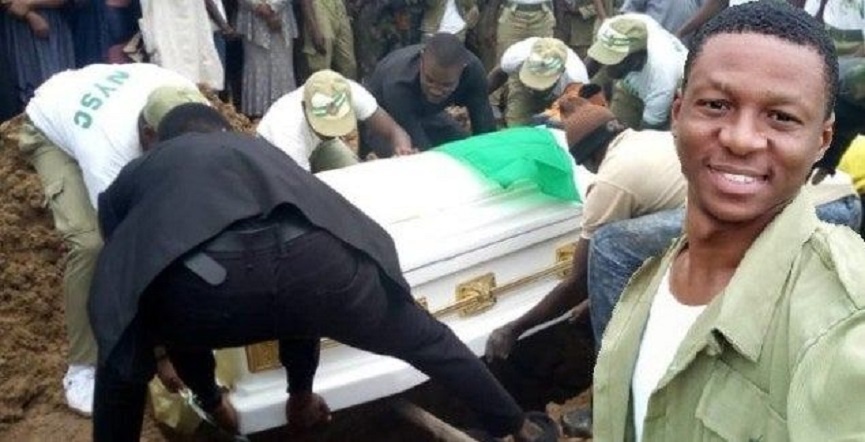
After he was hit by a stray bullet, Mr Owolabi was taken to a hospital, but died later in the day and was buried on Thursday in Kaduna, where his parents reside.

Commenting on the incident, CPJ Africa Program Coordinator Angela Quintal, said, “A swift and credible investigation into the shooting that killed Precious Owolabi is critical for journalists in Nigeria to believe the government is committed to their safety, adding that, “Journalists should never be targeted during the course of their work, and when members of the press are harmed, those responsible must be held accountable.”

Tavershima Adongo, a medical and health consultant with the Premium Times Centre for Investigative Journalism, told CPJ that he watched the confrontation from the window of a ministry of health building.

“I think he [Owolabi] still wanted to record the event, so he moved closer to the crowds and they shot him,” Adongo said, adding that he “couldn’t tell exactly which side” the bullet came from because his view of the journalist at that moment was obstructed by a parked car.

Mr Adongo said the shot that hit Owolabi came after police fired tear gas and some protesters had advanced toward the police. “[Owolabi] was in between [the protesters and police]. He didn’t leave his position. Maybe he thought perhaps he was not going to be harmed…the police took him away [after he was hit],” Adongo said.

A journalist who was at the scene, but requested anonymity for fear of reprisal, told CPJ he saw police fire their guns and that he did not see protesters with firearms.

Police spokesperson, Mr Frank Mba, told CPJ via phone that as well as Owolabi, deputy police commissioner Usman Umar was shot and died from his injuries.

Mba said, “The first hypothesis is that these guys were all shot by the protesters and the deputy commissioner of police was shot point blank, at close range, by the protesters.”

When asked if the police had fired shots during the confrontation, Mr Mba said, “When the rioters started shooting at the policemen, they [policemen] needed to fire shots into the air to let [the protesters] know that [the police] equally have weapons. They fired warning shots. When we handle protesters in this country we are guided by the principle of proportionality of force and we will always adhere to our rules of engagement and international best practices.”

Adullahi Muhammed, the Islamic Movement in Nigeria’s secretary to the academic forum, told CPJ that he was at the front of the protest and did not see any protesters with firearms. He added that some threw rocks at police after police began shooting.

John Momoh, the chairman of Channels TV’s parent company, Channels Media Group, has asked police to open an investigation into Owolabi’s killing, according to a report on the Channels TV website.

Suleiman Aliyu, another member of Nigeria’s National Youth Service Corps and a reporter with the Daily Leadership A Yau, the Hausa language service of the Leadership newspaper, was also shot and injured at the protest, but he was not reporting at the time, according to the Leadership.

Nigerian President Muhammadu Buhari tweeted condolences to the families of Owolabi and Umar.

Dipo Olowookere is a journalist based in Nigeria that has passion for reporting business news stories. At his leisure time, he watches football and supports 3SC of Ibadan. Mr Olowookere can be reached via [email protected]

Advertisement
Click to comment

Leave a Reply

Your email address will not be published. Required fields are marked *

General

NERC Unveils 3-Step Guide for Resolving Electricity Complaints

Published

on

NERC

By Adedapo Adesanya 

The Nigerian Electricity Regulatory Commission (NERC) has introduced a streamlined three-step process to help electricity consumers address common issues like power outages, estimated billing, faulty meters, and voltage fluctuations.

In a public advisory shared on its X handle on Tuesday, the electricity sector regulator emphasised that customers should begin by contacting their respective electricity Distribution Companies (DisCos), which serve as the primary point of contact for technical and billing problems.

Consumers are urged to secure a complaint reference number and maintain records of all interactions for efficient follow-up.

The advisory outlines the process as follows: “Contact your DisCo’s customer care – This is the first step for all technical or billing issues;

“Escalate to State Electricity Regulator (SER) – If unresolved, and the consumer is in a state that has transitioned to an SER;

“Reach NERC Call Centre – For consumers in non-transitioned states or needing further assistance. Contact options include 0201 344 4331, 0908 899 9244, or [email protected],” it said.

“We’re here to make sure your complaint is heard and addressed,” the advisory concluded, aiming to empower consumers amid ongoing challenges in Nigeria’s power sector.

This guidance comes as electricity consumers continue to grapple with service disruptions and billing disputes, highlighting NERC’s efforts to improve accountability across DisCos and state regulators.

Continue Reading

General

Senate Passes Electoral Act Amendment Bill After Mild Row

Published

on

Senate confirms Umar Yahaya

By Adedapo Adesanya

The Senate passed the Electoral Act, 2022 (Repeal and Re-Enactment) Bill 2026 on Tuesday after overcoming a rowdy session that saw lawmakers at loggerheads.

The issue in the upper chamber stemmed from a division over Clause 60 raised by Mr Enyinnaya Abaribe, a member of the opposition party, African Democratic Congress (ADC), from Abia South.

The Senate President, Mr Godswill Akpabio, stated that he believed the demand had previously been withdrawn, but several opposition senators immediately objected to that claim.

Citing Order 52(6), the Deputy Senate President, Mr Barau Jibrin, argued that it would be out of order to revisit any provision on which the Senate President had already ruled.

This submission sparked another uproar in the chamber, during which Mr Sunday Karimi had a brief face-off with Mr Abaribe.

The Senate Leader, Mr Opeyemi Bamidele, then reminded lawmakers that he had sponsored the motion for rescission, underscoring that decisions previously taken by the Senate are no longer valid, maintaining that, consistent with his motion, Mr Abaribe’s demand was in line.

Mr Akpabio further suggested that the call for division was merely an attempt by Mr Abaribe to publicly demonstrate his stance to Nigerians. He sustained the point of order, after which the Abian lawmaker rose in protest and was urged to formally move his motion.

Rising under Order 72(1), Mr Abaribe called for a division on Clause 60(3), specifically concerning the provision that if electronic transmission of results fails, Form EC8A should not serve as the sole basis, calling for the removal of the proviso that allows for manual transmission of results in the event of network failure.

During the division, Mr Akpabio directed senators who supported the caveat to stand. He then asked those opposed to the caveat to rise, to which 15 opposition senators stood.

However, when the votes were counted, the Senate President announced that 15 senators did not support the proviso, while 55 senators voted in support.

Earlier, proceedings in the Senate were momentarily stalled as lawmakers began clause-by-clause consideration of the Electoral Act, 2022 (Repeal and Re-Enactment) Bill 2026, following a motion to rescind the earlier amendment.

The motion to rescind the bill was formally seconded on Tuesday, paving the way for the upper chamber to dissolve into the committee of the whole for detailed reconsideration and reenactment of the proposed legislation.

During the session, the Senate President, Godswill Akpabio, reeled out the clauses one after the other for deliberation.

However, the process stalled when at clause 60, Mr Abaribe raised a point of order, drawing immediate attention on the floor.

This soon caused the session to move into a closed-door session.

Before rescinding the Electoral Act, the red chamber raised concerns over the timing of the 2027 general elections and technical inconsistencies in the legislation.

Rising under Order 52(6) of the Senate Standing Orders, the Senate leader, Opeyemi Bamidele, moved the motion to reverse the earlier passage of the bill and return it to the Committee of the Whole for fresh deliberations.

He explained that the development follows the announcement by the Independent National Electoral Commission (INEC) of a timetable fixing the 2027 general elections for February 2027, after consultations with the leadership of the National Assembly.

He stated that stakeholders had raised concerns that the proposed date conflicts with the provisions of the amended law, particularly the requirement that elections be scheduled not later than 360 days before the expiration of tenure.

He further noted that upon critical review of the passed bill, the 360-day notice requirement prescribed in Clause 28 could result in the scheduling of the 2027 Presidential and National Assembly elections during the Ramadan period.

According to him, holding elections during Ramadan could negatively affect voter turnout, logistical coordination, stakeholder participation, and the overall inclusiveness and credibility of the electoral process.

The motion also highlighted discrepancies discovered in the Long Title and several clauses of the bill, including Clauses 6, 9, 10, 22, 23, 28, 29, 32, 42, 47, 51, 60, 62, 64, 65, 73, 77, 86, 87, 89, 93, and 143. The identified issues reportedly affected cross-referencing, serial numbering, and internal consistency within the legislation.

Continue Reading

General

IFMA Nigeria Gets Branch in Oyo, Picks Adejumo Olusola Babatunde as Coordinator

Published

on

IFMA Nigeria Oyo branch

By Modupe Gbadeyanka

A new branch of the International Facility Management Association (IFMA) Nigeria Chapter has been established in Oyo State, with Mr Adejumo Olusola Babatunde chosen as Coordinator.

The organisation set up an arm in the South-West state in a bid to expand its footprint in the country. Mr Babatunde will be assisted by other executive committee members, including Mr Ajiboye Olusola Akeem as Secretary, and Mrs Adeniran Olaide as Treasurer.

At the inauguration of the branch at the Nigerian Society of Engineers (NSE) Secretariat in the Akobo area of Ibadan, the Oyo State capital, the president of IFMA Nigeria, Mr Sheriff Daramola, expressed delight at the successful inauguration of the branch and commended members for their commitment to the growth of facility management in Nigeria.

He highlighted IFMA’s global heritage, noting that the association is supporting over 25,000 members in more than 140 countries worldwide. Mr Daramola emphasised IFMA’s strong global network, the world’s largest and most widely recognised association for facility management professionals, headquartered in the United States and its growing influence in Africa, the Middle East and Europe.

“IFMA members have taken positions of authority across federal, state, and private institutions; IFMA Nigeria is positioned to ensure our professionals are the first choice for global investors entering the Nigerian market,” he stated.

The Legal Adviser of IFMA, Nigeria, Mr Sola Fatoki, who shared this sentiment, said, “Since 1997, when IFMA Nigeria was established, the association has equipped facility management professionals with integrated knowledge spanning human behaviour, infrastructure, and the built environment.”

He encouraged engineers, architects, surveyors, ITC, Technology innovators, data analysts and allied professionals to see IFMA as their professional home and outlined the functions and responsibilities of branch executive committees.

In his remarks, Mr Babatunde expressed gratitude to the national council for the opportunity to serve and pledged to ensure the success of the branch, focusing on unity and the professional advancement of stakeholders in the region.

Continue Reading

Trending