Connect with us

Economy

39 Stocks Depreciate NSE Index by 2.48% in Four Trading Days

Published

on

Nigerian Stocks

Dipo Olowookere

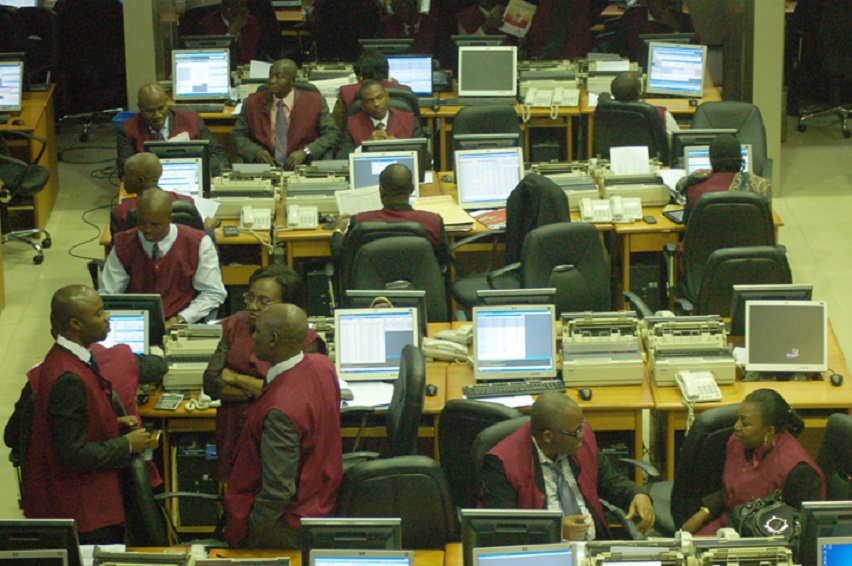
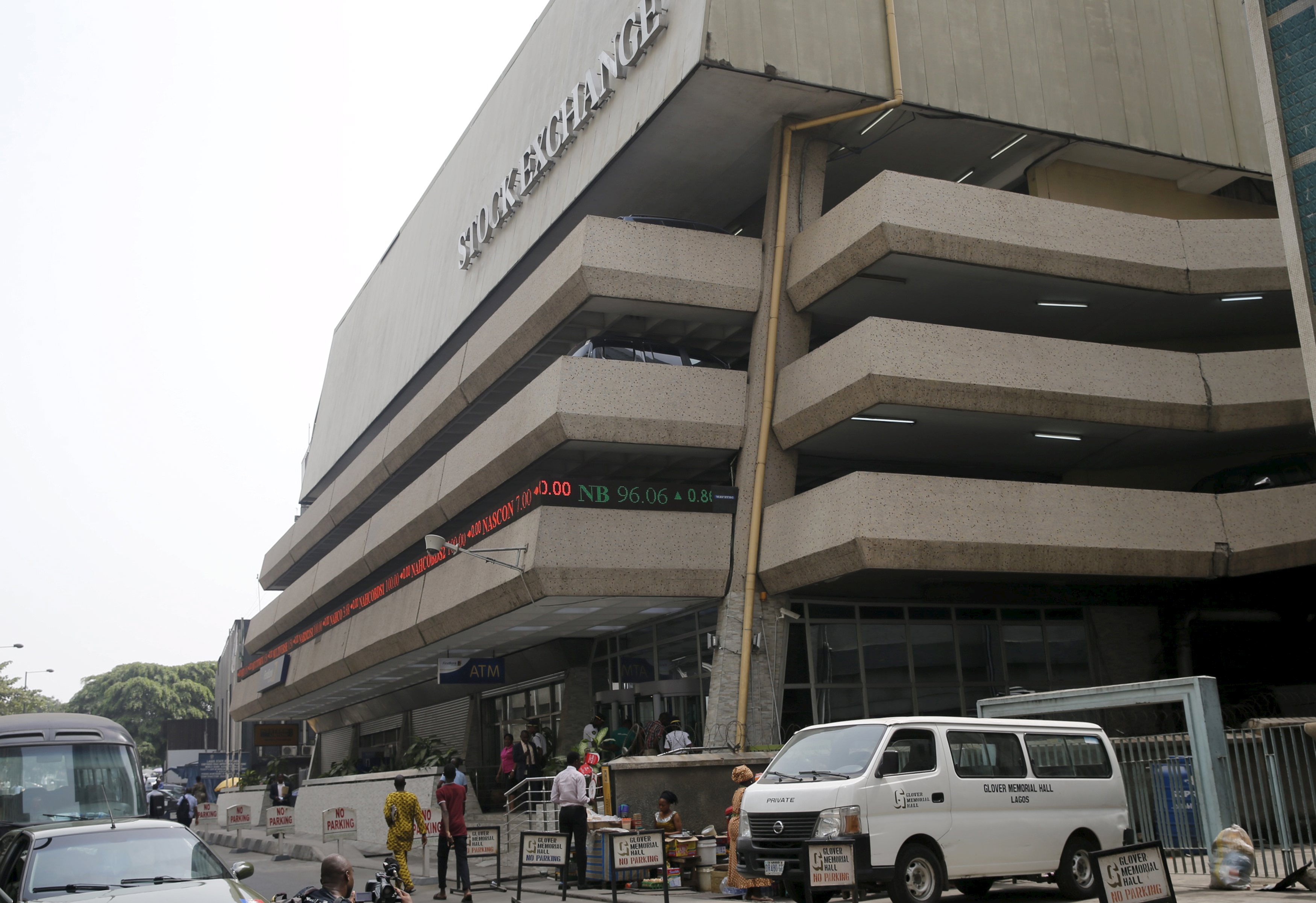
A total of 39 stocks trading on the Nigerian Stock Exchange (NSE) caused the All-Share Index (ASI) to depreciate by 2.48 percent to settle at 26,987.45 points in the four trading days last week.

The market opened for only four days in the week as a result of the public holiday declared by the federal government to celebrate the 59th anniversary of Nigeria’s independence from Britain in 1960.

The local stock market was mostly bearish for the week as investors stayed back to watch happenings from both the local and the global scenes, especially with the impeachment threat staring at President Donald Trump of the United States of America (USA) as well as activities on the global oil market, which is giving many investors serious concerns because of the price of the Brent crude, which fell below Nigeria’s benchmark of $60 per barrel in the week.

Shares in the oil and gas sector had a feel of this heat as they went down in the week at the domestic bourse by 2.25 percent.
 

CBN’s Fine Affects Banking Stocks

On the local scene, investors pondered on the action of the Central Bank of Nigeria (CBN) on 12 financial institutions, six of which are listed on the stock exchange. The dozen of banks were punished by the industry watchdog for failing to loan a certain amount of money in their custody to their customers as directed by the CBN.

In July 2019, the central bank had ordered lenders operating in the country to give 60 percent of their deposits to customers as loan so as to boost the economy.

The apex bank was hoping to use its loan policy to promote lending to the real sector of the economy so as to fast-track its recovery process after it slipped into recession over three year ago.

In the circular issued to the banks in July, the central bank had warned that failure do adhere to the 60 percent loan-to-deposit ratio would attract a sanction, which involves taking certain amount from their deposits to their cash reserves with the apex bank.


After the holiday, the CBN fined the 12 financial institutions the sum of N499.2 billion and this development caused selloffs in the banking space in the week, resulting into a 3.94 percent weekly loss.

Also, on the local scene, the persistent low purchasing power of Nigerians affected stocks in the consumer goods space at the market, leaving its barometer going down by 4.92 percent in the week.


Stock Performance In The Week

From the data harvested by Business Post on the NSE, Fidson Healthcare was the week’s heaviest loser as its stocks went down by 18.89 percent to close at N3.65 per share, while Ecobank followed with a loss of 14.61 percent to finish at N7.60 per unit.

UAC Nigeria fell by 14.38 percent to end at N6.55 per share, Africa Prudential depreciated by 9.97 percent to settle at N3.52 per unit, while Beta Glass declined by 9.96 percent to close at N53.80 per share.

At the other end, Continental Reinsurance shares went up by 20.11 percent to finish at N2.27 per unit, while Law Union and Rock Insurance followed with 12.82 percent appreciation to close at 44 kobo per unit.

Niger Insurance gained 10.00 percent to finish at 22 kobo per share, CAP improved by 9.89 percent to close at N25.55 per unit, while Caverton appreciated by 8.33 percent to settle at N2.60 per share.

In all, a total of 15 equities appreciated in price during the week, lower than 22 equities in the previous week, while 39 equities depreciated in price, lower than 42 equities in the previous week, with 112 equities remaining unchanged, higher than 102 equities recorded in the preceding week.


During the week, the market capitalisation also depreciated by 2.48 percent like the index to close and N13.137 trillion. Similarly, all other indices finished lower with the exception of NSE insurance and NSE industrial goods indices, which appreciated by 5.71 percent and 0.14 percent respectively, while the NSE ASeM index closed flat.

Activity Level In The Week

For the market turnover, a total of 660.7 million shares worth N9.2 billion were traded by investors in the week in 12,032 deals against the total of 1.1 billion shares valued at N16.7 billion that exchanged hands a week earlier in 14,717 deals.

A breakdown of the transactions showed that the financial services industry (measured by volume) led the activity chart with 458.2 million shares valued at N5.9 billion traded in 6,720 deals, contributing 69.35 percent and 64.27 percent to the total equity turnover volume and value respectively.

The conglomerates industry followed with 55.8 million shares worth N124.5 million in 545 deals, while the third place was occupied by construction/real estate sector with a turnover of 54.3 million shares worth N62.6 million in 135 deals.

Trading in GTBank Access Bank and FBN Holdings measured by volume accounted for 280.7 million shares worth N4.9 billion in 2,985 deals, contributing 42.49 percent and 53.43 percent to the total equity turnover volume and value respectively.

Other Transactions In The Week

Away from the stock market, investors traded a total of 3,015 units of Extended Traded Funds (ETFs) valued at N701,234.17 in the week in 16 deals compared with a total of 16,253 units valued at N1.103 million transacted the previous week in 13 deals.

For the bond market, a total of 4,250 units of Federal Government Bonds valued at N4.305 million were traded in the week in 6 deals compared with a total of 36,581 units valued at N37.504 million transacted a week earlier in 16 deals.

What to Expect This Week

Business Post returns that as investors prepare for the new week, they would be anticipating the return of bulls to the market, though happenings around don’t indicate this would occur.

At the moment, attention is focused on the decision of the United States Fed on whether it would lower interest rate, which is very much likely to happen. In addition, there would be huge expectations on the proposed talks between Washington DC and Beijing on the trade spat.

Further attention would be on oil, which rose slightly on Friday after enduring series of falls last week. Investors would hope to have things better in the week with news that Saudi’s Aramco has recovered from the attacks on its oil facilities few weeks ago by Yemen’s Iran-backed Houthi rebels.

On the local scene, there are more to worry about especially with the steady decline in the nation’s foreign reserves, which have fallen below $42 billion. This development is expected to put pressure on the Naira at the foreign exchange (forex) market this week.


 

Dipo Olowookere is a journalist based in Nigeria that has passion for reporting business news stories. At his leisure time, he watches football and supports 3SC of Ibadan. Mr Olowookere can be reached via [email protected]

Advertisement
Click to comment

Leave a Reply

Your email address will not be published. Required fields are marked *

Economy

FG, States, Local Councils Share N1.969trn FAAC Allocation

Published

on

faac allocation

By Adedapo Adesanya

A total of N1.969 trillion was shared to the federal government, the 36 state governments and the 774 local government councils from the gross revenue of N2.585 trillion generated by the nation in December 2025.

The money was disbursed to the three tiers of government at the January 2026 Federation Account Allocation Committee (FAAC) meeting held in Abuja.

In a statement issued on Monday by the Director of Press and Public Relations in the Office of the Accountant-General of the Federation (OAGF), Mr Bawa Mokwa, it was stated that the FAAC allocation comprised statutory revenue of N1.084 trillion, distributable Value Added Tax (VAT) revenue of N846.507 billion, and Electronic Money Transfer Levy (EMTL) revenue of N38.110 billion.

“Total deduction for cost of collection was N104.697 billion, while total transfers, refunds, and savings were N511.585 billion,” the statement partly read.

It was also revealed that from the N1.969 trillion total distributable revenue, the federal Government received the sum of N653.500 billion, and the state governments received N706.469 billion, the local government councils received N513.272 billion, and the sum of N96.083 billion was shared with the benefiting state as 13 per cent derivation revenue.

He said of the N1.084 trillion distributable statutory revenue, the central government received N520.807 billion, the state governments got N264.160 billion, the local councils were given N203.656 billion, and N96.083 billion was shared to the benefiting states as 13 per cent derivation revenue.

FAAC noted that from the N846.507 billion distributable VAT earnings, the federal government got N126.976 billion, the state governments received N423.254 billion, and the local government councils got N296.277 billion.

From the revenue from EMTL, Mr Mokwa explained that the national government was given N5.717 billion, the state governments got N19.055 billion, and the councils collected N13.338 billion.

He added that the companies’ Income Tax (CIT)/CGT and STD, Import Duty and Value Added Tax (VAT) increased significantly in December, while oil and gas royalty, CET levies and fees increase marginally, with excise duty, Petroleum Profit Tax (PPT)/Hydrocarbon Tax (HT), and EMTL considerably down.

Continue Reading

Economy

Oil Exports to Drop as Shell Commences Maintenance on Bonga FPSO

Published

on

Bonga FPSO

By Adedapo Adesanya

Nigeria’s oil exports will drop in February following the shutdown of the Bonga Floating Production Storage and Offloading (FPSO) vessel scheduled for turnaround maintenance.

Shell Nigeria Exploration and Production Company (SNEPCo) Limited confirmed the development in a statement issued, adding that gas output will also decline during the maintenance period.

This comes as SNEPCo begun turnaround maintenance on the Bonga FPSO, the statement signed by its Communications Manager, Mrs Gladys Afam-Anadu, said, describing the exercise as a statutory integrity assurance programme designed to extend the facility’s operational lifespan.

SNEPCo Managing Director, Mr Ronald Adams, said the maintenance would ensure safe, efficient operations for another 15 years.

“The scheduled maintenance is designed to reduce unplanned deferments and strengthen the asset’s overall resilience.

“We expect to resume operations in March following completion of the turnaround,” he said.

Mr Adams said the scope included inspections, certification, regulatory checks, integrity upgrades, engineering modifications and subsea assurance activities.

“The FPSO, about 120 kilometres offshore in over 1,000 metres of water, can produce 225,000 barrels of oil daily.

“It also produces 150 million standard cubic feet of gas per day,” he said.

He said maintaining the facility was critical to Nigeria’s production stability, energy security and revenue objectives.

Mr Adams noted that the 2024 Final Investment Decision on Bonga North increased the importance of the FPSO’s reliability. He said the turnaround would prepare the facility for additional volumes from the Bonga North subsea tie-back project.

According to him, the last turnaround maintenance was conducted in October 2022.

“On February 1, 2023, the asset produced its one billionth barrel since operations began in 2005,” Mr Adams said.

SNEPCo operates the Bonga field in partnership with Esso Exploration and Production Nigeria (Deepwater) Limited and Nigerian Agip Exploration Limited, under a Production Sharing Contract with the Nigerian National Petroleum Company (NNPC) Limited.

The last turnaround maintenance activity on the FPSO took place in October 2022. On February 1, the following year, the asset delivered its 1 billionth barrel of oil since production commenced in 2005.

Continue Reading

Economy

Nigeria Earns N1.17trn from Petroleum Sector in November 2025

Published

on

Petroleum Sector

By Adedapo Adesanya

Nigeria earned N1.17 trillion from the oil and gas industry in November 2025, lower than the N1.396 trillion generated in October 2025 by 16.2 per cent, according to data presented to the Federation Account Allocation Committee (FAAC) by the Central Bank of Nigeria (CBN).

The CBN, in the latest data available, noted that the N1.17 trillion earnings from the petroleum industry in November 2025 represented 96.4 per cent of the N1.214 trillion revenue budgeted for the sector for the month under review.

In comparison, revenue from the petroleum industry in October 2025 represented 94.71 per cent of the N1.474 trillion budgeted for the sector in the month.

In its breakdown of revenue from the oil and gas industry in November 2025, the central bank stated that the country earned N37.134 billion from crude oil sales, climbing by 395.58 per cent from N7.493 trillion recorded in the previous month; while revenue from gas sales appreciated by 25.22 per cent to N7.265 billion in November, compared with N5.802 billion recorded in October 2025.

Furthermore, the CBN noted that revenue from crude oil royalties dipped by 25.6 per cent, from N790.086 billion in October 2025 to N587.865 billion in November; while miscellaneous oil revenue more than doubled to N1.356 billion, from N447.279 million in October 2025.

Also, it stated that royalties from gas dipped by 38.1 per cent to N9.405 billion in November, from N15.195 billion in October, while the country earned N51.842 billion from gas flare penalties in November 2025, down from N61.898 billion recorded in the previous month.

The apex bank added that revenue from companies’ income tax (CIT) from upstream oil industry operations stood at N106.106 billion in the month under review, as against N73.025 billion in October 2025.

It also stated that revenue from Petroleum Profit Tax (PPT) stood at N301.471 billion; rentals – N775.162 million; while taxes stood at N67.242 billion in November 2025; as against N242.621 billion, N3.197 billion, and N196.277 billion in October 2025.

In addition, the apex bank reported that from the country’s oil earnings in November 2025, N18.163 billion was deducted for 13 per cent refund on subsidy, priority projects and Police Trust Fund from 1999 to 2021; while N2.872 billion was deducted by the Nigerian National Petroleum Company (NNPC) Limited in respect of its 13 per cent management fee and frontier exploration fund.

It added that N26.401 billion was deducted and collected by the Nigerian Upstream Petroleum Regulatory Commission (NUPRC) in October 2025, being four per cent cost of collection; while N49.768 billion was transferred to the Midstream and Downstream Gas Infrastructure Fund from gas flare penalties in the same month.

Continue Reading

Trending