Economy
UBA Seeks Entries for 2019 National Essay Competition
By Modupe Gbadeyanka
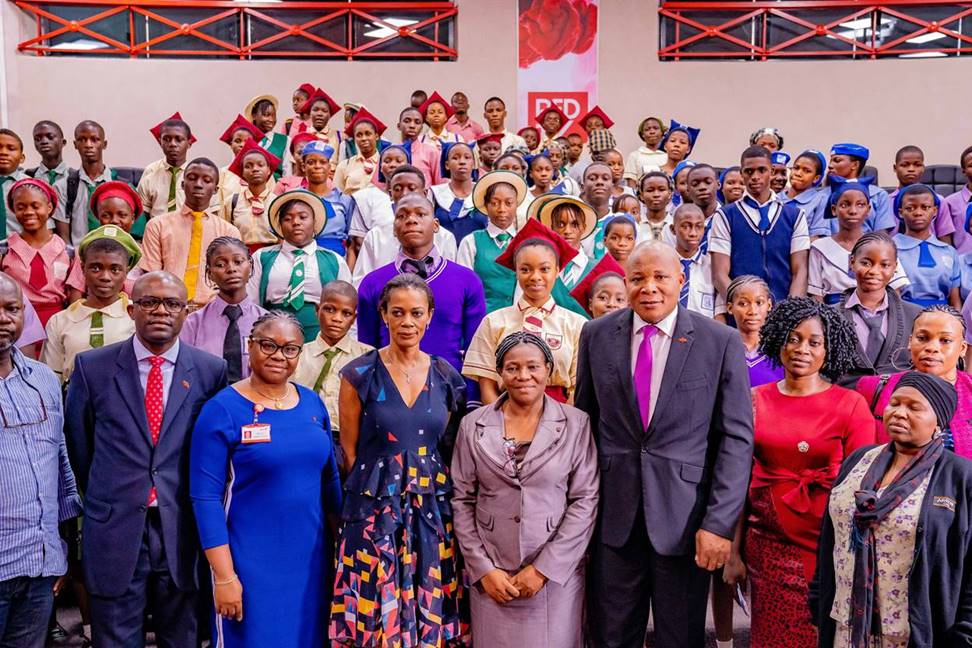
Entries for the 2019 edition of the annual National Essay Competition organised by the corporate social responsibility arm of the United Bank for Africa (UBA) Plc, UBA Foundation, have commenced.
At a media launch to herald the competition in its ninth series last week, the CEO of UBA Foundation, Mrs Bola Atta, explained that the educational contest will provide an opportunity for students in secondary schools across the country to put in their entries and to win prizes in the form of educational grants to study in any university of their choice on the African continent.
At the event held at the UBA headquarters in Lagos, the organisers said the essay competition was targeted at senior secondary school students in Nigeria and was part of UBA Foundation’s education initiative which is aimed at promoting the reading culture and encouraging healthy and intellectual competition amongst secondary school students in Nigeria and across Africa.
Beginning from last year, the prize money increased significantly as the UBA Foundation emphasises that education remains one of the foundation’s key initiatives.
The first prize for the UBA National Essay Competition is a N2 million educational grant, while the second and third prizes are N1.5 million and N1m educational grants respectively.
“To us at the Foundation, this is our drive to improve the quality of education across the continent. It is also our way of giving back to the society.
“The competition is a key aspect of our investment drive in human capital, as we seek to improve knowledge base, allow students to express themselves and write creatively.
“We will continue to sustain the initiative because education is very important to UBA and we are more than committed to providing the necessary support for students in Nigeria and across the African continent,” Mrs Attah noted.
She said further that, “We are driven by the mantra to do well and do good and we will not relent in our efforts to touch lives through our various projects, and initiatives.”
Explaining the modalities for the competition, she stated that entries received from students for the competition will be reviewed by a distinguished panel of judges made up of professors from reputable Nigerian Universities, who will then shortlist 12 best essays for further assessment.
Following this, a second round of the competition will involve the 12 finalists who will write a second supervised essay from which three best essays will be selected as the overall winners from the 12 finalists emerged from the first round of the competition.
Mrs Atta explained that the choice of essay for this year’s competition is one that helps promote creative and analytical thinking in students and helps them to be problem solvers. This year, the topic is What do you think the government should do to control fraud in Nigeria?
It is important to note that apart from Nigeria, the national essay competition has been taken to other African countries including Ghana and Senegal. More countries including Mozambique and Kenya will kick off the initiative this year. A unique component of this year’s edition is that, schools that turn in the highest number of entries will be recognised and rewarded a special prize by the Foundation.
Also speaking at the call to entries today, the Group Head, Direct Sales Agency, Ms Ogechi Altraide, who spoke on the benefits of reading and writing essays, motivated the students to research into the topics and give it their best shot, adding that there is the need for them to focus on adapting themselves to happenings in their generation, and to have a growth mindset. This she explained, will ensure that they can apply themselves and conquer whatever challenges they are faced with.
According to her, reading and writing go hand in hand, and so it is important for students to keep abreast of how the economy can develop through reading and writing.
An English teacher from Holy Child College, Ikoyi, Mrs Ezechukwu Ngozi, gave the students tips on how to write good essays, and advised them to keep to the proper tenets of essay writing to come out tops in the competition.
As the CSR platform for the UBA Group, UBA Foundation embodies the Group’s CSR objectives and seeks to impact positively on societies through a number of laudable projects and initiatives.
Each year, the bank donates thousands of books to students in Nigeria and across Africa, under the ‘Read Africa’ initiative to encourage and promote the reading culture in secondary schools.
Economy
Right Institutional Structures Critical to Unlocking Sustainable Growth—Kwairanga
By Aduragbemi Omiyale
The chairman of the Nigerian Exchange (NGX) Group Plc, Mr Umaru Kwairanga, says enabling entrepreneurship requires more than access to funding.
He said this at a workshop held in Kano under the theme Unlocking Growth – Harnessing the Capital Market for SME Growth.
The event was organisation by the NGX in partnership with the Bank of Industry (BoI) as part of their financing advocacy.
Mr Kwairanga noted that the right institutional structures and market platforms are critical to unlocking sustainable growth.
“Kano provides a fitting backdrop for this engagement, not only as a historic commercial hub but as a gateway to significant untapped potential. The priority is to connect that potential to capital and the frameworks required for long-term growth,” he stated.
The programme was put together to integrate small and medium-sized enterprises (SMEs) into Nigeria’s formal capital market.
The Kano workshop follows the inaugural edition held in Lagos last year, signalling a more structured push by both institutions to bridge the gap between Nigeria’s SME ecosystem and long-term capital.
Participants were equipped with insights on financing pathways, governance structures, and long-term growth strategies within the capital market.
On his part, the chief executive of NGX Limited, Mr Jude Chiemeka, emphasised the central role of SMEs in strengthening market depth and resilience, noting that recent market performance continues to reflect investor confidence despite macroeconomic pressures.
“Through initiatives like this, we are demystifying the capital market and demonstrating that with the right structure and governance, SMEs can access capital to scale sustainably,” he said.
An Executive Director for MSME at BOI, Mr Oluwatoyin Ahmed Edu, said the bank remains focused on bridging financing gaps for businesses that may not yet meet listing requirements.
“Where viable enterprises require capacity building before accessing the market, BOI is positioned to provide the necessary support to prepare them for that transition,” he noted.
Delivering remarks on behalf of the Emir of Kano, Mr Shehu Muhammed Dankade highlighted the region’s strong entrepreneurial base, particularly the growing participation of women-led businesses, describing it as a signal of resilience and economic potential.
The workshop featured detailed presentations from NGX on listing requirements, corporate governance, and the use of the NGX Growth Board as a platform for raising long-term capital.
It also created space for direct engagement with SME operators across Northern Nigeria, offering insights into their challenges, growth ambitions, and readiness to access structured financing.
The initiative aligns with NGX Group’s broader strategy to position SMEs as a critical engine of economic growth, while strengthening the institutional pathways that enable businesses to transition from informal operations to investment-ready enterprises.
Economy
Spike in Energy Prices Raises Nigeria’s Inflation to 15.38% in March
By Adedapo Adesanya
Nigeria’s inflation rate increased in March 2026 to 15.38 per cent from 15.1o per cent in February, data from the National Bureau of Statistics showed on Wednesday.
The Consumer Price Index (CPI) increased to 135.4 in March 2026, higher than the 130.0 in the preceding month by 5.4 points. The spike was likely stoked by the US-Israeli war on Iran, that’s pushed up the cost of fuel and has had a ripple effect in other areas.
At 15.38 per cent, the inflation numbers beat expectations of analysts at Meristem Research, which projected that the inflation rate in Nigeria for the month should come in at 13.59 per cent, after the price of crude oil on the global market soared as a result of the war in Iran, with prices of items growing in Nigeria.
The March 2026 headline inflation rate showed an increase of 0.32 per cent compared to the February 2026 headline inflation rate. However, on a month-on-month basis, the headline inflation rate in March 2026 was 4.18 per cent, which was 2.17 per cent higher than the rate recorded in February 2026 at 2.01 per cent.
This means that last month, the rate of increase in the average price level was higher than the rate of increase in the average price level a month earlier.
Food inflation rate in the review month stood at 14.31 per cent on a year-on-year basis versus 25.22 per cent in the same month of last year. However, on a month-on-month basis, the food inflation rate in March 2026 was 4.17 per cent, which is 0.52 per cent lower than the 4.69 per cent achieved in February 2026.
According to the stats office, “This can be attributed to the rate of change in the average prices of the following products: Yam, Ginger (Fresh), Cassava Tuber, Groundnuts (Shelled), Irish Potatoes, Avenger (Ogbono/Apon) – Dried Ungrinded, Tomatoes (fresh), Cassava Flour sold loose, etc.”
The average annual rate of food inflation for the twelve months ending March 2026 over the previous twelve-month average was 18.21 per cent, which was 17.81 per cent lower than the average annual rate of change recorded in March 2025 at 36.02 per cent.
On a year-on-year basis, in March 2026, the urban inflation rate was 14.64 per cent, and 3.16 per cent on a month-on-month basis, which is 0.61 per cent higher than the 2.55 per cent in February 2026.
As for the rural inflation rate, it was 17.22 per cent in the month under consideration and on a month-on-month basis, it stood at 6.73 per cent versus 0.71 per cent a month earlier.
Economy
Nigeria Inks $1bn Steel Investment Deal with India’s Rashmi Metaliks
By Adedapo Adesanya
The federal government has signed a Memorandum of Understanding (MoU) with an Indian conglomerate, Rashmi Metaliks Group, to boost Nigeria’s steel production.
The agreement, signed by the Minister of Steel Development, Mr Shuaibu Abubakar Audu, on Tuesday in Kolkata, India, was for a projected investment of $1 billion over three years.
This followed the Minister’s tour of the steel plant in Kolkata, where he commended the scale of the operations and advanced technology deployed at the facility.
He also lauded the company’s integrated operations — spanning Direct Reduced Iron (DRI), pig iron, billets, and finished ductile iron pipes — describing them as a strong example of industrial efficiency and excellence in modern steel production.
According to the Minister, Nigeria’s proactive investment drive is already attracting significant global capital.
He noted that the MoU signed with the company represents a major milestone in Nigeria’s efforts to reposition the steel sector, reaffirming President Bola Tinubu’s commitment to revitalising the industry, creating employment opportunities, and conserving foreign exchange through strategic import substitution.
He added that the efficiency of the facility underscored the importance of value addition, innovation, and sustainability in modern steel production, emphasising that the visit further reflected the strengthening economic ties between Nigeria and India in the areas of steel, mining, and manufacturing.
In signing the MoU, Audu highlighted Nigeria’s vast steel potential, noting that the country is transitioning from a raw minerals exporter to a value-adding industrial economy.
He disclosed that Nigeria possesses well over 3 billion tonnes of iron ore reserves, with some deposits grading as high as approximately 67 per cent iron content (Fe), while domestic steel consumption is estimated at about $10 billion annually.
He said that Nigeria aims to become a leading steel hub in Africa under President Tinubu’s Renewed Hope Agenda, which targets crude steel production of approximately 10 million tonnes per annum by 2030.
This is evidenced by recent Foreign Direct Investments in the sector, including a $400 million Stellar Steel plant in Ewekoro, Ogun State and a Chinese-Nigerian joint venture for a modern hot-rolled coil steel plant scheduled to commence operations by November 2026.
Also, African Industries Group (AIG) is completing a fully integrated iron-and-steel plant at Gujeni in Kaduna State. The company has invested $300 million in the Direct Reduced Iron (DRI) and steel unit of the project, and the galvanising and fabrication plant in Ikorodu, Lagos, which was recently commissioned by the Minister.
Energy infrastructure is also being developed to support the growth of the industry. The Nigerian National Petroleum Company (NNPC) Limited, the Ministry of Steel Development, and their partners recently broke ground on five mini-LNG plants in Ajaokuta, Kogi State — a $500 million project aimed at boosting gas supply to the steel industry, with a combined capacity of approximately 97 million standard cubic feet per day.
Mr Audu used the visit to invite additional Indian investors to explore opportunities within Nigeria’s steel sector.
He highlighted prospects for establishing integrated steel plants in Nigeria, deploying Direct Reduced Iron and electric-arc furnace technologies, and developing full value chains for automotive, construction, and infrastructure steel.
He further assured prospective investors that the Nigerian Government remains committed to providing an enabling environment through policy stability, fiscal incentives, and ongoing ease-of-doing-business reforms aimed at protecting investments.
“We are open to credible investors willing to partner with us for mutual growth,” the Minister said.
On his part, the Vice Chairman of Rashmi Metaliks Group, Mr Sunil Kumar Patwari, on behalf of the company, expressed appreciation to the Nigerian delegation for the successful visit to their facilities in Kolkata.
He emphasised that the visit reflects the priority placed on the partnership by the Nigerian Government and assured that, with the necessary support from the Nigerian government, Rashmi Group is committed to delivering on the projects envisioned in the MoU.
-
Feature/OPED6 years agoDavos was Different this year
-
Travel/Tourism10 years ago
Lagos Seals Western Lodge Hotel In Ikorodu
-
Showbiz3 years agoEstranged Lover Releases Videos of Empress Njamah Bathing
-
Banking8 years agoSort Codes of GTBank Branches in Nigeria
-
Economy3 years agoSubsidy Removal: CNG at N130 Per Litre Cheaper Than Petrol—IPMAN
-
Banking3 years agoSort Codes of UBA Branches in Nigeria
-
Banking3 years agoFirst Bank Announces Planned Downtime
-
Sports3 years agoHighest Paid Nigerian Footballer – How Much Do Nigerian Footballers Earn