Connect with us

Feature/OPED

African PR Practitioners Must Prevent Western Propaganda on Climate Change

Published

on

climate change issues

By Anthony Elikene

Wikipedia says “Climate Change occurs when changes in earth’s climate system result in new weather patterns that remain in place for an extended period. This length of time can be as short as a few decades to as long as millions of years.”

In a simpler explanation, Climate Change is the rise in average surface temperatures on earth. Also called Global Warming, Climate Change is the biggest threat to the world and mankind – this is beyond the environment.

What causes Climate Change? The western Public Relations firms and media have developed several explanatory narratives that seek to exonerate the West (Europe and America) of complicity in the deterioration of our collective planet.

Some of the causes of Climate Change these Western PR outfits and media postulate are:

Greenhouse Effect, which is warming when the atmosphere traps heat radiating from earth towards space.

Using the word ‘Humans’ to replace Europe or the West, by this, they make it an all involving culprit (we all did it together). You find narratives such as “in the mid-20th century, human expansion of the Greenhouse Effect.

Another narrative is “Human activities are changing the natural greenhouse. Over the last century, the burning of fossil fuels like coal and oil has increased the concentration of atmospheric carbon dioxide (CO2). To a lesser extent, the clearing of land for agriculture, industry, and other human activities has increased concentrations of Greenhouse gases.” – NASA Global Climate Change

Other minor narratives are: “The warming is caused by a more active sun… since 1750, the average amount of energy coming from the sun either remained constant or increased slightly.” – NASA.

The United Nations, in its “Fifth Assessment Report, the Intergovernmental Panel on Climate Change, a group of 1,300 independent scientific experts from countries all over the world under the auspices of the United Nations, concluded there’s a more than 95 percent probability that human activities over the past 50 years have warmed our planet.” – UN.

These Western narratives are spins of logical truth but not the ultimate truth.

The ultimate truth will be used to disarm these tactical lies and they are as follow:

Logically, it is correct to say humans contributed greatly to the Climate Change issues but the ultimate truth is that the West (Europe and America) unilaterally caused these problems through several activities in the guise of science and warfare. NASA space activities; nuclear activities; unnecessary global warfare to colonize the rest of the world; inventions of destructive weaponry; invention and use of biological weapons; over mining and destroying of the earth’s core for minerals; production of carbon-emitting cars and generators; commercial production of chemicals, and industrial pollution of the environment among others.

In a recent CNN report on Climate Change, experts said Africa’s contributions to the Climate Change problem is less than one percent (1%) but failed to say Europe and America’s contributions are ninety-nine plus percent (99+%).

The less than one percent (1%) the experts identified are largely not from Africans but from European corporations and industries that would stop at nothing from exploiting the natural reserves in Africa. These activities and the dumping of Western originated toxic wastes in Africa will cause environmental problems.

The West, through NASA, also blamed the sun’s increased warming effect claiming it started since 1750. According to Eric Hobsbawm, “the European industrial revolution began in Britain in the 1780 and was not fully felt until the 1830s or 1840s” while T.S. Ashton held that it occurred roughly between 1760 and 1830.

According to Britannica, from December 5 to 9, 1952, there was the Great Smog of London, this was the name used to describe the combination of industrial pollution and high-pressure weather conditions. People could not see themselves on the streets due to the thickness of the smoke pollution which destroyed the environment and all these activities damaged the Oxone Layer as it cut across Europe. The UN science experts’ findings are correct in the sense that 95 percent Climate Change issues are caused by humans but failed to identify the humans were Europeans and Americans.

The destruction of the Oxone Layer started a long time ago in Europe and America when Africa was all jungle with the cleanest ecosystem on earth. The African system of subsistent agriculture did not allow them to over hunt, over fish, overuse the soil, until Europe colonized Africa and changed everything.

Colonialism was an attempt to forcefully create a new market for the Western products and exploit the rich resources of Africa especially as Europe was in economic turmoil. But the narrative played was that they brought Western education and Christianity to save Africa when Africa was already very rich without mentioning the millions of Africans killed and enslaved for the commercial benefits of Europe and America.

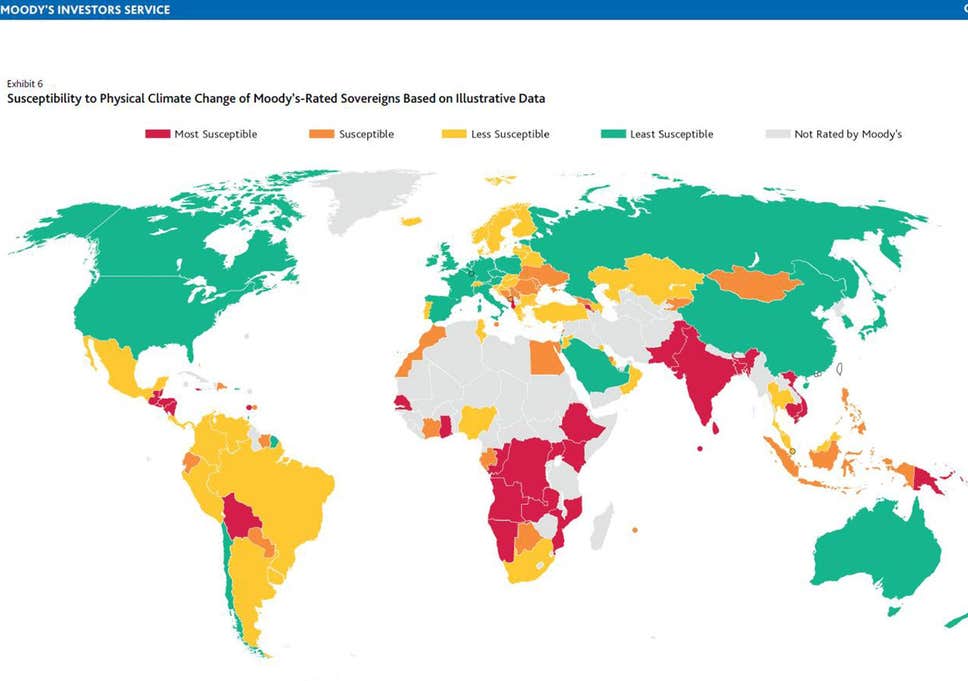
The effects of Western-caused Climate Change issues are being felt in Southern parts of Africa as reported by CNN. Even though Africa is an agrarian society, it is paying the price of commercialization and capitalism tendencies of the West.

Today, Europe is experimenting on the commercial production of solar energy cars, leaving Africa to suffer the damage they created while they seek solutions for themselves. A Tesla car goes for about $135,000 but it won’t get to Africa for decades, maybe not this century, as the West only shares what it doesn’t need at a price.

The Public Relations practitioners in Africa should brace up and be proactive to tell the true stories of Climate Change before the Western propaganda portrays Africa as the cause of Climate Change issues.

Sympathizers of everything Western might come to the defence of the West, but they should remember that a people that blame the sun and everything else for what they did will not think twice to blame a continent they have exploited and branded negatively for centuries.

Anthony Elikene ANIPR is the Strategist at Brandfit PR & Events

Dipo Olowookere is a journalist based in Nigeria that has passion for reporting business news stories. At his leisure time, he watches football and supports 3SC of Ibadan. Mr Olowookere can be reached via [email protected]

Click to comment

Leave a Reply

Your email address will not be published. Required fields are marked *

Feature/OPED

Stocks vs Forex: Which is Better for Beginners in 2026?

Published

on

Stocks vs Forex

By Onah Ishioma Adaeze

As a beginner, choosing between stocks and forex for your investment goals in 2026 can feel overwhelming. Before investing your hard-earned money, it is important to understand how both markets work.

While both markets present investors with opportunities to grow their wealth, they also differ in terms of volatility, liquidity, market hours, and leverage. Stocks involve owning portions of a company, while forex has to do with trading a base currency against a quote currency.

In this article, we will be going through the basics of stocks and forex, pointing out their differences, and helping you decide which asset better suits your investment journey in 2026.

What is Stock Trading?

When it comes to stock trading, you are buying shares of a company, which makes you a shareholder of that company. As a shareholder, you may be entitled to receive dividends whenever the company decides to pay dividends.

As for those companies that do not pay dividends, there are other benefits a shareholder may enjoy, like being called upon to attend shareholder meetings and having voting rights on certain company matters.

On a global scale, over $100 trillion worth of shares are traded annually. Also, the rising popularity of AI companies and technological innovations continues to drive investor participation and market growth.

If you’re an investor looking to buy and hold capital assets, then stock trading is definitely for you, as it allows for short-term, medium-term and long-term investment goals.

When you buy shares of a company and the company performs well, your shares increase in value. Another benefit of stock trading is access to index funds and ETFs.

These funds consist of companies that are grouped under an index. They are carefully selected and monitored under the fund, sparing the investor the stress of actively tracking the fund.

They can be a way of building a long-term, diversified portfolio, and some of these funds may pay dividends.

What is Forex Trading?

Forex trading has to do with buying one currency and selling another. With a pair like USD/JPY, USD is the base currency being bought against JPY, which is the quote currency.

In order to execute a trade in the forex market, you have to analyse and make predictions based on price movement, as well as pay attention to what’s going on in the global news scene.

The forex market runs twenty-four hours every weekday, with over $9 trillion traded in the market every day. Being the largest financial market in the world, there is very high liquidity.

Forex trading involves buying one currency against another, making predictions based on price movements on the forex charts. Price moves based on the activities of large institutions like hedge funds, big banks, the government, etc.

The forex market runs 24 hours a day, every weekday, with global forex turnover reaching $9 trillion per day in the BIS 2025 survey. Being the largest financial market in the world, there is very high volatility and price fluctuations.

At the same time, there is high liquidity in the market, which means that currency pairs can easily be bought and sold without hassle. Highly liquid instruments that are traded regularly include: EUR/USD, USD/JPY, GBP/USD, and gold (XAU/USD).

As a retail trader, knowing when to enter and exit the market is important. As easy as it is to make profits from price fluctuations, it is also very easy to lose money if the market moves against you. This is why it is important to set stop losses and take profits. This helps manage your trading capital.

Major Differences Between Stocks and Forex

While investing in stocks and forex can yield great capital gains, there are lots of ways in which they differ.

As a beginner, stock trading provides opportunities for long-term investments, ensuring slow but consistent returns for wealth building. But if you are looking for an active, short-term style of investment, then forex trading is for you, as it allows you to enter and exit the market within a shorter time frame.

Which is Better in 2026?

Choosing an asset to invest in all boils down to personal preference. At the same time, if you are not averse to risk, nor opposed to asset diversification, then it’s okay to invest in both.

For beginner investors in 2026, stock trading is easier to understand and get into, especially because of mutual funds, index funds and ETFs. With those funds, you don’t have to be an expert to start investing. You can just buy a fund that suits your needs and hold it over a long period of time.

If you are an investor who enjoys technical analysis, highly volatile and liquid markets, as well as trading under short time frames, then forex trading is the right pick for you.

Conclusion 

You do not need to put all your eggs in one basket. There are investors who invest in both stocks and forex simultaneously. When starting out, you can start investing in stocks while learning forex. Take calculated risks and do not invest above your means. Diversify your investments and remember, when starting out, you should prioritise acquiring knowledge over profits.

Onah Ishioma Adaeze is a finance writer who is passionate about simplifying complex concepts into easily digestible pieces. Her hobbies are reading and watching anime

Continue Reading

Feature/OPED

Building 234 Solutions: A Response to Everyday Workforce Challenges

Published

on

Owoloye Emmanuel 234 Solutions

By Owoloye Emmanuel

Every business starts with a problem. For us, that problem was hiding in plain sight.

Across organisations, we kept seeing HR professionals, payroll teams, and business leaders spend significant time navigating processes that should be simpler. Employee records sat across multiple systems, payroll processes required manual intervention, and routine workforce tasks often became more complicated than they needed to be.

As businesses grow, workforce operations naturally become more complex. Yet many organisations still rely on disconnected tools and workflows that create unnecessary friction for both employers and employees.

The consequence is more than operational inefficiency. HR teams spend valuable time managing systems instead of supporting people. Business leaders struggle to access timely workforce insights, while employees experience delays in processes that should be seamless.

These weren’t isolated challenges. They were recurring realities across workplaces, regardless of industry or size.

That observation led us to a simple question: what if workforce management could be easier?

What if HR, payroll, and workforce operations could work together within a single, connected experience?

That question became the foundation for 234 Solutions.

We are building 234 Solutions with a clear belief that workplace technology should reduce complexity, not add to it. Our goal is to help organisations spend less time navigating processes and more time focusing on productivity, growth, and people.

As we prepare for launch, our focus remains simple: building practical solutions for real workplace challenges and helping organisations create better experiences for the people who power them every day.

Owoloye Emmanuel is the founder of 234 Solutions

Continue Reading

Feature/OPED

The Role of TV in Preserving African Stories and Identity

Published

on

Preserving African Stories

Scroll through social media today, and you will notice something interesting: everyone is either reacting to a series, quoting a movie line, or debating a character as though they personally know them. Beneath the memes and binge-watch culture, however, lies something deeper. Television remains one of the most powerful tools shaping how Africans see themselves, remember their history, and tell their own stories. In a continent as diverse and expressive as Africa, that matters more than ever.

TV as a Cultural Archive, Not Just Entertainment

Long before streaming algorithms began shaping our viewing habits, television was already preserving African identity. From Nollywood dramas that capture the rhythm of everyday Lagos life to documentaries exploring Maasai traditions and Ghanaian folklore, TV has served as a living archive of the continent’s stories.

It preserves more than entertainment; it preserves language, culture, humour, values, and shared experiences. Unlike fleeting social media content, television allows stories to unfold with depth, exploring the realities of family, tradition, ambition, and modern African life without reducing them to stereotypes. That is the power of TV: preserving not just stories, but perspective.

Why Representation on TV Still Matters

There is a subtle but important truth: if people do not see themselves on screen, they may begin to believe their stories are not worth telling. This is why African TV content is more than entertainment; it is affirmation.

Seeing a character who speaks like you, struggles like you, or celebrates like your community does something powerful. It validates identity and challenges outdated narratives that have historically defined Africa through external lenses.

This is where MultiChoice Group, through platforms such as DStv and GOtv, plays an important role. They do not simply broadcast content; they help distribute cultural memory at scale.

GOtv, DStv, and the Everyday African Viewer

Think about a typical evening in many African homes: the TV is on in the background, someone is laughing at a comedy show, another person is watching a local series, and someone else is catching up on the news. That shared viewing experience remains very real.

Through platforms such as DStv and GOtv, African households are exposed to a blend of local storytelling and global content. More importantly, they have helped amplify African-produced content by bringing Nollywood films, African reality shows, talk shows, and documentaries into mainstream rotation.

It is not just about access. It is about visibility.

A young filmmaker in Lagos today is more likely to believe their story matters because they have seen similar stories broadcast widely. A child in Accra grows up hearing familiar accents and seeing environments that look like their own on screen, not as exceptions, but as the norm.

TV Is Also Shaping Modern African Identity

African identity is not static; it is evolving. Television reflects that evolution in real time.

Today, audiences see:

  • Young Africans balancing tradition and modern dating culture

  • Stories tackling mental health in African households

  • Fashion and music influences spreading through TV series

  • Political satire shaping public conversation

Conversations that were once confined to homes are now being explored on screen, giving audiences the language to discuss issues that were previously unspoken.

In many ways, television is doing what oral tradition has always done: passing stories, values, humour, warnings, and history from one generation to the next. The difference is that today’s griots are writers, directors, and broadcasters.

The Future: From Watching to Owning Our Narratives

The next stage of African storytelling is not just about being seen; it is about ownership.

As more African creators produce content and platforms continue to invest in regional storytelling, television becomes more than a mirror. It becomes a tool for shaping how Africa is represented to itself and to the world.

While streaming continues to grow, television, particularly accessible platforms such as GOtv, remains one of the most effective ways to reach everyday audiences across different income levels and regions. After all, storytelling only matters if people can access it.

African stories are not new. They have always existed in families, on streets, in markets, in history books, and through oral traditions. What television has done, and continues to do, is give those stories a stage wide enough for millions to experience them at once.

The next time you watch a local series or documentary on DStv or GOtv, remember that you are not just being entertained. You are participating in the preservation of African identity itself.

Continue Reading

Trending