Economy
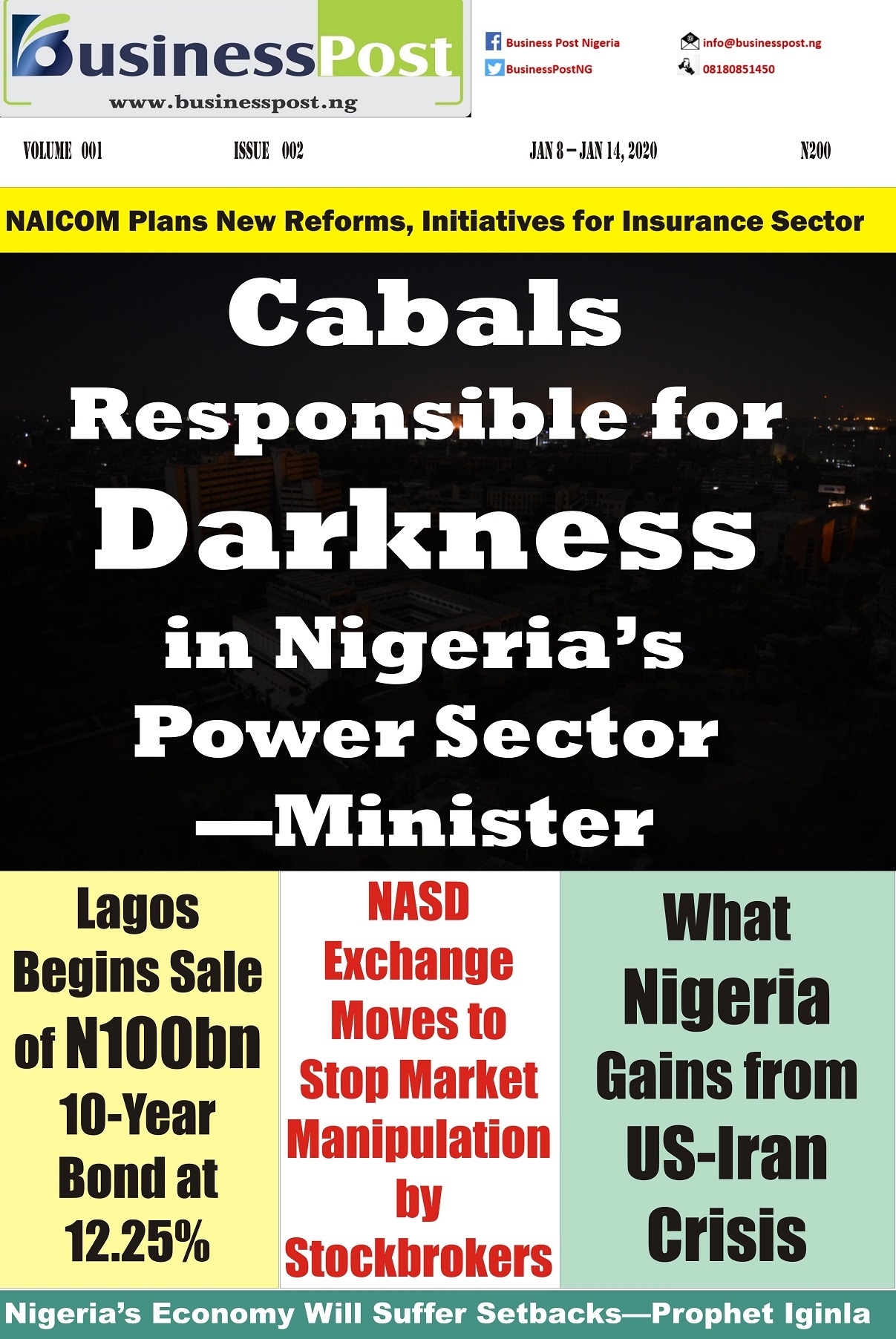
What Nigeria Gains From US-Iran Crisis
By Adedapo Adesanya
On Friday, January 3, 2020 the United States president, Mr Donald Trump, ordered an airstrike, which killed top Iranian General, Mr Qassem Soleimani, the head of Iran’s elite Quds military force and one of the most powerful figures in the country.
This spurred hike in oil prices as Brent crude oil futures, the global benchmark, coursed more than 4 percent, while the West Texas Intermediate (WTI) crude oil jumped more than 3 percent due to the escalation of the geopolitical tensions between the U.S. and Iran.
For a country like Nigeria, whose mainstay is oil, this development turned out to be a blessing because global events, which badly affect prices oil, have always been a major source of worry for government due to low revenues generated from the sale of the black gold.
But with the ongoing tensions from the assassination of the Iranian military chief, more money would continued to be raked from the sale of crude oil at higher prices.
In fact, Nigeria will like prices of oil to continue to trend higher at the global market because in the 2020 budget, the benchmark for crude oil was pegged at $60 per barrel.
Since last Friday, when the unmanned US drone attacked Mr Soleimani, prices have hovered around $70 (on Friday, January 3), $69 dollars over the weekend, and as the time of this report at $68 per barrel. This means prices are still in a safe net for the country.
By estimates, Nigeria produces over 1.5 million barrels of oil per day and at with an average increase of $69 per barrel since Friday, according to analysis by Business Post, the country has raked over $400 million so far from the sale of the commodity.
However, analysts have noted that a further escalation of the Mideast tensions could drive prices up as Iran’s Supreme Leader Ayatollah Ali Khamenei has vowed to inflict “severe retaliation” on those involved in Mr Soleimani’s death, and following this, the United States has also strengthened its military presence in and around the region.
A retaliation means that oil will rise with analysts saying that Iran’s could initiate attacks on oil tankers in the Persian Gulf, as it did in 2019 with a British tanker and a number of drones. This would provide support for oil prices but would be not hold on for much longer.
A bigger occurrence would be an attack on oil infrastructure of US allies in the Persian Gulf such as the September strikes on Saudi oil infrastructure, which led to a loss of 5.7 million barrels per day of oil production capacity when Iranian-backed Houthi rebels attacked the facilities.
The biggest would be if Iran closed off the Strait of Hormuz, which serves as a passageway for a major portion of the oil supply. Such an action would limit access to Asian markets where China, India, Japan and South Korea, some of the largest consumers are located.
However, even with the possible rise, oil prices face huge pressure from non-OPEC supplier like the United States, Brazil, and Norway, who would want to increase their output and eventually crash prices or lead the market to an oversupply which the OPEC and its allies – which includes Nigeria took a decision to curb by reducing oil production by 1.7 million barrels per day to help prices and stop oil glut this year.
But whichever way, Nigeria will continue to cash in on the crisis and use the opportunity to shore up its external reserves, which have depleted in recent times due to low prices of crude oil.
Economy
Flour Mills Supports 2026 Paris International Agricultural Show
By Modupe Gbadeyanka
For the second time, Flour Mills of Nigeria Plc is sponsoring the Paris International Agricultural Show (PIAS) as part of its strategies to fortify its ties with France.
The 2026 PIAS kicked off on February 21 and will end on March 1, with about 607,503 visitors, nearly 4,000 animals, and over 1,000 exhibitors in attendance last year, and this year’s programme has already shown signs of being bigger and better.
The theme for this year’s event is Generations Solution. It is to foster knowledge transfer from younger generations and structure processes through which knowledge can be harnessed to drive technological advancement within the global agricultural sector.
In his address on the inaugural day of the Nigerian Pavilion on February 23, the Managing Director for FMN Agro and Director of Strategic Engagement/Stakeholder Relations, Mr Sadiq Usman, said, “At FMN, our mission is Feeding and Enriching Lives Every Day.
“This is a mandate we have fulfilled through decades of economic shifts, rooted in a culture of deep resilience and constant innovation. We support this pavilion because FMN recognises that the next frontier of global Agribusiness lies in high-level technical exchange.
“We thank the France-Nigeria Business Council (FNBC), the organisers of the PIAS, and our fellow members of the Nigerian Pavilion – Dangote, BUA, Zenith, Access, and our partners at Creativo El Matador and Soilless Farm Lab— we are exceedingly pleased to work to showcase the true face of Nigerian commerce.”
Speaking on the invaluable nature of the relationship between Nigeria and France, and the FMN’s commitment to process and product innovation, Mr John G. Coumantaros, stated, “The France – Nigeria relationship is a valuable partnership built on a shared value agenda that fosters remarkable Intercontinental trade growth.
“Also, as an organisation with over six decades of transformational footprint in Nigeria and progressively across the African Continent, FMN has been unwaveringly committed to product and process innovation.
“Therefore, our continuous partnership with France for the success of the Paris International Agricultural Show further buttresses the thriving relationship between both countries.”
PIAS is one of the most widely attended agricultural shows, with thousands of people from across the world in attendance.
Economy
NEITI Backs Tinubu’s Executive Order 9 on Oil Revenue Remittances
By Adedapo Adesanya
Despite reservations from some quarters, the Nigeria Extractive Industries Transparency Initiative (NEITI) has praised President Bola Tinubu’s Executive Order 9, which mandates direct remittances of all government revenues from tax oil, profit oil, profit gas, and royalty oil under Production Sharing Contracts, profit sharing, and risk service contracts straight to the Federation Account.
Issued on February 13, 2026, the order aims to safeguard oil and gas revenues, curb wasteful spending, and eliminate leakages by requiring operators to pay all entitlements directly into the federation account.
NEITI executive secretary, Musa Sarkin Adar, called it “a bold step in ongoing fiscal reforms to improve financial transparency, strengthen accountability, and mobilise resources for citizens’ development,” noting that the directive aligns with Section 162 of Nigeria’s Constitution.
He noted that for 20 years, NEITI has pushed for all government revenues to flow into the Federation Account transparently, calling the move a win.
For instance, in its 2017 report titled Unremitted Funds, Economic Recovery and Oil Sector Reform, NEITI revealed that over $20 billion in due remittances had not reached the government, fueling fiscal woes and prompting high-level reforms.
Mr Adar described the order as a key milestone in Nigeria’s EITI implementation and urged amendments to align it with these reforms.
He affirmed NEITI’s role in the Petroleum Industry Act (PIA) and pledged close collaboration with stakeholders, anti-corruption bodies, and partners to sustain transparent management of Nigeria’s mineral resources.
Meanwhile, others like the Petroleum and Natural Gas Senior Staff Association of Nigeria (PENGASSAN) have kicked against the order, saying it poses a serious threat to the stability of the oil and gas industry, calling it a “direct attack” on the PIA.
Speaking at the union’s National Executive Council (NEC) meeting in Abuja on Tuesday, PENGASSAN President, Mr Festus Osifo, said provisions of the order, particularly the directive to remit 30 per cent of profit oil from Production Sharing Contracts (PSCs) directly to the Federation Account, could destabilise operations at the Nigerian National Petroleum Company (NNPC) Limited.
Mr Osifo firmly dispelled rumours of imminent protests by the union, despite widespread claims that the controversial executive order threatens the livelihoods of 10,000 senior staff workers at NNPC.
He noted, however, that the union had begun engagements with government officials, including the Presidential Implementation Committee, and expressed optimism that common ground would be reached.
Mr Osifo, who also serves as President of the Trade Union Congress (TUC), expressed concerns that diverting the 30 per cent profit oil allocation to the Federation Account Allocation Committee (FAAC), without clearly defining how the statutory management fee would be refunded to NNPC, could affect the salaries of hundreds of PENGASSAN members.
Economy
Dangote Cement Deepens Dominance, Export Activities With $1bn Sinoma Deal
By Aduragbemi Omiyale
To strengthen its domestic market dominance, drive its export activities, optimise existing operational assets and enhance production efficiency and capacity expansion, Dangote Cement Plc has sealed $1 billion strategic agreements with Sinoma International Engineering for cement projects across Africa.
The president of Dangote Industries Limited, the parent firm of Dangote Cement, Mr Aliko Dangote, disclosed that the deal reinforces the company’s long-term growth strategy and aligns with the broader aspirations of the Dangote Group’s Vision 2030.
According to him, Sinoma will construct 12 new projects and expand others for the cement organisation across Africa, helping to achieve 80 million tonnes per annum (MTPA) production capacity by 2030, while supporting the group’s overarching target of generating $100 billion in revenue within the same period.
Under the Strategic Framework Agreement, Sinoma will collaborate with Dangote Cement on the delivery of new plants, brownfield expansions, and modernisation initiatives aimed at strengthening operational performance across key markets.
The new projects include a new integrated line in Northern Nigeria with a satellite grinding unit, a new line in Ethiopia and other projects in Zambia/Zimbabwe, Tanzania, Sierra Leone and Cameroon. In Nigeria, Sinoma will also handle different projects in Itori, Apapa, Lekki, Port Harcourt and Onne.
The projects signal Dangote Cement’s sustained commitment to consolidating its leadership position within the African cement industry, while enhancing its competitiveness on the global stage.
Chairman of the Dangote Cement board, Mr Emmanuel Ikazoboh, during the agreement signing event in Lagos, explained that the new projects would enable the company to play a critical role in actualising Dangote Group’s Vision 2030.
The new projects, when completed, will increase Dangote Cement’s capacity and dominant position in Africa’s cement industry.
On his part, the Managing Director of Dangote Cement, Mr Arvind Pathak, said the agreement reflects the company’s determination to grow its investments across African markets to close supply gaps and support the continent’s infrastructural ambitions.
According to him, Dangote Cement is committed to making Africa fully self‑sufficient in cement production, creating more value and linkages, leading to increased economic activities and a reduction in unemployment.
-
Feature/OPED6 years agoDavos was Different this year
-
Travel/Tourism10 years ago
Lagos Seals Western Lodge Hotel In Ikorodu
-
Showbiz3 years agoEstranged Lover Releases Videos of Empress Njamah Bathing
-
Banking8 years agoSort Codes of GTBank Branches in Nigeria
-
Economy3 years agoSubsidy Removal: CNG at N130 Per Litre Cheaper Than Petrol—IPMAN
-
Banking3 years agoSort Codes of UBA Branches in Nigeria
-
Banking3 years agoFirst Bank Announces Planned Downtime
-
Sports3 years agoHighest Paid Nigerian Footballer – How Much Do Nigerian Footballers Earn