Connect with us

Economy

FG Reduces Licenses to Stop Fish Importation by 2022

Published

on

By Adedapo Adesanya

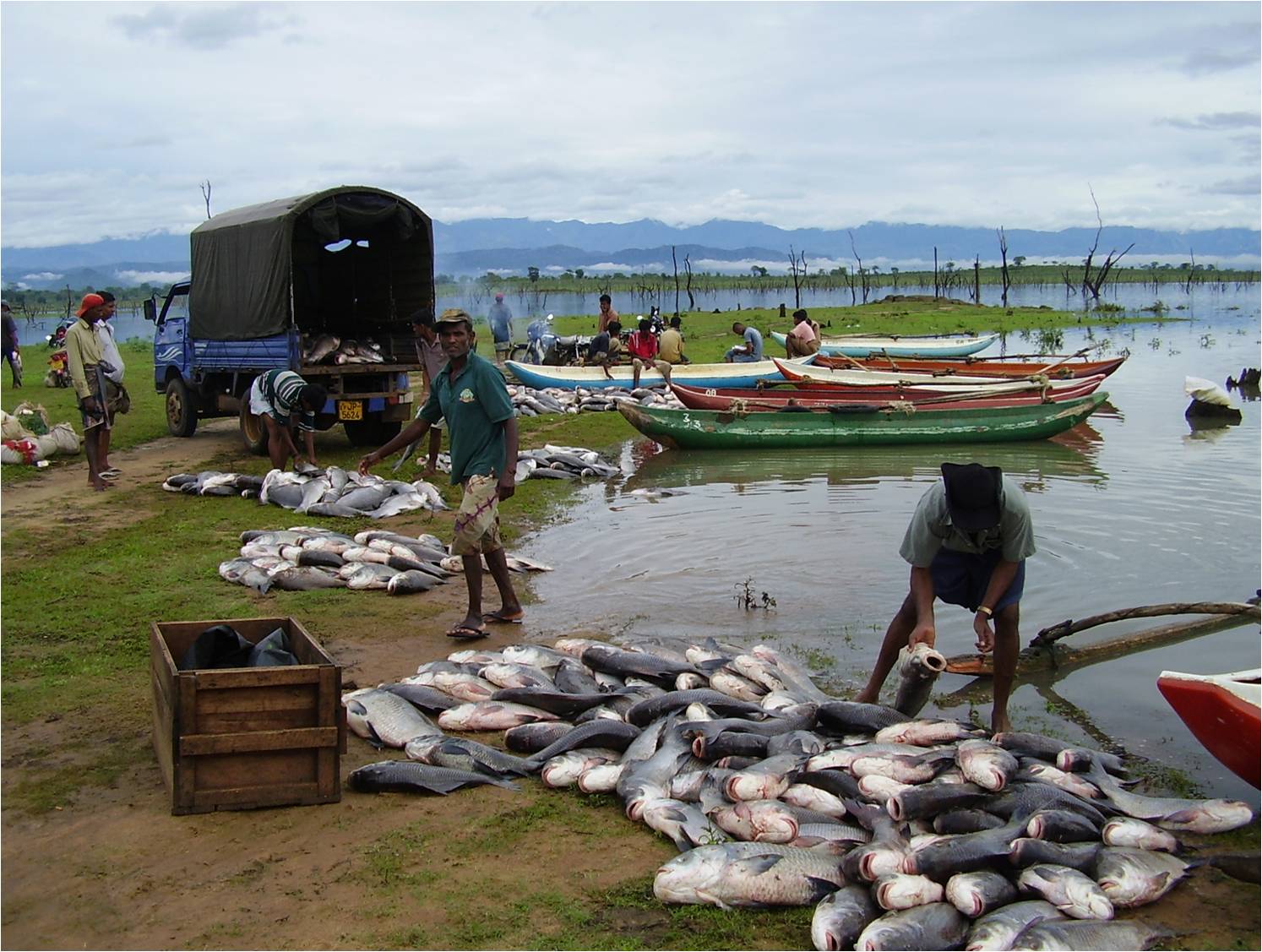
Following Nigeria’s drive for encouraging local production and consumption, the federal government has embarked on measures that will see the stop to the importation of fish by 2022.

Minister of Agriculture and Rural Development, Mr Sabo Nanono, during a chat with delegates from the National Fish Association of Nigeria (NFAN), said the country will begin to look inward to improve fisheries and aquaculture.

Speaking to the NFAN delegation led by its president, Mr Gabriel Ogunsanya in Abuja recently, he said that the President Muhammadu Buhari-led administration had instituted measures to actualise the plan that included reducing the number of licenses approved for imports.

According to the Minister, if the country pursued the huge potential in fisheries and aquaculture, this will bring about local consumption and export, bringing in more revenue for the government and local investors.

He used the opportunity to call upon other stakeholders for partnerships to ensure that there was minimal need for importation into the country.

“Last year, we issued about one million licenses. This year, we virtually cut it into half and I hope next year, we will further cut it so that in the next two years we may rely entirely on what we produce here.

“Since you are producers and probably processors, it is important to take note of your development in the fish sector towards this,” he said.

He further added; “In the next years, probably we will not allow the importation of fish into the country.

“I know people are saying we can only rear catfish, tilapia and a few other species but most of the white fish they do not do well here.

“But I know for a fact that the consumption of catfish is very high in this country both the fresh one as well as the smoked one.

“In fact, I was made to understand that it now has an export market. So, if you put your head together and work hard, the future is very bright for fish producers in this country,” he said.

On his part, the President of NFAN, Mr Gabriel Ogunsanya, called for assistance in some areas such as involving members of the association in training programmes of the ministry and other relevant agencies.

“We need a letter of introduction to CBN, NIRSAL, BOI, BOA for timely intervention to boost the fish industry production business in Nigeria.

They used the opportunity to call for loan and credit facilities for the purpose of business expansion, adding that the government needed to reactivate the dormant fishery terminals, fish markets, hatcheries and develop broodstock bank for identified fish species and privatise them for utilisation.

Mr Ogunsanya equally urged the minister to direct research institutes to embark on demand-driven researches to benefit the entire industry and called for measures to be put in place to support commercial fish production from along the value chain for both local and export markets.

The NFAN President also urged the minister to involve the association in the policy formulations for the fish industry.

The Agriculture Minister then assured the association of the government’s readiness to assist where necessary in order to move the industry forward.


Adedapo Adesanya is a journalist, polymath, and connoisseur of everything art. When he is not writing, he has his nose buried in one of the many books or articles he has bookmarked or simply listening to good music with a bottle of beer or wine. He supports the greatest club in the world, Manchester United F.C.

Click to comment

Leave a Reply

Your email address will not be published. Required fields are marked *

Economy

Nestoil Debt: EFCC Facilitates $60m Payment to Lenders

Published

on

Nestoil

By Adedapo Adesanya

The Economic and Financial Crimes Commission (EFCC) has facilitated the recovery of $60 million from Nestoil Limited, with the funds paid to a consortium of lenders as part of efforts to recover the oil and gas company’s outstanding debt.

According to a report by Nairametrics, the payment followed a structured repayment agreement between Nestoil and the lenders, reached during a meeting convened and chaired by EFCC Chairman, Mr Ola Olukoyede.

The meeting brought together Nestoil and the consortium of financial institutions as part of the Commission’s investigation into transactions involving the company and its creditors.

According to sources cited by the publication, operatives of the EFCC’s Lagos Zonal Directorate 2 facilitated the recovery as part of investigations into alleged criminal aspects of the transactions.

The $60 million payment represents the first phase of the repayment arrangement, with about $40 million expected to be received in the next tranche.

The consortium, which includes Access Bank, Zenith Bank, Ecobank, African Export-Import Bank (Afreximbank), First Bank of Nigeria, First City Monument Bank (FCMB), United Bank for Africa (UBA) and Union Bank of Nigeria, is expected to continue working with the EFCC and other stakeholders to recover the outstanding obligations.

The lenders had previously stated that Nestoil’s indebtedness stood at approximately $1.084 billion and N469.43 billion as of June 2026.

The debt arose from several bilateral credit facilities extended to Nestoil by the financial institutions from 2010. The facilities were subsequently consolidated under a restructuring arrangement known as the “Global Club”, which became effective in 2023.

However, the lenders alleged that repayment defaults continued after the restructuring, resulting in substantial outstanding obligations.

The dispute escalated in October 2025 when the Federal High Court in Lagos granted a Mareva injunction freezing assets, bank accounts and shares linked to Nestoil, its affiliate Neconde Energy Limited and their promoters.

The court subsequently appointed Mr Abubakar Sulu-Gambari, a Senior Advocate of Nigeria (SAN), as receiver-manager and authorised him to take possession of identified assets.

Nestoil, however, maintained that it remained operational and described the matter as a commercial dispute being addressed through the courts.

The legal dispute subsequently progressed through the Federal High Court, Court of Appeal and Supreme Court over issues relating to debt recovery, receivership and interim orders.

In June 2026, the Supreme Court set aside interim preservative orders previously granted by the Court of Appeal and directed the parties to return to the lower court to address the substantive issues.

The lenders subsequently clarified that the Supreme Court decision did not extinguish Nestoil’s indebtedness or invalidate the underlying debt recovery process.

The latest $60 million recovery is therefore a significant development in the prolonged debt dispute, although it represents only a fraction of the total amount claimed by the lenders.

Based on the consortium’s previously disclosed dollar-denominated debt of $1.084 billion, the recovered $60 million represents about 5.5 per cent of that amount, excluding the separate N469.43 billion naira obligation.

The recovery could provide a basis for further repayments under the structured arrangement while the EFCC investigation and related legal proceedings continue.

Continue Reading

Economy

Nigeria’s Headline Inflation Cools to 15.43% in July 2026

Published

on

Nigeria's Inflation

By Adedapo Adesanya

Nigeria’s headline inflation rate cooled to 15.43 per cent in July from 15.91 per cent in June, according to the National Bureau of Statistics (NBS) on Monday in its Consumer Price Index (CPI) Report.

“In July 2026, the headline inflation rate stood at 15.43 per cent, down from 15.91 per cent in June 2026 and [lower than the] 24.94 per cent in the same month of the preceding year (July 2025),” the stats office said in the report.

This beat the projection from Coronation Asset Management, which predicted that the July 2026 inflation rate should come at 15.80 per cent, lower than the 15.91 per cent recorded in June 2026.

Coronation explained that it projected a pullback in the rate because of “three primary forces: a fresh energy price shock stemming from renewed Strait of Hormuz hostilities and a domestic refinery pricing disruption, seasonal harvest-related relief on food prices, and continued relative exchange rate stability.”

The organisation noted that the disinflation trend in the first half of the year remained last month, with the fuel price shock denting the pace of improvement rather than reversing it.

Also, the headline inflation rate showed a decrease of 0.48 per cent compared to the June 2026 headline inflation rate.

On a month-on-month basis, the inflation in July 2026 was 1.57 per cent, which is 0.09 per cent lower than the rate recorded in June 2026 (1.66 per cent). This means that in July 2026, the rate of increase in the average price level was lower than the rate of increase in the average price level in June 2026.

The food inflation rate in July 2026 was 20.31 per cent on a year-on-year basis and stood at 26.20 per cent in the same month of the preceding year (July 2025). On a month-on-month basis, the food inflation rate in July 2026 was 5.56 per cent, up by 1.82 per cent from June 2026 (3.75 per cent).

The ease in headline inflation raises expectations that the Central Bank of Nigeria (CBN) may resume cutting interest rates from as early as next month.

Continue Reading

Economy

NGX Trading Volume Surges 127%, as Investors Trade 12.2bn Stocks in One Week

Published

on

Trading Volume

By Dipo Olowookere

A total of 12.153 billion shares worth N176.058 billion exchanged hands in 224,146 deals last week on the floor of the Nigerian Exchange (NGX) Limited compared with the 5.359 billion shares valued at N139.053 billion traded in 261,869 deals in the preceding week.

The surge in activity level was triggered by large-ticket transactions in Fortis Global Insurance, Cornerstone Insurance, and Consolidated Hallmark, accounting for 9.488 billion shares worth N36.219 billion in 1,781 deals, contributing 78.07 per cent and 20.57 per cent to the total equity turnover volume and value, respectively.

Analysis showed that the Financial Services space accounted for 11.212 billion shares valued at N88.991 billion in 102,246 deals, contributing 92.25 per cent and 50.55 per cent to the total trading volume and value, respectively.

The ICT sector traded 246.127 million shares worth N51.605 billion in 27,169 deals, and the Services industry transacted 198.195 million shares worth N1.995 billion in 13,747 deals.

In the week, 26 equities gained weight as in the previous week, while 59 equities shed weight versus 63 equities a week earlier, and 62 equities remained unchanged versus 58 equities in the previous week.

Trans-Nationwide Express chalked up 32.09 per cent to trade at N2.84, International Energy Insurance rose by 31.68 per cent to N5.32, Sovereign Trust Insurance expanded by 13.77 per cent to N1.90, Chams grew by 12.25 per cent to N4.58, and CWG increased by 9.74 per cent to N21.40.

On the flip side, AVA Capital lost 34.55 per cent to close at N7.20, Unilever Nigeria declined by 18.94 per cent to N118.30, Zichis depreciated by 15.08 per cent to N18.30, Thomas Wyatt slipped by 14.33 per cent to N2.75, and Dangote Sugar weakened by 11.58 per cent to N64.55.

Business Post reports that Customs Street was under selling pressure last week, depleting the All-Share Index (ASI) by 1.20 per cent to 242,619.20 points and cutting the market capitalisation by 1.19 per cent to N156.624 trillion.

In the same vein, all other indices finished lower while the sovereign bond index was flat.

Continue Reading