General
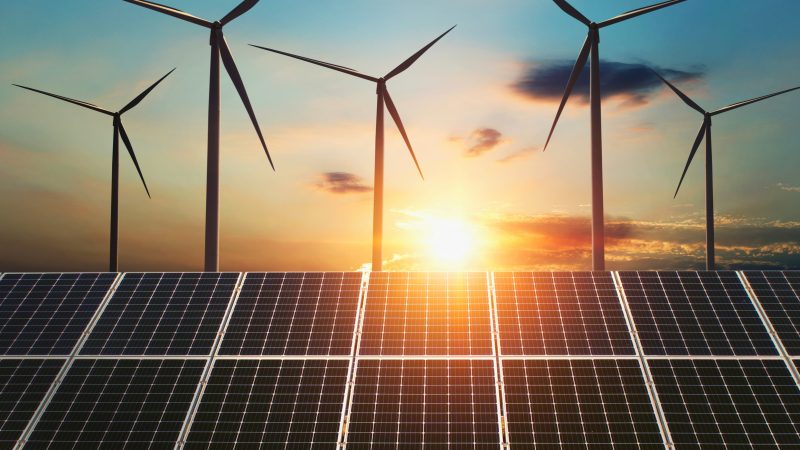
AfDB Approves $760,000 for Small-Scale Renewable Energy
By Adedapo Adesanya
The African Development Bank (AfDB) has approved a $760,000 grant to Empower New Energy AS (EmNEW) to develop at least eight small-scale renewable energy projects in Africa.
The project, which will be executed through the Sustainable Energy Fund for Africa (SEFA), will have a capacity ranging from 1-10 Megawatts.
The grant will support a broad range of project preparation and development activities, including technical feasibility studies, legal due diligence, environmental and social impact assessment, quality assurance and risk management.
According to the bank’s Acting Vice President for Power, Energy, Climate and Green Growth, Mr Wale Shonibare, the project will not only boost accessibility to energy for the continent but will be environmentally friendly.
“Accelerated deployment of distributed solar power and small hydropower is one of the fastest and most cost-efficient ways to bridge the energy access gap, fight climate change and promote sustainable development in sub-Saharan Africa,” he said.
Reechoing Mr Shonibare’s sentiment, the bank’s acting Director for Renewable Energy & Energy Efficiency, Mr Daniel Schroth, explained that AfDB’s support to EmNEW through SEFA was fully aligned with SEFA’s strategy to tackle challenges faced by smaller renewable energy projects in many African countries in accessing financing to cover their initial development costs.
EmNEW’s Chief Executive Officer, Mr Terje Osmundse, welcomed the approval and said it would help in taking a faster approach towards the projects.
“We are very excited to be entering into a partnership with the African Development Bank and SEFA. There is a large number of strong small or medium scale projects across Africa that remain unrealised because they can’t access competitive financing.
“Our approach allows us to bridge this gap and working with SEFA will help us to accelerate this process and support more high-quality projects.
“Together, we can bring impactful investment to Africa, while helping the continent to meet its electrification, carbon-reduction, and sustainable development targets,” he said.
Drawing on high-quality local partnerships in Africa, EmNEW invests in renewable energy projects through competitive equity to small and medium scale projects which helps to reduce the time and resources required to finance projects while delivering environmental and social impact.
Through its Empower Invest fund, EmNEW invests in small and medium-scale renewable energy projects in Africa, with a focus on solar power, hybrid, and hydro technologies.
General
DisCos Collect N196bn in March, Miss N50bn of Billed Revenue
By Adedapo Adesanya
Nigeria’s electricity distribution companies (DisCos) generated N196.13 billion in revenue in March 2026, despite billing customers a total of N246.43 billion during the month, according to the latest commercial performance report released by the Nigerian Electricity Regulatory Commission (NERC).
The figure represents a slight decline from the N196.68 billion collected in February, highlighting persistent challenges in revenue recovery across the power distribution segment, even as energy supplied to the grid continued to improve.
NERC’s March 2026 fact sheet showed that electricity billing rose by 1.71 per cent from N242.29 billion recorded in February, reflecting increased energy deliveries and customer charges. However, collection efficiency declined to 79.59 per cent from 81.17 per cent in the previous month, indicating that a significant portion of billed revenue remained uncollected.
The regulator disclosed that DisCos received 293.76 million kilowatt-hours of electricity during the review period, representing a 6.02 per cent increase compared to February. The development suggests a modest improvement in power availability across the distribution network.
Despite the increase in energy supplied, revenue recovery remains uneven across the industry. NERC reported that the average approved tariff for March stood at N124.30 per kilowatt-hour, while actual collections averaged ₦100.75 per kilowatt-hour, resulting in an overall revenue recovery efficiency of 81.05 per cent.
Among the eleven DisCos, Ikeja Electric emerged as the strongest performer, posting a revenue recovery efficiency of 99.30 per cent. Eko Electricity Distribution Company followed with 95.73 per cent, while Benin DisCo recorded 85.18 per cent.
At the lower end of the performance table, Kaduna Electric recorded the weakest recovery rate at 35.65 per cent. Jos DisCo and Yola DisCo also struggled, achieving recovery efficiencies of 53.53 per cent and 58.58 per cent, respectively.
Ikeja Electric also led in collection efficiency with 96.38 per cent, ahead of Benin DisCo at 90.97 per cent and Eko DisCo at 87.68 per cent. Kaduna, Jos and Yola remained the poorest performers in this category, underlining the persistent commercial and operational challenges facing power distributors in parts of northern Nigeria.
In terms of billing efficiency, Eko DisCo ranked first with 92.30 per cent, followed by Port Harcourt DisCo at 90.36 per cent and Ikeja Electric at 87.76 per cent. Yola DisCo recorded the lowest billing efficiency at 58.68 per cent.
The latest figures underscore the mixed realities within Nigeria’s power sector. While electricity supply and customer billing continue to improve, revenue collection remains a major obstacle to the financial sustainability of the industry.
Analysts note that stronger metering penetration, improved customer confidence, reduction in energy theft and more efficient collection systems will be critical if DisCos are to close the widening gap between electricity supplied, billed revenue and actual collections.
The March performance report comes as regulators and industry stakeholders intensify efforts to strengthen the commercial viability of the electricity market, attract fresh investment and improve service delivery across the country.
General
Interswitch Adopts Temenos Platform to Deliver Banking Services to African Lenders
By Adedapo Adesanya
Interswitch has entered into a partnership with Geneva-headquartered banking software provider Temenos to offer managed banking services to financial institutions across the continent, deepening its push into banking technology.
The partnership will see Interswitch adopt Temenos’ banking technology across core banking, digital banking, payments, wealth management, and financial crime management.
This will enable the firm to provide cloud-hosted and on-premises managed services to lenders on the continent. The service will initially target Nigeria, Ghana, Côte d’Ivoire, Kenya, and other African markets.
“This is a pivotal moment for Interswitch as we accelerate our expansion beyond payments and reimagine digital banking for Africa,” Mr Jonah Adams, managing director for Digital Infrastructure and Managed Services at Interswitch, said in a statement.
By combining Temenos’ software with its existing footprint across the continent, Interswitch is positioning itself as a technology partner that can help banks upgrade critical systems without having to manage the complexity of large-scale technology deployments.
“By adopting Temenos’ cloud-native, composable platform, Interswitch gains the flexibility and scalability to accelerate its next phase of growth and deliver banking services that meet the needs of African markets,” Mr Adams added.
For Temenos, the deal strengthens its presence in Africa through a partner with deep relationships across the banking sector. It lost one of its banking customers, Sterling Bank, in 2024 after the tier-2 Nigerian bank switched to SEABaaS, a new custom-built core banking application.
“Interswitch is an important new customer and partner for Temenos in Africa,” said Mr William Moroney, Chief Revenue Officer at Temenos. “Interswitch’s strong presence across the continent also extends our reach and further strengthens our ecosystem and partner network.”
Founded in 2002, Interswitch built its reputation as one of Africa’s largest payments companies through products such as Quickteller and Verve, its domestic card scheme.
General
TGI Group, Wilmar to Form $12bn West Africa Food Giant in Major Merger
By Adedapo Adesanya
Tropical General Investments (TGI) Group and Singapore-based Wilmar International have agreed to combine their Nigeria and Republic of Benin operations into a 50:50 joint venture aimed at building a dominant integrated food and agribusiness platform across West Africa, targeting a market estimated at $12 billion.
The proposed merger will consolidate operations across several value chains, including agriculture, oil palm plantations, edible oils, edible nuts, rice, food manufacturing, and distribution, creating one of the region’s largest end-to-end food production and supply chains.
Under the arrangement, both firms will integrate their complementary strengths, with Wilmar contributing global expertise in palm oil, speciality fats, and large-scale agribusiness operations, while TGI brings established local manufacturing capacity, consumer brands, and an extensive distribution network across Nigeria and neighbouring markets.
Chairman and Chief Executive Officer of Wilmar International, Mr Kuok Hong, said the partnership would enhance both firms’ ability to serve Africa’s expanding consumer base, describing Nigeria and Benin as strategic growth markets.
“For more than four decades, TGI Group has built a leading position in Nigerian food manufacturing and distribution. This partnership will leverage Wilmar’s global scale and expertise as well as TGI’s local knowledge to deliver innovative food solutions across Africa,” added TGI Group founder and chairman, Mr Cornelis Vink.
On his part, Vice Chairman of TGI Group, Mr Farouk Gumel, said the deal reflects confidence in Nigeria’s long-term economic prospects, adding that it would deepen domestic value addition, strengthen food security, support smallholder farmers, and create jobs.
Adding his input, Wilmar’s Africa Head, Mr Santosh Pillai, described the transaction as a strategic fit, noting that the combined entity would have the scale, local insight, and operational depth needed to better serve consumers in the region.
The companies said the transaction is expected to be completed in the 2026 financial year, subject to regulatory approvals and other customary conditions.
-
Feature/OPED6 years agoDavos was Different this year
-
Travel/Tourism10 years ago
Lagos Seals Western Lodge Hotel In Ikorodu
-
Showbiz3 years agoEstranged Lover Releases Videos of Empress Njamah Bathing
-
Banking8 years agoSort Codes of GTBank Branches in Nigeria
-
Economy3 years agoSubsidy Removal: CNG at N130 Per Litre Cheaper Than Petrol—IPMAN
-
Banking3 years agoSort Codes of UBA Branches in Nigeria
-
Banking3 years agoFirst Bank Announces Planned Downtime
-
Sports3 years agoHighest Paid Nigerian Footballer – How Much Do Nigerian Footballers Earn