Connect with us

General

AfDB Approves $288.5m Loan for Nigeria

Published

on

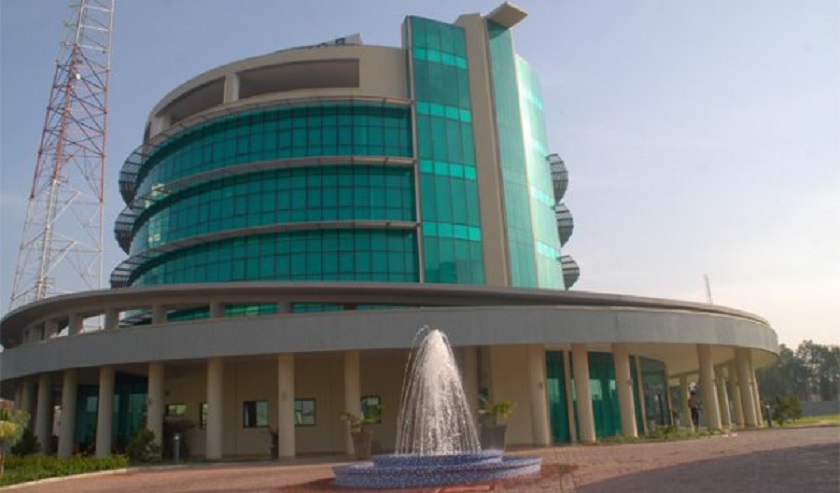
AfDB Nigeria Country office

By Adedapo Adesanya

The African Development Bank (AfDB) has approved $288.5 million loan to help Nigeria tackle the COVID-19 pandemic and mitigate its impact on the economy.

The loan, according to the development finance institution, will bolster the government’s plans to improve response to COVID-19 emergencies, ease the impact on workers and businesses and strengthen the social protection system.

The loan is the bank’s initial response to help mitigate the slump in oil prices and its impact on the national economy, which has affected revenue projects for the year.

Nigeria had in April secured $3.4 billion from the International Monetary Fund (IMF) in emergency financial assistance under the fund’s Rapid Financing Instrument (RFI).

This supports government’s efforts in addressing the severe economic impact of the COVID-19 economic shock and the drastic fall in oil prices, which affected Nigeria’s revenue.

Speaking on this, the bank’s Senior Director for Nigeria, Mr Ebrima Faal said, “The proposed programme will ensure that the fiscal position and the economy are sufficiently supported to weather the COVID-19 shocks, thereby limiting its potential adverse impact on livelihoods and the economy more generally.”

The bank also noted that its active portfolio in Nigeria as of December 2019 comprised 61 operations, with a total commitment of about $5 billion.

The AfDB disclosed this while announcing the approval of Nigeria’s Country Strategy Paper (CSP) 2020 – 2024 by its board of directors.

These active operations include 29 in the public sector, with a commitment of $2 billion. which accounts for 43 percent and 32 non-sovereign operations with a total commitment of $3 billion equivalent to 57 percent of the total portfolio.

The bank said under the CSP, it would deploy a combination of sovereign and non-sovereign financing instruments to support the two priority areas, including investment and institutional support projects, evidence-based analytical work in numerous economic sectors, policy dialogue and provision of advisory services.

It said special focus would be put on supporting the Nigerian private sector, in terms of financing and advisory services, and on public-private-partnership initiatives that would enable innovative, long-term investment in energy, transport and water and sanitation.


Adedapo Adesanya is a journalist, polymath, and connoisseur of everything art. When he is not writing, he has his nose buried in one of the many books or articles he has bookmarked or simply listening to good music with a bottle of beer or wine. He supports the greatest club in the world, Manchester United F.C.

General

Tinubu Deploys Army to Kwara, Condemns Terrorist Attack

Published

on

kwara state map

By Adedapo Adesanya

President Bola Tinubu has deployed an army battalion to Kaiama district in Kwara State after suspected jihadist fighters killed about 170 people in an overnight attack on Tuesday.

The terrorists stormed Woro and Nuku communities in Kaiama Local Council, according to Kwara State lawmaker, Mr Saidu Ahmed.

The violence highlights fears that jihadist factions prevalent in Northern Nigeria are pushing south along the Niger-Kwara axis toward the Kainji forest.

According to a statement from the Presidency, the new military command will spearhead Operation Savannah Shield to checkmate the barbaric terrorists and protect defenceless communities.

He condemned the attack as “cowardly and barbaric,” saying the gunmen targeted villagers who had rejected attempts to impose extremist rule.

“It is commendable that community members, even though Muslims, refused to be conscripted into a belief that promotes violence over peace,” President Tinubu said in the statement.

The President urged collaboration between federal and state agencies to provide succour to members of the community and ensure that those who committed the atrocities do not go scot-free.

President Tinubu prayed for the repose of the souls of the deceased and condoled with those who lost family members as well as the people and government of Kwara State.

Similarly, suspected bandits stormed Doma community in Tafoki Ward, Katsina State, on Tuesday afternoon, killing several residents, injuring many others and setting vehicles and houses ablaze.

There were conflicting figures over the casualty toll, with police putting the number of deaths at 13, while the executive chairman of Faskari Local Council estimated more than 20.

Continue Reading

General

NNPC, Chinese Firm in Talks over Nigeria’s Moribund Refineries

Published

on

NNPC Crude Cargoes pricing

By Adedapo Adesanya

The Nigerian National Petroleum Company (NNPC) Limited is in talks with a Chinese company over one of the state-owned oil firm’s refineries, the chief executive of the state oil company, Mr Bashir Bayo Ojulari, said.

He said the company was seeking experienced operators as equity partners to revive its four refineries after years of losses and underperformance.

The NNPC chief said an internal review carried out shortly after assuming his role last April showed the refineries were running at huge losses, with high operating costs and heavy spending on contractors while processing volumes remained low.

Mr Ojulari said that the board of the state oil company has approved a strategy to bring in refinery operators with proven expertise rather than contractors, adding it was in advanced talks with several interested parties.

“I’m just coming from a meeting with one of the potential investors,” Mr Ojulari said, without giving a name. “They are going to the refinery tomorrow to inspect. It’s a Chinese company that has one of the biggest petrochemical plants in China.”

The NNPC head stated that operations in the refineries had been put on hold to give time to evaluate potential restoration solutions.

This coincided with the opening of the Dangote Refinery, which provided “breathing space” for the supply of domestic petroleum.

For the past two years, the NNPC has unsuccessfully attempted to fully reactivate the state oil refineries in Warri, Kaduna, and Port Harcourt, which have a combined processing capacity of 445,000 barrels per day but have remained idle for decades.

These endeavors to restore the facilities to operational status have resulted in both public controversy and shifts in strategic direction.

The government initially sought to rehabilitate these refineries, primarily in response to the commissioning of Dangote’s 650,000-barrel-per-day oil refinery; however, this effort proved unsuccessful, necessitating an exploration of potential public-private partnerships.

In October 2025, the NNPC announced its search for new technical private equity partners to facilitate the revival of its long-dormant refineries.

Continue Reading

General

Senate Passes Electoral Act Amendment Bill, Blocks Electronic Transmission of Results

Published

on

Godswill akpabio Senate President

By Modupe Gbadeyanka

The Senate on Wednesday passed the bill to amend the Electoral Act of 2022 after delays, which almost pitched the institution against several Nigerians.

Last week, the upper chamber of the National Assembly headed by the Senate President, Mr Godswill Akpabio, set up a panel to look into the matter, with the directive to submit its report yesterday, Tuesday, February 3, 2026.

However, after the report was submitted yesterday, the red chamber of the parliament said it was going to take an action on it on Wednesday.

At the midweek plenary, the Senate eventually passed the Bill for an Act to Repeal the Electoral Act No. 13, 2022 and Enact the Electoral Act, 2025.

However, some critical clauses were rejected, including the proposed amendment to make is mandatory for the Independent National Electoral Commission (INEC) to transmission election results electronically from polling units to the INEC Result Viewing (IReV) portal.

The clause was to strengthen transparency and reduce electoral malpractice through technology-driven result management.

It also rejected a proposed amendment under Clause 47 that would have allowed voters to present electronically-generated voter identification, including a downloadable voter card with a unique QR code, as a valid means of accreditation.

The Senate voted to retain the existing 2022 provisions requiring voters to present their Permanent Voter’s Card (PVC) for accreditation at polling units, and upheld the provision mandating the use of the Bimodal Voter Accreditation System (BVAS) or any other technological device prescribed by the electoral umpire for voter verification and authentication, rather than allowing alternative digital identification methods as proposed in the new bill.

The Senate also reduced the notice of election from 360 days to 180 days, with the timeline for publishing list of candidates by INEC dropped from 150 days to 60 days.

Continue Reading

Trending