Connect with us

General

Buhari to Flag Off Ajaokuta-Kaduna-Kano Gas Pipeline

Published

on

gas pipelines

By Adedapo Adesanya

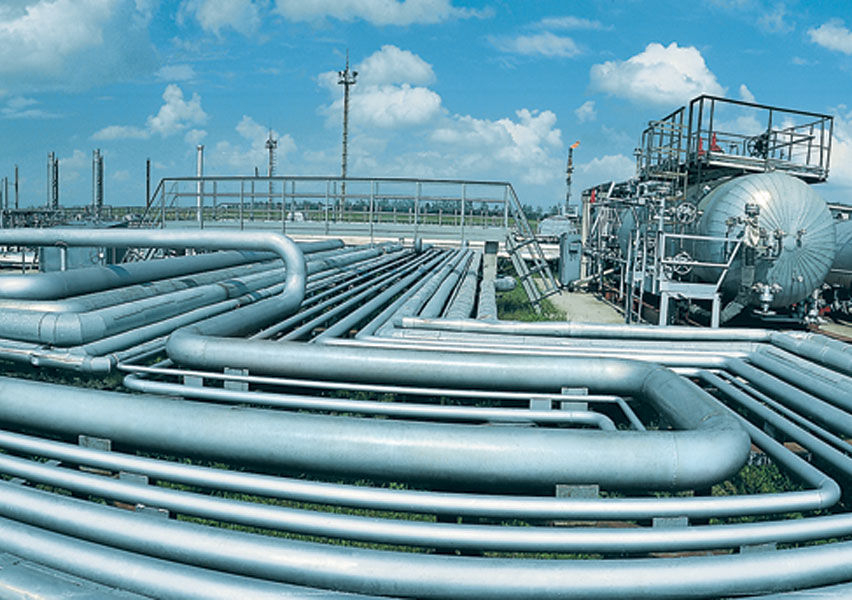
President Muhammadu Buhari will on Tuesday flag off the construction of the Ajaokuta-Kaduna-Kano (AKK) pipeline, which is set to become the nation’s biggest domestic gas transmission infrastructure.

The 614 kilometre gas pipeline conceived to provide the highly desired stimulus to domestic industrial growth will be delivered by a consortium of indigenous and international engineering firms. This project will also signal the finest hour so far for the Nigerian Content Policy goals.

The President, by the flag-off of this project at Ajaokuta, Kogi State, would be turning to reality some of the nation’s long-term economic aspirations of boosting domestic energy infrastructure, deepening the local gas market, creating industrial corridors with cleaner fuel, and commercialising the country’s abundant gas resources.

The project, according to the Nigerian National Petroleum Corporation (NNPC), will significantly curb gas flaring in the Niger Delta and guarantee better air quality in the oil-producing region.

Furthermore, the pipeline, which was conceived to connect demand from the northern part of the country with supply from the south, would be the biggest infrastructure development in the country’s recent history.

It will also mark a significant shift in the nation’s energy policy; from revenue targeted export programmes to development-focused domestic supply programmes.

Significantly, the $2.8 billion project will breakthrough on the June 30 after seven years of rigorous processes that morphed from policy conception through implementation strategy designs, master-plans and solid implementation programmes.

The biggest value to the economy is the participation of indigenous engineering firms led by pipeline giant, Oilserv Limited, in the delivery of some of the phases of the project.

The company has successfully delivered over 17 similar challenging projects in the country including the engineering, procurement and construction (EPC) of the 67 kilometres Obiafu/Obrikom to Oben (OB3) 48-inch diameter Gas Transmission Pipeline System. The Oilserv consortium is slated to deliver the first 200-kilometre phase of the AKK pipeline which covers the section between Ajaokuta and Abuja, after securing the EPC contract in April 2018.

According to the Presidency, “the AKK pipeline project is itself a section of an ambitious pipeline project to supply gas to Europe through the proposed Trans Sahara Gas Pipeline (TSGP) and Nigeria Morocco Gas Pipelines.”

Thus, in the short term the AKK will ensure energy sufficiency for domestic commerce and industry, and in the long term, having deepened and satisfied domestic demand, morph into an export pipeline and economic mainstay.

The AKK pipeline, in Nigeria’s prevailing socioeconomic downturn, will prove to be fortuitous as well as strategic even as the world steps away from fossil fuel.

Beyond the immediate need to stem the devastation of the corona pandemic and stimulate activity in the domestic economy, the AKK, which is already potentially poised as a very central economic powerhouse in Nigeria, will also create deeper, more enduring values.


Adedapo Adesanya is a journalist, polymath, and connoisseur of everything art. When he is not writing, he has his nose buried in one of the many books or articles he has bookmarked or simply listening to good music with a bottle of beer or wine. He supports the greatest club in the world, Manchester United F.C.

General

Senate Passes Electoral Act Amendment Bill, Blocks Electronic Transmission of Results

Published

on

Godswill akpabio Senate President

By Modupe Gbadeyanka

The Senate on Wednesday passed the bill to amend the Electoral Act of 2022 after delays, which almost pitched the institution against several Nigerians.

Last week, the upper chamber of the National Assembly headed by the Senate President, Mr Godswill Akpabio, set up a panel to look into the matter, with the directive to submit its report yesterday, Tuesday, February 3, 2026.

However, after the report was submitted yesterday, the red chamber of the parliament said it was going to take an action on it on Wednesday.

At the midweek plenary, the Senate eventually passed the Bill for an Act to Repeal the Electoral Act No. 13, 2022 and Enact the Electoral Act, 2025.

However, some critical clauses were rejected, including the proposed amendment to make is mandatory for the Independent National Electoral Commission (INEC) to transmission election results electronically from polling units to the INEC Result Viewing (IReV) portal.

The clause was to strengthen transparency and reduce electoral malpractice through technology-driven result management.

It also rejected a proposed amendment under Clause 47 that would have allowed voters to present electronically-generated voter identification, including a downloadable voter card with a unique QR code, as a valid means of accreditation.

The Senate voted to retain the existing 2022 provisions requiring voters to present their Permanent Voter’s Card (PVC) for accreditation at polling units, and upheld the provision mandating the use of the Bimodal Voter Accreditation System (BVAS) or any other technological device prescribed by the electoral umpire for voter verification and authentication, rather than allowing alternative digital identification methods as proposed in the new bill.

The Senate also reduced the notice of election from 360 days to 180 days, with the timeline for publishing list of candidates by INEC dropped from 150 days to 60 days.

Continue Reading

General

Amupitan Says 2027 Elections Timetable Ready Despite Electoral Act Delay

Published

on

Incorruptible INEC Chairman

By Adedapo Adesanya

The Independent National Electoral Commission (INEC) has completed its timetable and schedule of activities for the 2027 general election, despite pending amendments to the Electoral Act by the National Assembly.

INEC Chairman, Mr Joash Amupitan, disclosed this on Wednesday in Abuja during a consultative meeting with civil society organisations.

Mr Amupitan said the commission had already submitted its recommendations and proposed changes to lawmakers, noting that aspects of the election calendar might still be adjusted depending on when the amended Electoral Act is passed.

He, however, stressed that the electoral umpire must continue preparations using the existing legal framework pending the conclusion of the legislative process and presidential assent to the revised law.

According to him, the commission cannot delay critical preparatory activities given the scale and complexity involved in conducting nationwide elections.

The development highlights INEC’s commitment to early planning for the 2027 polls, even as stakeholders await legislative clarity that could shape parts of the electoral process.

Yesterday, the Senate again failed to conclude deliberations on the proposed amendment to the Electoral Act after several hours in a closed-door executive session. The closed session lasted about five hours.

Lawmakers dissolved into the executive session shortly after plenary commenced, to consider the report of an ad hoc committee set up to harmonise senators’ inputs on the Electoral Act Amendment Bill.

When plenary resumed, the Senate President, Mr Godswill Akpabio, did not disclose details of the discussions on the bill.

Despite repeated executive sessions, the upper chamber has yet to pass the bill, marking the third unsuccessful attempt in two weeks.

The Senate, however, said it will not rush the bill, citing the volume of post-election litigation after the 2023 polls and the need for careful legislative scrutiny.

Last week, the red chamber of the federal parliament constituted a seven-member ad hoc committee after an earlier three-hour executive session to further scrutinise the proposed amendments.

Continue Reading

General

REA Expects Further $1.1bn Investment for New Mini Power Grids

Published

on

Mini Power Grids

By Adedapo Adesanya

The Managing Director of the Rural Electrification Agency, (REA), Mr Abba Aliyu, is poised to attract an estimated $1.1 billion in additional private-sector investment to further achieve the agency’s targets.

He said that the organisation has received a $750 million funding in 2024 through the World Bank funded Distributed Access through Renewable Energy Scale-up (DARES) project.

He added that this capital is specifically intended to act as a springboard to attract an estimated $1.1 billion in additional private-sector investment, with the ultimate goal of providing electricity access to roughly 17.5 million Nigerians through 1,350 new mini grids.

Mr Aliyu also said that the Nigeria Electrification Project (NEP) has already led to the electrification of 1.1 million households across more than 200 mini grids and the delivery of hybrid power solutions to 15 federal institutions.

According to a statement, this followed Mr Aliyu’s high-level inspection of Vsolaris facilities in Lagos, adding that the visit also served as a platform for the REA to highlight its decentralized electrification strategy, which relies on partnering with firms capable of managing local assembly and highefficiency project execution.

The federal government, through the REA, underscored the critical role the partnership with the private sector plays in achieving Nigeria’s ambitious off-grid energy targets and ending energy poverty.

Mr Aliyu emphasized that while public funds serve as a catalyst, the long-term sustainability of Nigeria’s power sector rests on credible private developers who are willing to invest their own resources.

He noted that public funds are intentionally deployed as catalytic grants to ensure that the private sector maintains skin in the game which he believes is the only way to guarantee true accountability and the survival of these projects over time.

Continue Reading

Trending