Economy
Quick Money Access Across the Continent with Airtel Africa & MoneyGram
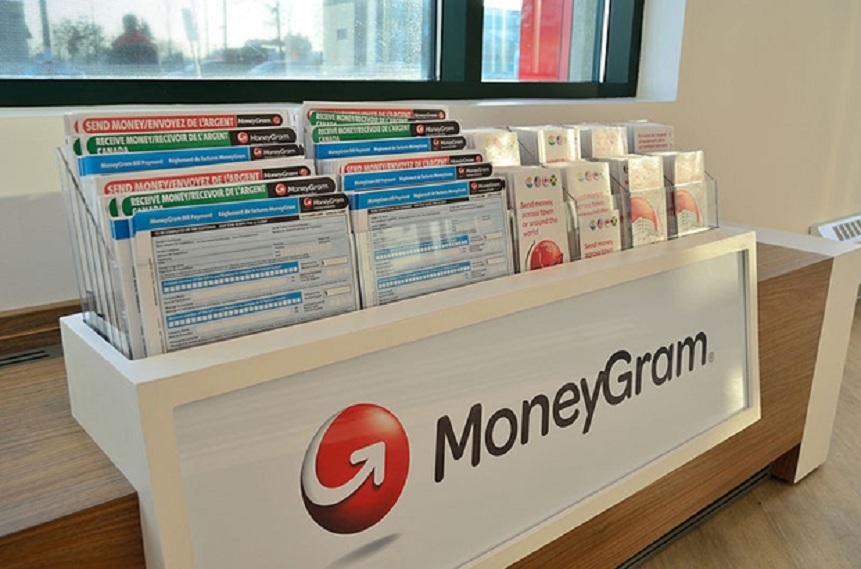
Airtel Africa’s partnership with MoneyGram, announced on August 21st, is supposed to provide millions of users across the continent with a quick way to receive money.
Airtel Africa is well known as a provider of telecommunications and mobile money, available in 14 African countries (primarily in East, Central, and West Africa).
In March last year, the company had over 99 million subscribers, 19 million of which use a mobile payment app called Airtel Money The great appeal of Airtel Money, in addition to its national and international money services, is their offer of very cheap data plans in Nigeria.
Speaking about the new partnership, the CEO of Airtel Africa, Raghunath Mandava said: “We are delighted to work with MoneyGram to provide millions of customers with fast, secure, and convenient options to receive and send money as well as access their funds from a vast distribution of exclusive kiosks, agents and branches at their convenience.”
He also added: “This is a significant step forward in our ambition to transform lives through greater financial inclusion and empowerment across the continent. Maximizing access to global remittances is a key part of this – even more so given the disruption and economic hardship faced by many because of the COVID-19 pandemic.”
This partnership is just one step in the company’s journey. Airtel Africa also closed a deal with Standard Chartered Bank in order to allow its clients to make online deposits and withdrawals from the bank in real-time as well as internationally receive money to their wallet and access their savings, in addition to other features. Last year, they also partnered up with a payment and foreign exchange services firm Ecobank and Finablr – a pan-African banking giant.
MoneyGram International Second Biggest Worldwide
On the other hand, MoneyGram International is a global remittance company based in the USA. They specialize in cross-border peer-to-peer payments and money transfers and are the second-biggest provider of these services in the world.
When it comes to the Airtel deal, John Gely, Head of MoneyGram Africa said: “This partnership with Airtel will enable millions of consumers instant access to our global platform to receive money from over 200 countries and territories without having to even step outside.”
Gely added: “We’re excited about how this customer-centric partnership with Airtel will expand our mobile wallet capabilities, build upon our strong momentum in Africa, and further accelerate our digital growth across the globe.”
MoneyGram already has similar arrangements with Safaricom, which allows Tanzanian and Kenyan users to access the platform, as well as with Zimbabwe’s Ecocash and various providers in Ghana, such as Vodafone Cash, Airtel Tigo Money, and MTN MoMo.
There was also talk of Western Union approaching MoneyGram and proposing a takeover deal but, so far, it looks like nothing came of it. Furthermore, the company is relying on blockchain and its decentralized technology to make its transfers faster and more efficient. Ripple, a blockchain payments company, made a significant investment in MoneyGram and now holds around 10% of its common stocks.
The Airtel Africa/MoneyGram deal means that Airtel Money’s customers will be able to receive transfers from their friends and family through MoneyGram and put it directly into their mobile wallets. The money will be available instantly and can be used for a variety of purposes, from paying the utility bills to transferring it to other individuals.
Seeing as how the coronavirus pandemic encouraged people to replace cash with various digital payment apps, it’s no wonder that there is more and more use of this method in e-commerce, mobile banking, and mobile gambling industries. Being somewhat of a data security freak, the stamp of approval from the online gambling industry means a lot.
As the pay by phone page on casinos.co.za says, ‘the latest data encryption technology should be implemented to keep your personal details and banking information completely secure’. Indeed, to make a purchase or money transfer, a verification code is sent to the specific phone number. It’s one of the safest methods because you can only complete the transaction if you are holding the phone.
What is more, paying by phone is one of the most convenient ways of paying as chances are that everyone has their phone on them at all times. Furthermore, this is one of the safest methods because only a phone number and a verification code sent to that number are required to make a purchase or payment.
However, it is important to note that the Communication Authority of Kenya (CAK) is yet to approve this deal. If and once the deal is approved by this regulatory body, the Airtel Money customers will be able to experience all the benefits of this partnership.
Economy
Heavy Sell-Offs Weaken NASD Index by 0.64%, Erase N16.5bn from Market
By Adedapo Adesanya
NASD Over-the-Counter (OTC) Securities Exchange remained in the negative territory after it further depreciated by 0.64 per cent on Friday, July 24, despite recording four price gainers.
The NASD Security Index (NSI) dropped 27.4 points at the close of business to settle at 4,294.75 points versus the previous day’s 4,383.48 points, while the market capitalisation gave up N16.49 billion to end at N2.577 trillion, in contrast to the N2.594 trillion it ended a day earlier.
The bourse was down during the session amid heavy sell-offs, with the volume of transactions skyrocketing by 693.9 per cent to 2.99 million units from Thursday’s 377,635 units.
Equally, the value of trades went up by 71.6 per cent to N69.4 million from N40.4 million, and the number of deals increased by 41.0 per cent to 55 deals from the preceding day’s 39 deals.
Great Nigeria Insurance (GNI) Plc remained the most active stock by value on a year-to-date basis, with 3.4 billion units worth N8.4 billion, trailed by Infrastructure Credit Guarantee (Infracredit) Plc with 2.3 billion units sold for N6.5 billion, and Central Securities Clearing System (CSCS) Plc with 75.6 million units traded for N5.4 billion.
GNI Plc was also the most active stock by volume on a year-to-date basis, with 3.4 billion units exchanged for N8.4 billion, trailed by Infracredit Plc with 2.3 billion units transacted for N6.5 billion, and Resourcery Plc with 1.1 billion units valued at N415.7 million.
The market ended the session with four price gainers and two price losers, led by FrieslandCampina Wamco Nigeria Plc, which lost N7.44 to trade at N136.19 per share compared with the previous day’s N143.63 per share, and CSCS Plc, which declined by N1.64 to N93.63 per unit from N95.27 per unit.
But MRS Oil gained N13.50 to sell at N148.50 per share versus N135.00 per share, Afriland Properties Plc advanced by 56 Kobo to N17.41 per unit from N16.85 per unit, UBN Property Plc surged by 18 Kobo to N1.93 per share from N1.75 per share, and Food Concepts Plc climbed by 1 Kobo to N2.50 per unit from N2.49 per unit.
Economy
Profit-taking Crashes Nigeria’s Stock Exchange by 0.19%
By Dipo Olowookere
Nigeria’s stock exchange succumbed to profit-taking on Friday, losing 0.19 per cent when the closing gong was hit at 4 pm.
Shares in the banking and energy sectors influenced the decline suffered by the Nigerian Exchange (NGX) Limited during the session, as they respectively closed lower by 0.40 per cent and 0.04 per cent.
The industrial goods index was flat yesterday, while the insurance counter gained 0.68 per cent and the consumer goods space chalked up 0.25 per cent. The gains by these two segments could not keep Customs Street in the green territory at the close of business.
As a result, the All-Share Index (ASI) retreated by 474.00 points to 247,357.40 points from 247,831.40 points, and the market capitalisation decreased by N306 billion to N159.588 trillion from N159.894 trillion.
Presco dropped 10.00 per cent during the trading day to close at N2,070.00, Thomas Wyatt crumbled by 9.93 per cent to N3.63, Trans-Nationwide Express plunged by 8.44 per cent to N2.82, Royal Exchange slipped by 7.86 per cent to N1.29, and LivingTrust Mortgage Bank shrank by 7.32 per cent to N3.80.
On the flip side, C&I Leasing improved by 9.48 per cent to N6.35, Cornerstone Insurance rose by 9.09 per cent to N6.00, RT Briscoe jumped by 8.61 per cent to N13.25, Honeywell Flour expanded by 7.38 per cent to N17.45, and Africa Prudential increased by 6.98 per cent to N13.80.
Despite the poor performance, the local bourse recorded a positive market breadth index after finishing with 35 price gainers and 25 price losers, representing strong investor sentiment.
It was a relatively quiet market on Friday, as the activity level dropped, with the trading volume down by 27.72 per cent to 565.5 million units from 782.4 million units, and the trading value contracted by 46.89 per cent to N29.9 billion from N56.3 billion, while the number of deals executed by investors soared by 16.03 per cent to 53,688 deals from 46,273 deals.
Access Holdings was the busiest stock for the session, with a turnover of 128.0 million units sold for N3.8 billion, First Holdco transacted 35.4 million units worth N4.3 billion, Chams exchanged 34.8 million units valued at N154.3 million, Zenith Bank traded 30.4 million units for N3.9 billion, and UBA sold 30.4 million units worth N1.5 billion.
Economy
Naira Trades N1,362/$1 at Official FX Market, as Bitcoin Falls
By Adedapo Adesanya
The Naira marked a whole week of appreciation against the United States Dollar on Friday, July 24, further gaining N5.67 or 0.41 per cent to close at N1,362.09/$1 in the Nigerian Autonomous Foreign Exchange Market (NAFEX) compared with N1,367.76/$1 it ended on Thursday.
Equally, the local currency appreciated against the Pound Sterling in the official FX market yesterday by N10.83 to trade at N1,813.62/£1 versus the preceding day’s N1,824.45/£1, and improved against the Euro by N7.68 to settle at N1,549.10/€1, in contrast to the N1,556.78/€1 it was exchanged a day earlier.
However, at the parallel market and GTBank forex counter, the Nigerian currency remained unchanged against the greenback during the session at N1,400/$1 and N1,379/$1, respectively.
The Central Bank of Nigeria (CBN) buffer has been strengthened with sustained foreign portfolio inflows and robust foreign reserves, which stand above $52 billion.
The apex bank’s policy signals that the Naira will be stronger in the near term, with Nigeria clearing hurdles with FX reforms and settlement of all backlogs.
However, some traders expect that pressure may come due to foreign-currency buying from fuel importers as they make Dollar purchases to build inventories.
Meanwhile, Bitcoin (BTC), in the digital currency landscape, trimmed recent gains as it fell by 2.3 per cent to $63,787.73.
The weak action in the AI momentum trade is feeding through to crypto as well.
Further, Cardano (ADA) dropped 3.7 per cent to close at $0.1615, Solana (SOL) dipped by 2.8 per cent to $73.71, Ripple (XRP) crashed by 2.3 per cent to $1.08, Ethereum (ETH) slid by 1.9 per cent to $1,851.58, Dogecoin (DOGE) retreated by 0.8 per cent to $0.0694, Binance Coin (BNB) contracted by 0.7 per cent to $564.18, and TRON (TRX) lost 0.5 per cent to trade at $0.3292, while the US Dollar Tether (USDT) and the US Dollar Coin (USDC) traded flat at $1.00 each.