Connect with us

Economy

Quick Money Access Across the Continent with Airtel Africa & MoneyGram

Published

on

MoneyGram

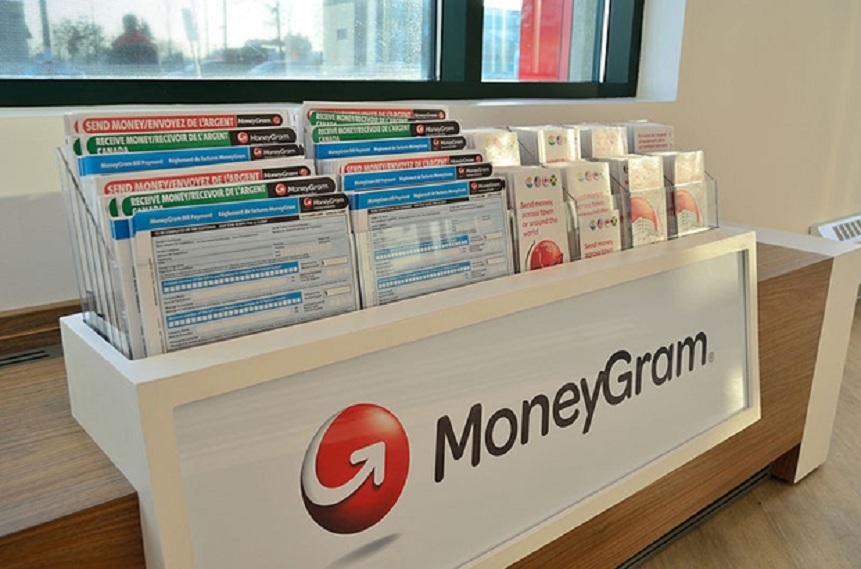
Airtel Africa’s partnership with MoneyGram, announced on August 21st, is supposed to provide millions of users across the continent with a quick way to receive money.

Airtel Africa is well known as a provider of telecommunications and mobile money, available in 14 African countries (primarily in East, Central, and West Africa).

In March last year, the company had over 99 million subscribers, 19 million of which use a mobile payment app called Airtel Money The great appeal of Airtel Money, in addition to its national and international money services, is their offer of very cheap data plans in Nigeria.

Speaking about the new partnership, the CEO of Airtel Africa, Raghunath Mandava said: “We are delighted to work with MoneyGram to provide millions of customers with fast, secure, and convenient options to receive and send money as well as access their funds from a vast distribution of exclusive kiosks, agents and branches at their convenience.”

He also added: “This is a significant step forward in our ambition to transform lives through greater financial inclusion and empowerment across the continent. Maximizing access to global remittances is a key part of this – even more so given the disruption and economic hardship faced by many because of the COVID-19 pandemic.”

This partnership is just one step in the company’s journey. Airtel Africa also closed a deal with Standard Chartered Bank in order to allow its clients to make online deposits and withdrawals from the bank in real-time as well as internationally receive money to their wallet and access their savings, in addition to other features. Last year, they also partnered up with a payment and foreign exchange services firm Ecobank and Finablr – a pan-African banking giant.

MoneyGram International Second Biggest Worldwide

On the other hand, MoneyGram International is a global remittance company based in the USA. They specialize in cross-border peer-to-peer payments and money transfers and are the second-biggest provider of these services in the world.

When it comes to the Airtel deal, John Gely, Head of MoneyGram Africa said: “This partnership with Airtel will enable millions of consumers instant access to our global platform to receive money from over 200 countries and territories without having to even step outside.”

Gely added: “We’re excited about how this customer-centric partnership with Airtel will expand our mobile wallet capabilities, build upon our strong momentum in Africa, and further accelerate our digital growth across the globe.”

MoneyGram already has similar arrangements with Safaricom, which allows Tanzanian and Kenyan users to access the platform, as well as with Zimbabwe’s Ecocash and various providers in Ghana, such as Vodafone Cash, Airtel Tigo Money, and MTN MoMo.

There was also talk of Western Union approaching MoneyGram and proposing a takeover deal but, so far, it looks like nothing came of it. Furthermore, the company is relying on blockchain and its decentralized technology to make its transfers faster and more efficient. Ripple, a blockchain payments company, made a significant investment in MoneyGram and now holds around 10% of its common stocks.

The Airtel Africa/MoneyGram deal means that Airtel Money’s customers will be able to receive transfers from their friends and family through MoneyGram and put it directly into their mobile wallets. The money will be available instantly and can be used for a variety of purposes, from paying the utility bills to transferring it to other individuals.

Seeing as how the coronavirus pandemic encouraged people to replace cash with various digital payment apps, it’s no wonder that there is more and more use of this method in e-commerce, mobile banking, and mobile gambling industries. Being somewhat of a data security freak, the stamp of approval from the online gambling industry means a lot.

As the pay by phone page on casinos.co.za says, ‘the latest data encryption technology should be implemented to keep your personal details and banking information completely secure’. Indeed, to make a purchase or money transfer, a verification code is sent to the specific phone number. It’s one of the safest methods because you can only complete the transaction if you are holding the phone.

What is more, paying by phone is one of the most convenient ways of paying as chances are that everyone has their phone on them at all times. Furthermore, this is one of the safest methods because only a phone number and a verification code sent to that number are required to make a purchase or payment.

However, it is important to note that the Communication Authority of Kenya (CAK) is yet to approve this deal. If and once the deal is approved by this regulatory body, the Airtel Money customers will be able to experience all the benefits of this partnership.


Economy

NASD OTC Exchange Inches Up 0.03% as CSCS Outshines Four Price Decliners

Published

on

Nigerian OTC securities exchange

By Adedapo Adesanya

Central Securities Clearing System (CSCS) Plc bested four price decliners on the NASD Over-the-Counter (OTC) Securities Exchange on Monday, April 27. The alternative stock market opened the week bullish during the session with a 0.03 per cent uptick.

According to data, the security depository company added N2.61 to its share price to close at N76.26 per unit compared with the preceding session’s N78.87 per unit.

As a result, the market capitalisation of the platform increased by N820 million to N2.425 trillion from N2.424 trillion, and the NASD Unlisted Security Index (NSI) gained 1.38 points to finish at 4,053.97 points compared with the 4,052.58 points it ended last Friday.

The four price losers were led by NASD Plc, which slumped by N3.80 to sell at N34.70 per share versus N38.50 per share. FrieslandCampina Wamco Nigeria Plc fell by N1.45 to N98.10 per unit from N99.55 per unit, Food Concepts Plc slid by 27 Kobo to N2.43 per share from N2.70 per share, and Geo-Fluids Plc dipped by 9 Kobo to N2.91 per unit from N3.00 per unit.

The value of securities transacted by market participants went down by 82.0 per cent to N7.4 million from N41.3 million units, the volume of securities declined by 28.5 per cent to 319,831 units from 447,403 units, and the number of deals dropped by 34.1 per cent to 29 deals from 44 deals.

Great Nigeria Insurance (GNI) Plc was the most active stock by value on a year-to-date basis with 3.4 billion units worth N8.4 billion, followed by CSCS Plc with 59.6 million units sold for N4.0 billion, and Okitipupa Plc with 27.8 million units exchanged for N1.9 billion.

Also, GNI Plc was the most traded stock by volume on a year-to-date basis with 3.4 billion units valued at N8.4 billion, followed by Resourcery Plc with 1.1 billion units traded for N415.7 million, and Infrastructure Guarantee Credit Plc with a turnover of 400 million units worth N1.2 billion.

Continue Reading

Economy

Naira Opens Week Weaker at N1,364/$ at NAFEX After N5.80 Loss

Published

on

NAFEX Rate

By Adedapo Adesanya

The first trading day of the week in the currency market was bearish for the Naira in the Nigerian Autonomous Foreign Exchange Market (NAFEX) on Monday, April 27.

Yesterday, it lost N5.80 or 0.43 per cent against the United States Dollar to trade at N1,364.24/$1, in contrast to the N1,358.44/$1 it was traded last Friday.

In the same vein, the Nigerian currency depreciated against the Pound Sterling in the official market by N13.70 to close at N1,847.72/£1 versus the preceding session’s N1,834.02/£1, and slumped against the Euro by N11.56 to sell at N1,602.29/€1 versus N1,590.73/€1.

Also, the Nigerian Naira tumbled against the greenback during the trading day by N5 to quote at N1,385/$1 compared with the previous rate of N1,380/$1, and at the GTBank FX desk, it traded flat at N1,370/$1.

The poor performance of the domestic currency could be attributed to liquidity shortage at the official currency market on Monday, which came amid surging demand for international payments. At $76.50 million, interbank liquidity printed higher across 79 deals, up from the $43.572 million reported on Friday.

Nigeria’s gross external reserves declined to $48.45 billion amid a month-long decline in inflows, amid uncertainties in the global commodity market. The depletion of foreign reserves could be partly attributed to the Central Bank of Nigeria’s intervention in the FX market.

The market remains perturbed by persistent concerns over liquidity constraints, policy transparency, and weakening confidence in Nigeria’s FX market, while boosters, including oil prices, continue to look rocky due to stalled discussions and unclear ceasefire negotiations between the US and Iran.

A look at the cryptocurrency market, Bitcoin (BTC) has been rejected near $79,000 three times in eight sessions, leaving the level as the de facto ceiling of its current trading range even as major cryptocurrencies trade lower over the past day. It lost 0.9 per cent to sell at $77,003.61.

Analysts say that upcoming US Federal Reserve policy decisions and top tech firms’ earnings this week could provide the catalyst to push bitcoin decisively above $80,000.

The market also continued to weigh Iran’s interim deal proposal to reopen the Strait of Hormuz, which failed to advance over the weekend. The White House said US officials were discussing the latest Iranian proposal but maintained “red lines” on any deal to end the eight-week war.

Solana (SOL) dropped 1.8 per cent to $84.25, Ripple (XRP) went down by 1.6 per cent to $1.39, Ethereum (ETH) depreciated by 1.3 per cent to $2,290.00, Binance Coin (BNB) declined by 0.5 per cent to $625.18, and Cardano (ADA) fell by 0.2 per cent to $0.2480.

However, Dogecoin (DOGE) rose by 2.0 per cent to $0.1002, and TRON (TRX) appreciated by 0.2 per cent to $0.3242, while the US Dollar Tether (USDT) and the US Dollar Coin (USDC) remained unchanged at $1.00 apiece.

Continue Reading

Economy

NASCON Targets Deeper Cost Optimisation, Accelerated Digital Transformation, Others

Published

on

NASCON AGM shareholders

By Aduragbemi Omiyale

One of the leading salt makers in Nigeria, NASCON Allied Industries Plc, has set its eyes on some strategies aimed to deliver more value to shareholders.

The chief executive of the company, Mrs Aderemi Saka, said efforts are being made to surpass the performance of last year.

In the 2025 financial year, the organisation recorded a 27 per cent growth in revenue, while post-tax profit grew by over 100 per cent to N33.5 billion, with the earnings per share (EPS) expanding by 115 per cent to N12.41 from N5.77 Kobo in the previous year.

The impressive performance, attributed to a clear strategic vision, disciplined execution and sustained focus on cost-saving initiatives across production, logistics and fleet management, resulted in a 200 per cent increase in dividend payout to shareholders to N6 per share.

Mrs Saka, at the firm’s Annual General Meeting (AGM) in Lagos, said the strategic priorities for the coming year include deeper cost optimisation, expanded market penetration, strengthened energy diversification and sustainability initiatives, as well as accelerated digital transformation and process automation.

Earlier, the chairman of NASCON, Mr Olakunle Alake, informed shareholders that the achievements for last year were due to improved operational efficiency, strict cost management and the dedication of the company’s workforce.

“The operating environment in 2025 was characterised by economic volatility, persistent inflation and structural changes across key sectors. Yet, NASCON remained resilient and strategically focused, delivering outstanding value to shareholders,” Mr Alake said.

He noted that operational sustainability remains a core pillar of the organisation’s strategy, stressing that during the year, NASCON introduced Compressed Natural Gas (CNG) trucks into its logistics fleet to reduce fuel costs and minimise exposure to diesel price volatility.

In addition, the company’s state-of-the-art salt refinery, its largest production facility, now runs entirely on natural gas, significantly boosting efficiency while reinforcing NASCON’s commitment to environmental sustainability.

A director in the organisation, Mrs Tonya Lawani, emphasised that the firm remains firmly committed to the principles that have driven its excellent performance, noting that NASCON approaches the new financial year from a position of strength, with further opportunities for growth and improvement.

Speaking on behalf of shareholders, Mr Faruk Umar expressed strong confidence in the company’s trajectory, citing NASCON’s rising share price, which recently crossed the N100 mark, and projecting further appreciation.

He commended the quality of the Board and management team, noting that strong leadership and recent executive appointments have positioned the entity to deliver even greater value to all stakeholders.

Continue Reading

Trending