

World
Ozerov Sees Huge Economic Benefits in Russia-Africa Relations

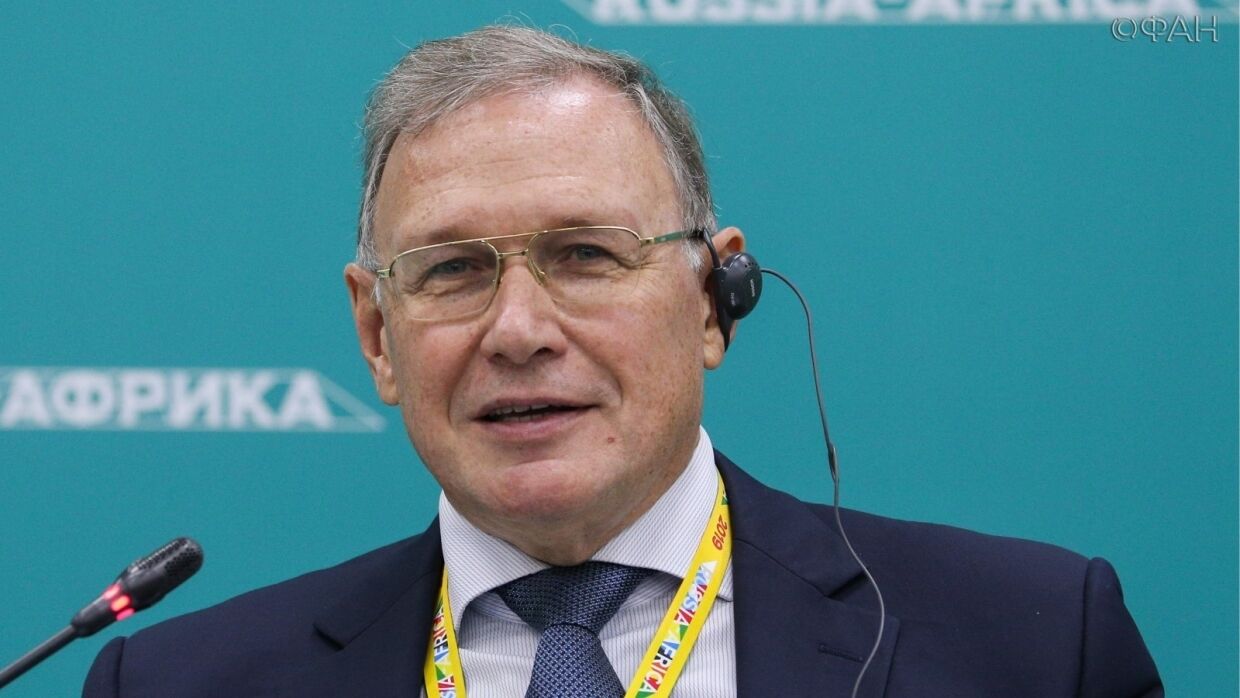
By Kester Kenn Klomegah
Russia is consistently working on strengthening multifaceted relations with Africa despite the numerous challenges.
After the first Russia-Africa summit held in Sochi, authorities have been moving to build on this new page in the history of Russia’s relations, based on shared values and interests, with African countries.
Within the framework of the joint declaration adopted in Sochi, the Ministry of Foreign Affairs of the Russian Federation created a Secretariat of the Russia-Africa Partnership Forum.
On May 18, the Deputy Director of the Department of Africa at the Russian Foreign Ministry, Mr Oleg Borisovich Ozerov, was appointed Ambassador-at-Large and Head of the Secretariat of the Russia-Africa Partnership Forum.
He is a diplomat with extensive experience at the Foreign Ministry, including with Arab and African countries. In 2010-2017, he was Ambassador to Saudi Arabia and in 2011-2017, Permanent Representative of the Russian Federation to the Organisation of Islamic Cooperation.
In this interview with Kester Kenn Klomegah, Mr Ozerov, Ambassador-at-Large and Head of the Secretariat of the Russia-Africa Partnership Forum, talks about the primary tasks of the Secretariat, current efforts at supporting Russian companies to work in Africa and the way forward with Russia-African relations.
Here are the interview excerpts:
Why it has become important, in the first place, to create the Secretariat of the Russia-Africa Partnership Forum within the Ministry of Foreign Affairs of the Russian Federation?
In October 2019, Sochi hosted the first-ever Russia-Africa Summit, ushering in a new era in the history of Russian-African cooperation. The outcomes of this event are evident in its final declaration. The first few points in the document outline decisions made by the event’s participants concerning the establishment of a Russia-Africa Partnership Forum as the Summit’s supreme body. It also stipulates that annual political consultations will be held between the Foreign Ministers of the Russian Federation and the African States acting as the present, former and future presidents of the African Union.
There needs to be coordinated action between Russian government bodies and economic actors. This is to ensure that the decisions reached at the previous Summit can be implemented, preparations for the next high-level Russian-African meeting made, and diplomatic support provided for communicating with the African Union and government bodies in Africa which oversee foreign policy.
This need for coordinated action has led to the establishment of the Russia-Africa Partnership Forum Secretariat within the Ministry of Foreign Affairs of the Russian Federation. Incidentally, one of its key objectives will be to organise and conduct the aforementioned political consultations. The first round of these consultations was held in July of this year.
The Secretariat has already held a few meetings. Could you please talk about some of the decisions that have been taken with regards to strengthening cooperation with Africa?
I would like to make a small correction. On September 9 this year, Moscow hosted the official presentation of the Russia-Africa Partnership Forum Secretariat and the Association of Economic Cooperation with the African States.
The senior management of the Secretariat’s working bodies were presented at this event. These included the heads of the coordinating council, research council, public council, and the working media group. These people are, respectively, Chairman of the Board and CEO of the Roscongress Foundation Alexander Stuglev, Director of the Institute for African Studies of the Russian Academy of Sciences Irina Abramova, Head of Rossotrudnichestvo Yevgeny Primakov, and Director General of TASS Sergey Mikhailov.
The first meeting of the coordinating council is planned for October this year. The research and public councils should meet accordingly shortly afterwards. Draft resolutions concerning the work of the Secretariat will be discussed at the aforementioned meetings, and the media will be informed of the outcomes in due course.
Is it possible to discuss the roles of the three councils (business, research and public) that were created during the meeting of 9 September?
The decision to set up the councils was taken much earlier, as the concept for the Russia-Africa Partnership Forum Secretariat was being drawn up, which was established, as we know, in June this year. The Secretariat does not have a business council. Issues regarding coordination between federal government bodies and the business sector come under the remit of the coordinating council.
The Association of Economic Cooperation with the African States also performs the role of a business council and operates in close collaboration with the Secretariat.
All three councils are staffed by highly qualified professionals. They include people specializing in international relations, economics and finance, science, business, society and the media, who provide expert support for the Secretariat’s operations.
In your objective view, is there a lot of potential in terms of increasing trade and economic cooperation between the African continent and Russia?
Speaking to the press at the end of the inaugural Russia-Africa Summit, President of the Russian Federation Vladimir Putin noted that in 2018, Russia’s trade with African states exceeded $20 billion. As pointed out by the Head of State, “It is absolutely feasible to reach higher, and bring the value of trade to, at least, $40 billion over the next few years.”
The official figures to come out of the Sochi Summit pay testament to the enormous potential of economic relations between Russia and Africa. Of particular note is the fact that delegations from 54 African nations took part in the event. Of these, 45 were led by Heads of State and Government. The Summit was also attended by the heads of eight regional organizations in Africa, 109 foreign ministers, and two vice presidents.
The Russia-Africa Economic Forum, which took place alongside the Summit, was attended by more than 6,000 participants from 104 countries and territories. These included more than 1,100 foreign business leaders, 1,400 Russian business leaders, and 2,200 members of official delegations from Russia and abroad. Ninety-two agreements, contracts, and memoranda of understanding were signed worth a total of more than RUB 1 trillion.
I would say that when organising and holding the next high-level Russian-African meeting, one of the main objectives will be to further reinforce the powerful momentum built up in Sochi in 2019 in terms of economic collaboration between Russia and African countries. We are now enjoying comprehensive and enduring collaboration which is founded on long-term programmes.
Doing business is not easy in Africa, but what kind of approach do you envisage adopting when it comes to dealing with such issues?
We see our mission as uniting economic operators from Russia and Africa and facilitating the sharing of information between them. We also aim to ensure there is political and diplomatic support for Russian businesses in African countries. The Secretariat will work in close collaboration with the aforementioned Association of Economic Cooperation with the African States.
We enjoy robust ties and have established communications with relevant Russian ministries and government bodies responsible for foreign trade, the Chamber of Commerce and Industry of the Russian Federation, the Russian Union of Industrialists and Entrepreneurs, the Coordinating Committee on Economic Cooperation with Sub-Saharan Africa (AfroCom) and many other organisations.
The task before us is to coordinate the actions of all stakeholders with the aim of effectively promoting Russia’s economic interests in Africa and to foster mutually beneficial cooperation with African nations.
Apart from a corporate business at the state level, Foreign Minister Sergey Lavrov has spoken about developing medium-sized enterprises. Is this part of your plan?
Small and medium-sized enterprises have already been using the AfroCom platform to work together with African countries for a long time. Incidentally, this organisation is planning to soon join the Association of Economic Cooperation with the African States.
Our embassies’ consular departments and trade missions – where they exist – are also providing assistance to small and medium-sized Russian businesses. They are helping them to find partners in African countries and to establish business ties.
In accordance with the decisions made at the inaugural Russia-Africa Summit, we will also help build partnerships for small and medium-sized businesses, and help them to be more active and effective. The plans and strategies, which will be employed to achieve this, will be discussed at the first meeting of the coordinating council this October, as well as at other events.
Looking at current developments and other active foreign players on the African continent, what do you see as the key challenges there?
In terms of intensifying economic collaboration between Russia and African countries, we need to anticipate the technical aspects of having Russian businesspeople, firms, and companies do business on the African continent.
In particular, this means looking at transport accessibility (by air and sea), processes and forms related to mutual settlements, making payments, investment, providing loans, hedging risk, providing legal services and insurance, etc. Work on these aspects must be done immediately, in parallel with work on organising the next Summit.
That said, however, the current coronavirus pandemic is causing considerable difficulties, at the moment. It is affecting international travel and is hindering economic activity across the board, including in African countries.
In terms of competing with other countries on the continent, we are counting on building relations between Russian firms and companies in such a way as to create a sense of camaraderie and solidarity when it comes to withstanding foreign competitors on the African market. This will be another area of focus for the Association of Economic Cooperation with the African States as it works in close collaboration with the Secretariat.
Why do you think Russia’s soft power is not what it was during the days of the Soviet Union?
I cannot say I fully agree with that statement. There are numerous examples of how Russia has achieved notable success through soft power. I would like to particularly draw attention to the fantastic work being done by the Russian news channel, Russia Today, under Margarita Simonyan’s leadership.
And I cannot ignore the fact that in many African countries, a number of important roles within the African Union and a host of other regional organizations are staffed by graduates of Soviet and Russian universities. This says a great deal about the nature of Russian-African partnership. And there is still a high degree of interest among African people in studying in the Russian Federation.
I am also aware that Rossotrudnichestvo (the Federal Agency for the Commonwealth of Independent States, Compatriots Living Abroad and International Humanitarian Cooperation) is working hard to make Russia’s humanitarian presence both more effective and more keenly felt abroad, including in African countries.
What plans do you have in terms of developing cooperation in education, the media and culture over the next few years?
The final declaration of the inaugural Russia-Africa Summit includes an entire section on our collaboration in science, culture, education and social ties.
Rossotrudnichestvo is the main body in Russia responsible for humanitarian cooperation, including with African states. At the next meeting of the public council, we intend to discuss this agenda in detail with Yevgeny Primakov, who heads the organisation. This discussion will take place within the context of implementing the decisions of the Sochi Summit and working towards fulfilling associated objectives.


