Connect with us

World

Ryan Collyer Reveals Reasons Behind Africa’s Significant Energy Deficit

Published

on

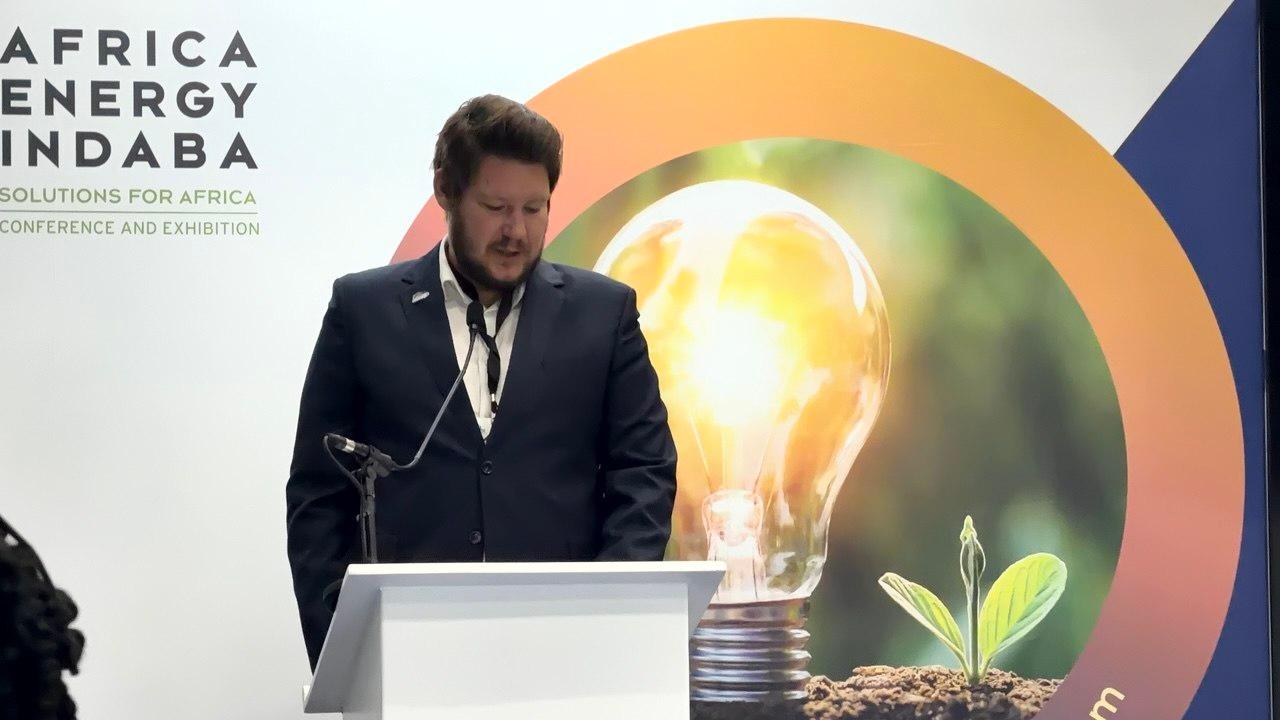
Ryan Collyer Rosatom CEO

By Kestér Kenn Klomegâh

Perhaps Russia’s state nuclear corporation, Rosatom, is at the frontline, shaping Africa’s energy security. And African countries are also accelerating coordinated efforts to build nuclear power plants primarily to supply their energy, which will drive industrialisation and boost power capacity for domestic utilisation.

Energy experts say adopting nuclear can further support a diverse energy mix, reduce reliance on fossil fuels, and help across the continent. Over the past two decades, Russia has been collaborating with African countries, adopting energy initiatives to provide power to approximately half the continent’s population, and making it an important component of Africa’s future energy strategy and solutions. At this point, however, it is necessary to underline the irreversible fact that Russia’s ultimate goal is to ensure long-term African energy security.

In this interview, Rosatom’s Chief Executive Director for Central and Southern Africa, Ryan Collyer, reiterates the strategic importance of Russia-Africa’s energy cooperation through strengthening bilateral agreements on collaboration on the peaceful use of nuclear energy. Collyer explains that the Russian approach is its ability to offer an integrated solution, from technology and financing to training and localisation. According to him, partnerships must be built on mutual benefit and on the principle of transparency. Here follows the interview excerpts:

What are the expectations, specifically in the nuclear energy sphere, for Africa during the forthcoming Russia–Africa Summit scheduled for 2026?

The expectation is a clear shift from dialogue to delivery. Over the past few years, we have built a strong foundation through agreements, feasibility discussions and partnerships. The 2026 Russia–Africa Summit is an opportunity to demonstrate tangible progress.

In practical terms, I would expect greater focus on implementation readiness. That includes regulatory development, human capital, financing models and localisation strategies. We also expect to see more structured cooperation in areas like small modular reactors, which are particularly relevant for many African grids, as well as stronger emphasis on education and training partnerships. Ultimately, the success of the Summit will be measured by how many initiatives move from concept to execution.

Why, despite many bilateral agreements, is Africa still experiencing a significant energy deficit?

Africa’s energy deficit is not a result of a lack of ambition or agreements. It is primarily a question of scale, financing and infrastructure readiness. Energy projects, especially large-scale ones, require long-term investment, stable policy frameworks and strong institutional capacity. Many countries are working under fiscal constraints, and at the same time, demand is growing rapidly due to population growth and urbanisation. So, even when progress is made, it can be outpaced by rising demand.

It is also important to understand that many agreements are not meant to deliver immediate infrastructure. They are part of a longer preparation cycle, including feasibility studies, regulatory development and workforce training. Nuclear projects in particular are long-term by nature, and while this can be perceived as slow progress, it is actually a reflection of the level of diligence required.

How do you assess the contribution of nuclear energy to climate change mitigation and technological development in Africa?

Nuclear energy plays a dual role in Africa’s development, both as a clean energy source and as a driver of technological advancement. From a climate perspective, nuclear provides reliable, low-carbon electricity at scale. Africa needs a significant expansion of its energy capacity to support economic growth, and this growth must be both stable and sustainable.

Nuclear allows countries to increase power generation without increasing emissions, while ensuring a consistent baseload supply. At the same time, its impact goes beyond electricity. Nuclear technologies support medicine, agriculture, water management and industrial processes. Across Africa, they are already used in areas such as cancer treatment, food preservation and environmental monitoring, making nuclear a broader platform for sustainable development.

In this context, Rosatom offers integrated solutions across the full nuclear value chain. This includes large-scale and small modular reactors, as well as advanced non-power applications such as nuclear medicine and irradiation technologies. Our focus is on delivering practical, tailored solutions that support long-term development and local capacity building.

Is Africa unprepared to deal with nuclear waste, as some critics suggest?

I would say that preparedness varies across countries, but it would be inaccurate to suggest that the issue is being ignored. Responsible nuclear programmes require a comprehensive approach to waste management from the very beginning. This includes legal frameworks, regulatory oversight, storage solutions and long-term planning. These elements are part of international best practice and are supported by organisations such as the IAEA. What is true is that this topic is often undercommunicated in the public space. It should be discussed more openly, because transparency builds trust.

Countries that are serious about nuclear energy understand that waste management is not optional. It is a core component of the programme, and it is addressed in parallel with all other aspects of development. Rosatom offers comprehensive solutions for spent fuel and radioactive waste management. These include technologies for safe storage, transportation, reprocessing and recycling of nuclear materials. In fact, advanced reprocessing solutions allow for the reuse of valuable components of spent fuel, significantly reducing the volume of waste and improving the overall sustainability of the nuclear cycle.

Nuclear power remains controversial. Why do you believe it is important for Africa, and what role does it play in the energy mix?

Africa needs a balanced and pragmatic energy strategy. The conversation should not be about choosing one technology over another, but about building an energy mix that is reliable, affordable and sustainable. Renewables will play a critical role and are already expanding rapidly. However, they are variable by nature. For industrialisation, countries also need stable, continuous power that is baseload. This is where nuclear can make a meaningful contribution. A diversified energy mix that includes renewables, nuclear, hydropower and other sources allows countries to reduce risk, improve energy security and support long-term economic growth.

Nuclear is not the only solution, but it is an important part of a resilient system, especially for countries with growing industrial ambitions. In this context, Rosatom is able to support countries with integrated energy solutions that combine reliability, sustainability and long-term partnership models, tailored to national development priorities.

How can we shift public perception, given the legacy of Chornobyl and Fukushima?

We cannot rewrite history, and we should not try to. Events like Chornobyl and Fukushima shaped public perception for a reason. The starting point is respect for those concerns, not dismissal. At the same time, what is often missing in the conversation is what happened after those events. Chornobyl, in particular, fundamentally reshaped the entire philosophy of nuclear safety. It led to a complete rethinking of reactor design, emergency response, and regulatory oversight. Independent regulators were strengthened, safety responsibilities were clearly separated from operators, and safety culture became not just a principle but a legal requirement supported by continuous drills and probabilistic risk assessments.

Technologically, the industry also changed dramatically. Modern reactors are designed to withstand even worst-case scenarios, with multi-layered “defence-in-depth” systems, core melt traps, and passive safety mechanisms that rely on natural physical processes rather than human intervention. These are not incremental improvements. They are the direct result of lessons learned at a very high cost. But facts alone do not change perception. People do not build trust through reports. They build it through experience and transparency. That is why our approach in Africa is deliberately open.

We create opportunities for students, young professionals and journalists to visit nuclear facilities, research centres and training programmes. When people can see how systems operate, how safety is managed, and how seriously it is taken, the conversation becomes more grounded and less abstract. There is also an important human dimension that is often overlooked.

The history of Chornobyl is not only a story of tragedy. It is also a story of professionalism, responsibility and the people who managed the crisis and generated the knowledge that made today’s safety standards possible. Acknowledging that the full picture helps move the discussion away from fear alone toward understanding. At the same time, we need to broaden the narrative. Nuclear is not only about power generation. It is about cancer treatment, food security, water management and high-skilled employment. When communities begin to connect nuclear technology with real benefits in their own lives, it stops being an abstract risk and starts becoming a practical solution. Ultimately, perception does not change through persuasion. It changes through consistency. Through transparency, long-term engagement, and real-world impact.

What are your final thoughts on Russia’s preparedness to support Africa’s nuclear ambitions?

Russia has demonstrated that it is committed to long-term partnerships in Africa, particularly in the nuclear sector. We are already seeing concrete examples of cooperation in areas such as project development, education and skills transfer. The key strength of the Russian approach is its ability to offer an integrated solution, from technology and financing to training and localisation. Partnerships must be built on mutual benefit and transparency. Africa’s priorities are clear: energy security, economic development and local capacity building. Any partner that is ready to contribute to these goals consistently and practically will have a meaningful role to play. If we look country by country, the picture becomes even more interesting.

Take Ethiopia. This is a country thinking long-term about energy security and industrialisation. It has strong hydropower, but also understands the need to diversify. Ethiopia is prepared to take a big step towards nuclear energy. In Rwanda, the approach is different. It is focused on innovation and speed. There is a strong interest in small and flexible nuclear technologies, alongside active use of nuclear science in healthcare and agriculture. What stands out is the clarity of vision and pace of implementation.

Then, there is Namibia. As a major uranium producer, the question is how to move up the value chain. Partnerships can help connect resources to technology, skills and future energy applications. So, Russia’s role is not one-size-fits-all.

The real strength lies in adapting to each country’s strategy. If that continues, nuclear cooperation becomes not just about energy, but about shaping long-term technological development. Rosatom is one of the few global players capable of delivering the entire nuclear value chain. This includes reactor technologies, fuel supply, waste management solutions, including reprocessing, as well as long-term operational support and human capital development. This comprehensive capability is what allows us to move projects from concept to reality in a structured and sustainable way.


Click to comment

Leave a Reply

Your email address will not be published. Required fields are marked *

World

Africa Startup Deals Activity Rebound, Funding Lags at $110m in April 2026

Published

on

By Adedapo Adesanya

Africa’s startup ecosystem showed tentative signs of recovery in April 2026, with deal activity picking up after a subdued March, though funding volumes remained weak by recent standards, Business Post gathered from the latest data by Africa: The Big Deal.

In the review month, a total of 32 startups across the continent announced funding rounds of at least $100,000, raising a combined $110 million through a mix of equity, debt and grant deals, excluding exits. The figure represents a notable rebound from the 22 deals recorded in March, suggesting renewed investor engagement after a slow start to the second quarter.

However, the recovery in deal count did not translate into stronger capital inflows. April’s $110 million total marks the lowest monthly funding volume since March 2025, when startups raised $52 million, and falls significantly short of the previous 12-month average of $275 million per month.

The data highlights a growing divergence between investor activity and cheque sizes, with more deals being completed but at smaller ticket values.

The data showed that, despite this, looking at the numbers on a month-to-month basis does not tell the whole story of venture funding cycles as a broader 12-month rolling view presents a more stable picture of Africa’s startup ecosystem.

Based on this, over the 12 months to April 2026 (May 2025–April 2026), startups across the continent raised a total of $3.1 billion, excluding exits – largely in line with the range observed since August 2025. The figure has hovered around $3.1 billion, with only marginal deviations of about $90 million, indicating relative stability despite recent monthly dips.

A closer breakdown shows that equity financing accounted for $1.7 billion of the total, while debt funding contributed $1.4 billion, alongside approximately $30 million in grants. This composition underscores the growing role of debt in sustaining overall funding levels.

The data suggests that while headline monthly figures may point to short-term weakness, the broader funding environment remains resilient, supported in large part by continued activity in debt financing, even as equity investments show signs of moderation.

The report said if April’s total amount was lower than March’s overall, it was higher on equity: $74 million came as equity and $36 million as debt, while March had been overwhelmingly debt-led ($55 million equity, $96 million debt).

In the review month, the deals announced include Egyptian fintech Lucky raising a $23 million Series B, while Gozem ($15.2 million debt) and Victory Farms ($15 milliomn debt) did most of the heavy lifting on the debt side. Ethiopia-based electric mobility start-up Dodai announced $13m ($8m Series A + $5m debt).

April also saw two exits as Nigeria’s Bread Africa was acquired by SMC DAO as consolidation continues in the country’s digital asset sector, and Egypt’s waste recycling start-up Cyclex was acquired by Saudi-Egyptian investment firm Edafa Venture.

Year-to-Date (January to April), startups on the continent have raised a total of $708 million across 124 deals of at least $100,000, excluding exits. The funding mix was almost evenly split, with $364 million in equity (51.4 per cent) and $340 million in debt (48.0 per cent), alongside a small contribution from grants (0.6 per cent). This is an early sign that funding startups is taking a different shape compared to what the ecosystem witnessed in 2025.

For instance, in the first four months of last year, startups raised a higher $813 million across a significantly larger 180 deals. More notably, last year’s funding was heavily skewed toward equity, which accounted for $652 million (80.1 per cent) compared to just $138 million in debt (16.9 per cent).

The year-on-year comparison points to two clear trends: a contraction in deal activity as evidenced by a 31 per cent drop, and a 13 per cent decline in total funding. At the same time, the composition of capital has shifted meaningfully, with debt now playing a much larger role in sustaining funding volumes.

Continue Reading

World

Nigeria Summons South Africa Envoy Over Xenophobic Attacks

Published

on

South Africa Xenophobic Attacks

By Adedapo Adesanya

Nigeria’s Ministry of Foreign Affairs has summoned South Africa’s Acting High Commissioner to complain about xenophobic attacks against its citizens, weeks after a similar complaint was lodged by Ghana.

The ministry called the meeting to convey “profound concern regarding recent events that have the potential to impact the established cordial relations between Nigeria and South Africa,” it said in a statement posted on X on Monday.

It noted that the country is aware of the growing discontent among Nigerians concerning the treatment of their nationals in South Africa, but implored calm while it plans to repatriate those willing to return home voluntarily, amid growing fears that recent attacks on foreigners there could escalate.

Foreign Minister, Mrs Bianca Odumegwu-Ojukwu, said 130 applicants had already registered for the exercise, adding that the number was expected to rise.

She expressed President Bola Tinubu’s concern about the attacks in the southern African nation, and condemned the violence against foreign nationals and demonstrations characterised by “xenophobic rhetoric, hate speeches and incendiary anti-migrant statements”.

“Nigerian lives and businesses in South Africa must not continue to be put at risk, and we remain committed to working to explore with South Africa ways to put an end to this,” she said.

She cited the killing of two Nigerians in separate incidents involving local security personnel, insisting that her government was demanding justice.

She said the Nigerian president’s priority was for the safety of citizens and “consequently, arrangements are currently underway to collate details of Nigerians in South Africa for voluntary repatriation flights for those seeking assistance to return home”.

According to reports, four Ethiopian nationals have also been killed in recent weeks, while there have been attacks on citizens of other African countries.

South African President Cyril Ramaphosa has condemned the attacks but also cautioned foreigners to respect local laws.

He used his Freedom Day address last week – marking the country’s first democratic elections in 1994 – to remind South Africans of the support other African nations had given in the struggle against the racist system of apartheid.

However, anti-immigrant groups in South Africa have accused foreigners of being in the country illegally, taking jobs from locals and having links to crime, especially drug trafficking.

They have also reportedly been stopping people outside hospitals and schools, demanding to see their identity papers.

Last month, Ghana summoned South Africa’s top envoy after a video was widely shared showing a Ghanaian man being challenged to prove he had the correct immigration papers.

Anti-immigrant sentiment rose earlier this year after reports that the head of the Nigerian community in the port city of KuGompo (formerly East London) had been installed in a traditional role often translated as “king”. Some South Africans in the local area saw this as an attempt to grab political power and kicked against it.

South Africa is home to about 2.4 million migrants, just less than 4 per cent of the population, according to official figures. However, many more are thought to be in the country without official authorisation. Most come from neighbouring countries such as Lesotho, Zimbabwe and Mozambique, which have a history of providing migrant labour to their wealthy neighbour.

Continue Reading

World

United States Building Entrepreneurial Partnerships With Africa

Published

on

US-Africa Business Summit

By Kestér Kenn Klomegâh

Within the heightening of geopolitical tension, the United States is actively building diversified entrepreneurial partnerships with African countries, reviewing and restyling working relations with relevant institutions and adopting new policy frameworks largely based on African-led initiatives. The economic policy architecture concentrates more on bilateral partnerships, but with some variation of investments in infrastructure and exploiting natural resources, while taking into account the needs of individual African countries.

In the context of broadening economic dimensions, the Corporate Council on Africa (CCA) and the Government of the Republic of Mauritius have agreed to hold the 18th US-Africa Business Summit on July 26-29, 2026.

According to reports, Dhananjay Ramful, Minister of Foreign Affairs, Regional Integration and International Trade of the Republic of Mauritius and Ms Florizelle (Florie) Liser, President and CEO of CCA, signed the agreement on the sidelines of the United Nations General Assembly in New York.

The US-Africa Business Summit is one of the most important business platforms that annually brings together African Heads of State and Government, Ministers, high-level US and African Government Officials, CEOs, and senior executives of the US and African companies to explore investment, trade and commercial opportunities.

The selection of Mauritius as the host country for the 18th US-Africa Business Summit bears testimony to the deep commitment of the country to play a key role in strengthening a mutually beneficial trade and investment relationship between Africa and the United States. Both envision facilitating bilateral trade and building long-term and high-value economic partnerships.

Positioned at the crossroads of Africa and Asia in the Indian Ocean, Mauritius is recognised for its political stability, reform-driven economy, strong governance, innovation-friendly policies and high-quality local infrastructure. It offers a strong regulatory framework, a sophisticated financial services sector, and a proven track record as a gateway for investment into Africa. As a dynamic financial and trade hub, Mauritius is an ideal setting for the 2026 US-Africa Business Summit.

With momentum building across both public and private sectors, this Summit provides an excellent opportunity for participants to engage on critical issues impacting the US-Africa trade and investment relationship and strike landmark deals in key sectors such as energy, infrastructure, agri-business, health, ICT and financial services that will have a high impact on the lives of African and American citizens, enterprises, workers and consumers.

In a thoroughly analytical study, the CCA has broadened its operational focus to the entire Africa, strategically dealing with institutions that matter for implementing its economic policy initiatives. In order to ensure a significant degree of success, CCA is seriously addressing the complex diversities on the continent, explaining to leaders within the political structures the essence of large-scale cooperation.

Florie Liser, President & CEO of CCA, said: “We are delighted to bring the 2026 U.S.-Africa Business Summit to Mauritius, a country known for its strategic location, strong governance, and dynamic business environment. This Summit will provide a critical platform to strengthen U.S.-Africa economic relations, explore investment opportunities, and foster partnerships that will increase two-way trade.”

Liser underlined the fact that high possibility exists for stronger engagement through initiatives that support trade and investment (including renewal of the African Growth and Opportunity Act (AGOA), and continued policy and financing support by key US government agencies including the Export-Import Bank of the U.S. (Eximbank), Development Finance Corporation (DFC), US Trade and Development Agency, Departments of State and Commerce, US Trade Representative and others.

The Dhananjay Ramful, Minister of Foreign Affairs, Regional Integration and International Trade of the Republic of Mauritius, stated: “Mauritius is honoured to host the 2026 US -Africa Business Summit and play a key role in strengthening a mutually beneficial trade and investment relationship between Africa and the United States. Our nation has long been a bridge between Africa and the world, and we are committed to creating an enabling environment that encourages trade, innovation, and inclusive growth. Hosting this prestigious gathering further underscores Mauritius’ role as a hub for investment and partnership in Africa.”

The United States brings a distinct and compelling value proposition to partnerships in Africa, grounded in transparency, high standards, and a long-term commitment to mutually beneficial US-Africa economic and commercial partnerships. In addition, the US companies are known for delivering quality products and services, fostering innovation, and building partnerships that prioritise local value creation, skills transfer, and economic impact. These are not short-term engagements—they are investments designed to support businesses and growth on both sides of the Atlantic.

That means continuing to mobilise capital, support competitive US participation in African markets, and ensure that partnerships are responsive to the priorities of African countries. The role of the Corporate Council on Africa is to help bridge that gap—connecting businesses to opportunities, advocating for policies that enable investment, and ensuring that the US–Africa commercial relationship remains strong, competitive, and mutually beneficial.

The Corporate Council on Africa (CCA) is the leading US business association focused solely on connecting business interests in Africa. It encourages US-Africa private sector partnerships and advocates for a business climate conducive to long-term investment. Founded in 1993, CCA has been at the forefront of fostering strategic partnerships, promoting investments, and facilitating trade between the United States and the diverse nations of Africa.

Continue Reading

Trending