World
Russian Researchers Roadmap Africa’s Investment Sectors for Entrepreneurs
By Kestér Kenn Klomegâh
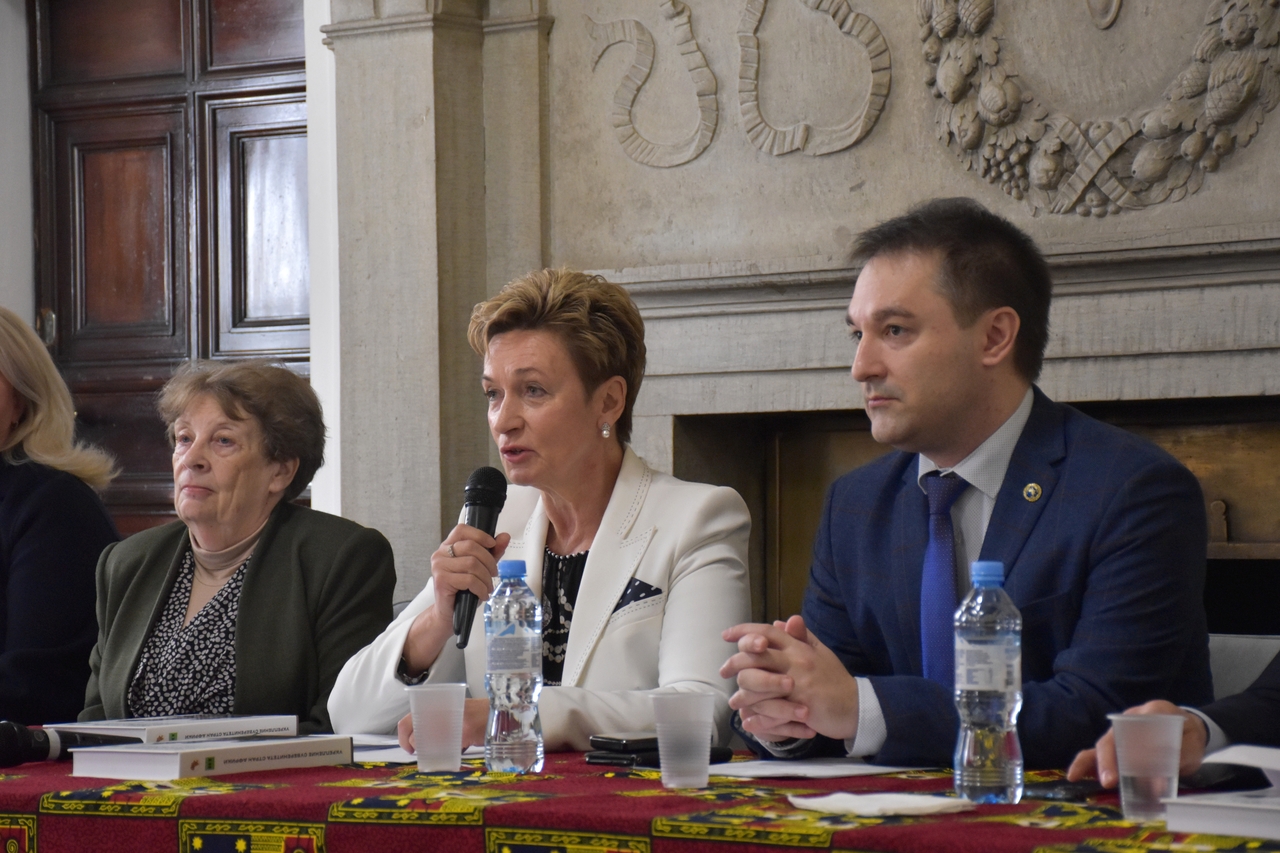
The Centre for Transition Economy Studies of the Institute for African Studies of the Russian Academy of Sciences held a two-day scientific conference under the theme: “Industrial Development Strategies of African Countries” on March 18-19. The conference was opened by Professor Irina Abramova, Director of the Institute for African Studies. More than 40 researchers and experts from Russia, South Africa, Nigeria, Egypt and North Macedonia took part in the event.
The conference focused on a wide range of significant issues related to Africa’s industrial development, the modernisation of the African production base, and the potential for Russian-African cooperation. The in-person part of the conference focused on the development of the manufacturing and extractive industries, special economic zones, energy and transport infrastructure, digitalisation, and the agro-industrial complex. The second day of the conference was conducted as an online discussion in English, featuring African colleagues on the localisation of production chains in Africa, covering both agricultural and mineral processing.
Topics of the Conference included:
- Continental, regional and national programs and plans of industrial development in Africa. Prospects of continental and regional production chains.
- Study of the manufacturing market in African countries: manufacturing and agro-industrial complexes
- Energy, transport, and digitalisation: necessary infrastructure for industrial development.
- Interests of Multinational Corporations in Africa: conditions, forms of activities and geographical distribution. The role of free economic zones.
- Government policy regarding Multinational Corporations and control over export-import flows.
- The role of international organisations and activities of external actors.
- Possible areas and prospects for expanding mutually beneficial cooperation for Russian companies in Africa.
Experts in African studies from Russia, as well as representatives of the Russian government and business circles involved in trade and economic cooperation with African countries, actively participated. One of the significant outputs presented at the plenary session of the conference was the full-text on the African Development Strategy database created by Professors D. A. Degterev and A. D. Novikov, together with the staff of the IAS. The database covers more than 400 official strategic planning documents across 53 countries on the continent for the period 1997–2025. It systematises them under six thematic areas: long-term and medium-term development strategies, industrial policy, ICT, agriculture and the water sector.
The plenary session featured nine reports covering key dimensions of Africa’s industrial development. There were issues of trade and industrial potential of the continent that were highlighted in the report on the export specificity of African machine-building industries: based on ITC Trade Map data (2019–2024) that shows duties of South Africa, Tunisia, and industrial production, including on intracontinental markets.
Institutional mechanisms of Russian-African economic cooperation were reviewed in the report on the activities of Intergovernmental Commissions: the number of these ICC increased from four (4) in 2023 to nine (9) in 2025, and the volume of investment funds to support African projects is planned to increase, at least, to Rouble 5 billion for 2026–2027.
The conceptual dimension of financing industrialisation was presented through a critique of universal Western narratives and the justification for the need for an “application finance strategy”—a country model that takes into account the economy of Africa. Practical aspects of Russia’s investment presence in Africa are characterized on the example of projects in the countries of the Alliance of Sahel States (AES) with an emphasis on the specific risks of the subregion (DM Sinitsyn, VEB.RF). Digitalisation and artificial intelligence development in sub-Saharan African countries were also analysed and presented at the conference.
Russian-African cooperation in the field of technologies and education was covered in the reports on the transfer of agrobiotechnologies through the Afro-Russian Centre for Technology Development in Kampala, within which, in 2025/2026, this period, in which concretely 467 citizens of African countries were trained in Russian universities (NA Goncharova, FGBU “Agroexport”).
The competitive struggle of foreign players for African markets and the possibilities of Russian participation were considered in the reports on the position of the continent on the world energy markets, supplies of ground vehicles, and activities of pharmaceuticals for Africa. The digital dimension of industrialisation was covered by the reports on the cyber potential of West Africa, the formation of data processing centres in the industrial strategy of South Africa, and the digitalisation strategies of Algeria and Morocco.
The theme of most speeches, at the conference, became a reflection on the ‘disconnection’ between the proclaimed goals of industrialisation and the actual structure of African economies: despite the widespread proliferation of pre-national strategic documents, industries in the continent’s total GDP has not exceeded 10–12% for more than two decades, and exports still comprise mainly unprocessed raw materials.
In this regard, a number of reports justify the need to transition from external financial models formed by international organisations to sovereign country strategies based on state political, industrial and human resources. Global South—including, to deepen Russian-African cooperation in the spheres of technology, education and investment.
A collective monograph is, however, planned for publication following the conference. The event included the presentation of the full-text database on African development strategies, prepared by the team of the Institute for African Studies of the Russian Academy of Sciences.
World
Nigeria Summons South Africa Envoy Over Xenophobic Attacks
By Adedapo Adesanya
Nigeria’s Ministry of Foreign Affairs has summoned South Africa’s Acting High Commissioner to complain about xenophobic attacks against its citizens, weeks after a similar complaint was lodged by Ghana.
The ministry called the meeting to convey “profound concern regarding recent events that have the potential to impact the established cordial relations between Nigeria and South Africa,” it said in a statement posted on X on Monday.
It noted that the country is aware of the growing discontent among Nigerians concerning the treatment of their nationals in South Africa, but implored calm while it plans to repatriate those willing to return home voluntarily, amid growing fears that recent attacks on foreigners there could escalate.
Foreign Minister, Mrs Bianca Odumegwu-Ojukwu, said 130 applicants had already registered for the exercise, adding that the number was expected to rise.
She expressed President Bola Tinubu’s concern about the attacks in the southern African nation, and condemned the violence against foreign nationals and demonstrations characterised by “xenophobic rhetoric, hate speeches and incendiary anti-migrant statements”.
“Nigerian lives and businesses in South Africa must not continue to be put at risk, and we remain committed to working to explore with South Africa ways to put an end to this,” she said.
She cited the killing of two Nigerians in separate incidents involving local security personnel, insisting that her government was demanding justice.
She said the Nigerian president’s priority was for the safety of citizens and “consequently, arrangements are currently underway to collate details of Nigerians in South Africa for voluntary repatriation flights for those seeking assistance to return home”.
According to reports, four Ethiopian nationals have also been killed in recent weeks, while there have been attacks on citizens of other African countries.
South African President Cyril Ramaphosa has condemned the attacks but also cautioned foreigners to respect local laws.
He used his Freedom Day address last week – marking the country’s first democratic elections in 1994 – to remind South Africans of the support other African nations had given in the struggle against the racist system of apartheid.
However, anti-immigrant groups in South Africa have accused foreigners of being in the country illegally, taking jobs from locals and having links to crime, especially drug trafficking.
They have also reportedly been stopping people outside hospitals and schools, demanding to see their identity papers.
Last month, Ghana summoned South Africa’s top envoy after a video was widely shared showing a Ghanaian man being challenged to prove he had the correct immigration papers.
Anti-immigrant sentiment rose earlier this year after reports that the head of the Nigerian community in the port city of KuGompo (formerly East London) had been installed in a traditional role often translated as “king”. Some South Africans in the local area saw this as an attempt to grab political power and kicked against it.
South Africa is home to about 2.4 million migrants, just less than 4 per cent of the population, according to official figures. However, many more are thought to be in the country without official authorisation. Most come from neighbouring countries such as Lesotho, Zimbabwe and Mozambique, which have a history of providing migrant labour to their wealthy neighbour.
World
United States Building Entrepreneurial Partnerships With Africa
By Kestér Kenn Klomegâh
Within the heightening of geopolitical tension, the United States is actively building diversified entrepreneurial partnerships with African countries, reviewing and restyling working relations with relevant institutions and adopting new policy frameworks largely based on African-led initiatives. The economic policy architecture concentrates more on bilateral partnerships, but with some variation of investments in infrastructure and exploiting natural resources, while taking into account the needs of individual African countries.
In the context of broadening economic dimensions, the Corporate Council on Africa (CCA) and the Government of the Republic of Mauritius have agreed to hold the 18th US-Africa Business Summit on July 26-29, 2026.
According to reports, Dhananjay Ramful, Minister of Foreign Affairs, Regional Integration and International Trade of the Republic of Mauritius and Ms Florizelle (Florie) Liser, President and CEO of CCA, signed the agreement on the sidelines of the United Nations General Assembly in New York.
The US-Africa Business Summit is one of the most important business platforms that annually brings together African Heads of State and Government, Ministers, high-level US and African Government Officials, CEOs, and senior executives of the US and African companies to explore investment, trade and commercial opportunities.
The selection of Mauritius as the host country for the 18th US-Africa Business Summit bears testimony to the deep commitment of the country to play a key role in strengthening a mutually beneficial trade and investment relationship between Africa and the United States. Both envision facilitating bilateral trade and building long-term and high-value economic partnerships.
Positioned at the crossroads of Africa and Asia in the Indian Ocean, Mauritius is recognised for its political stability, reform-driven economy, strong governance, innovation-friendly policies and high-quality local infrastructure. It offers a strong regulatory framework, a sophisticated financial services sector, and a proven track record as a gateway for investment into Africa. As a dynamic financial and trade hub, Mauritius is an ideal setting for the 2026 US-Africa Business Summit.
With momentum building across both public and private sectors, this Summit provides an excellent opportunity for participants to engage on critical issues impacting the US-Africa trade and investment relationship and strike landmark deals in key sectors such as energy, infrastructure, agri-business, health, ICT and financial services that will have a high impact on the lives of African and American citizens, enterprises, workers and consumers.
In a thoroughly analytical study, the CCA has broadened its operational focus to the entire Africa, strategically dealing with institutions that matter for implementing its economic policy initiatives. In order to ensure a significant degree of success, CCA is seriously addressing the complex diversities on the continent, explaining to leaders within the political structures the essence of large-scale cooperation.
Florie Liser, President & CEO of CCA, said: “We are delighted to bring the 2026 U.S.-Africa Business Summit to Mauritius, a country known for its strategic location, strong governance, and dynamic business environment. This Summit will provide a critical platform to strengthen U.S.-Africa economic relations, explore investment opportunities, and foster partnerships that will increase two-way trade.”
Liser underlined the fact that high possibility exists for stronger engagement through initiatives that support trade and investment (including renewal of the African Growth and Opportunity Act (AGOA), and continued policy and financing support by key US government agencies including the Export-Import Bank of the U.S. (Eximbank), Development Finance Corporation (DFC), US Trade and Development Agency, Departments of State and Commerce, US Trade Representative and others.
The Dhananjay Ramful, Minister of Foreign Affairs, Regional Integration and International Trade of the Republic of Mauritius, stated: “Mauritius is honoured to host the 2026 US -Africa Business Summit and play a key role in strengthening a mutually beneficial trade and investment relationship between Africa and the United States. Our nation has long been a bridge between Africa and the world, and we are committed to creating an enabling environment that encourages trade, innovation, and inclusive growth. Hosting this prestigious gathering further underscores Mauritius’ role as a hub for investment and partnership in Africa.”
The United States brings a distinct and compelling value proposition to partnerships in Africa, grounded in transparency, high standards, and a long-term commitment to mutually beneficial US-Africa economic and commercial partnerships. In addition, the US companies are known for delivering quality products and services, fostering innovation, and building partnerships that prioritise local value creation, skills transfer, and economic impact. These are not short-term engagements—they are investments designed to support businesses and growth on both sides of the Atlantic.
That means continuing to mobilise capital, support competitive US participation in African markets, and ensure that partnerships are responsive to the priorities of African countries. The role of the Corporate Council on Africa is to help bridge that gap—connecting businesses to opportunities, advocating for policies that enable investment, and ensuring that the US–Africa commercial relationship remains strong, competitive, and mutually beneficial.
The Corporate Council on Africa (CCA) is the leading US business association focused solely on connecting business interests in Africa. It encourages US-Africa private sector partnerships and advocates for a business climate conducive to long-term investment. Founded in 1993, CCA has been at the forefront of fostering strategic partnerships, promoting investments, and facilitating trade between the United States and the diverse nations of Africa.
World
Outcome of Russia-Congo Strategic Talks
By Kestér Kenn Klomegâh
Congolese President Denis Sassou Nguesso tightly embraced and shook hands with President Vladimir Putin, signalling the highest level of cordial friendship, and later settled down for official talks focusing on strengthening the multifaceted Russian-Congolese comprehensive strategic economic partnership, including in the context of the upcoming high-level third Russia-Africa Summit scheduled for October 2026.
In St George’s Hall of the Grand Kremlin Palace, Putin told his Congolese counterpart, Denis Nguesso, and the delegation that there were “good prospects for developing relations in a variety of areas” and reminded them that the full-fledged relations between Russia and the Congo have been making strides. Russian companies are ready and eager to work in the country’s market, primarily because the political situation has been stable, which is good for business. The Intergovernmental commissions are operational.
Denis Nguesso’s official visit, from April 28 to 29, has immense significance for the Kremlin. Moscow is stepping up to tackle important corporate investments ranging from an industrial and technological standpoints, which open pathways for knowledge transfer, human capital development, and Congo’s integration into defence innovation value chains. At the geo-strategic level, Moscow is seemingly positioning itself as a regional security hub and as an incredible partner, particularly in Congo, while strengthening a broader strategic influence in the central African region.
On the agenda, Russia will begin design work this year for the construction of an oil product pipeline in Congo, under an agreement signed in 2024. The Pointe-Noire – Loutete – Moluko-Tresho oil product pipeline that Russia plans to build in the African country under an intergovernmental agreement is supposed to go into operation by the end of 2029.
It was reported earlier that Russia is hoping to create a channel for shipping oil products that is protected from sanctions by building this pipeline in the Congo, as well as becoming a strategic partner in ensuring the energy security of the whole region. The agreement on the project, which was signed in Moscow on September 28, 2024, provides for the creation of favourable conditions to carry out the pipeline’s construction.
Under the agreement, the authorised organisations responsible for the implementation of the project are Zakneftegazstroy-Prometei LLC and the National Petroleum Company of Congo (SNPC), which is the client of the project. They will form a joint venture to carry out the project in which the Russian side will own a 90% stake and the Congolese side will hold 10%.
A build-own-operate-transfer concession agreement will be signed with the joint venture to build and operate the pipeline for 25 years, with a guaranteed price for transport that will ensure the utilisation of the pipeline and a return on investment in the project. The Russian Ambassador to Congo, Georgy Chepik, said earlier that the pipeline will run between the country’s two largest cities, Pointe-Noire and the capital Brazzaville.
In particular, the two sides discussed the prospects of implementing joint projects and forging mutual cooperation prospects in a wide range of areas, including geological prospecting, energy, logistics, agriculture, trade, and manufacturing. The sides also “noted readiness to gradually increase their transport cooperation. The Republic of Congo is seen as a key logistics hub in Central Africa and a crucial participant in a promising international transport route between Russia and the African continent,” the statement said.
Nearly 80% of the population still lives in abject poverty, even though the country boasts huge resources. Congo is the fourth-largest oil producer in the Gulf of Guinea, providing the country with a high degree of potential prosperity, despite its internal ethnic conflicts and economic disparity. It has a large untapped mineral wealth and large untapped metal, gold, iron, and phosphate deposits. In 2018, the Republic of the Congo joined the Organisation of Petroleum Exporting Countries (OPEC).
Historical records show that Denis Nguesso, several times as a civil servant during the Soviet era, and as president, visited Russia, including participation in the two Russia-Africa Summits held in Sochi and St. Petersburg, and consequently was gifted with a collage of photographs and Pravda newspaper clips documenting these visits. President Putin has also awarded him with the Order of Honour, while Moscow State University of International Relations (MGIMO) gifted him with a Doctorate Degree. The document, published on the Kremlin website, for instance, says Nguesso has been honoured with the award “for his major contribution to boosting and strengthening relations between the Russian Federation and the Republic of the Congo.”
Congolese Denis Nguesso, who has shuttled frequently between his city and Moscow, underlined the fact that bilateral relations have been developing for many decades. These are ties of solidarity and cooperation that bind the two parties in all areas, including security, defence, and the economy. He emphasised the point that the time has arrived to act more concretely, to accelerate the implementation of the jointly elaborated programme. Both parties will have the opportunity to sign more bilateral agreements in Brazzaville in September 2026, before the new Russia-Africa summit, to be held in Moscow.
The third Summit is expected to solidly reaffirm the development of relations between African states and the Russian Federation. For decades, Russia has supported Africa’s ideals for freedom, independence and sovereignty. Next, Russia-Africa cooperation has a big future. Africa is rich in resources. And Russia contributes to efforts to ease the debt burden that African countries are facing. The total debt Russia has cancelled, previously and so far, stands at $23 billion, according to reports.
In addition, Russia and African states have coordinated efforts for building a new, fairer global architecture, and further working together to protect international law, the UN Charter and the central role of that global organisation, while at the same time, trying to coordinate their positions on the main issues on the international agenda. African regional structures have substantially enhanced these geopolitical profiles, and within the general objectives of the African Union.
-
Feature/OPED6 years agoDavos was Different this year
-
Travel/Tourism10 years ago
Lagos Seals Western Lodge Hotel In Ikorodu
-
Showbiz3 years agoEstranged Lover Releases Videos of Empress Njamah Bathing
-
Banking8 years agoSort Codes of GTBank Branches in Nigeria
-
Economy3 years agoSubsidy Removal: CNG at N130 Per Litre Cheaper Than Petrol—IPMAN
-
Banking3 years agoSort Codes of UBA Branches in Nigeria
-
Banking3 years agoFirst Bank Announces Planned Downtime
-
Sports3 years agoHighest Paid Nigerian Footballer – How Much Do Nigerian Footballers Earn