Connect with us

General

Renonwed Poet J.P. Clark Dies at 86

Published

on

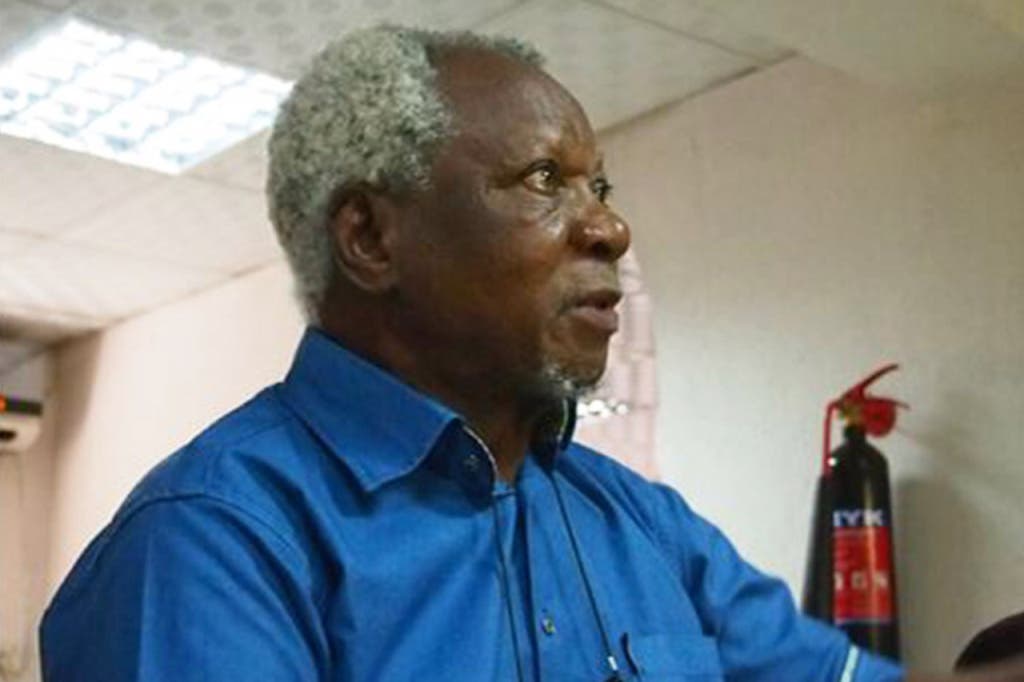
Prof JP Clark

By Adedapo Adesanya

One of Nigeria’s golden generation poets, Prof John Pepper Clark-Bekederemo, is dead. The renowned writer breathed his last on Tuesday, October 13, 2020, at the age of 86.

This was disclosed in a statement signed by Mr C. C. Clark and Mr Ilaye Clark on behalf of the family today.

“The Clark-Fuludu Bekederemo family of Kiagbodo Town, Delta State, wishes to announce that Emeritus Professor of Literature and Renowned Writer, Prof. John Pepper Clark, has finally dropped his pen in the early hours of today, Tuesday, 13 October 2020.

“Prof. J. P. Clark has paddled on to the great beyond in comfort of his wife, children and siblings, around him.

“The family appreciates your prayers at this time,” the statement said.

He was born on December 6, 1933, in Kiagbodo to an Ijaw father and Urhobo mother in present-day Delta State.

Prof Clark received his early education at the Native Authority School, Okrika (Ofinibenya-Ama), in Burutu LGA (then Western Ijaw) and the prestigious Government College in Ughelli, and his BA degree in English at the University of Ibadan, where he edited various magazines, including the Beacon and The Horn.

Upon graduation from Ibadan in 1960, he worked as an information officer in the Ministry of Information, in the old Western Region of Nigeria, as features editor of the Daily Express, and as a research fellow at the Institute of African Studies, University of Ibadan.

He served for several years as a professor of English at the University of Lagos, a position from which he retired in 1980. While at the University of Lagos he was co-editor of the literary magazine Black Orpheus.

In 1982, along with his wife Ebun Odutola (a professor and former director of the Centre for Cultural Studies at the University of Lagos), he founded the PEC Repertory Theatre in Lagos.

A widely travelled man, Prof Clark held visiting professorial appointments at several institutions of higher learning, including Yale and Wesleyan University in the United States.

He was most noted for his poetry, including Poems (Mbari, 1961), a group of 40 lyrics that treat heterogeneous themes; A Reed in the Tide (Longmans, 1965), occasional poems that focus on Clark’s indigenous African background and his travel experience in America and other places; Casualties: Poems 1966–68 (USA: Africana Publishing Corporation, 1970), which illustrate the horrendous events of the Nigeria-Biafra war and A Decade of Tongues (Longmans, Drumbeat series, 1981), a collection of 74 poems, all of which apart from “Epilogue to Casualties” (dedicated to Michael Echeruo) were previously published in earlier volumes;

Others are State of the Union (1981), which highlights Clark’s apprehension concerning the socio-political events in Nigeria as a developing nation and Mandela and Other Poems (1988), which dealt with the perennial problem of ageing and death.

His dramatic work included Song of a Goat – premiered at the Mbari Club in 1961, a tragedy cast in the Greek classical mode in which the impotence of Zifa, the protagonist, causes his wife Ebiere and his brother Tonye to indulge in an illicit love relationship that resulted in suicide. This play was followed by a sequel, The Masquerade (1964), in which Dibiri’s rage culminates in the death of his suitor Tufa.

Other works include The Raft (1964), in which four men drifted helplessly down the Niger aboard a log raft; Ozidi (1966), a transcription of a performance of an epic drama of the Ijaw people and The Boat (1981), a prose drama that documents Ngbilebiri history.

Other details concerning his burial rites will be announced in due course.

Adedapo Adesanya is a journalist, polymath, and connoisseur of everything art. When he is not writing, he has his nose buried in one of the many books or articles he has bookmarked or simply listening to good music with a bottle of beer or wine. He supports the greatest club in the world, Manchester United F.C.

Click to comment

Leave a Reply

Your email address will not be published. Required fields are marked *

General

Nigerians Turn to Solar Energy as Petrol Prices Bite Harder

Published

on

Solar Panel Importation

By Adedapo Adesanya

Nigerians continue to seek alternative power sources, primarily solar, causing the consumption of Premium Motor Spirit (PMS), also known as petrol, to fall by 16.9 per cent in March 2026.

Prices of the petroleum products have been up since last month as a result of the US-Israel attack on Iran and its blowback.

According to data from the Nigerian Midstream and Downstream Petroleum Regulatory Authority (NMDPRA), daily petrol consumption dropped from 56.9 million litres in February to 47.3 million litres in March, marking one of the steepest month-on-month declines in recent times.

This fall is significant not just for its size, but for what it signals in a country where petrol has long remained the dominant fuel for transport and off-grid electricity generation, which has been epileptic.

The drop of over 9 million litres per day suggests that households, transport operators and small businesses had to adjust their consumption patterns in response to sustained fuel price pressure, which rose to as high as N2,000 in some parts of the country, following the blockade of the Strait of Hormuz.

At the same time, total PMS supply rose marginally from 39.5 million litres per day in February to 40.1 million litres in March, representing a 1.5 per cent increase. This contrast between rising supply and falling demand points to a market that is not constrained by availability but increasingly shaped by affordability and substitution effects.

Prices of petrol in Nigeria typically rise due to global market conditions since the government removed fuel subsidy, which led to changes in the cost of buying the fuel weekly.

Also, Dangote Refinery, which handles a chunk of Nigeria’s domestic supply, relies on international markets to get crude feedstock due to shortages from the Nigerian National Petroleum Company (NNPC) Limited. This comes into play when pricing for the local market.

Also, the March figures could suggest rising renewable energy adoption as residential estates, businesses and commercial buildings are gradually expanding, driven largely by the need to escape rising diesel and petrol costs.

However, adoption is slow because of how expensive a solar power setup is, with the cost running into millions of Naira.

Energy experts told Business Post that, beyond cost, there are several factors, such as holding false beliefs as well as a lack of energy management.

Mr Danieel Anomfueme, a Port Harcourt-based solar expert, told this newspaper, “While going solar is a much better alternative to fuel-based generation (napkin maths puts it at ~3 years fuel cost ), most can’t make the move because they lack the upfront money. While there are solar financing companies, the credit cost and options don’t make it attractive.”

“We are wasteful energy-wise because we grew up with it being heavily subsidised electricity, and we don’t bother to know about energy conservation or efficiency of appliances. This is why someone will be spending 400k+ monthly on band A, but expect their “#6m setup” to power all those appliances 24/7 daily,” he added.

For the expert, interested Nigerians can design a solar setup, have an overview of it and get to build it up little by little as the money comes.

“They don’t have to deploy everything at once.”

Continue Reading

General

Kaduna Electric Vows to Prosecute Attackers of Workers

Published

on

Kaduna Electric

By Adedapo Adesanya

The management of Kaduna Electricity Distribution Company (KEDCO) has announced a sweeping crackdown on individuals who assault its staff members, warning that offenders would face prosecution and possible public exposure as incidents of violence against its workforce continue to rise.

In a statement issued on Thursday, the company expressed concern over what it described as a “disturbing surge” in attacks on its field workers and third-party partners.

It explained that the affected workers were primarily involved in meter installation, revenue collection, and maintenance of electricity infrastructure.

According to the company, the growing trend of harassment, physical assault, and even unlawful detention of its staff poses a significant threat not only to employee safety but also to the stability of electricity service delivery across its coverage areas.

According to the Discos’ Deputy Managing Director, Mr Abubakar Mohammed, the company will no longer tolerate any form of aggression against its workers.

“Let this serve as a clear warning to anyone who engages in the assault of our staff. Kaduna Electric will pursue every case to its logical conclusion,” he said.

“We will work closely with security agencies to ensure offenders are brought to justice and face the full weight of the law,” Mr Mohammed added.

He further revealed that the company plans to publicly disclose the identities of those found responsible for such attacks.

According to him, names, photographs, and other details of offenders will be published across the company’s official platforms as well as in national and local media.

“This measure is intended to ensure accountability and serve as a strong deterrent. Anyone who chooses to attack our personnel should be prepared not only to face prosecution but also public exposure,” he added.

Kaduna Electric stated that assaults on utility workers carry serious legal and financial consequences.

It also said that offenders risked criminal charges that might result in fines or imprisonment, in addition to civil liabilities such as compensation for medical treatment, psychological trauma, and lost work hours.

While condemning the attacks, the company urged customers to adopt peaceful and lawful means of resolving disputes, advising customers to channel complaints through its customer service units or relevant regulatory bodies.

The management reaffirmed its commitment to protecting its workforce and partners, stressing that a safe working environment is essential for delivering reliable and efficient electricity services.

Disagreements between electricity providers and consumers are often linked to billing disputes, metering issues, and service delivery concerns. This has worsened with recent challenges to the power supply across the country.

However, Kaduna Electric says it remains open to resolving such issues through dialogue, but insists that violence against its staff will no longer be tolerated.

Continue Reading

General

Senate Summons Ojulari, Kyari Over N210trn NNPC Audit Queries

Published

on

Bayo Ojulari Mele Kyari NNPC

By Adedapo Adesanya

The Senate, through its Committee on Public Accounts, has given the management of Nigerian National Petroleum Company (NNPC)  Limited an April 29 deadline to appear before it to account for the N210 trillion flagged in audit reports from 2017 to 2023.

The committee directed the chief executive of the state oil company, Mr Bayo Ojulari, to appear alongside his predecessor, Mr Mele Kyari, on the scheduled date unfailingly.

Also expected to appear are former Chief Financial Officer (CFO) of the firm, Mr Umar Ajia; Mr Bala Wunti and the external auditors of the national oil company.

The committee’s resolutions followed a motion moved by the senator of Imo West, Mr Osita Izunaso, and seconded by Mr Adams Oshiomhole, the senator representing Edo North.

Chairman of the committee, Mr Aliyu Wadada, said that the N210 trillion in question, as contained in the audit reports, must be fully accounted for by the company’s management.

Mr Wadada said that the explanations provided by NNPCL to the 19 audit queries were unsatisfactory, noting that Nigerians deserved clear, detailed and convincing responses.

“This committee, and by extension, the Senate, is not satisfied with the blanket explanation given by NNPCL on N103 trillion, which it claimed represents liabilities.

“Liabilities have components such as retention fees, legal fees and audit fees. Specific amounts spent on each of these components must be clearly stated and explained.

“Detailed explanations are also required for the N107 trillion, which NNPCL said was expended on joint venture cash calls as well as funds allegedly owed by some defunct banks whose identities were not disclosed.

“Consequently, it is resolved that NNPCL is given an additional two weeks to appear before this committee unfailingly.

“The deadline for compliance is Wednesday, April 29,” Mr Wadada said.

A member of the committee, Mr Abdul Ningi, had called for the invocation of the National Assembly’s powers to compel the appearance of NNPC officials, citing repeated failures to honour invitations.

“We must treat this matter with utmost seriousness. The strength of democracy rests significantly on the authority of the legislature.“Unfortunately, there appears to be a growing reluctance to honour invitations from the National Assembly, leaving members feeling helpless in enforcing compliance,” he said.

Continue Reading

Trending