Connect with us

Economy

AFEX Drives Investor Education in Agricultural Sector

Published

on

AFEX Nigeria

By Adedapo Adesanya

AFEX Commodities Exchange Limited has announced plans to drive initiatives for stakeholders in the agricultural sector to promote investor education in a bid to help them make informed investment decisions as the sector continues to expand.

This is part of efforts aimed at ensuring that farmers and other relevant stakeholders in the commodities market are financially literate to harness opportunities in the capital market.

Part of the initiatives will involve knowledge-sharing sessions, video tutorials, one-on-one with financial experts, and detailed reports on commodity value chains, all of which will be incorporated into its technological platforms.

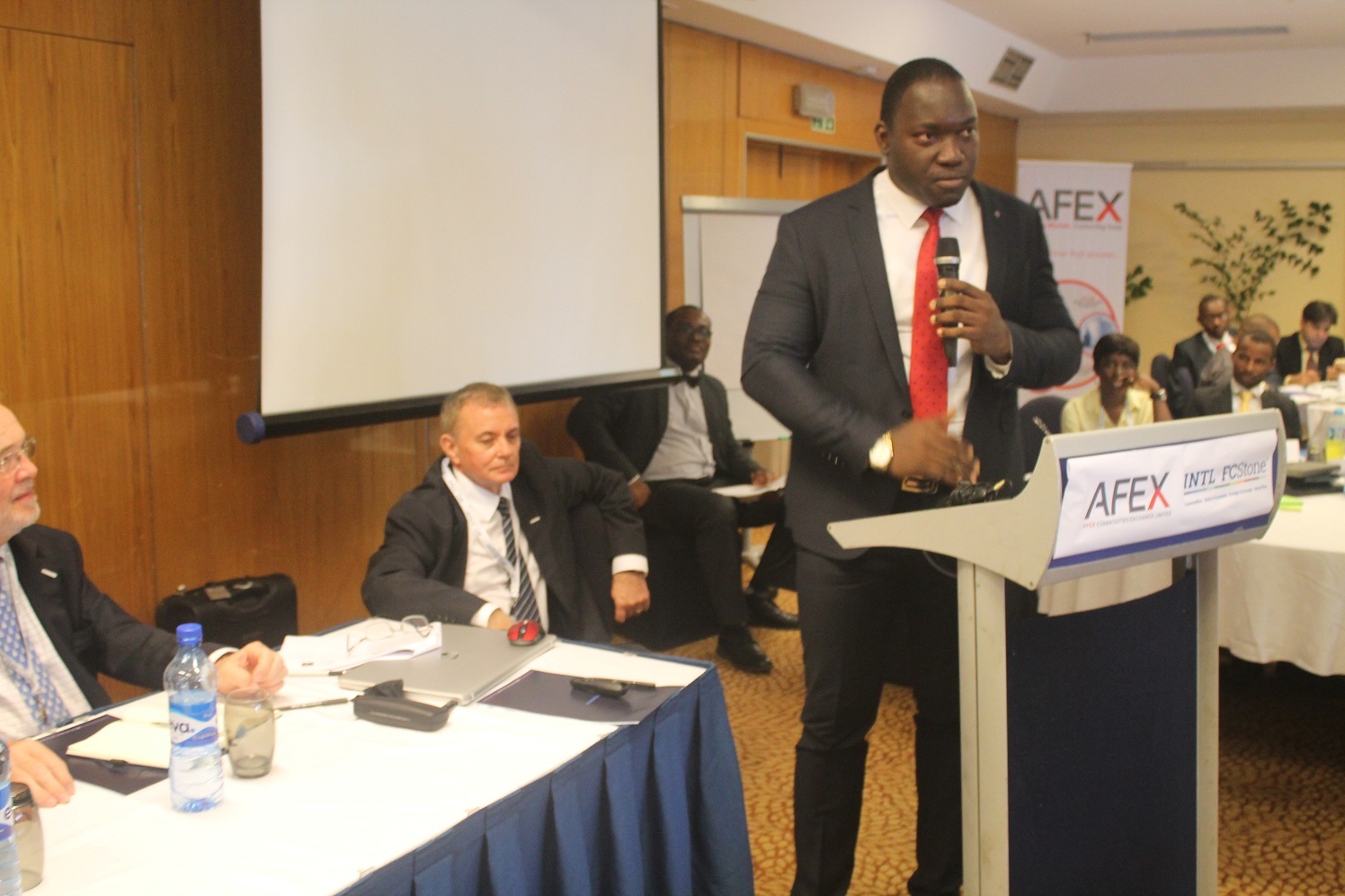
Speaking on this, the Chief Executive Officer (CEO) of AFEX, Mr Ayodeji Balogun, noted that financially literate market participants stand a better chance of taking advantage of new opportunities in the capital market which directly drives up the level of activities and diversity in the market.

“Our vision is to grow our education campaigns into an open-source library of content for commodity exchanges in Africa,” Mr Balogun said in Abuja when the company joined the Securities and Exchange Commission (SEC) to ring the bell for Financial Literacy to kick investment week in Nigeria.

“The content will span across membership procedure, market access, trading strategies, and community engagement, and will be accessible to investors at the click of a button,” he added at the event.

Addressing the topic of inclusion in the commodities market, Mr Balogun also revealed that in a bid to ensure a wider reach, the company operates in 600 communities with 60 technologically-run warehouses across 15 states servicing over 110,000 farmers who are currently registered with AFEX through their different cooperatives.

This, alongside some of the programmes the company offers, such as Input Finance, he explained, will go a long way in securitizing trade by helping farmers access loan bundles that improve mechanization and crop protection while also connecting them to off-takers interested in their products.

“As a member of AFEX as a farmer, you are sure that you can get the right financing and double/triple your yields in a year or two,” he said.

Mr Balogun also listed some of the commodities available for trade and investment currently include Maize, Sorghum, Rice, Cocoa, Ginger, and Soya Bean.

The Head, Registration, Exchanges, Market Infrastructure and Innovation, at SEC, Mr Emomotimi Agama, who represented the Executive Commissioner of the SEC at the event, reiterated the commission’s support and confidence in the work AFEX has and continues to do in the area of investment in the commodities’ sector.

“We aim to facilitate the dissemination of information about Nigeria’s capital market that provides investors with the critical knowledge required to make better decisions about investing in the market. We are happy that together with key stakeholders like AFEX we can facilitate this movement of financial literacy,” he said.

Calling for young Nigerians and also international investors to secure investments in agriculture before it’s too late, Mr Agama recognized the humongous opportunities available in the country’s commodity space in relation to its ever-growing population.


Adedapo Adesanya is a journalist, polymath, and connoisseur of everything art. When he is not writing, he has his nose buried in one of the many books or articles he has bookmarked or simply listening to good music with a bottle of beer or wine. He supports the greatest club in the world, Manchester United F.C.

Advertisement
Click to comment

Leave a Reply

Your email address will not be published. Required fields are marked *

Economy

NASD OTC Exchange Rallies 0.23% as Nipco Leads Six Advancers

Published

on

NASD OTC stock exchange

By Adedapo Adesanya

Six price gainers helped the NASD Over-the-Counter (OTC) Securities Exchange retain its stay in green territory after a 0.23 per cent appreciation on Thursday, February 26.

The price gainers were led by Nipco Plc, which added N25.00 to close at N278.00 per share compared with the previous day’s N253.00 per share, NASD Plc rose by N5.13 to N56.41 per unit versus N51.28 per unit, FrieslandCampina Wamco Nigeria Plc expanded by N2.24 to N102.44 per share from N100.00 per share, Afriland Properties Plc grew by 88 Kobo to N18.88 per unit from N18.00 per unit, 11 Plc increased by 35 Kobo to N277.00 per share from N276.65 per share, and Lagos Building Investment Company (LBIC) Plc gained 27 Kobo to close at N3.75 per unit versus N3.48 per unit.

On the flip side, Central Securities Clearing System (CSCS) Plc lost N1.75 to sell at N68.25 per share versus N70.00 per share, and Geo-Fluids Plc depreciated by 2 Kobo to N3.25 per unit from N3.27 per unit.

The weight of the advancers fortified the NASD Unlisted Security Index (NSI) by 9.21 points to 4,034.46 points from 4,025.25 points, and the market capitalisation soared by N5.51 billion to N2.413 trillion from Wednesday’s N2.408 trillion.

Yesterday, the transaction value jumped by 18.8 per cent to N102.8 million from N80.7 million, and the number of deals surged by 18,8 per cent to 38 deals from 32 deals, while the transaction volume went down by 84.9 per cent to 1.3 million units from 8.7 million units.

At the close of business, CSCS Plc was the most traded stock by value (year-to-date) with 34.2 million units worth N2.04 billion, followed by Okitipupa Plc with 6.3 million units sold for N1.1 billion, and Geo-Fluids Plc with 122.1 million units valued at N478.2 million.

Resourcery Plc remained as the most traded stock by volume (year-to-date) with 1.05 billion units exchanged for N408.7 million, trailed by Geo-Fluids Plc with 122.1 million worth N478.2 million, and CSCS Plc with 34.2 million units traded for N2.04 billion.

Continue Reading

Economy

Naira Down Again at NAFEX, Trades N1,359/$1

Published

on

Naira-Yuan Currency Swap Deal

By Adedapo Adesanya

The Naira further weakened against the Dollar in the Nigerian Autonomous Foreign Exchange Market (NAFEX) for the fourth straight session this week on Thursday, February 26.

At the official market yesterday, the Nigerian Naira lost N3.71 or 0.27 per cent to trade at N1,359.82/$1 compared with the previous session’s N1,356.11/$1.

In the same vein, the local currency depreciated against the Pound Sterling in the same market window on Thursday by N8.27 to close at N1,843.23/£1 versus Wednesday’s closing price of N1,834.96/£1, and against the Euro, it crashed by N8.30 to quote at N1,606.89/€1, in contrast to the midweek’s closing price of N1,598.59/€1.

But at the GTBank forex desk, the exchange rate of the Naira to the Dollar remained unchanged at N1,367/$1, and also at the parallel market, it maintained stability at N1,365/$1.

The continuation of the decline of the Nigerian currency is attributed to a surge in foreign payments that have outpaced the available Dollars in the FX market.

In a move to address the ongoing shortfall at the official window, the Central Bank of Nigeria (CBN) intervened by selling $100 million to banks and dealers on Tuesday.

However, the FX support failed to reverse the trend, though analysts see no cause for alarm, given that the authority recently mopped up foreign currency to achieve balance and it is still within the expected trading range of N1,350 and N1,450/$1.

As for the cryptocurrency market, major tokens posted losses over the last 24 hours as traders continued to de-risk alongside equities following Nvidia’s earnings-driven pullback, with Ripple (XRP) down by 2.7 per cent to $1.40, and Dogecoin (DOGE) down by 1.6 per cent to $0.0098.

Further, Litecoin (LTC) declined by 1.3 per cent to $55.87, Ethereum (ETH) slipped by 0.9 per cent to $2,036.89, Bitcoin (BTC) tumbled by 0.7 per cent to $67,708.21, Cardano (ADA) slumped by 0.6 per cent to $0.2924, and Solana (SOL) depreciated by 0.4 per cent to $87.22, while Binance Coin (BNB) gained 0.4 per cent to sell for $629.95, with the US Dollar Tether (USDT) and the US Dollar Coin (USDC) closing flat at $1.00 each.

Continue Reading

Economy

Crude Oil Falls as Geopolitical Risk Around Iran Clouds Supply Outlook

Published

on

Crude Oil Loan Facility

By Adedapo Adesanya

Crude oil settled lower on Thursday as investors tracked developments in talks between the United States and Iran over the latter’s nuclear programme, weighing potential supply concerns if hostilities escalate.

Brent crude futures lost 10 cents or 0.14 per cent to close at $70.75 a barrel, while the US West Texas Intermediate (WTI) crude futures depreciated by 21 cents or 0.32 per cent to $65.21 a barrel.

The US and Iran held indirect talks in Geneva on Thursday over their long-running nuclear dispute to avert a conflict after US President Donald Trump ordered a military build-up in the region.

Prices had gained earlier in the session after media reports indicated the talks had stalled over US insistence on zero enrichment of uranium by Iran, as well as a demand for the delivery of all 60 per cent-enriched uranium to the US.

However, prices then retreated after the two countries extended talks into next week, reducing the immediate strike potential.

Iran’s Foreign Minister, who confirmed talks will continue next week, said Thursday’s talks were the most serious exchanges with the US yet, saying Iran clearly laid out its demand for lifting sanctions and the process for relief.

His counterpart from Oman, who is handling the talks, said significant progress was made in Thursday’s talks. The Omani minister’s upbeat assessment followed indirect talks between Iranian Foreign Minister and US envoys Steve Witkoff and Jared Kushner in Geneva, with one session in the morning and the second in the afternoon.

He will also hold talks with US Vice President JD Vance and other US officials in Washington on Friday.

The Trump administration has insisted that Iran’s ballistic missile program and its support for armed groups in the region must be part of the negotiations.

The American President said on February 19 that Iran must make a deal in 10 to 15 days, warning that “really bad things” would otherwise happen.

On Tuesday, he briefly laid out his case for a possible attack on Iran in his State of the Union speech, underlining that while he preferred a diplomatic solution, he would not allow Iran to obtain a nuclear weapon.

Meanwhile, the US continues to amass forces in the Middle Eastern region, with the military saying it is prepared to execute orders given by the US President.

Continue Reading

Trending