General
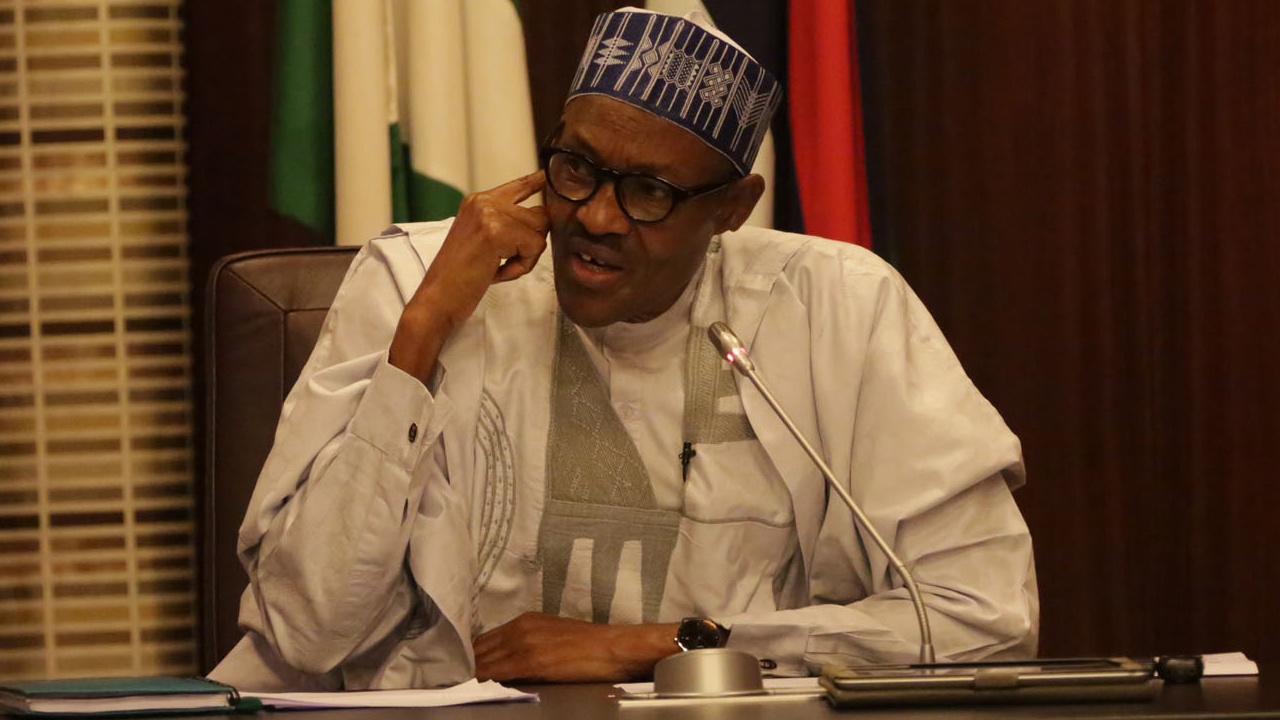
Buhari, Others on Movers, Shakers Watch List for 2021
By Adedapo Adesanya
President Muhammadu Buhari and four other Nigerians have made it to the top 25 list of the African Energy Chamber’s Top 25 Movers & Shakers Watch List for 2021.
Published every year, the list identifies the leading African and international figures whose work and decisions have a direct impact on the African energy industry and the way Africans access and consume energy.
President Buhari is the first listed for his direct involvement in the possible passing and signing of the Petroleum Industry Bill (PIB) in 2021.
It was noted that if the President manages to carry through this substantial wave of reform in the country, it could unlock billions of dollars of investments and significantly boost the country’s recovery and West Africa’s overall attractiveness for business.
His ability to compromise and define the sector will be tested in the first quarter of 2021 when his government is expected to sign the all-important and long-awaited law.
Similarly, Mr Mele Kyari, Group Managing Director of the Nigerian National Petroleum Corporation (NNPC), made the list for the first time. As the NNPC embarks on several strategic programmes and projects to boost refining capacity, cut upstream operational costs, develop energy infrastructure and unlock Nigeria’s gas potential, his actions and decisions can profoundly impact the short and medium-term outlook for Africa’s biggest oil & gas producing country.
Regarded as a veteran of the state oil company, he has been able to make his mark quickly since his appointment, strengthening corporate reporting and aggressively pushing the removal of fuel subsidies for refined products.
As LNG becomes more and more important for African markets, Mr Tony Attah, Managing Director/Chief Executive Officer of Nigeria LNG is also listed for his piloting of the NLNGSevenPlus project. His ability to oversee the project’s execution and local content impact will be central to support Nigeria’s economic recovery and capacity building efforts.
It was explained that his presence is yet another indication of the rising role of gas as a driving force for the future of the Nigerian and West African’s hydrocarbons industry.
Other key figures of the power and electricity industries have also made it to the prestigious list: Mr Seun Suleiman, new Managing Director and Chief Executive Officer of Siemens Nigeria, and Mrs Damilola Ogunbiyi, CEO and Special Representative of the UN Secretary-General for Sustainable Energy for All and Co-Chair of UN-Energy.
Mr Suleiman is notably expected to become an increasingly influential executive as Siemens executes the Presidential Power Initiative in Nigeria in order to upgrade the country’s transmission and distribution systems and increase the overall national system’s capacity from 5 to 7 Gigawatts first, before ramping up to 11 Gigawatts and ultimately 25 Gigawatts. This notably puts Mr Suleiman and the German equipment giant in the fore when major decisions are being made on how to solve Nigeria’s energy sector problems.
On her side, Mrs Damilola Ogunbiyi has taken an increasing role in leading the global energy transition conversation and bringing a truly African voice to the fight against energy poverty. Her work in off-grid solar or LPG access notably has the power to transform the way Africans access and consume energy.
African Energy Chamber confirmed that the presence of so many Nigerians on the list confirms that what happens in Nigeria affects the rest of the industry across the continent.
It noted, “These five key figures of the industry will be instrumental in shaping up the recovery everyone expects in 2021, and in building a sustainable and inclusive energy sector that works for all Nigerians and Africans.”
General
NIMASA Rallies Stakeholders’ to Develop National Action Plan
By Adedapo Adesanya
The Nigerian Maritime Administration and Safety Agency (NIMASA) has pledged its commitment to provide the regulatory leadership, technical coordination, and stakeholder engagement required to successfully develop and implement a robust National Action Plan on maritime decarbonization in Nigeria.
The Director General of the agency, Mr Dayo Mobereola, made this known during the National Stakeholders’ workshop on the development of a National Maritime Decarbonization Action Plan, further describing the workshop as a critical step in actualising the Federal Government’s blue economy and climate objectives.
Represented by the Executive Director, Operations, Mr Fatai Taiye Adeyemi, the NIMASA DG underscored the significance of the IMO GreenVoyage2050 Project, a technical cooperation initiative /designed to support developing countries in implementing the IMO GHG Strategy.
According to him, the National Action Plan being developed will reflect national realities, leverage existing capacities, address identified gaps, and align with broader economic and environmental priorities of the federal government.
Mr Mobereola stressed that “this transition is not merely about compliance with international obligations, it is about safeguarding our marine environment, protecting public health, strengthening the blue economy, and ensuring that our maritime industry remains competitive and future-ready”, the DG said.
Also speaking at the event was the Technical Manager of the IMO GreenVoyage2050 Project, Ms Astrid Dispert, who highlighted that the overarching objective of the initiative is to advance a coherent and globally aligned regulatory framework to accelerate maritime decarbonization.
She also emphasised that NIMASA plays a pivotal role in driving the project at the national level.
The IMO GreenVoyage2050 Project provides technical expertise and institutional support to assist countries in developing and implementing National Action Plans that promote sustainable shipping practices, encourage investment in clean technologies, and strengthen capacity for long-term emissions reduction.
Through this collaboration, the federal government is advancing deliberate steps towards maritime decarbonization, reinforcing its commitment to global climate goals and ensuring a cleaner, greener, and more sustainable future for the sector.
General
BPP Mandates Digital Submission for MDAs From March 1
By Adedapo Adesanya
The Bureau of Public Procurement (BPP) has directed all Ministries, Departments and Agencies (MDAs) to comply with its digital submission process effective March 1.
The directive was contained in a circular signed by the Director-General of the Bureau, Mr Adebowale Adedokun, noting that the move was part of the bureau’s commitment to digital transformation and paperless governance.
It explained that the transition followed an earlier circular of Aug. 4, 2025, which introduced electronic submission procedures.
According to the bureau, it has successfully moved from physical filings to a dedicated e-mail service for document submissions and is now advancing to a more robust and integrated system.
The circular announced the inauguration of the BPP Digital Submission Portal, a web-based platform designed to enable MDAs submit procurement-related documents directly to the Bureau.
It stated that the automated platform would streamline the submission process, enhance transparency and ensure accelerated tracking of procurement-related documents and petitions.
“With effect from March 1, all MDAs will be required to use the portal to submit requests for ‘No Objection’ Certificates, approvals for ‘No Objection’ for special procurements, clarifications and status updates on submissions,” the bureau said.
It added that the portal would be hosted on the Bureau’s official website and would become fully operational from the effective date.
The bureau warned that physical submissions or manual hand-deliveries would no longer be prioritised and would eventually be rejected following the full transition to the digital platform.
It urged accounting officers to brief their procurement departments and ICT units on the development to ensure seamless processing of procurement activities from March 1.
It further advised MDAs to contact the Bureau via its official email for information on the onboarding process and integration into the portal.
The bureau emphasised that full compliance by all MDAs was required to ensure a smooth transition and avoid delays in the implementation of the 2026 fiscal year procurement processes.
General
Senate Seeks Removal of CAC Boss Hussaini Magaji
By Adedapo Adesanya
The Senate has asked President Bola Tinubu to remove the Registrar General of the Corporate Affairs Commission (CAC), Mr Hussaini Ishaq Magaji, from office.
The Senate Committee on Finance, while passing a resolution in Abuja on Thursday, accused Mr Magaji, a Senior Advocate of Nigeria (SAN), of failing to honour the Senate’s invitations to account for the finances of his agency.
“He refused on so many occasions to honour our invitation to appear before this committee.
“We have issues with the reconciliation of the revenue of CAC.
“Each time we invite him, he gives us excuses,” the Chairman of the committee, Mr Sani Musa, said as the committee passed the resolution.
CAC was part of a group of agencies that the House of Representatives Public Accounts Committee (PAC) recommended zero allocation for the year 2026, for allegedly failing to account for public funds appropriated to them.
The committee, at an investigative hearing held two weeks ago, accused CAC and some other ministries, departments and agencies (MDAs) of shunning invitations to respond to audit queries contained in the Auditor-General for the Federation’s annual reports for 2020, 2021 and 2022.
The PAC chairman, Mr Bamidele Salam, stated that the National Assembly should not continue to appropriate public funds to institutions that disregard accountability mechanisms, saying this will create fiscal discipline and strengthen transparency across federal institutions and conform with extant financial regulations and the oversight powers of the parliament.
“Public funds are held in trust for the Nigerian people. Any agency that fails to account for previous allocations, refuses to submit audited accounts, or ignores legislative summons cannot, in good conscience, expect fresh budgetary provisions. Accountability is not optional; it is a constitutional obligation,” he said.
-
Feature/OPED6 years agoDavos was Different this year
-
Travel/Tourism10 years ago
Lagos Seals Western Lodge Hotel In Ikorodu
-
Showbiz3 years agoEstranged Lover Releases Videos of Empress Njamah Bathing
-
Banking8 years agoSort Codes of GTBank Branches in Nigeria
-
Economy3 years agoSubsidy Removal: CNG at N130 Per Litre Cheaper Than Petrol—IPMAN
-
Banking3 years agoSort Codes of UBA Branches in Nigeria
-
Banking3 years agoFirst Bank Announces Planned Downtime
-
Sports3 years agoHighest Paid Nigerian Footballer – How Much Do Nigerian Footballers Earn