Connect with us

Education

Revolutionising Education in Abia Through Digital Learning

Published

on

Ikpeazu

By Okechukwu Keshi Ukegbu

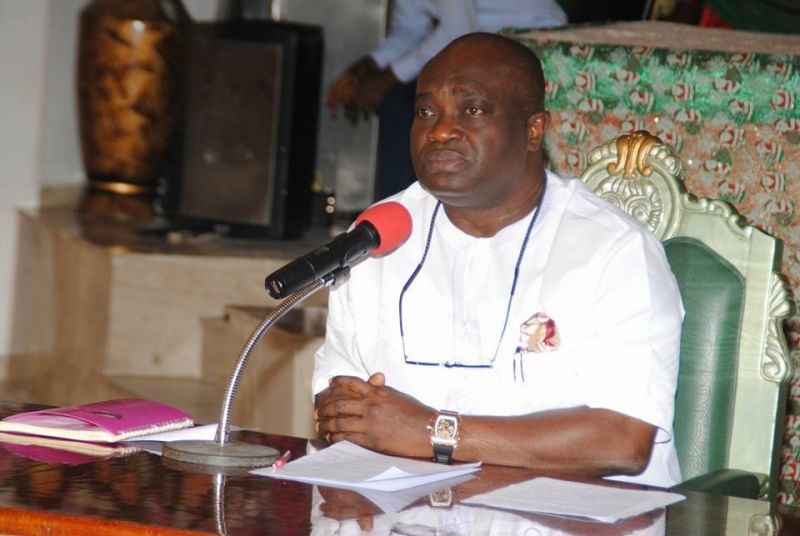
Indeed, better times are here once again for Abia children. In a question of months, if not days, digital learning will be pioneered this part of the world. And this innovation will shoot them miles ahead of their contemporaries.

In the words of Governor Okezie Ikpeazu, “With that device, my children will be ahead of other children in Nigeria.”

The most interesting episode of this narrative is that the state has taken delivery of the machines that will teach Abia children using the smart box.

Another interesting feature of this digital learning process is that it can teach up to 25 subjects with different curricular already programmed in the machine.

The story is not yet completed as four model schools across the senatorial districts will soon spring up. The model schools will be located at Obingwa, Osisioma, Ohafia, and  Umuahia.

The current innovation is one in a million. Remember the Education for Employment Programme (E4E), a scheme that was conceptualised around creating employment and to ensure that education leads to employment by imbuing the youths with the technical skills that would enable them to become either self-employed or sought after by others. E4E reactivated Technical and Vocational Training (TVET) in the state.

It was also conceptualised in training youths in various technical and vocational skills to take up jobs in industries or be self-employment and help grow the economy.

This was a perfect interpretation of the Chinese proverb of teaching the youths how to fish instead of giving them fish.”

“In this new Abia,” according to Mr Ikpeazu during his inaugural speech at the Umuahia Township Stadium, “instead of giving our people fish (handouts), we will focus on leading them to grow economically.”

Governor Ikpeazu is vigorously pursuing his manifesto on education which is captured thus, “Our focus on education will be extensive as we believe that the strength of Abia lies in her people. As such, the transformation of the education sector in Abia State will involve both public and private institutions. We will develop an all-inclusive master plan to drive development and progress within the sector.

“The master plan will incorporate restructuring the education curricula for primary, secondary and state-owned tertiary institutions to ensure our children and youths are empowered with sound knowledge and technical skills to survive and add value in the ever-evolving labour market.

“We will promote the emergence of Abia as an education hub/ destination by attracting and diligently fast-tracking the establishment of internationally recognized education providers in the state; taking advantage of the secure environment and social infrastructure we will provide.

“Having recognized the key role of education in our reform and repositioning of Abia State, we will drive incisive reform of the public education system. The reformed education system will also boost our IGR base, and contribute to funding our other social and economic development programmes.”

“Our government will resuscitate all the existing programme- specific vocational programmes and institutions across the state.

“In areas where we identify gaps, we will establish new vocational training centres to address those gaps. These will be emphasised to support our key economic sectors to ensure relevance and sustainability.

“Facilitate the rollout of massive ICT infrastructure to improve the adoption of e-commerce and internet usage; encourage advanced skills training and development for both teachers; create a database of unemployed youths to facilitate their gainful employment in due course,” he added.


Advertisement
Click to comment

Leave a Reply

Your email address will not be published. Required fields are marked *

Education

Nigerian Breweries to Empower 1,000 Lagos, Ogun, Enugu Students

Published

on

Nigerian Breweries Orange Corners Student Ambassadors Programme

By Modupe Gbadeyanka

Plans have been concluded by Nigerian Breweries to support about 1,000 Nigerian students in Lagos, Ogun, and Enugu States.

The foremost brewing company is carrying out this empowerment initiative with a leading non-profit organisation, FATE Foundation, through the Orange Corners Student Ambassadors Programme of the Netherlands.

This partnership marks a significant step in advancing youth entrepreneurship in Nigeria, equipping young people with the knowledge, skills, and opportunities needed to build sustainable businesses and contribute meaningfully to the nation’s economy.

This is because the scheme is to promote entrepreneurship and offer networking opportunities in Nigerian tertiary institutions. Ambassadors are selected from specific universities to inspire students to see entrepreneurship as a desirable career path and to foster a culture of innovation within universities.

It targets students aged 18–35 currently enrolled in tertiary institutions across Lagos, Ogun, and Enugu States.

“The partnership reinforces Nigerian Breweries’ long-standing commitment to youth empowerment and entrepreneurship development. Through initiatives like this, we are creating pathways for the next generation of entrepreneurs and business leaders in Nigeria,” the Corporate Affairs Director for Nigerian Breweries, Mr Uzodinma Odenigbo, stated.

He further highlighted the company’s track record in youth empowerment, noting that since the renewed focus on youth empowerment and entreprenuership, Nigerian Breweries has impacted 2,365 young Nigerians across 24 states and the FCT.

Also speaking on the partnership, the Executive Director of FATE Foundation, Ms Adenike Adeyemi, expressed enthusiasm about the collaboration between Nigerian Breweries and the Orange Corners Programme.

“Nigerian Breweries has been a longstanding partner with Orange Corners Nigeria in many ways. We are delighted to have the company continue to support the Orange Corners Programme and elated that this commitment will reach an additional 1000 young Nigerians leveraging the proven Orange Corners Student Ambassadors framework,” she said.

Ms Adeyemi outlined FATE Foundation’s role to include designing and delivering the training curriculum, managing student registration and participation, maintaining accurate records of all beneficiaries, and coordinating all logistical and technical aspects to ensure successful programme delivery.

Continue Reading

Education

Kidnappings: FG Reopens 47 Unity Schools

Published

on

unity schools nigeria

By Adedapo Adesanya

The federal government has announced the reopening of the 47 unity schools earlier shut down due to security concerns on November 21.

This was disclosed in a statement by the Federal Ministry of Education on Thursday.

It said that the decision to reopen the affected colleges across the country reaffirmed its unwavering commitment to safeguarding students and ensuring the continuity of education.

On November 18, 2025, over 20 schoolgirls were kidnapped by unidentified armed men from the Government Girls Comprehensive Secondary School in Maga, Kebbi state.

Just three days later, on November 21, about 303 students and 12 teachers were kidnapped at St. Mary’s Catholic Primary and Secondary School in Papiri, Niger state.

In response, the federal government shut down 47 Federal Unity Colleges, and some states including Katsina, Taraba, and Niger also closed schools or restricted school activities, particularly boarding institutions.

Rights group including Human Rights Watch lamented that while these measures were aimed at protecting students, they disrupted learning for thousands of children, denied them access to education, and the social and psychological support schools provide.

FULL LIST OF AFFECTED UNITY COLLEGES

North-West:
FGGC Minjibir, FTC Ganduje, FGGC Zaria, FTC Kafanchan, FGGC Bakori, FTC Dayi, FGC Daura, FGGC Tambuwal, FSC Sokoto, FTC Wurno, FGC Gusau, FGC Anka, FGGC Gwandu, FGC Birnin Yauri, FTC Zuru, FGGC Kazaure, FGC Kiyawa, FTC Hadejia.

North-East:
FGGC Potiskum, FGC Buni Yadi, FTC Gashua, FTC Michika, FGC Ganye, FGC Azare, FTC Misau, FGGC Bajoga, FGC Billiri, FTC Zambuk.

North-Central:
FGGC Bida, FGC New-Bussa, FTC Kuta-Shiroro, FGA Suleja, FGC Ilorin, FGGC Omu-Aran, FTC Gwanara, FGC Ugwolawo, FGGC Kabba, FGGC Bwari, FGC Rubochi, FGGC Abaji.

South-West:
FTC Ikare Akoko, FTC Ijebu-Imusin, FTC Ushi-Ekiti, FTC Ogugu.

Continue Reading

Education

Coursera, Udemy Announce $2.5bn Merger

Published

on

Coursera and Udemy

By Adedapo Adesanya

Online learning platforms, Coursera and Udemy, have reached an agreement to merge in an all-stock transaction, with the combined company’s implied equity value estimated at approximately $2.5 billion.

The agreement, unanimously approved by both companies’ boards of directors, stipulates that Udemy shareholders will receive 0.8 shares of Coursera common stock for each Udemy share held.

Upon completion of the merger, Coursera shareholders are expected to own about 59 per cent and Udemy shareholders approximately 41 per cent of the new entity on a fully diluted basis.

The combined company will continue under the Coursera name, and maintain its headquarters in Mountain View, California.

Coursera, founded in 2012 by Mr Andrew Ng and Ms Daphne Koller, is an online learning platform with 191 million registered users as of September 30, 2025. It collaborates with over 375 universities and industry partners to offer courses, specialisations, professional certificates, and degrees.

The platform includes features such as generative AI (gen AI) tools (Coach, Role Play, Course Builder) and role-based solutions (Skills Tracks) to support scalable and personalised learning. Coursera is used by institutions for workforce development in fields such as gen AI, data science, technology, and business.

Udemy is a platform that provides on-demand, multi-language courses to help companies and individuals develop technical, business, and soft skills. It uses AI to offer personalised learning experiences and supports workforce development in a changing workplace.

Mr Greg Hart, currently CEO of Coursera, is set to lead the enlarged organisation as CEO after the merger.

The board will consist of nine members. Six from Coursera’s board, including chairman Mr Ng and CEO Mr Hart, and three from Udemy’s board.

“We’re at a pivotal moment in which AI is rapidly redefining the skills required for every job across every industry.

“Organisations and individuals around the world need a platform that is as agile as the new and emerging skills learners must master,” Mr Hart said.

The combination is said to create a complete ecosystem of top instructors supported by AI tools, data-driven insights, and broader distribution, enabling more engaging, personalised, and dynamic learning at scale.

Projected operational efficiencies include anticipated annual run-rate cost synergies of $115m within two years after closing.

Udemy CEO, Mr Hugo Sarrazin said: “For more than 15 years, Udemy has helped millions of people master in-demand skills at the speed of innovation.

“Through this combination with Coursera, we will create meaningful benefits for our learners, enterprise customers, and instructors, while delivering significant value to our shareholders, who will participate in the substantial upside potential of the combined company.”

The merger is anticipated to close in the second half of 2026, pending regulatory clearances, approval by both companies’ shareholders, and other customary closing conditions.

Continue Reading

Trending