Feature/OPED
The Unspiritual Side Of Aso Villa

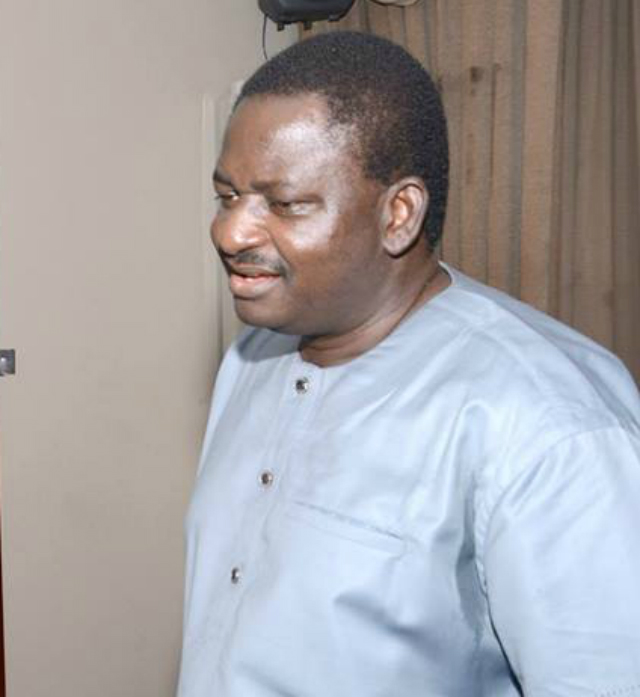
By Femi Adesina
Let me begin with two clarifications. Aso Villa is not my home, I am just passing through. Even this world is nobody’s home, we are just birds of passage. So, let nobody turn up his nose in derision, and say; “he’s writing like the landlord of Aso Villa, defending a place where’s he’s just a tenant.” Yes, nobody is landlord in the Villa, not even rational presidents. They can only live there for maximum of eight years, if Nigerians so decide. And for me, my treasures are laid up somewhere beyond the blue. The angels only need to beckon me from Heaven’s open door, and I wouldn’t feel at home in this world anymore.
The second clarification. Let nobody, particularly on social media, begin to insinuate that Femi Adesina is at war with Reuben Abati, his immediate predecessor as presidential spokesman. This piece you are beginning to read is not about Abati as a person, it is about his spiritual ideas and convictions, which I think need some appraisal, as they are rather unspiritual. Abati and myself have been professional colleagues for almost 30 years, we have a lot of mutual friends, and know how to reach each other when necessary. So, this is not a case of Muhammadu Buhari’s spokesman being at war with Goodluck Jonathan’s spokesman. What for?
In his piece in The Guardian of October 14, 2016, Abati wrote under the headline, ‘The spiritual side of Aso Villa.’ What were his conclusions? For the benefit of those who did not read the highly entertaining piece (in fact, there were moments I had my two legs in the air, laughing, as I read), let me do a brief summary. Call it ‘gospel’ according to Abati, and you would be right: There is some form of witchcraft, which causes occupants of Aso Villa to take weird decisions. Working in the Villa makes you susceptible to some sort of evil influences, because there is something supernatural about power and closeness to it. Some of those who lived or worked in the Villa had something dying under their waists (for the men), while some of the women became merchants of dildo, because they had suffered a special kind of deaths in their homes. “The ones who did not have such misfortune had one ailment or the other that they had to nurse. From cancer to brain and prostate surgery and whatever, the Villa was a hospital full of agonizing patients,” Abati posited.
Reading the piece through, you would think Aso Villa was nothing but what Godfrey Chaucer called “a thoroughfare of woes.” In fact, Abati submitted that the Villa “should be converted into a spiritual museum, and abandoned.” Holy Moses! Jumping Jehoshaphat!
If Aso Villa was such a haunted house, why then do most occupants like to stay put, right from the first tenant, Ibrahim Babangida, who was virtually forced to step aside in August 1993? And why did Goodluck Jonathan, Abati’s principal, spend money in trillions (in different currencies of the world), just to perpetuate himself in a house that consumes its occupants? Being a literary scholar, Abati would remember the doctor in Macbeth, that work of William Shakespeare, who was detailed to cure Lady Macbeth of the neurosis that afflicted her, after she had been party to the deaths of King Duncan and Banquo, so that her husband would be the king of Scotland. A spiritually troubled Lady Macbeth sleepwalked every night, trying to wash her hands of the innocent blood that had been shed. The doctor was so fed up with the terrifying atmosphere, that he said to himself: “Were I from Dunsinane away and clear, profit should hardly again draw me here.” Did Abati ever say the same of the Villa, a place where men became women “after something died below their waists?” We do not have it on record that Abati showed a clean pair of heels, or that he would not have stayed if Dr Jonathan had won re-election, and had asked him to continue in his position as adviser on media. Or was it the case of eternal fascination for the thing that repelled and terrified you? Mysterium tremendum et fascinas, as it is called in Latin.
For me, what Abati did in the October 14 piece was simply a glorification and deification of superstition, something that attempted to elevate works of darkness above the powers of God. The writer merely fed the cravings and propensity of people for the supernatural, in a way that stoked and kindled the kiln of fear, rather than that of faith.
Let’s take the issues one after the other, and look at them against true spiritual principles. Christianity is the one I am most familiar with, and that would be my benchmark.
In Aso Villa, houses were haunted, people were oppressed into taking curious decisions, they fell ill, died, or suffered the losses of loved ones, so Abati claimed. Are such peculiar only to the presidential villa? Should all those who live or work there automatically enjoy immunity from the vicissitudes of life, simply because they walked the corridors of power? Wasn’t President Umaru Yar’Adua right inside the presidential villa, when he told us on national television: “I am a human being. I can fall sick. I can recover. And I can die.” That was a practical man for you. Abati unwittingly wants his readers to believe that once you operated in or around Aso Villa, you became a superman. No. You are as mortal as can be. The Holy Bible does not even give us such leeway. “There hath no temptation taken you but such as is common to man…”(1 Cor 10:13). There are certain things common to man, and they can happen to you wherever you are. At the White House. At 10, Downing Street. Buckingham Palace, Aso Villa. Wherever. “But such as is common to man…” Let no man feed us with the bogey that such things happen because of where you live or operate from. There are some things that are just common to man, and which may happen to you as long as you are on this side of eternity.
I lost my sister in a road crash last year. She was a professor of Dramatic Arts at the Obafemi Awolowo University in Ile-Ife. Abati knew her well, as they both did post-graduate studies at University of Ibadan in the 1980s. Abati was among those who called to condole with me. My sister never visited the Villa in her lifetime. Even if she did, that could never have had anything to do with her death on the Lagos-Ibadan Expressway. To believe and teach otherwise is to carry superstition to ridiculous level, and venerate the Devil, granting him omnipotence, an attribute that belongs to God only. For the Devil, doing evil is full-time business and whether you had anything to do with Aso Villa or not, he continued with his pernicious acts. Does that then suggest that mankind is helpless before evil? No. God still has ultimate powers. He can spare you “as a father spares the son that serves him.” (Malachi 3:17). If you are under the pavilion of God, sleep, wake and operate daily in Aso Villa, you are covered, no matter the evil that lurks around, if any. There is a better covenant established on greater promises, and that is the canopy under which you should function. God can spare you from all evils, and if He permits any other thing, it is “such as is common to man,” and not because of Aso Villa.
If houses catch fire in the Villa, how many conflagrations occur in other parts of the city? If some men in the Villa suffered erectile dysfunction in Abati’s time, doesn’t the Journal of Sexual Medicine tell us that about 20 million American men have something that has died under their waists? It is one thing that became prevalent in the last two to three decades, due to modern lifestyle. Causes range from age, to stress, depression, anxiety, alcohol, medication, and several others. Even, a study showed that watching too much television kills something under the waist. So why does Abati make it seem as if it is a copyright of Aso Villa?
Now, another clarification. Don’t I believe in demonic infestation and manifestation? I sure do. I wouldn’t be a student of the Holy Bible if I don’t. Jesus talked of the man who got delivered from demonic possession, and because that man did not yield himself to a better influence, the evil spirit that inhabited him came back with seven more powerful spirits, and the end of the man was worse than his beginning. Abati wrote of persons in the Villa, “walking upside down, head to the ground.” Let me share this story I heard over 20 years ago. There was this young Christian who gave scant regards to demons and what they could do. In fact, he almost didn’t believe demons existed. One day, as he walked along the ever busy Broad Street in Lagos, God opened his spiritual eyes. Some people were walking on their heads! And not only that, as they passed by other people, they slapped them with the soles of their feet. If you got so slapped, you developed an affliction, which you would nurse for the rest of your life. Yet, you never knew where it came from.
As the young man saw that vision and got its spiritual explanation, he began to s-c-r-e-a-m. Was that in Aso Villa? “Such as is common to man…” Evil exists everywhere. Trying to source and locate it in Aso Villa is disingenuous. You need God everywhere. In Europe, Asia, America, Oceania, Aso Villa. There is evil everywhere, and we need not make fetish of any place as being more evil infested than other places. Since Satan got thrown out of Heaven due to his inordinate ambition, evil had resided in the world. “How art thou fallen from heaven, O Lucifer, son of the morning! How art thou cut down to the ground, which didst weaken the nations!” (Isaiah 14:12). The Devil lives in the world, but God is never helpless before evil. He will never be. Let the Devil commit suicide if he is not happy about that fact. God rules!
If every principal officer including the President and his wife suffered series of tragedies as Abati claimed, and he himself had breathing problems, and walked with the aid of crutches for months, it was ” such as is common to man” and not necessarily because they were in Aso Villa. But of course, if such people put their hands in evil, possibly to gain some things in power or perpetuate themselves beyond the time heaven granted, then “he who rolls a stone, a stone shall be rolled back to him. He that digs a pit, shall fall into it.” That is what the Good Book says. You can then hardly blame Aso Villa for such payback time, can you?
To avoid getting sucked into what Abati calls “the cloud of evil” that hangs around power, what to do is to hold ephemeral things loosely. Know that they are temporal, and will truly end. Power is one of such things. Will anybody be a permanent landlord at Aso Villa? It would be foolhardy to have such mindset. A couple of times I’d had some private discussions with President Buhari, and he had lamented the state of the nation, he invariably ended with the statement, “while we are here, we will do our best.” It shows a man who knows that he’s not a permanent landlord at Aso Villa, and can never be. He would use the opportunity he has to do his best for Nigeria, and then move on. That is a good mindset, and a safety valve from getting sucked into “the cloud of evil.” Daily, I tell myself that I am just passing through Aso Villa. And while there, just like my principal, I will do my best. It could be long, it could be short, depending on God and the man who appointed me, but one day, it would be over, and some other people would come in to do their bit. It is inexorable. The real treasures are laid somewhere beyond the blue.
Abati says we should pray before people pack their things into Aso Villa. I say not just Aso Villa, but everywhere. Pray before you pack into any place, because there are some things “such as is common to man.” It is only God that keeps from such. And He is sovereign in terms of what He prevents, and in what He allows. Ours is to pray, and believe. Prayer works.
“Aso Villa is in urgent need of redemption. I never slept in the apartment they gave me in that Villa for an hour,” wrote Abati. Well, different strokes for different folks. Hear what the Good Book says: “It is vain for you to rise up early, to sit up late, to eat the bread of sorrows; for so he giveth his beloved sleep.” Here am I. For over one year, I have lived in the house allocated to me at the Villa. I sleep so soundly, I even snore. In fact, I snore so loud that at times, I wake myself up with the sound.
Adesina is Special Adviser on Media and Publicity to President Muhammadu Buhari
Feature/OPED
Stocks vs Forex: Which is Better for Beginners in 2026?
By Onah Ishioma Adaeze
As a beginner, choosing between stocks and forex for your investment goals in 2026 can feel overwhelming. Before investing your hard-earned money, it is important to understand how both markets work.
While both markets present investors with opportunities to grow their wealth, they also differ in terms of volatility, liquidity, market hours, and leverage. Stocks involve owning portions of a company, while forex has to do with trading a base currency against a quote currency.
In this article, we will be going through the basics of stocks and forex, pointing out their differences, and helping you decide which asset better suits your investment journey in 2026.
What is Stock Trading?
When it comes to stock trading, you are buying shares of a company, which makes you a shareholder of that company. As a shareholder, you may be entitled to receive dividends whenever the company decides to pay dividends.
As for those companies that do not pay dividends, there are other benefits a shareholder may enjoy, like being called upon to attend shareholder meetings and having voting rights on certain company matters.
On a global scale, over $100 trillion worth of shares are traded annually. Also, the rising popularity of AI companies and technological innovations continues to drive investor participation and market growth.
If you’re an investor looking to buy and hold capital assets, then stock trading is definitely for you, as it allows for short-term, medium-term and long-term investment goals.
When you buy shares of a company and the company performs well, your shares increase in value. Another benefit of stock trading is access to index funds and ETFs.
These funds consist of companies that are grouped under an index. They are carefully selected and monitored under the fund, sparing the investor the stress of actively tracking the fund.
They can be a way of building a long-term, diversified portfolio, and some of these funds may pay dividends.
What is Forex Trading?
Forex trading has to do with buying one currency and selling another. With a pair like USD/JPY, USD is the base currency being bought against JPY, which is the quote currency.
In order to execute a trade in the forex market, you have to analyse and make predictions based on price movement, as well as pay attention to what’s going on in the global news scene.
The forex market runs twenty-four hours every weekday, with over $9 trillion traded in the market every day. Being the largest financial market in the world, there is very high liquidity.
Forex trading involves buying one currency against another, making predictions based on price movements on the forex charts. Price moves based on the activities of large institutions like hedge funds, big banks, the government, etc.
The forex market runs 24 hours a day, every weekday, with global forex turnover reaching $9 trillion per day in the BIS 2025 survey. Being the largest financial market in the world, there is very high volatility and price fluctuations.
At the same time, there is high liquidity in the market, which means that currency pairs can easily be bought and sold without hassle. Highly liquid instruments that are traded regularly include: EUR/USD, USD/JPY, GBP/USD, and gold (XAU/USD).
As a retail trader, knowing when to enter and exit the market is important. As easy as it is to make profits from price fluctuations, it is also very easy to lose money if the market moves against you. This is why it is important to set stop losses and take profits. This helps manage your trading capital.
Major Differences Between Stocks and Forex
While investing in stocks and forex can yield great capital gains, there are lots of ways in which they differ.
As a beginner, stock trading provides opportunities for long-term investments, ensuring slow but consistent returns for wealth building. But if you are looking for an active, short-term style of investment, then forex trading is for you, as it allows you to enter and exit the market within a shorter time frame.
Which is Better in 2026?
Choosing an asset to invest in all boils down to personal preference. At the same time, if you are not averse to risk, nor opposed to asset diversification, then it’s okay to invest in both.
For beginner investors in 2026, stock trading is easier to understand and get into, especially because of mutual funds, index funds and ETFs. With those funds, you don’t have to be an expert to start investing. You can just buy a fund that suits your needs and hold it over a long period of time.
If you are an investor who enjoys technical analysis, highly volatile and liquid markets, as well as trading under short time frames, then forex trading is the right pick for you.
Conclusion
You do not need to put all your eggs in one basket. There are investors who invest in both stocks and forex simultaneously. When starting out, you can start investing in stocks while learning forex. Take calculated risks and do not invest above your means. Diversify your investments and remember, when starting out, you should prioritise acquiring knowledge over profits.
Onah Ishioma Adaeze is a finance writer who is passionate about simplifying complex concepts into easily digestible pieces. Her hobbies are reading and watching anime
Feature/OPED
Building 234 Solutions: A Response to Everyday Workforce Challenges
By Owoloye Emmanuel
Every business starts with a problem. For us, that problem was hiding in plain sight.
Across organisations, we kept seeing HR professionals, payroll teams, and business leaders spend significant time navigating processes that should be simpler. Employee records sat across multiple systems, payroll processes required manual intervention, and routine workforce tasks often became more complicated than they needed to be.
As businesses grow, workforce operations naturally become more complex. Yet many organisations still rely on disconnected tools and workflows that create unnecessary friction for both employers and employees.
The consequence is more than operational inefficiency. HR teams spend valuable time managing systems instead of supporting people. Business leaders struggle to access timely workforce insights, while employees experience delays in processes that should be seamless.
These weren’t isolated challenges. They were recurring realities across workplaces, regardless of industry or size.
That observation led us to a simple question: what if workforce management could be easier?
What if HR, payroll, and workforce operations could work together within a single, connected experience?
That question became the foundation for 234 Solutions.
We are building 234 Solutions with a clear belief that workplace technology should reduce complexity, not add to it. Our goal is to help organisations spend less time navigating processes and more time focusing on productivity, growth, and people.
As we prepare for launch, our focus remains simple: building practical solutions for real workplace challenges and helping organisations create better experiences for the people who power them every day.
Owoloye Emmanuel is the founder of 234 Solutions
Feature/OPED
The Role of TV in Preserving African Stories and Identity
Scroll through social media today, and you will notice something interesting: everyone is either reacting to a series, quoting a movie line, or debating a character as though they personally know them. Beneath the memes and binge-watch culture, however, lies something deeper. Television remains one of the most powerful tools shaping how Africans see themselves, remember their history, and tell their own stories. In a continent as diverse and expressive as Africa, that matters more than ever.
TV as a Cultural Archive, Not Just Entertainment
Long before streaming algorithms began shaping our viewing habits, television was already preserving African identity. From Nollywood dramas that capture the rhythm of everyday Lagos life to documentaries exploring Maasai traditions and Ghanaian folklore, TV has served as a living archive of the continent’s stories.
It preserves more than entertainment; it preserves language, culture, humour, values, and shared experiences. Unlike fleeting social media content, television allows stories to unfold with depth, exploring the realities of family, tradition, ambition, and modern African life without reducing them to stereotypes. That is the power of TV: preserving not just stories, but perspective.
Why Representation on TV Still Matters
There is a subtle but important truth: if people do not see themselves on screen, they may begin to believe their stories are not worth telling. This is why African TV content is more than entertainment; it is affirmation.
Seeing a character who speaks like you, struggles like you, or celebrates like your community does something powerful. It validates identity and challenges outdated narratives that have historically defined Africa through external lenses.
This is where MultiChoice Group, through platforms such as DStv and GOtv, plays an important role. They do not simply broadcast content; they help distribute cultural memory at scale.
GOtv, DStv, and the Everyday African Viewer
Think about a typical evening in many African homes: the TV is on in the background, someone is laughing at a comedy show, another person is watching a local series, and someone else is catching up on the news. That shared viewing experience remains very real.
Through platforms such as DStv and GOtv, African households are exposed to a blend of local storytelling and global content. More importantly, they have helped amplify African-produced content by bringing Nollywood films, African reality shows, talk shows, and documentaries into mainstream rotation.
It is not just about access. It is about visibility.
A young filmmaker in Lagos today is more likely to believe their story matters because they have seen similar stories broadcast widely. A child in Accra grows up hearing familiar accents and seeing environments that look like their own on screen, not as exceptions, but as the norm.
TV Is Also Shaping Modern African Identity
African identity is not static; it is evolving. Television reflects that evolution in real time.
Today, audiences see:
-
Young Africans balancing tradition and modern dating culture
-
Stories tackling mental health in African households
-
Fashion and music influences spreading through TV series
-
Political satire shaping public conversation
Conversations that were once confined to homes are now being explored on screen, giving audiences the language to discuss issues that were previously unspoken.
In many ways, television is doing what oral tradition has always done: passing stories, values, humour, warnings, and history from one generation to the next. The difference is that today’s griots are writers, directors, and broadcasters.
The Future: From Watching to Owning Our Narratives
The next stage of African storytelling is not just about being seen; it is about ownership.
As more African creators produce content and platforms continue to invest in regional storytelling, television becomes more than a mirror. It becomes a tool for shaping how Africa is represented to itself and to the world.
While streaming continues to grow, television, particularly accessible platforms such as GOtv, remains one of the most effective ways to reach everyday audiences across different income levels and regions. After all, storytelling only matters if people can access it.
African stories are not new. They have always existed in families, on streets, in markets, in history books, and through oral traditions. What television has done, and continues to do, is give those stories a stage wide enough for millions to experience them at once.
The next time you watch a local series or documentary on DStv or GOtv, remember that you are not just being entertained. You are participating in the preservation of African identity itself.
-
Feature/OPED6 years agoDavos was Different this year
-
Travel/Tourism10 years ago
Lagos Seals Western Lodge Hotel In Ikorodu
-
Showbiz3 years agoEstranged Lover Releases Videos of Empress Njamah Bathing
-
Banking8 years agoSort Codes of GTBank Branches in Nigeria
-
Economy3 years agoSubsidy Removal: CNG at N130 Per Litre Cheaper Than Petrol—IPMAN
-
Banking3 years agoSort Codes of UBA Branches in Nigeria
-
Banking3 years agoFirst Bank Announces Planned Downtime
-
Sports3 years agoHighest Paid Nigerian Footballer – How Much Do Nigerian Footballers Earn