Connect with us

Economy

New FX Policy Will Cut Cost Burden of Remitting Funds—CBN

Published

on

CBN MPR 12.5%

By Dipo Olowookere

The Central Bank of Nigeria (CBN) has explained the reason it came up with a new foreign exchange (FX) policy on diaspora remittances.

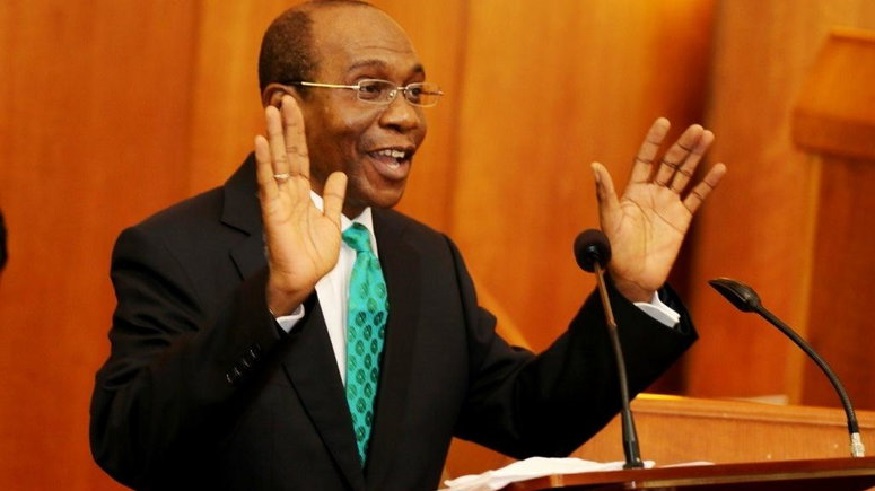
On Saturday, the apex bank, under the leadership of Mr Godwin Emefiele, announced a new forex promo tagged CBN Naira 4 Dollar Scheme, an incentive for senders and recipients of International Money Transfers.

The campaign, which will last for two months from March 8 to May 8, 2021, will enable “all recipients of diaspora remittances through CBN licensed IMTOs [to] be paid N5 for every $1 received as remittances inflow.”

After the circular was issued, the central bank explained the reason behind the policy, noting that it was to make it possible for Nigeria to tap into the booming remittances industry.

The apex bank said a forecast by PwC suggests that Nigeria’s remittance flows could reach $34.89 billion by 2023 and to meet this target, there must be channels put in place.

“This can only be accomplished if remittance infrastructure improves and if the right policies are put in place,” the central bank explained in a separate post.

It further said this new policy was also in line “with the global trend [as] Nigeria aspires to ensure that remittance flows and diaspora investments become a significant source of external financing.”

The apex bank expressed optimism that the rebate of N5 for every $1 of fund remitted to Nigeria “will help to make the process of sending remittance through formal bank channels cheaper and more convenient for Nigerians in the diaspora.”

It also noted that the “new FX policy will create an easier, more flexible, and more transparent, system of remittance administration, it will greatly enhance the benefits of diaspora remittances in supporting investments and growth in Nigeria.”

“[The] policy on the administration of remittance flows is aimed at increasing the transparency of remittance inflows, reducing rent-seeking activities, and providing Nigerians in the diaspora with cheaper and more convenient ways of sending remittances to Nigeria,” it added.

Concluding, the CBN said, “The use of reimbursements of remittance fees has been critical in supporting improved inflow of remittances to countries in South Asia and in improving their balance of payments position following the COVID-19 pandemic.”

Business Post reports that since the new policy was announced yesterday, some economists have suggested that the apex bank was in desperate need of Dollars.

In recent time, the price of crude oil, Nigeria’s main source of FX earnings, has been on the rise, trading close to $70 per barrel at the global market.

In the 2021 budget signed into law by President Muhammadu Buhari in December 2020, the crude oil benchmark price was $40 per barrel, implying that Nigeria is earning more than it projected.

However, instead of the nation’s external reserves to rise as a result of more FX inflows from oil sales, the account balance is shrinking. The FX reserves currently stand at $34.9 billion as against $35.1 billion on February 26, 2021.


Dipo Olowookere is a journalist based in Nigeria that has passion for reporting business news stories. At his leisure time, he watches football and supports 3SC of Ibadan. Mr Olowookere can be reached via [email protected]

Economy

Naira Depreciates to N1,450/$1 at Official Forex Market

Published

on

Naira-Dollar exchange rate gap

By Adedapo Adesanya

The Naira depreciated further against the US Dollar in the Nigerian Autonomous Foreign Exchange Market (NAFEX) on Friday, December 5, as FX demand pressure mounts.

The Nigerian currency lost N2.60 or 0.18 per cent against the greenback to close at N1,450.43/$1 compared with the previous day’s N1,447.83/$1.

Equally, the domestic currency declined against the Pound Sterling in the official forex market during the session by N4.48 to trade at N1,935.45/£1, in contrast to Thursday’s closing price of N1,930.97/£1 and shrank against the Euro by 43 Kobo to end at N1,689.17/€1 versus the preceding session’s rate of N1,688.74/€1.

Similarly, the local currency performed badly against the US Dollar at the GTBank FX counter by N2 to close at N1,455/$1 versus Thursday’s N1,453/$1 but traded flat at the parallel market at N14.65/$1.

As the country gets into the festive period, pressure mounted on the local currency reflecting higher foreign payments and lower FX inflows.

However, there are expectations that the Nigerian currency will be stable, supported by interventions by to the Central Bank of Nigeria (CBN) in the face of steady dollar Demand and inflows from Detty December festivities that will give the Naira a boost after it depreciated mildly last month.

Traders cited by Reuters expect that the Naira will trade within a band of N1,443-N1,450/$1 next week, buoyed by improved FX interventions by the apex bank.

As for the crypto market, it was down yesterday due to profit-taking associated with year-end trading. However, the December 1-Year Consumer Inflation Expectation by the University of Michigan fell to 4.1 per cent from 4.5 per cent previously and 4.5 per cent expected. The 5-Year Consumer Inflation Expectation fell to 3.2 per cent from 3.4 per cent previously and 3.4 per cent expected.

With the dearth of official economic data of late, these private surveys have taken on a new level of significance and the market banks of them to make decisions.

Cardano (ADA) depreciated by 5.7 per cent to $0.4142, Dogecoin (DOGE) slid by 5.1 per cent to $0.1394, Ethereum (ETH) dropped by 3.9 per cent to $3,039.75, Solana (SOL) declined by 3.8 per cent to $133.24, and Litecoin (LTC) fell by 3.7 per cent to $80.59.

Further, Bitcoin (BTC) went down by 2.6 per cent to sell at $89,683.72, Binance Coin (BNB) slumped by 2.2 per cent to $883.59, and Ripple (XRP) shrank by 2.1 per cent to $2.04, while the US Dollar Tether (USDT) and the US Dollar Coin (USDC) remained unchanged at $1.00 each.

Continue Reading

Economy

Oil Market Climbs on Federal Reserve Rate-Cut Signals, Supply Concerns

Published

on

global oil market

By Adedapo Adesanya

The oil market was up on Friday on increasing expectations the US Federal Reserve will cut interest rates next week, which could boost economic growth and energy demand.

Brent futures rose by 49 cents or 0.8 per cent to $63.75 per barrel and the US West Texas Intermediate (WTI) futures expanded by 41 cents or 0.7 per cent to $60.08 per barrel.

Investors digested a US inflation report and recalibrated expectations for the Federal Reserve to reduce rates at its December 9-10 meeting.

US consumer spending increased moderately in September after three straight months of solid gains, suggesting a loss of momentum in the economy at the end of the third quarter as a lackluster labor market and the rising cost of living curbed demand.

Traders have been pricing in an 87 per cent chance that the US central bank will lower borrowing costs by 25 basis points next week, according to CME Group’s FedWatch Tool.

Investors also focused on news from Russia and Venezuela to determine whether oil supplies from the two sanctioned members of the Organisation of the Petroleum Exporting Countries and allies (OPEC+) will increase or decrease in the future.

The failure of US talks in Moscow to achieve any significant breakthrough over the war in Ukraine has helped to boost oil prices so far this week.

A loss of Venezuelan oil production in case of a US military intervention will materially impact global benchmark prices as the market will have to replace Venezuela’s heavy crude.

Venezuela is estimated to pump about 1.1 million barrels per day of crude oil at present, so if the US-Venezuela tension escalation into an invasion in the South American country, this volume of crude would be at risk.

Reuters reported that the Group of Seven countries and the European Union are in talks to replace a price cap on Russian oil exports with a full maritime services ban in a bid to reduce the oil revenue that helps finance Russia’s war in Ukraine.

Any deal that could lift sanctions on Russia, the world’s second-biggest crude producer after the US, could increase the amount of oil available to global markets, weakening prices.

Continue Reading

Economy

UK Backs Nigeria With Two Flagship Economic Reform Programmes

Published

on

UK Nigeria

By Adedapo Adesanya

The United Kingdom via the British High Commission in Abuja has launched two flagship economic reform programmes – the Nigeria Economic Stability & Transformation (NEST) programme and the Nigeria Public Finance Facility (NPFF) -as part of efforts to support Nigeria’s economic reform and growth agenda.

Backed by a £12.4 million UK investment, NEST and NPFF sit at the centre of the UK-Nigeria mutual growth partnership and support Nigeria’s efforts to strengthen macroeconomic stability, improve fiscal resilience, and create a more competitive environment for investment and private-sector growth.

Speaking at the launch, Cynthia Rowe, Head of Development Cooperation at the British High Commission in Abuja, said, “These two programmes sit at the heart of our economic development cooperation with Nigeria. They reflect a shared commitment to strengthening the fundamentals that matter most for our stability, confidence, and long-term growth.”

The launch followed the inaugural meeting of the Joint UK-Nigeria Steering Committee, which endorsed the approach of both programmes and confirmed strong alignment between the UK and Nigeria on priority areas for delivery.

Representing the Government of Nigeria, Special Adviser to the President of Nigeria on Finance and the Economy, Mrs Sanyade Okoli, welcomed the collaboration, touting it as crucial to current, critical reforms.

“We welcome the United Kingdom’s support through these new programmes as a strong demonstration of our shared commitment to Nigeria’s economic stability and long-term prosperity. At a time when we are implementing critical reforms to strengthen fiscal resilience, improve macroeconomic stability, and unlock inclusive growth, this partnership will provide valuable technical support. Together, we are laying the foundation for a more resilient economy that delivers sustainable development and improved livelihoods for all Nigerians.”

On his part, Mr Jonny Baxter, British Deputy High Commissioner in Lagos, highlighted the significance of the programmes within the wider UK-Nigeria mutual growth partnership.

“NEST and NPFF are central to our shared approach to strengthening the foundations that underpin long-term economic prosperity. They sit firmly within the UK-Nigeria mutual growth partnership.”

Continue Reading

Trending