Connect with us

General

Reps Summon CBN Governor, COAS Over $1bn for Arms

Published

on

Summon CBN Governor

By Modupe Gbadeyanka

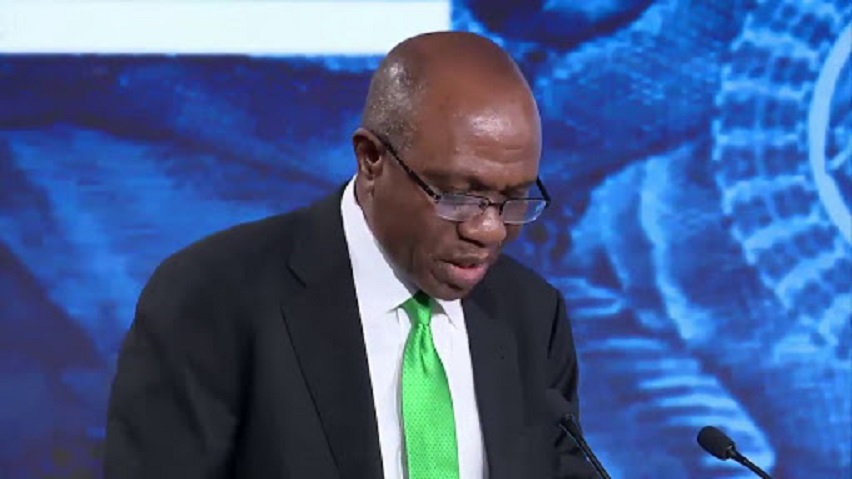
The Governor of the Central Bank of Nigeria (CBN), Mr Godwin Emefiele, has been summoned by the House of Representatives.

The country’s chief banker was summoned by the lower chamber of the National Assembly to answer questions in connection with the $1 billion approved by the federal government a few years ago for the procurement of arms to fight insurgency.

The House of Representatives Ad Hoc Committee on the Need to Review the Purchase, Use and Control of Arms, Ammunition and Related Hardware by Military, Paramilitary and Other Law Enforcement Agencies in Nigeria, wants the CBN chief to appear before it alongside the Chief of Army Staff, Lt.-Gen. Ibrahim Attahiru, for grilling.

Yesterday, the duo was supposed to be before the committee with others to explain what happened with the money but they were absent.

This made the panel ask them to specifically appear to state what they know about the funds unfailingly on Wednesday, April 7, 2021.

How FG approved $1bn for arms purchase

In April 2018, the federal government, worried that the military was complaining of inability to fight Boko Haram insurgents in the northeast of Nigeria, approved the withdrawal of $1.0 billion from the Excess Crude Account (ECA) to procure arms.

The country’s main opposition party, the Peoples Democratic Party (PDP) kicked against this because it claimed the money would be embezzled.

Another reason for the opposition was because it was just less than a year to the 2019 general elections and it was speculated that the ruling party would use the funds mainly to campaign for re-election.

NSA latest comments

About two weeks ago, the National Security Adviser (NSA), Mr Babagana Monguno, insinuated in an interview with the Hausa Service of the British Broadcasting Corporation (BBC) that the money was squandered.

He claimed in the interview that the immediate past service chiefs could not account for the funds as there were no arms to show for the $1.0 billion approved by the government for the purchase of the military equipment.

However, he later recanted, claiming that the media quoted him out-of-context.

Reps wade in

In view of the reactions that trailed the NSA’s comments, the green chamber of the parliament mandated its ad-hoc committee to investigate how the funds were used.

This made the House of Reps summon the CBN Governor and the head of the army in Nigeria for explanations on what the money was used for. They were invited along with several other security agency heads and ministries.


Modupe Gbadeyanka is a fast-rising journalist with Business Post Nigeria. Her passion for journalism is amazing. She is willing to learn more with a view to becoming one of the best pen-pushers in Nigeria. Her role models are the duo of CNN's Richard Quest and Christiane Amanpour.

Click to comment

Leave a Reply

Your email address will not be published. Required fields are marked *

General

10 Reasons to Join the MTN MIP 2026 Webinar

Published

on

MTN MIP 2026 Webinar

If you work in media and have been watching the industry shift around you, faster news cycles, shrinking revenues, AI in the newsroom, the MTN Media Innovation Programme may be exactly the kind of intervention your career needs right now.

Now in its fifth edition and bigger than it has ever been, MIP 2026 is calling for applications. The webinar on April 16 is your best first step.

What Is the MTN Media Innovation Programme?

The MTN Media Innovation Programme (MIP) is a certificate course run by the School of Media and Communication, Pan-Atlantic University, with a focus on the convergence between ICT and the media. It is a fellowship for journalists and media practitioners across the entire spectrum, including social media, designed to help them build capacity at both professional and business levels, delivered over a six-month period.

The programme gives participants skills to create better content, run media businesses, and earn money in a tough industry. It mixes classroom time, international trips, and real-world visits.

This year, the programme crosses a significant milestone. The cohort has been expanded to 25 fellows, up from 20 in previous editions, as a deliberate reflection of MTN Nigeria’s 25-year anniversary.

Tobe Okigbo, Chief Corporate Services and Sustainability Officer at MTN Nigeria, explained the thinking behind it: “The expansion to 25 fellows this year is a deliberate reflection of our 25-year milestone, and a reminder that as the media industry continues to evolve, there is a continued need to invest in the people and ideas that will shape its future.”

MTN is hosting a webinar on April 16 to walk prospective applicants through everything they need to know. Here is why you should be on that call.

  1. You will understand exactly what MIP is built to do. MIP is designed to increase participants’ knowledge and skill base and help them understand the changing media landscape and how to effectively use technology to create impactful media content. The webinar is your clearest path to grasping that mission before you apply.
  2. You will learn how to apply correctly, before it is too late. With less than a week between the webinar and the closing date, attendance gives you just enough time to fix mistakes and strengthen your submission before the April 22 deadline.
  3. You will know for certain whether you qualify. MIP is open to media practitioners and digital content creators across the entire spectrum, including social media. But eligibility has specific requirements. The webinar helps you confirm your fit before you invest time in the application.
  4. You will understand what the selectors are actually looking for. Shortlisted candidates are reviewed independently based on professional merit, potential impact, and their commitment to the evolution of African media. Knowing this helps you position your application more effectively.
  5. You will grasp the full scope of the curriculum. Fellows build skills in three main areas: the telecom industry, media innovation, and writing and reporting. Modules cover media entrepreneurship, ethics, fintech, 5G, financial reporting, and more. The webinar will walk you through what that looks like in practice.
  6. You will learn about the international component. Accepted participants get a seven-day, all-expenses-paid trip to South Africa for special training in Johannesburg, including a day at MTN Nigeria Headquarters and another at MTN Group Headquarters, plus industry visits and tours at an Innovation Hub.
  7. You will hear what past fellows actually experienced. The alumni speak for themselves. Oloye Ayodele Samuel, CEO of Rock FM Jalingo and a past MIP fellow, described it this way: “This fellowship is a transformative experience that has completely shifted my perspective. From Nigeria to South Africa, the training and conversations have ignited a burning desire to push beyond the status quo. It’s a new future reimagined, and it’s coming soon.”
  8. You will see the career value of the alumni network. The programme has built a strong alumni network, with participants occupying key roles across media organisations and contributing to public discourse through impactful storytelling. The webinar will show you what that network looks like and what it can open up for growth.
  9. You will get your questions answered live. A few things sharpen an application like a direct answer to the question you were afraid to ask. A live session removes the guesswork that costs candidates competitive ground.
  10. You will leave with the momentum to apply actually. Content Strategist and MIP 2 fellow Anu Odubanjo put it plainly: “If you are in the media industry, here is a life-changing opportunity you shouldn’t miss. Being selected as one of the 20 fellows for the second cohort of the fully funded media fellowship out of over 2,500 applications was definitely the highlight of 2023 for me. Truly an unforgettable experience and one I will forever cherish.”

Applications for MIP 2026 are now open.

Application Deadline: April 22, 2026.

Apply here: mtnmip.smc.edu.ng

Have questions? Join the webinar on April 16.

Continue Reading

General

NDPC Laments Shortage of Data Protection Officers in Nigeria

Published

on

data protection officer

By Adedapo Adesanya

The Nigeria Data Protection Commission (NDPC) has warned that the country faces a significant gap of 480,000 Data Protection Officers (DPOs), in spite of notable progress recorded in the last three years.

The National Commissioner of NDPC, Mr Vincent Olatunji, disclosed the opening of a one-week training for the second cohort of DPOs Training and Certification Programme in Abuja.

Mr Olatunji said there were still shortages even as the number of certified DPOs in Nigeria increased from fewer than 1,000 three years ago to over 10,000, while more than 27,000 professionals now operate within the broader privacy ecosystem.

However, he noted that the gap remained wide due to the increasing number of data controllers and processors in the country.

“We have identified over 500,000 data controllers and processors who require the services of data protection officers.

“At the moment, we have about 10,000 certified DPOs to work in that space.

“The gap of about 480,000 still exists, which underscores the need for sustained capacity building,” he said.

The NDPC boss said the commission was intensifying efforts to bridge the gap through continuous training programmes.

He said the initiative was aimed at positioning Nigeria as a hub for highly skilled and globally competitive data protection professionals in Africa.

“Our goal is to make Nigeria the go-to country when it comes to sourcing qualified data protection officers in Africa.

“The certification we offer meets global standards, enabling practitioners to operate not just locally but in any part of the world,” Mr Olatunji said.

He said the programme would also contribute to job creation within the digital economy, in line with the federal government’s priorities.

On her part, Mrs Tolu Fadipe, the commission’s Head of Research and Development, emphasised the critical role of data protection in the digital economy.

She said that responsible data handling was fundamental to the growth of digital systems and emerging technologies.

“As we move towards a digital economy, data becomes central and protecting that data is essential.

“This training is designed to build competence and ensure organisations comply with the Nigeria Data Protection Act,” she said.

Continue Reading

General

Lagos Discontinues Manual Property Planning Permits System

Published

on

LASPPPA Property Planning Permits

By Modupe Gbadeyanka

The processing of planning permits for property owners in Lagos State is now fully digital, discontinuing manual and semi-digital processes.

The Special Adviser to the Governor on E-GIS and Urban Development, Mr Olajide Abiodun, said the new system is the Electronic Physical Planning Process System (EPPPS).

He described it as a transformative, web-based platform designed to completely modernise the operations of the Ministry of Physical Planning and Urban Development, which is transitioning from legacy, manual systems toward a highly efficient, transparent, and scalable digital framework.

“Lagos State has entered the dawn of a new era in digital processing of Planning Permissions, Authorisations to Commence Construction Works, Stage Certification, amongst other services,” he told newsmen recently.

Mr Abiodun noted that the full automation of the planning permit process commenced on April 1, 2026, stressing that anyone processing planning permits manually from the stated date is engaging in an illegal activity and that all applications must now go through the EPPPS platform exclusively.

The Governor Babajide Sanwo-Olu’s aide added that once one receives planning approvals via EPPPS, the journey is not over. The person should immediately apply for their Authorisation to Commence Construction Works and Stage Certifications through the EPPPS platform, amongst other services, adding that there will be a task force to monitor compliance with this activity.

While updating the citizens on other developments on Urban Development and Land Administration in the State, he said the state government has introduced CAP to further strengthen LASBCA’s capability in ensuring strict building development compliance.

According to him, CAP is a strategic Public-Private Partnership that allows accredited private professionals to work alongside LASBCA in monitoring building projects.

“This helps us ensure strict compliance with the state’s building codes. It will drastically reduce the risk of building collapses while accelerating project delivery. It is a win for safety, a win for the construction industry, and a win for Lagosians,” he said.

The Lagos State Government, in the journey of moving from the built environment to Land Administration, has actively decentralised its services to ease the burden on citizens, announcing that the e-GIS Regional Office in Ikeja has officially commenced operations.

“This is a dedicated, customer-facing hub designed specifically to handle your digitised land administration activities. Citizens will no longer need to travel all the way to Alausa for every land-related inquiry.

“The Ikeja office is fully equipped to serve residents efficiently at the grassroots level, as the Government is assuring that the remaining divisional offices across the state will also commence operations very soon,” he disclosed.

Continue Reading

Trending