Connect with us

Health

Merck, IFFS Tackle Infertility In Africa

Published

on

infertility-in-africa

By Modupe Gbadeyanka

Leading science and technology company, Merck, through its ‘Merck More than a Mother’, has conducted a high level panel to addressed infertility challenges in Africa, with a view to finding solutions to them.

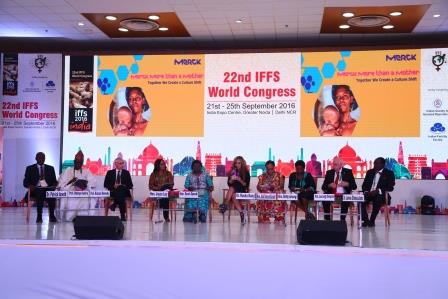
The panel was set in partnership with the International Federation of Fertility Societies (IFFS) at the opening ceremony of the World Congress of (IFFS) held in New Delhi, India.

The high level panel of ministers, parliamentarians and global fertility experts from IFFS and Africa Fertility Society highlighted lack of access to regulated fertility care and awareness about infertility management and widespread stigma of infertile women as some of the key challenges in Africa.

The panel called for increased efforts to improve access to regulated fertility care through the development of artificial reproductive therapy (ART) laws and regulations and to empower infertile women through access to education and information. They also supported the training of African embryologists and discussed different interventions to remove the infertility stigma and create a culture shift and change of mind set.

The high level panel including Sarah Opendi, Minister of Health, Uganda; Betty Amongi, Uganda’s Minister of Lands, Housing and Urban Development and Chair of Uganda Women Parliamentarian Association; Julia Duncan-Cassell, Minister of Gender, Liberia; Joyce Lay, Member of Parliament, Kenya; Dr Patrick Amoth, Senior Deputy Director of Medical Services, Ministry of Health, Kenya; Prof. Joe Leigh Simpson, Former President of International Federation of Fertility Societies (IFFS); Prof. Richard Kennedy, President of IFFS; Prof. Oladapo Ashiru, President of Africa Fertility Society; Dr. James Olobo-Lalobo, Vice-President of Africa Fertility Society, Uganda and Dr. Rasha Kelej, Chief Social Officer, Merck Healthcare supported the implementation of ‘Merck More than a Mother’s’ strategic objectives and interventions across Africa.

“The aim of ‘Merck More than a Mother’ is to empower infertile women in Africa through improving access to education, information and health and change of mind-set and in case they cannot be treated the campaign is empowering them economically and socially through ‘Empowering Berna’ Project so that they can be independent and re-build their own lives,” said Dr. Rasha Kelej, Chief Social Officer, Merck Healthcare.

“In Uganda, between 15-20% of couples fail to conceive. The number of fertility clinics in the country to address this problem are few and expensive. Together with ‘Merck More than a Mother’ in Uganda we are creating awareness that infertility can be prevented and that to improve access, fertility care can be integrated into the already existing public reproductive healthcare services which will be cost effective as the infrastructure is already there. In addition we are building a hospital for Women Health where we will dedicate an IVF center to provide couples with affordable and effective treatment with the support of Merck to train the future staff,” said Sarah Opendi, the Minister of Health, Uganda.

“In our culture, a woman is always blamed for infertility. She carry’s the shame, embarrassment and tears in private. We need to create awareness by providing information and education on infertility so that both men and women can talk about it. ‘Merck More than a Mother’ campaign has opened discussions on infertility and is talking about solutions and interventions available,” said Joyce Lay, Member of Parliament, Kenya.

At the meeting Merck showed a few videos of African infertile women who shared their stories of suffering due to failing to have children and their transformation after meeting Merck more than a Mother team who helped empower them socially and economically.

Speaking on the need to create a culture shift, Julia Duncan Cassell, Minister of Gender, Liberia said: “We should look at a woman as more than a mother. It is not always the fault of the woman when there is no child, but in our culture it is. We need to speak out as both men and women can be affected by infertility. Violence and stigma against infertile women should not be tolerated. We need to change our culture, tradition, attitude and mind-set. These can be modified and changed. We hope the ‘Merck More than a Mother’ initiative can be extended to other African countries so that awareness can increase and know that infertility can be caused by many factors and that with the right information it can be prevented.”

“In the African culture, marriage gives a woman the right to property and land. When they don’t bear children they are disinherited and when they go back home there is also nothing for them. Therefore, empowering infertile women economically and socially as ‘Merck More than a Mother’ is doing is important because most of them have nowhere to go. This enables them to sustain themselves and with the information they are given they become change agents in their communities,” said Betty Amongi, Minister of Lands, Housing and Urban Development, Uganda.

Prof. Joe Leigh Simpson, President of IFFS supported the need and importance of building fertility care capacity in Africa. “We in high resource countries have an obligation to provide education, service and translate in the shortest period of time the advances that are being made in our labs to middle and low resource countries”.

“IFFS has an important role to support ‘Merck More than a Mother’. We agree that education is essential and that we will support the education and training initiatives necessary in Africa to develop capacity for infertility treatment,” said Prof. Richard Kennedy, President elect of IFFS.

“In Nigeria people who come into our clinics are afraid because they don’t want people to know they are taking fertility treatment. In most of these cases only women seek treatment for infertility and not the men. People prefer to seek help elsewhere and by the time they come for medical help it is too late. We are happy that ‘Merck More than a Mother’ campaign is being launched in Nigeria and in Africa to create a culture shift that will enable people to seek proper treatment for infertility and that there is respect for womanhood than motherhood,” emphasized Prof. Oladapo Ashiru, President Africa Fertility Society.

Dr. Patrick Amoth, Senior Deputy Director of Medical Services, Ministry of Health Kenya pledged support for the work that ‘Merck More than a Mother’ is doing in Kenya. “The Ministry will play a key role in developing policy and guidelines to implement the ART law to ensure standards and regulations are maintained to protect couples seeking fertility treatment from exploitation,” he emphasized.


Dipo Olowookere is a journalist based in Nigeria that has passion for reporting business news stories. At his leisure time, he watches football and supports 3SC of Ibadan. Mr Olowookere can be reached via [email protected]

Advertisement
Click to comment

Leave a Reply

Your email address will not be published. Required fields are marked *

Health

Modern Veterinary Clinics For Advanced Pet Care

Published

on

Petfolk Veterinary

As companion animals live longer and owners expect more from routine care, modern veterinary clinics have evolved into centers offering advanced diagnostics, specialty surgery, and integrative therapies. For busy professionals juggling work, travel, and online business demands, knowing which clinic delivers comprehensive care is essential. Frisco vet services illustrate how these modern practices combine cutting-edge technology, multidisciplinary expertise, and client-focused workflows. This article outlines the infrastructure, service offerings, and decision criteria that indicate a clinic capable of providing contemporary, evidence-based care while keeping visits efficient and stress-free for both pets and owners.

What Defines A Modern Veterinary Clinic

A modern veterinary clinic is defined less by a single piece of equipment and more by an integrated approach that combines up‑to‑date technology, specialized staff, and clinic design that prioritizes safety and comfort. These clinics treat animals with complex conditions, run efficient workflows, and communicate transparently with owners.

Key Infrastructure And Technology Investments

Contemporary clinics invest strategically in diagnostic and treatment modalities that materially change outcomes: digital radiography for rapid imaging, in‑house laboratories for same‑day blood work, ultrasound for real‑time organ assessment, and advanced surgical suites with anesthesia monitoring. Investment also includes infection‑control systems, reliable HVAC, and sterilization equipment. These capital decisions reduce turnaround time for diagnoses and support complex procedures that previously required referral.

Staffing, Specialization, And Continuing Education

Staffing reflects clinical ambition: veterinarians with specialty training (DACVS, DACVIM, DACVECC), certified veterinary technicians, and support staff trained in low‑stress handling. Modern clinics often host visiting specialists or maintain referral relationships with tertiary centers. Importantly, clinics that prioritize continuing education schedule regular training, subscribe to current literature, and engage in case reviews, actions that keep protocols current and improve outcomes.

Clinic Design For Safety, Flow, And Comfort

Design matters. Logical patient flow minimizes cross‑contamination and stress: separate entrances for healthy and sick patients, dedicated isolation wards, and distinct surgical zones. Comfortable client areas, clear signage, and private consultation rooms improve communication and compliance. For pets, non‑slip surfaces, quiet recovery areas, and pheromone‑friendly environments reduce anxiety, which in turn improves diagnostic accuracy and post‑procedure recovery.

Advanced Diagnostic Capabilities

Diagnostics are the backbone of modern pet care. Faster, more precise tests enable tailored treatment plans and earlier interventions.

Advanced Imaging: Digital X‑Ray, Ultrasound, CT, And MRI

Digital X‑ray provides high‑resolution images with immediate availability and easier sharing for remote consults. Ultrasound is indispensable for soft‑tissue evaluation and guided biopsies. CT and MRI, once exclusive to academic centers, are now present in many referral clinics, allowing detailed assessment of complex fractures, thoracic disease, neurologic conditions, and staging of cancer. Image quality and interpretation, often augmented by teleradiology, lead to more confident surgical planning and prognostication.

Laboratory, Point‑Of‑Care Testing, And Genomic Diagnostics

In‑house labs produce same‑day CBCs, chemistry panels, and cytology, accelerating decision‑making. Point‑of‑care tests for infectious agents, endocrine disorders, and clotting function add convenience without sacrificing reliability. Genomic diagnostics, from breed‑specific risk panels to tumor genomics, are increasingly accessible, enabling targeted therapies and risk stratification for hereditary conditions.

How Diagnostics Inform Preventive Care And Personalized Medicine

Diagnostics underpin preventive medicine: heartworm antigen tests, thyroid screening, and wellness blood panels reveal problems before clinical signs appear. Personalized medicine emerges when diagnostics inform individualized vaccination schedules, dietary plans, or monitoring frequency. The result: care that reduces emergency visits and improves long‑term quality of life.

State‑Of‑The‑Art Surgical And Interventional Services

Surgery in modern clinics spans routine spays and neuters to complex orthopedic reconstructions and image‑guided interventions.

Minimally Invasive, Laser, And Image‑Guided Procedures

Minimally invasive techniques, arthroscopy, laparoscopy, and endoscopy, reduce pain, shorten hospital stays, and speed return to function. Laser surgery provides precision and reduced bleeding for soft‑tissue procedures. Image‑guided interventions, such as CT‑guided biopsies or fluoroscopy for foreign body retrieval, allow targeted treatments that were once riskier or impossible.

Anesthesia, Pain Management, And Perioperative Safety

Anesthesia protocols are more nuanced today: individualized drug selection, multimodal analgesia, regional blocks, and continuous monitoring (ECG, capnography, pulse oximetry) improve safety. Preoperative assessment, including risk stratification and optimization of comorbidities, reduces complications. Recovery protocols emphasize early mobilization and aggressive pain control to prevent chronic pain syndromes.

Postoperative Rehabilitation And Recovery Protocols

Rehabilitation is an expected component of surgical care. Physical therapy, hydrotherapy, and tailored exercise plans reduce muscle atrophy and improve joint function. Clinics often provide home‑care instructions and scheduled reassessments to track progress and adjust protocols. These programs turn good surgical outcomes into durable functional gains.

Petfolk Veterinary & Urgent Care – Frisco


Advanced Therapeutics And Specialty Treatments

Beyond diagnostics and surgery, modern clinics deliver advanced therapeutics that extend and improve life quality.

Regenerative Medicine: Stem Cells And PRP

Regenerative modalities like mesenchymal stem cell therapy and platelet‑rich plasma (PRP) injections aim to stimulate healing in tendon, ligament, and osteoarthritic conditions. While still an evolving field, controlled studies and clinical experience show promising functional improvements for select patients. Clinics offering these therapies combine careful case selection with measurable outcome tracking.

Oncology, Neurology, Cardiology, And Other Specialties

Specialty services allow complex, multidisciplinary care. Veterinary oncologists provide staging, chemotherapy, and radiation planning: neurologists manage seizure disorders and spinal disease: cardiologists use echocardiography and interventional procedures for congenital heart defects. Integration with imaging and lab diagnostics enables cohesive care pathways that mirror human tertiary centers.

Integrative Therapies: Physical Rehab, Acupuncture, And Nutrition

Integrative care recognizes the value of adjunctive treatments. Acupuncture and targeted nutrition plans complement medical therapy for chronic pain and mobility issues. Nutritional counseling, including therapeutic diets for renal, cardiac, or dermatologic disease, is standard in clinics focused on long‑term outcomes.

Improving Pet And Client Experience With Technology

Technology enhances both clinical care and client experience, especially for owners who need efficient, transparent services.

Telemedicine, Remote Monitoring, And Virtual Follow‑Ups

Telemedicine extends access for triage, follow‑ups, and behavioral consultations. Remote monitoring devices, activity trackers, continuous glucose monitors, and wearable ECGs, provide objective data between visits. Virtual follow‑ups reduce travel burdens and let clinicians adjust care in real time, improving adherence and satisfaction.

Electronic Medical Records, Client Portals, And Scheduling Tools

Electronic medical records (EMRs) streamline documentation and support coordinated care. Client portals give owners access to vaccination histories, lab results, and discharge instructions. Integrated scheduling and automated reminders decrease no‑shows and improve preventive care compliance, a benefit both to clinics and busy clients.

Pain Management, Behavior‑Based Care, And Low‑Stress Handling

Client experience is inseparable from pet comfort. Modern clinics train staff in low‑stress handling techniques and behavior‑based protocols that reduce fear and aggression. Transparent pain‑management plans, clear cost estimates, and follow‑up communications foster trust and better outcomes.

How To Choose The Right Modern Clinic For Your Pet

Choosing a clinic requires practical criteria and an understanding of trade‑offs between convenience, specialization, and cost.

Questions To Ask: Credentials, Equipment, And Outcomes

Prospective clients should ask about specialist credentials, the availability of imaging and lab services, and the clinic’s approach to anesthesia and pain control. Request examples of similar cases and expected outcomes. A clinic that welcomes such questions is often more transparent and results‑oriented.

Cost, Insurance, And Referral Pathways

Advanced care carries higher costs. Discuss fee structures, payment options, and whether the clinic works with pet insurance. Understand referral pathways: does the clinic refer to or host board‑certified specialists? Clear referral and co‑management policies indicate maturity and a networked approach to care.

Evaluating Reviews, Accreditation, And Collaboration With Primary Vets

Look for consistent reviews that mention communication, follow‑up, and outcomes rather than isolated flashy cases. Accreditation (AAHA in the U.S.) or affiliation with universities can signal adherence to higher standards. Finally, the best specialty clinics collaborate with primary care veterinarians, ensuring continuity rather than competition.

Conclusion

Modern veterinary clinics for advanced pet care combine technology, specialization, and thoughtful design to deliver better diagnostic accuracy, safer surgeries, and more personalized therapies. Pet owners benefit when clinics pair capabilities with clear communication, transparent costs, and collaborative care models. For professionals, including small business owners and busy entrepreneurs who value efficient, outcome‑driven services, selecting a clinic that integrates advanced diagnostics, robust perioperative care, and client‑centric technology yields the best chance for sustained pet health. As veterinary medicine continues to mirror human healthcare in capability and complexity, informed choices and trusted partnerships between owners and clinics will determine the real value of those advances.

Continue Reading

Health

Oyo Seals Ar-Rahmon Khabul Herbal Over Health Concerns

Published

on

OYRLEA

By Modupe Gbadeyanka

An Ibadan-based herbal company, Ar-Rahmon Khabul Herbal Nigeria Limited, has been sealed by the Oyo State Rule of Law Enforcement Authority (OYRLEA).

The state government, in a statement signed on Friday by the Commissioner for Information, Mr Dotun Oyelade, revealed that the herbal firm was shut down due to environmental violations and public health concerns.

The leader of OYRLEA, Mrs Aderonke Aderemi, explained that the action was taken after multiple petitions from residents alleging persistent offensive odour and health challenges linked to the company’s operations.

She noted that the state government swung into action “to protect public health, preserve environmental standards, and enforce regulatory compliance across the state.”

It was gathered that investigations identified tobacco leaf as a major component in its production process, generating a strong, putrid odour deemed hazardous to residents and capable of posing serious health risks to the surrounding community.

“Joint inspections by officials revealed that the company operates a herbal production facility within a densely populated residential area, in clear violation of environmental and public health standards,” the statement said, adding that further findings from the inspection include the emission of harmful and toxic gaseous substances into the atmosphere, the discharge of wastewater into a nearby community water body, the installation of a chimney deemed too short and directly facing residential buildings, and the accumulation of solid waste within the premises despite claims of engaging a waste contractor, among others.

Prior to the enforcement action, the agency had issued an abatement notice directing the company to cease operations and relocate within 21 days in accordance with the Oyo State Environmental, Sanitation and Waste Control Regulations.

OYRLEA, along with the agencies that carried out the enforcement, reiterates that air pollution, hazardous waste discharge, and improper waste management are violations of environmental laws.

Mrs Aderemi reaffirmed OYRLEA’s commitment to sustained monitoring and enforcement to ensure a safe and healthy environment for all residents.

Continue Reading

Health

NAFDAC Receives Seized Pharmaceutical Products from Rivers Customs

Published

on

Rivers customs NAFDAC

By Bon Peters

The Port Harcourt Area I Command of the Nigeria Customs Service (NCS) has handed over pharmaceutical products intercepted at the Omagwa International Airport recently to the National Agency for Food and Drug Administration and Control (NAFDAC).

The spokesman for the command, Mr Barilule Aanee, an Assistant Superintendent of Customs 1, said in a statement that the items were given to NAFDAC on February 12, 2026, at the NAHCO Shed of the airport, where the seizure occurred.

The Customs Area Controller of the command, Comptroller Salamatu Atuluku, disclosed that the interception was made during routine examination and intelligence-driven scrutiny at the NAHCO Shed by officers of the Command in collaboration with relevant agencies.

She disclosed that six packages of pharmaceutical products, including Menotrophin 150 IU injections, Progesterone, and Isifrane, as well as three packages of medicaments containing Tramadol Ratiopharm injections, were discovered in two separate consignments.

The products, according to the statement, were neither properly declared nor accompanied by the mandatory NAFDAC certification required for lawful importation into Nigeria.

The Customs Area 1 chief further revealed that one shipment, originating under the name Zecho Oil and Gas Nigeria Limited for Elite Health Pharmacy Ltd, with Airway Bill No. 020 34858250, weighing 135 kilograms and amounting to 4,300 units, transported by Lufthansa Cargo Airline, was among the seized products.

More so, another consignment on Allied Airway Bill No. 574 34543283 from Amsterdam was falsely declared as spare parts.

She emphasised that regardless of the importer or volume involved, “no pharmaceutical product is permitted entry into Nigeria without proper declaration and regulatory clearance from NAFDAC.”

Comptroller Atuluku commended the diligence of the Customs Intelligence Unit and all officers involved, stressing that sustained interagency cooperation remained vital to strengthening enforcement and preserving the integrity of the nation’s supply chain.

While receiving the items, the Deputy Director of the NAFDAC Port Inspection Directorate, Pharm. Adepoju Bayo Raufu, thanked the customs for its vigilance and prompt handover of the intercepted items.

He assured that the agency would subject the items to appropriate regulatory procedures in line with its mandate to safeguard public health.

Continue Reading

Trending