General
FG to Distribute 4 million Meters in Second Phase
By Adedapo Adesanya
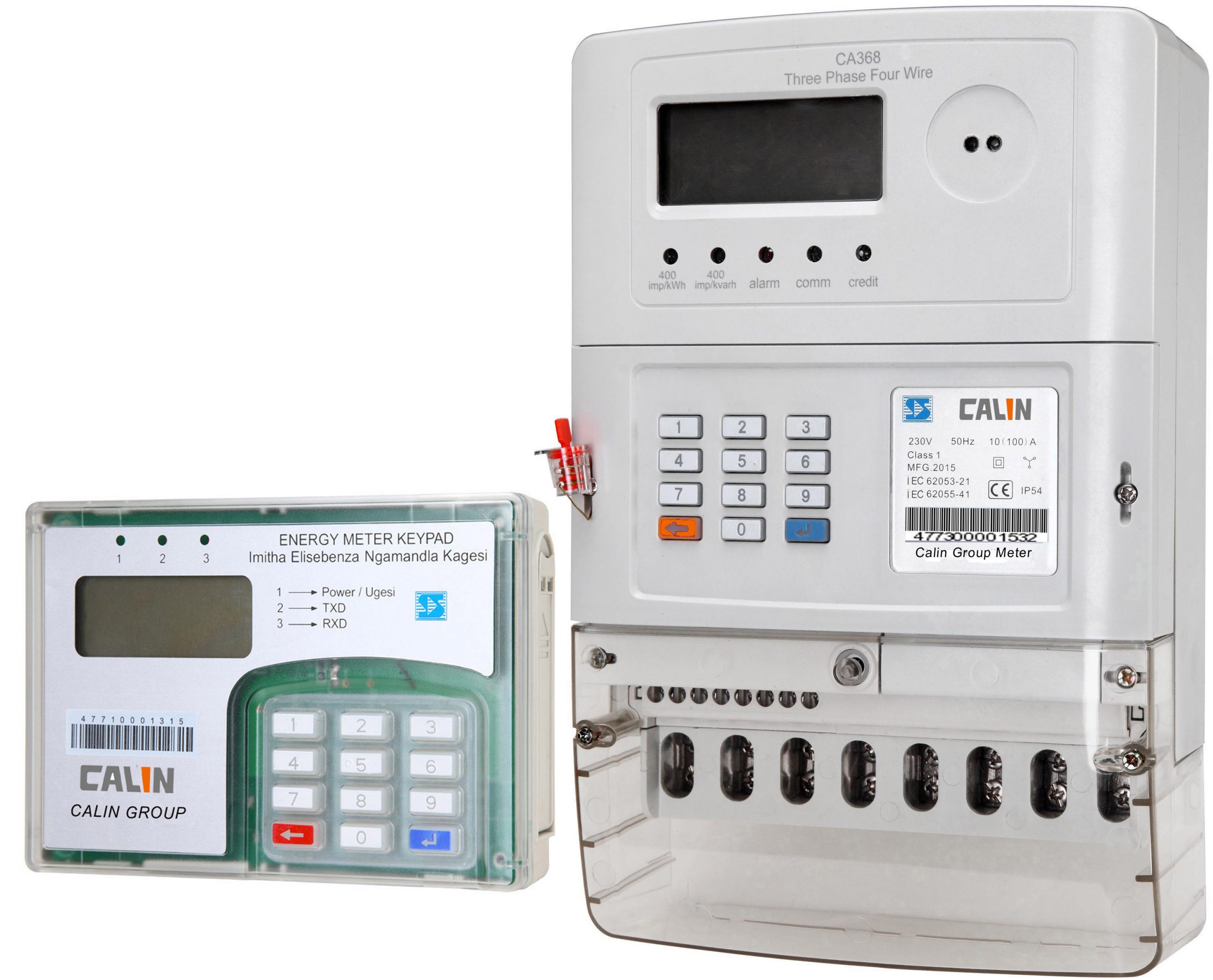
Under its National Mass Metering Programme (NNMP), the federal government is set to distribute about 4 million prepaid meters in the second phase.
A statement issued by the Power Sector Working Group disclosed that 750,000 meters have been delivered to DisCos in just under eight months in the first leg of the service.
It will be recalled that the first phase (Phase 0) was launched later than expected in December 2020 due to the COVID-19 pandemic, with a target of one million meters across the country.
The mass metering programme is expected to drastically reduce estimated billing by Distribution Companies (DisCos) and ensure consumers are billed appropriately for the electricity they consume by installing meters free of charge in household and business premises that are currently unmetered.
“This is a marked improvement in terms of the speed of installation of meters compared to its predecessor (Meter Asset Provider – MAP program) which recorded 350,000-meter installations in just over 18 months. Essentially the Nigerian Meter Industry has increased local installation capacity by a multiple of five.
“In preparation for the Second Phase (known as Phase 1) of the NMMP, the electricity sector regulator – Nigerian Electricity Regulatory Commission (NERC) – has conducted extensive consultations and stakeholder management, and has revised its metering guidelines. This phase will provide up to 4 million meters and shall also use a similar financing mechanism as phase 0.
“One of the key successes of the NMMP initiative is how rapidly it has increased private sector interest in investing the local meter assembly, manufacturing and installation space.
“In addition to the springing up of new factories such as the Quantum meter assembly plant in Lagos and the Smart Meter assembly plant in Kaduna, we are also seeing the refurbishment and upgrade of some metering plants that had been also fallen into disrepair such as EMCON in Kaduna.
“This development in the meter assembly space is driven by the Central Bank’s commitment to supporting local meter assembly/manufacturing as only local companies will be allowed to participate in the bidding process for the upcoming phase of the program.
“This promises to increase the job creation impact of the program which has already attained appreciable heights with over 10,000 direct jobs created as a result of phase 0 of the program,” the statement added.
The government explained that for phase 1, a central procurement mechanism to be overseen and supervised by NERC will be employed to ensure that meters are secured at the lowest possible cost, thereby reaching the goals and objectives of the NMMP.
“The commencement of the procurement process of Phase 1 has been done strategically to ensure that there is no gap in meter supply to customers as the NMMP transitions from Phase 0 to Phase 1,” it disclosed.
The federal government provided funding for the program through loans from the Central Bank of Nigeria (CBN).
General
Dangote Refinery Remains Europe’s Biggest Jet Fuel Supplier
By Aduragbemi Omiyale
For the second consecutive month, Dangote Petroleum Refinery and Petrochemicals has become the largest supplier of jet fuel to Europe, outpacing the United States of America (USA).
Data from Kpler showed that in July 2026, the Lagos-based oil facility, which has the capacity to refine 700,000 barrels of crude oil per day, produced more than 400,000 tonnes of jet fuel.
In June 2026, the private refinery, owned by Mr Aliko Dangote, exported 466,000 tonnes to Europe, underscoring its growing influence on international fuel markets and highlighting Nigeria’s emergence as a strategic player in global refined petroleum trade.
The latest data indicated that Dangote Refinery accounts for approximately 20 per cent of Europe’s total jet fuel imports last month.
The sustained export performance marks a significant milestone for the refinery, demonstrating its ability to consistently supply one of the world’s most demanding fuel markets with aviation fuel that meets stringent international quality specifications. Europe imported approximately 2.06 million tonnes of jet fuel in July, with Dangote accounting for the single largest share of those imports, ahead of traditional suppliers from the United States and the Middle East.
Industry observers say the refinery is rapidly reshaping established Atlantic Basin fuel trade flows by offering a competitive alternative to long-standing suppliers. While European buyers have traditionally relied on refiners in the United States, the Middle East and Asia, Dangote’s strategic location on Nigeria’s Atlantic coast, combined with its scale, modern technology and export capability, has enabled it to become an increasingly important source of aviation fuel for European markets.
General
Tinubu Orders EFCC to Lift Embargo on Osun Govt Account
By Modupe Gbadeyanka
President Bola Tinubu on Thursday directed the Economic and Financial Crimes Commission (EFCC) to vacate the court ordering the freezing of the bank account of the Osun Srate government.
In a statement today by his Special Adviser on Information and Strategy, Mr Bayo Onanuga, the President said he’s “deeply embarrassed not by the EFCC’s exercise of its mandate backed by a court order” because of its timing, which is just a few days to the governorship election in the state next Saturday.
According to him, actions of an institution of State, especially at the Federal level, is always credited to me, as the President, even when I may not have had any prior knowledge of the action.
“Since assuming office, I have consistently maintained that anti-corruption and law enforcement agencies must be allowed to discharge their statutory responsibilities independently, professionally, without fear or favour, or political interference. I have therefore deliberately refrained from directing or interfering in the operational activities of the EFCC or any other investigative or prosecutorial agency because I firmly believe that strong democratic institutions, operating within the confines of the law, are indispensable to democratic good governance and the rule of law.
“As President, I am committed to allowing institutions of State to function and take any action they consider necessary in the interest of proper governance without the need for any prior approval. Indeed, that is why institutions are set up by law with clearly defined powers. While I am yet to be fully apprised of the facts which informed the action of EFCC in approaching the court to obtain the said order freezing the Osun State Government account, I am not in the slightest doubt that the timing of the action of EFCC is inauspicious, and therefore I feel compelled to intervene.
“Osun State is only a few days away from its gubernatorial election. Therefore, nothing ought to be done to give an impression that the EFCC or indeed any other agency of the federal government is being used to interfere with the election.
“Based on the foregoing premise, I am duty-bound to issue a directive on this issue in consonance with the overriding public interest in preserving public confidence and the integrity, credibility, and fairness of our democratic process.
“Accordingly, I have directed the EFCC to immediately proceed to the court to vacate the order and discontinue whatever action it has instituted against the Osun State Government in this regard,” the statement stated.
General
EFCC Admits Freezing Osun Bank Account, Alleges N11bn Embezzlement
By Modupe Gbadeyanka
The Economic and Financial Crimes Commission (EFCC) has explained why it initiated a move to freeze the bank account of the Osun State government.
Earlier on Wednesday, the Governor of Osun State, Mr Ademola Adeleke, claimed that the anti-money laundering agency asked one of its bankers, First Bank, not to release funds to the state government.
According to the Governor, this was part of the strategies to frustrate his administration ahead of the August 15, 2026, governorship election in the state.
Reacting to the issue on Wednesday night, the EFCC, in a statement, said it has been investigating the state government since March 2026 over an alleged “fraudulent handling of Ecology Funds, Intervention Funds and Federal Account Allocation Committee (FAAC) account to the tune of N11.0 billion.
The organisation noted that some officials of the state government, especially the Accountant General of the State, have had interview sessions with investigators of the EFCC.
“These ongoing investigations of the state government would not have warranted any placement of Post No Debit order on its account but for the precipitate and unwarranted movement of funds from the accounts to different suspicious accounts since August 2, 2026.
“The commission noticed huge transfers of funds into different corporate entities and had to swiftly halt the trend by freezing the accounts from which such heavy funds are being moved,” parts of the statement said.
In the disclosure, the agency noted that its preventive mandate is a public-inclined framework of safeguarding public funds, assets and resources, stressing that it cannot “watch idly while a state government’s account is being pillaged.”
“While the commission is fully aware of the impending governorship election in Osun State, it has a responsibility to act in defence of the sanctity of the funds of the state. It will be uncharitable for the commission to allow an excuse of an upcoming election to fold its arms to perform its legally-assigned functions,” it pointed out.
The EFCC disclosed that it is “keeping watch over the finances of other states like Osun State. Many of these states are on the investigative radar of the commission to ensure accountability and probity. The commission has always pointed out that it is non-partisan and non-sectarian but always working in the overall interests of Nigerians. The Osun State government account was frozen to save public funds from being looted.”
The organisation urged the public “to ignore false narratives and deliberate demonisation of the works of the EFCC. The interests of all Nigerians are greater and will always be protected by the commission.”