General
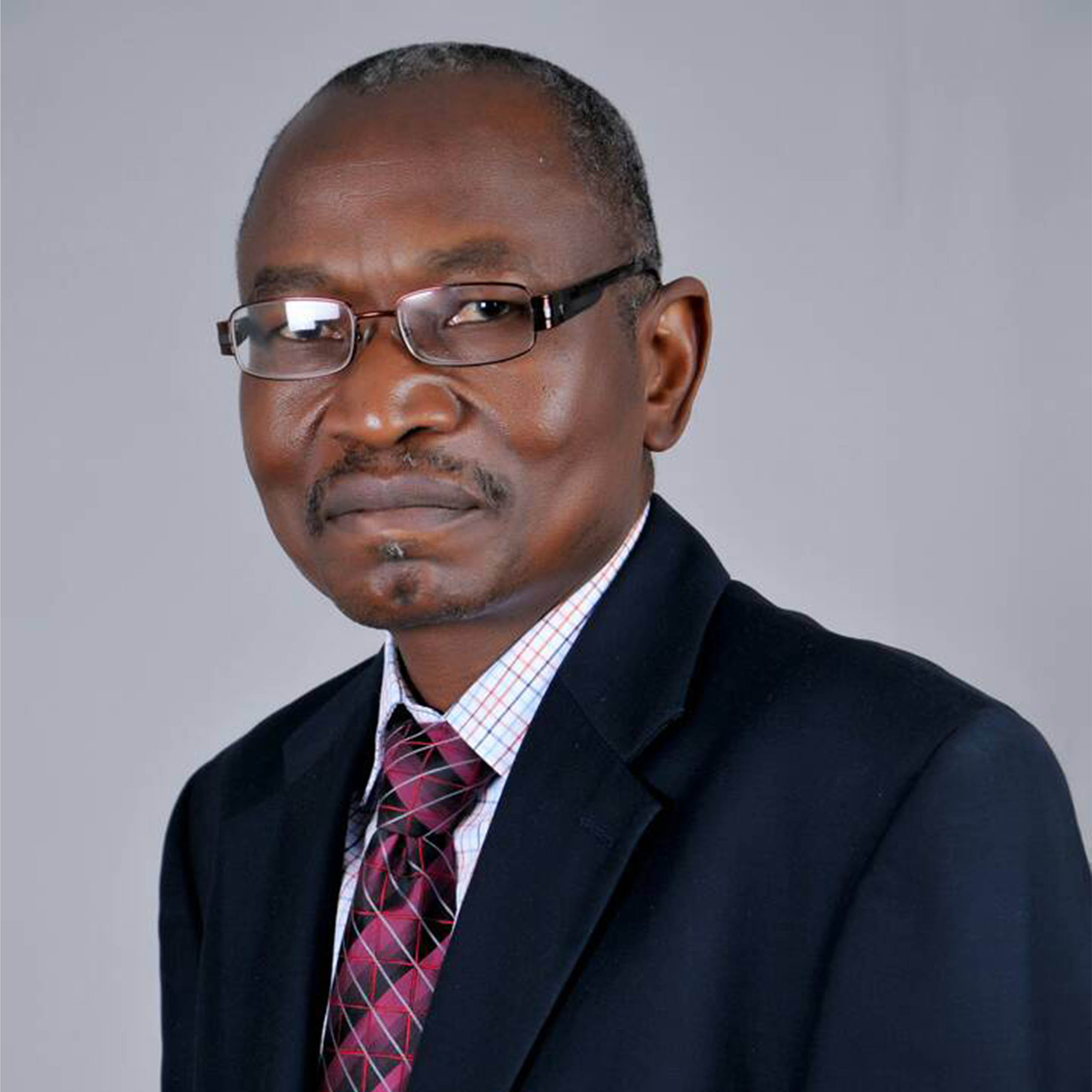
Privatization of Power Sector Not a Failure—IBEDC COO
By Adedapo Adesanya
The Chief Operating Officer (COO) of the Ibadan Electricity Distribution Company (IBEDC), Mr John Ayodele, has disagreed with those who said the privatization of the power sector has turned out to be a failure, unlike its telecommunications counterpart.
Mr Ayodele, while addressing newsmen in Ibadan on Tuesday, said the electricity distribution company and others were making progress despite the challenges.
He said, for example, IBEDC runs a deficit of N4 billion monthly and that between January and July 2021, it has recorded 15,032 cases of vandalisation of distribution assets.
Mr Ayodele said the money paid by customers to the company also goes to generating (GENCO) and transmission companies operating in the sector as well.
He maintained that IBEDC does not have the full power to reduce the tariff, stressing that stakeholders must unanimously agree to review power tariffs in the country.
On the efforts of the company towards effective service delivery, he said the electricity distributing company, he been investing heavily in the sector.
All in the bid to improve service delivery, he highlighted that the company has added 2,632 distribution substations to its network, rehabilitated 39 dilapidated substations, replaced two failed power stations and 381 distribution transformers.
The IBEDC COO added that the company reconstructed six new 33 kilovolt (kV) and six new 11 kV outgoing feeders, rehabilitated 22 high tensions and 52 low tension overhead lines.
Mr Ayodele said the company has made progress on Asset and Customer Enumeration; an exercise that has made it possible to correctly capture the active consumer base of the company and aided the Distribution Transformer (DT) metering project.
According to him, the company has ensured that 50 per cent of IBEDC DT meters are smartly metered, adding that metering would aid management and solve problems of accountability of energy.
Also, he explained that the organisation has been working on improving occupational and safety management systems and initiated e-billing which enables effective delivery of bills to postpaid customers via SMS and Email.
Speaking on the issue of increase in tariff, he said that the increasing energy cost is driven by the impact of worsening exchange rate on gas price, the inflation evident in the economy, the constraints on the national grid and the frequent collapse of the grid.
Clarifying on compensation, the COO said many individuals and communities are not truthful about the real cost of the infrastructure provided and should have first consulted with the company to agree on the cost and structure of repayment hence the reason for non-compensation.
“The management, however, promised to work on its response system to ensure a close interaction with communities,” he said.
Mr Ayodele also responded to the allegation on the corruption of staff, saying that IBEDC has constantly been sacking employees found to be corrupt and even prosecuting them.
He advised the public not to keep quiet but report such incidences and urged all to deviate from the thinking that energy supply is a social service rather than an economic service.
He pointed that this perception was the reason why some bypassers do not want to accept meters but called for active cooperation from consumers.
General
NERC Seeks Reallocation of Rural Electrification Fund to Industries, Others
By Adedapo Adesanya
The Nigerian Electricity Regulatory Commission (NERC) is seeking the reallocation of the $2 billion currently domiciled with the Rural Electrification Agency (REA) beyond rural use to include industries and other large-scale needs.
The Vice Chairman of NERC, Mr Musiliu Oseni, called for a policy rethink in the management and utilisation of the REA fund, saying Nigeria must go beyond powering homes to powering industries and national prosperity.
Mr Oseni, speaking during the Technical Sessions to mark NERC’s 20th Anniversary in Abuja, said the commission’s focus has now shifted toward unlocking private capital, particularly in the transmission sub-sector, through the newly established Transmission Infrastructure Fund (TIF).
“Through effective regulation, we have saved the Federal Government several trillions of naira in subsidies, strengthened market reliability, and enhanced consumer protection,” he said.
The REA fund is part of efforts address Nigeria’s electricity access gaps. It was established for the purpose of supporting rural and underserved electrification. The fund provides capital subsidies or grants to schemes that can help achieve the electrification goal.
According to Mr Oseni, transmission remains a challenge beyond generation and distribution.
“But now we must move from subsidy savings to investment stimulation. That is why our attention is on transmission, the weakest link in the electricity value chain.“
The NERC Vice Chairman explained that the TIF will provide a financing platform to attract both local and international investors into Nigeria’s transmission grid, thereby enhancing stability and capacity for industrial growth.
On the management of the Rural Electrification Fund, Mr Oseni urged the federal government to deploy part of the $2 billion fund toward large-scale industrial and commercial power supply.
“You can power access through mini-grids, but you can’t power your economy to prosperity,” he said pointedly.
“We must ensure that access translates to productivity, and productivity translates to jobs and growth,” he added.
General
NCSP Urges Stronger Alignment to Unlock Private Capital for Nigeria’s Blue Economy
By Adedapo Adesanya
The Nigeria–China Strategic Partnership (NCSP) has urged stronger alignment among federal, state, and global climate strategies to unlock billions of dollars in private capital for Nigeria’s growing Blue Economy.
This call was made by the Director-General of NCSP, Mr Joseph Tegbe, at the 11th Lagos International Climate Change Summit (LICCS), held from November 6–7, 2025 in Lagos.
The DG, represented by the Head of Investment Management, Mr Taiwo Ajetunmobi, commended the Lagos State government for leading subnational climate action and setting a continental benchmark for sustainable growth.
Organized by the Lagos State Ministry of the Environment and Water Resources, the summit, themed Blue Economy, Green Money; Financing Africa’s Coastal Resilience and Ocean Innovation, convened policymakers, investors, climate experts, and development partners to explore innovative financing for ocean-based and climate-resilient projects.
Highlighting Lagos’s 180-kilometre coastline and dynamic private sector, the Director-General identified the state as a natural leader in Nigeria’s Blue Economy transformation.
He cited the Lekki Deep Sea Port as a prime example of effective federal–state collaboration that attracted over $1 billion in private equity investment, reinforcing Nigeria’s position as a regional maritime hub.
“Investors look for three things policy coherence, regulatory predictability, and project bankability. When these align, private capital follows,” he stated.
“By synchronizing federal vision with subnational execution, Lagos can unlock billions in blended finance for coastal resilience and sustainable infrastructure,” he added.
He further outlined Public–Private Partnership (PPP) models such as Build–Operate–Transfer (BOT), Design–Build–Finance–Operate (DBFO), and Lease–Develop–Operate (LDO), urging reforms to standardize processes, improve transparency, and strengthen institutional capacity.
The NCSP DG also highlighted China’s growing role as a strategic partner in Nigeria’s Blue Economy, noting investor interest in waste-to-energy, solar-powered cold-chain, and water transport projects.
“China leads globally in clean energy and marine infrastructure. With transparent, commercially viable frameworks, Lagos can attract long-term equity partnerships that deliver real value to its people,” he added.
Mr Tegbe called for unified action among stakeholders: “The tide of opportunity is rising and Lagos must rise with it. By aligning state, federal, and global strategies, we can turn Nigeria’s maritime potential into real wealth and shared prosperity.”
NCSP also reaffirmed its commitment to supporting projects that strengthen Nigeria’s climate resilience and solidify Lagos’s position as Africa’s hub for sustainable Blue Economy innovation.
General
We Will Defeat Every Form of Terrorism, Secure Nigerians—Tinubu
By Modupe Gbadeyanka
President Bola Tinubu has promised to protect the country and work very hard to ensure every form of terrorism in Nigeria is defeated.
Mr Tinubu gave this assurance during the Federal Executive Council (FEC) meeting in Abuja on Thursday.
He disclosed that Nigeria remains on a steady growth trajectory, with more promise of stability and prosperity as economic reforms continue to yield results and gain national and international acceptance.
Speaking in reaction to the threats by President Donald Trump of United States to raid terrorists’ camps in Nigeria, Mr Tinubu asked, “Do we have problems? Yes. Are we challenged by terrorism? Yes. But we will defeat terrorism. We will overcome the CPC designation.
“Nigeria is one happy family, and we shall spare no effort until we eliminate all criminals from our society. We want our friends to help us as we step up our fight against terrorism, and we will eliminate it.”
The President also disclosed that the federal government was engaging with the world diplomatically, noting, “The most important thing is the fact that despite the political headwinds and the fear of our people, we will continue to engage with partners.”
Commenting on the economy, he said, “The success of the $2.3 billion Eurobond that was oversubscribed by 400 per cent is the most assuring. So, the task ahead is immense; we are engaging the world diplomatically, and we assure all of you that we will defeat terrorism in this country.
“The task ahead is immense, but it is our resolve to move forward with unity and purpose, guided by the Renewed Hope Agenda to build a prosperous, inclusive and resilient Nigeria.”
Mr Tinubu directed the Minister of Finance and Coordinating Minister of the Economy, Mr Wale Edun, to brief the council on the nation’s economic performance, stated that the government will continue to sustain and consolidate the gains.
-
Feature/OPED6 years agoDavos was Different this year
-
Travel/Tourism9 years ago
Lagos Seals Western Lodge Hotel In Ikorodu
-
Showbiz3 years agoEstranged Lover Releases Videos of Empress Njamah Bathing
-
Banking7 years agoSort Codes of GTBank Branches in Nigeria
-
Economy2 years agoSubsidy Removal: CNG at N130 Per Litre Cheaper Than Petrol—IPMAN
-
Banking3 years agoFirst Bank Announces Planned Downtime
-
Sports3 years agoHighest Paid Nigerian Footballer – How Much Do Nigerian Footballers Earn
-
Banking3 years agoSort Codes of UBA Branches in Nigeria