Economy
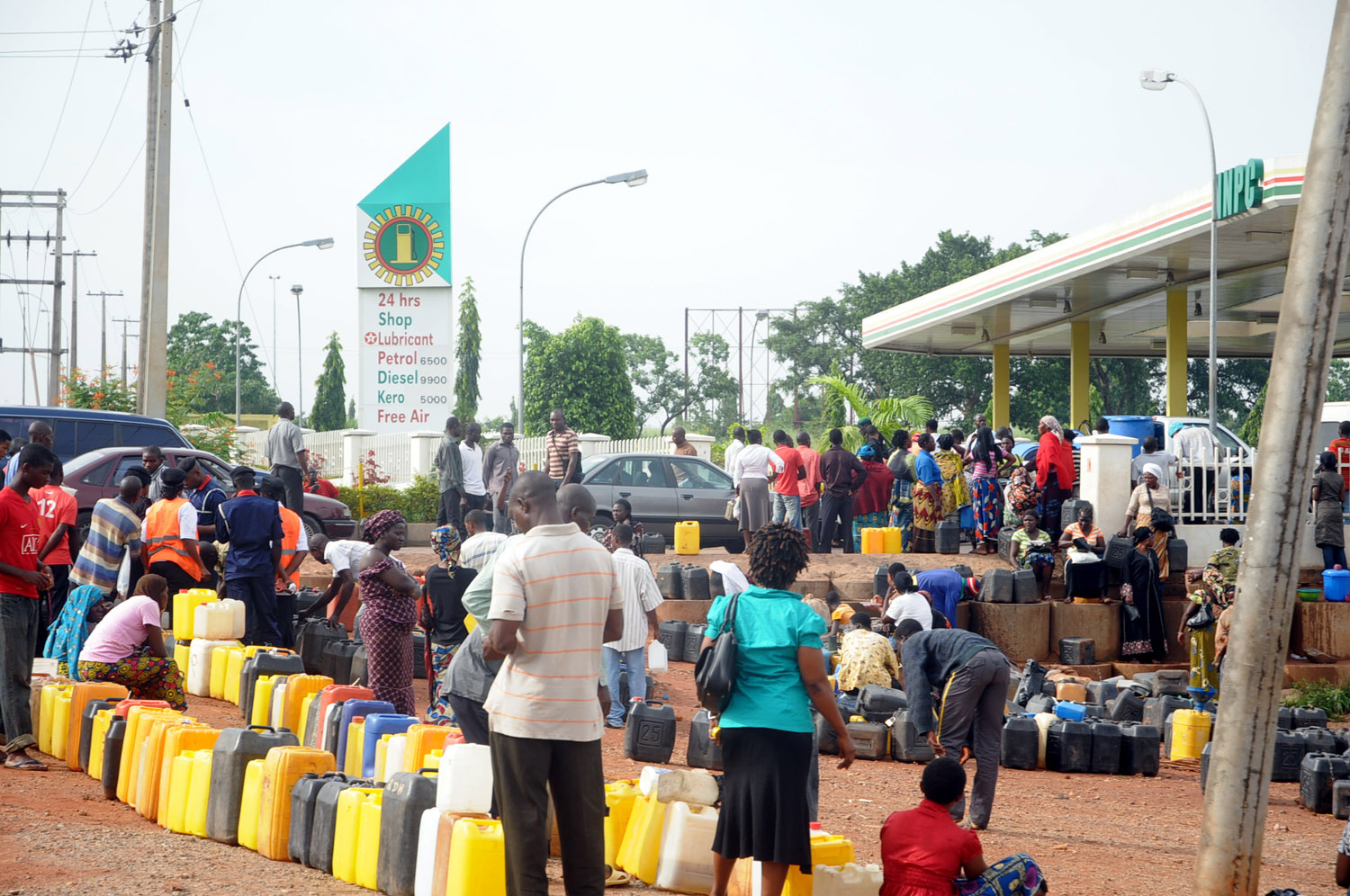
NNPC Stops Importation of Kerosene

By Dipo Olowookere
The importation of kerosene by the Nigerian National Petroleum Corporation (NNPC) has been stopped, Punch is reporting.
This has occurred for the past three months, the paper relied on information from NNPC’s latest financial and operations report.
The NNPC report disclosed that it last imported kerosene into Nigeria under the Direct-Sale Direct-Purchase/Offshore Processing Agreement in May 2016, disclosing further that in the months of June, July and August this year, it did not get a single litre of the commodity under the DSDP/OPA.
However, following this development, the report indicated that the corporation produced DPK from the country’s refineries.
It would be recalled that in February, the Minister of State for Petroleum Resources, Dr Ibe Kachikwu, announced the replacement of the crude swap arrangement with what he called the Direct-Sale Direct-Purchase framework, which took off in April.
The DSDP was adopted to replace the crude swap initiative and the offshore processing arrangement in a bid to entrench transparency in the crude oil for product transaction by the country’s national oil firm.
Documents sighted by Punch at the Abuja headquarters of the NNPC showed that by implementing the DSDP, Nigeria was able to save $336.4 million (N102.6 billion at the official exchange rate of N305 to $1) between April and July 2016.
But the latest report of the corporation showed that while the national oil firm continued the DSDP framework for the importation of Premium Motor Spirit, popularly known as petrol, it discontinued the importation of DPK through the channel.
For June, July and August, the NNPC was supplied 1.18 billion, 798.33 million and 901.35 million litres of PMS, respectively, but it got no single drop of DPK during these months via the DSDP/OPA scheme.
“In August 2016, 901.35 million litres of white products were supplied into the country through the DSDP arrangement, while 798.33 million litres were supplied in the month of July 2016; only PMS (was) supplied through the DSDP in the months of July and August 2016,” the report stated.
The report, however, did not state if the NNPC was importing kerosene through other channels and officials of the firm could not confirm this on Wednesday.
The Group General Manager, Group Public Affairs Division, NNPC, Mr Garba-Deen Mohammed, told Punch that he would find out if the firm had stopped kerosene importation, particularly through the DSDP channel.
He promised to get back after making his findings, but had yet do so as of the time of filing this report.
Economy
Naira Firms to N1,372/$1 at Official Market, N1,455/$1 at Black Market
By Adedapo Adesanya
The Naira firmed up against the US Dollar in the various segments of the foreign exchange (FX) market on Tuesday, February 3, 2026, on the back of improved forex liquidity.
In the black market window, the local currency improved its value against the Dollar during the session by N10 to sell for N1,455/$1 compared with the previous day’s rate of N1,465/$1, and at the GTBank FX counter, it gained N33 gain to close at N1,386/$1 versus Monday’s closing value of N1,419/$1.
In the Nigerian Autonomous Foreign Exchange Market (NAFEM), the domestic currency appreciated against the greenback by N17.45 to trade at N1,372.91/$1, in contrast to the preceding session’s N1,390.36/$1.
In the same vein, the Nigerian currency chalked up N21.92 against the Pound Sterling yesterday in the official market to quote at N1,877.59/£1 compared with the N1,899.51/£1 it was exchanged a day earlier, and gained N24.76 against the Euro to settle at N1,619.76/€1 versus N1,644.52/€1.
The appreciation seen indicates that available supply is mopping up demand even without any intervention from the Central Bank of Nigeria (CBN) in recent weeks, showing that market-driven currency framework is driving a stronger Naira.
Enhanced price discovery following plans by the apex bank to undertake a comprehensive revamp of the FX manual is acting as a pillar of support.
At a recent forum, the Deputy Governor, Economic Policy, CBN, Mr Muhammad Sani Abdullahi, disclosed that the bank was revamping the manual, a key regulatory document used by banks for export proceeds and other foreign trade-related transactions.
According to him, the document was already undergoing significant reforms aimed at aligning market operations with current economic realities.
Mr Abdullahi explained that the revised manual would introduce clearer rules, stronger oversight and improved processes to support transparency and efficiency in the FX market.
He said the reforms are expected to close loopholes, reduce uncertainty for market participants, and support a more orderly functioning of the foreign exchange system.
Also, Nigeria’s external reserves, which provide the CBN with the capacity to support the Naira, have continued to rise, reaching $46.59 billion as of 2 February 2026, according to CBN data.
In the cryptocurrency market, most prices still remained down as sentiment among short-term traders remaining cautious after thin liquidity and heavy liquidations pushed prices sharply lower.
Global crypto investment products saw $1.7 billion in outflows last week, marking the second consecutive week of heavy redemptions, with Solana (SOL) down by 5.2 per cent to $98.41.
Further, Bitcoin (BTC) depreciated by 2.4 per cent to $76,638.44, Binance Coin (BNB) slumped by 2.0 per cent to $761.78, Ethereum (ETH) dropped by 1.9 per cent to $2,277.16, Ripple (XRP) declined by 0.6 per cent to $1.60, and the US Dollar Tether (USDT) lost 0.1 per cent to sell at $0.9985.
However, Dogecoin (DOGE) improved by 1.7 per cent to $0.1084, Cardano (ADA) expanded by 1.2 per cent to $0.2868, and Litecoin (LTC) increased by 0.9 per cent to $60.63, while the US Dollar Coin (USDC) remained unchanged at $1.00 apiece.
Economy
Investors Gain N333bn Trading Nigerian Equities
By Dipo Olowookere
A 0.31 per cent gain was recorded by the Nigerian Exchange (NGX) Limited on Tuesday, helped by renewed bargain-hunting by investors, with the year-to-date return extending to 6.61 per cent.
It was observed that the growth achieved by Customs Street yesterday was supported by the banking and the industrial goods indices, which went up by 1.32 per cent and 0.69 per cent apiece.
They offset the losses recorded by the three other sectors, with the insurance counter down by 1.32 per cent, the consumer goods segment down by 0.23 per cent, and the energy space down by 0.17 per cent.
At the close of business, the All-Share Index (ASI) increased by 516.94 points to 165,901.57 points from 165,384.63 points and the market capitalization appreciated by N333 billion to N106.495 trillion from N106.162 trillion.
The market breadth index was positive yesterday after the bourse ended with 35 price gainers and 34 price losers, representing bullish investor sentiment.
The quartet of Industrial and Medical Gases (IMG), Union Dicon, Zichis, and Austin Laz chalked up 10.00 per cent each to sell for N34.65, N9.90, N5.06, and N4.07, respectively, while RT Briscoe appreciated by 9.95 per cent to N9.50.
On the flip side, Omatek lost 10.00 per cent to trade at N2.43, Cutix also fell by 10.00 per cent to N3.15, Union Homes shrank by 9.95 per cent to N76.90, Sunu Assurances declined by 9.94 per cent to N4.62, and Deap Capital crashed by 9.93 per cent to N7.62.
During the trading day, 736.4 million stocks worth N24.7 billion exchanged hands in 46,026 deals compared with the 762.8 million stocks valued at N18.4 billion traded in 55,374 deals a day earlier, indicating a rise in the trading value by 34.24 per cent, and a slip in the trading volume and number of deals by 3.46 per cent and 16.88 per cent apiece.
The activity chart was led by volume on the second trading session of the week by GTCO with 65.9 million equities valued at N6.5 billion, Chams transacted 55.7 million shares worth N249.8 million, Custodian Investment traded 49.8 million stocks for N2.2 billion, Universal Insurance sold 36.1 million equities valued at N51.5 million, and Zenith Bank exchanged 35.4 million shares worth N2.6 billion.
Economy
Oil Market Rises 2% on Fresh Iran-US Confrontation
By Adedapo Adesanya
The oil market was up by nearly 2 per cent on Tuesday after the United States shot down an Iranian drone approaching an aircraft carrier and armed boats in the Strait of Hormuz, stoking concerns talks aimed at de-escalating US-Iran tensions could be disrupted.
This action caused the Brent futures to rise by $1.03 or 1.6 per cent to $67.33 per barrel, as the US West Texas Intermediate (WTI) futures jumped by $1.07 or 1.7 per cent to $63.21 a barrel.
Both crude benchmarks dropped more than 4 per cent on Monday after President Donald Trump said Iran was seriously talking with America.
However, the US military shot down an Iranian drone that “aggressively” approached the Abraham Lincoln aircraft carrier in the Arabian Sea on Tuesday.
In the Strait of Hormuz between the Persian Gulf and the Gulf of Oman, Iranian gunboats approached a US-flagged oil tanker in what US and British maritime security sources describe as a failed attempt to interfere with the vessel’s transit.
Members of the Organisation of the Petroleum Exporting Countries (OPEC) including Saudi Arabia, Iran, the United Arab Emirates, Kuwait and Iraq export most of their crude via the strait, mainly to Asia. The Strait of Hormuz, through which roughly a fifth of the world’s oil supply passes, remains Iran’s most obvious pressure point.
Despite the latest development, the UAE urged Iran and the US on Tuesday to use the resumption of nuclear talks this week to resolve a standoff that has led to mutual threats of air strikes. Iran, meanwhile, is demanding that talks be held in Oman not Turkey.
In Ukraine, President Volodymyr Zelenskiy accused Russia on Tuesday of exploiting a US-backed energy truce to stockpile munitions, and using them to attack Ukraine a day before peace talks. This boosted worries that Russia’s oil would remain sanctioned for longer.
On Monday, President Trump announced a trade deal with India, one of the world’s biggest economies and oil importers, on Monday to cut tariffs to 18 per cent from 50 per cent in exchange for the country halting Russian oil purchases and lowering trade barriers.
The American Petroleum Institute (API) estimated that crude oil inventories in the US decreased by 11.1 million barrels in the week ending January 30. Crude oil inventories decreased by 247,000 barrels in the week prior.
Official data from the US Energy Information Administration (EIA) will be published later on Wednesday.
-
Feature/OPED6 years agoDavos was Different this year
-
Travel/Tourism9 years ago
Lagos Seals Western Lodge Hotel In Ikorodu
-
Showbiz3 years agoEstranged Lover Releases Videos of Empress Njamah Bathing
-
Banking8 years agoSort Codes of GTBank Branches in Nigeria
-
Economy3 years agoSubsidy Removal: CNG at N130 Per Litre Cheaper Than Petrol—IPMAN
-
Banking3 years agoSort Codes of UBA Branches in Nigeria
-
Banking3 years agoFirst Bank Announces Planned Downtime
-
Sports3 years agoHighest Paid Nigerian Footballer – How Much Do Nigerian Footballers Earn