General
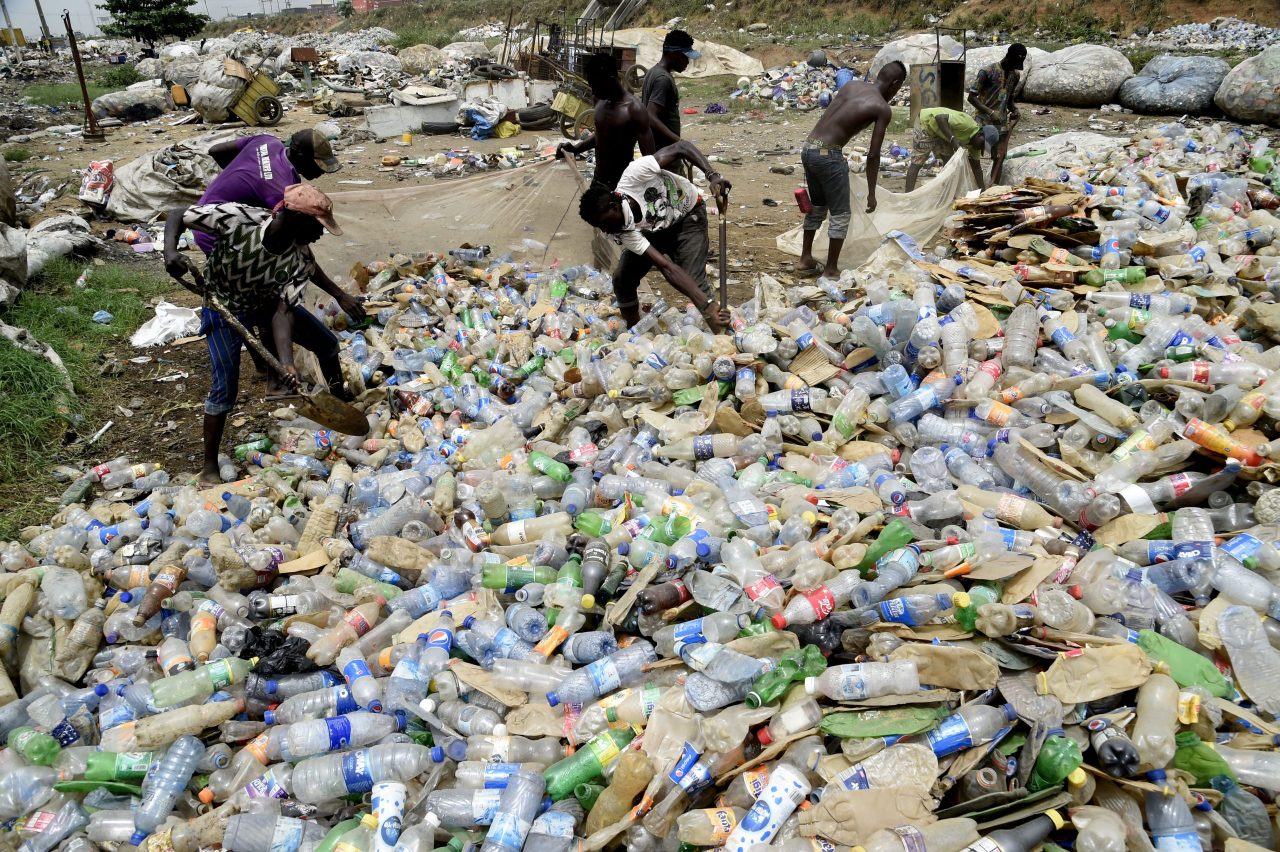
Group Asks Nigeria to Ban Indiscriminate Dumping of Plastic Waste
By Sodeinde Temidayo David
The Nigerian government has been asked to ban the indiscriminate dumping of plastic materials in the country as a result of the threat this action poses to the environment.
This call was made by the Consortium on Plastic and Environmental Management (COPEM) in association with several other organizations.
The group noted that the rate at which various environmental issues continue to ravage the world, giving rise to climate change and global warming, should be a source of concern for the nation.
It, therefore, appealed to the federal government to do the needful to stop indiscriminate dumping of plastic waste in the country, which leads to serious environmental impacts. The forum called for a long-lasting, sustainable solution to the problem.
Speaking at the sensitization workshop which briefed on the dangers of plastic waste in Nigeria’s fragile environment, the consortium noted that the plastic waste crisis in the country could be addressed only through sincere actions by the government in addressing plastic disposal.
The workshop forum had 25 civil society organizations (CSOs) in attendance to strategise and approach new ways to fight indiscriminate generation and dumping of plastic wastes, provide lasting and sustainable solutions.
Also, it stressed that the government should not make any further delay in co-ordinating together various laws, policies, and agreements on effective management of plastic waste.
It demanded that the government should urgently come up with a legal and policy framework to manage plastic waste and phase out the use of single-use plastic items and styrofoam so as to ensure that all plastic packaging is either recyclable or biodegradable by 2030.
As reported by Lagos Waste Management Agency (LAWMA), annually, Nigeria generates some 32 million tonnes of waste per year, of which 2.5 million tonnes is plastic.
The country’s disposal, recycling, and waste management system is very inefficient, with 70 per cent of plastic and non-plastic waste ending up in landfills, sewers, beaches, and water bodies.
It was pointed out that there are major challenges confronting recycling interventions in Nigeria including lack of public awareness about the recycling value chain, and inadequate collection infrastructure, especially in remote locations.
This also includes the high cost of logistics, lack of finance, and inadequate implementation of the Extended Producer Responsibility (EPR) Programme, a policy placing responsibility on producers to manage the lifecycle of their products.
COPEM further urged the government to be more aggressive and responsive in its fight against plastic pollution.
General
World Banks Debar Three PwC Subsidiaries for 21 Months Over Project Fraud
By Adedapo Adesanya
Three African subsidiaries of global advisory firm, PricewaterhouseCoopers (PwC), have been debarred by the World Bank Group for 21 months after being found guilty of manipulating procurement processes for a major cross-border electricity project.
In a statement on Wednesday, the Washington-based multilateral lender said PricewaterhouseCoopers Associates Africa Ltd, based in Mauritius, along with its Kenyan and Rwandan affiliates, engaged in “collusive and fraudulent practices” linked to the Eastern Electricity Highway Project, a flagship initiative to transmit hydropower from Ethiopia to Kenya.
The decision sidelines PwC from lucrative World Bank-funded projects on the continent, dealing a blow to one of the region’s most influential audit and advisory firms.
This development could reshape competition for high-value consulting work across emerging markets, potentially disrupting startups and tech firms reliant on World Bank funding, as scrutiny over governance and compliance tightens.
The World Bank, through its private sector arm, International Finance Corporation (IFC), offers grants and low-interest loans to startups across emerging markets.
Earlier this week, the IFC committed $20 million to invest in high-growth startups in Kenya, Nigeria, and South Africa.
“The debarment makes PwC Associates, PwC Kenya, PwC Rwanda, and any affiliates they control ineligible to participate in Bank Group-financed projects and operations,” the World Bank said. “It is part of a settlement agreement under which the three companies admit culpability for sanctionable practices.”
The determination was based on the company’s conduct between 2019 and the award of contracts for consultancy services and asset valuation work for the Ethiopian state power utilities.
According to the World Bank statement, the firm obtained confidential procurement documents to improperly influence the award of a contract for the implementation of International Financial Reporting Standards at the Ethiopian Electric Power Corporation.
They also attempted to steer a separate contract for a fixed asset inventory and revaluation for the power utility towards PwC Associates. During the bidding and execution of that contract, the bank found that the company misrepresented the availability and qualifications of key experts and failed to disclose the full list of subconsultants involved.
According to the World Bank, the debarment is shorter than would otherwise apply because PwC admitted misconduct. The advisory firm also agreed to a series of remedial measures, including internal investigations, disciplinary action against responsible staff, terminating relationships with all subconsultants involved, and additional staff training.
General
Nigerians Can Film Police on Duty—Court Declares
By Aduragbemi Omiyale
A Federal High Court in Warri, Delta State, has affirmed the right of Nigerians to film personnel of the Nigeria Police Force (NPF) on duty.
The judgment was given by Justice H. A. Nganjiwa on Tuesday in a case filed by Mr Maxwell Uwaifo in suit number FHC/WR/CS/87/2025.
The court held that Nigerians have the constitutional right to use any device to record police officers executing their official duties in public.
It was ruled that police officers must wear visible name tags, display their force numbers, and must not harass, intimidate, arrest, or seize devices from citizens documenting their activities.
The court awarded the applicant N5 million in damages for the violation of his fundamental rights and N2 million for the cost of litigation.
Business Post reports that the respondents in the case were the Inspector General of Police (IGP), the NPF, the Police Service Commission (PSC), and the Attorney-General of the Federation (AGF).
The lawyer filed the case in accordance with Sections 34, 35, 36, 37, 38, 39, 40, and 41 of the Constitution of Nigeria and others.
“This judgement has significant implications for policing standards, civil liberties, and public accountability across Nigeria,” Mr Uwaifo said after the judgement.
General
Lagos Consumes 30% of Total Power Off-Take in Nigeria—TCN
By Aduragbemi Omiyale
The General Manager in charge of Transmission for Lagos Region of the Transmission Company of Nigeria (TCN), Mr Adeshina Adeonipekun, has stressed the critical role of Lagos in the national grid.
While receiving the chief executive of Eko Electricity Distribution Company (EKEDC), Ms Wola Joseph Condotti, at his office on Monday, he said the Lagos region accounts for about 30 per cent of total power off-take in Nigeria.
He stated that TCN was implementing strategic expansion and project upgrades aimed at enhancing grid stability and operational efficiency in response to rising demand.
Mr Adeonipekun highlighted recent key milestones achieved in the region, including the commissioning of a 100MVA power transformer at the Ijora 132/33kV Transmission Substation, a 300MVA transformer at the Lekki 330/132kV Transmission Substation, and a 125MVA unit at the Agbara 132/33kV Substation, among others.
According to him, these additions have further increased the region’s installed capacity to 5,470MVA on the 132/33kV network and 4,110MVA on the 330/132kV network.
He further said that there were several ongoing rehabilitations at key substations within the region, including Amuwo GIS, Akoka 132/33kV, and Itire 132/33kV Transmission Substations, all geared towards further improving reliability, reducing system constraints, and enhancing the overall efficiency of power delivery.
In her remarks, Ms Condotti expressed appreciation for TCN’s continued partnership and support, underscoring the importance of sustained collaboration between transmission and distribution companies in building a more stable and efficient electricity transmission and supply network.
Both parties explored ways to strengthen collaboration and ensure a more stable and efficient power supply in Lagos, the nation’s commercial hub.
-
Feature/OPED6 years agoDavos was Different this year
-
Travel/Tourism10 years ago
Lagos Seals Western Lodge Hotel In Ikorodu
-
Showbiz3 years agoEstranged Lover Releases Videos of Empress Njamah Bathing
-
Banking8 years agoSort Codes of GTBank Branches in Nigeria
-
Economy3 years agoSubsidy Removal: CNG at N130 Per Litre Cheaper Than Petrol—IPMAN
-
Banking3 years agoSort Codes of UBA Branches in Nigeria
-
Banking3 years agoFirst Bank Announces Planned Downtime
-
Sports3 years agoHighest Paid Nigerian Footballer – How Much Do Nigerian Footballers Earn