General
Dow Partners Nigerian Firms to Tackle Plastic Waste
By Modupe Gbadeyanka
An initiative called Project ReflexNG, which aims to collect and recycle plastic waste in Lagos, Nigeria, has been launched by Dow in partnership with some local firms.
The Nigeria-based firms involved in this scheme include Omnik, RecylePoints and the Lagos Business School Sustainability Centre.
The parties will specifically recycle water sachets through a pilot program, designed to show that they can be collected and recycled to be utilised in new, quality packaging applications.
A statement from Dow disclosed that the project aims to divert 600 MT of sachet water pouches (approximately 300 million sachets) which otherwise would have ended up in the environment or landfill, into recycling applications, while promoting education to engrain sustainability into a select group of small and medium waste entrepreneurs.
The pilot is set up to enable a viable business case for the use of recyclate (resins made from recycled plastics) in non-food primary packaging applications.
According to Dow, this initiative aligns with its global Stop The Waste sustainability target which will enable the collection, reuse or recycling of one million metric tons of plastic globally by 2030.
An estimated 19 per cent of the Nigerian population still does not have access to clean, safe drinking water.
Though access to clean water has improved significantly over the last decade, it is crucial that everyone has access to it.
For many years, water sachets have provided an affordable and readily available source of drinking water for the masses, particularly in heavily populated urban environments like Lagos.
These pouches have become a fundamental part of life for millions of Nigerians every day.
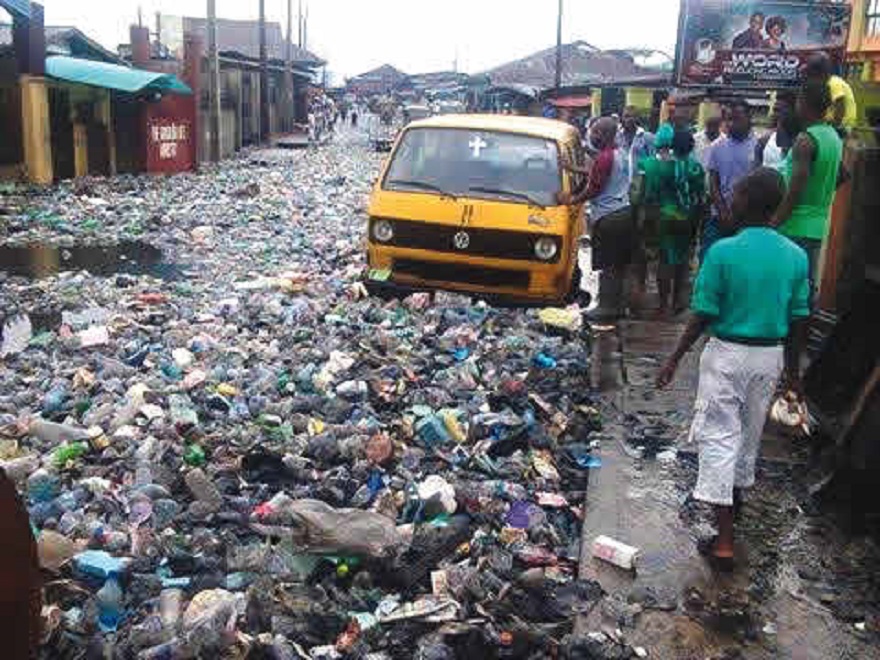
However, their widespread consumption has led to the unintended consequence of environmental pollution due to inadequate waste management infrastructure and poor waste disposal behaviour.
As in many developing countries, there is an informal waste collection economy, but this favours rigid plastic in Nigeria and disregards low weight water sachets because waste pickers are paid by weight.
The water sachets will be collected by RecyclePoints, a waste management company, which uses kiosks, a phone app and employs waste pickers in order to collect waste that can be recycled.
The kiosks act as a bring-back focal point for the community to return waste in exchange for groceries, mobile phone credits, cash and other useful items. The app can coordinate pick-ups from several points around the city.
The collection part of the project is being funded by Dow’s Impact Fund and will expand to include additional collection partners in a later phase.
Once the waste is collected, it will be taken to Omnik, where it will be processed into PCR (post-consumer recyclate).
Currently, the first few batches have been collected and sent to Dow’s Pack Studios in Tarragona, Spain, where they will be analysed and tested.
Based on this assessment, Dow and Omnik will collaborate to enhance the properties of the recyclates so they can adequately be used again.
Additionally, as part of this project, Omnik has funded a stationary buy-back centre, operated by RecyclePoints, at premises of Lagos State Ministry of Environment to create long-term infrastructure for recovering plastic waste.
The project aims to create an end-use for the waste stream of water sachets, while employing over 200 registered waste pickers through RecyclePoints, for this new waste stream. The pilot will potentially increase the income of 8,000 RecyclePoints app subscribers.
Lagos Business School’s Sustainability Centre (LBS sustainability Centre) will act as an educational partner to enable small and medium waste enterprises to learn sustainability principles to enhance their businesses.
Currently, LBS sustainability Centre runs a Circular Economy series and are partnering with Dow to train a selected group of 40 social entrepreneurs who currently have businesses in the waste management space.
The goal is to ensure that the education and materials these entrepreneurs receive through the process will result in long term sustainable collection for flexible packaging, specifically water sachets.
“Currently, more than 90 per cent of waste generated in Africa is disposed at uncontrolled dumpsites and landfills.
“Through our partnerships with Nigerian enterprises, academic institutions and local industry associations, we are making significant strides in addressing the crises of plastic waste and proving that the material does have intrinsic value,” said Adwoa Coleman, Dow’s Africa Sustainability and Advocacy Manager for Packaging and Specialty Plastics. “Together with our industry partners and in alignment with Nigeria’s vision for plastic waste management, we are creating new opportunities for local business entrepreneurs and their surrounding communities.”
“Plastic is a man-made solution to a pre-existing problem. Rather than turning it into the problem, we should continue to find sustainable environmentally friendly ways to ensure it continues to serve its purpose as the most affordable and hygienic form of packaging,” said Alkesh Thavrani, Managing Director, Omnik Ltd.
Mazi Ukonu of RecyclePoints adds, “Circular Economy can only thrive if players at the different stages of the waste recovery value chain run viable activities, especially the waste pickers who are the unsung heroes of waste recycling in frontier markets like ours.”
By collaborating with individuals and organizations that are already supporting waste management infrastructure and recycling, Project ReflexNG is driving local, sustainable solutions for Nigeria. Beyond the pilot phase which runs to February 2021, Dow will scale up Project ReflexNG to recover even more quantities of flexible packaging with potential for replication across the region.
General
Terra Industries Unveils Defence Drones, Robots to Support Nigerian Military
By Adedapo Adesanya
Nigeria-backed startup Terra Industries has launched drones and mine-clearing robots for the country’s military use to fight Islamic militants and reduce reliance on imported defence equipment.
The startup on Monday unveiled interceptor drones, mine-clearing unmanned vehicles and battlefield intelligence software that officials said could help troops confronting insurgents who have increasingly used roadside bombs and drones in recent attacks.
The launch shows a growing effort by Nigeria to reduce dependence on imported military hardware and build domestic defence manufacturing capacity, after years of buying aircraft, armoured vehicles and surveillance systems from countries including China, Turkey, Pakistan and the United States.
However, procurement delays, maintenance bottlenecks and rising foreign exchange costs have strengthened the case for local production, with Terra Industries among the first of such beneficiaries.
Terra Industries had previously focused on civilian drones and security technology before expanding into defence systems. In February, it signed a pact with Defence Industries Corporation of Nigeria (DICON) as part of efforts to boost the country’s defence industrial capacity and advance indigenous high-technology development.
“We are unveiling new defence systems such as our interceptor UAVs, our minesweepers, ground vehicles that can detect IEDs on the ground, and our battlefield intelligence software,” according to Mr Nathan Nwachukwu, the chief executive officer of the firm.
The need for security has risen in recent years, as groups such as Islamic State and al-Qaeda are gaining ground in Africa, converging along a swathe of territory that stretches from Mali to Nigeria, which is also battling with Boko Haram and other cells which remain active despite repeated military offensives.
Militants have stepped up attacks against army positions using improvised explosive devices (IEDs) and drones, forcing armies to invest in counter-drone systems, electronic warfare and autonomous ground equipment.
Major General Babatunde Alaya, head of the state-owned DICON, said collaboration with Terra Industries was necessary, given troop casualties caused by hidden explosives and roadside bombs.
DICON has long been central to Nigeria’s ambition to produce more of its own defence equipment, but progress has historically been slow. Partnerships with private firms are increasingly seen as a faster route to innovation and scale.
Terra Industries, which is valued at $100 million, has also announced plans to expand beyond Nigeria, including a manufacturing facility in Ghana, signalling ambitions to serve a wider African market and position itself in the region’s growing security technology industry.
General
Tinubu Tasks Ambassadors to Attract Foreign Investment
By Adedapo Adesanya
President Bola Tinubu has charged Nigeria’s newly appointed ambassadors and high commissioners to help pursue foreign investments from their designated countries, charging them to strengthen strategic partnerships and reposition the country’s global image in line with evolving diplomatic realities.
This is contained in a statement by Mr Yomi Odunuga, Special Adviser on Media and Publicity to the Secretary to the Government of the Federation (SGF), Mr George Akume.
According to Mr Odunuga, the President, represented by the SGF, gave the charge at the opening of an induction course for the envoys in Abuja.
The President said that the appointments of the envoys reflected the administration’s confidence in their capacity to advance Nigeria’s interests on the international stage.
He noted that the global system was undergoing rapid transformation driven by shifting geopolitical dynamics, economic uncertainties, technological disruptions, climate challenges and emerging security threats.
He added that the developments had made the role of diplomats more critical than ever.
”The international system is evolving rapidly. We must be prepared to meet these challenges by focusing on how best to protect and promote Nigeria’s national interest,” he said.
President Tinubu urged the envoys to adopt a modern, results-oriented approach to diplomacy by combining traditional methods with digital engagement, public diplomacy and strategic communication.
He underscored the importance of telling Nigeria’s story in a compelling and credible manner while projecting the achievements of his administration, also calling on them to be proactive and innovative in fostering partnerships, promoting trade and attracting foreign direct investment and technology to Nigeria.
According to him, safeguarding the welfare of Nigerians in the diaspora must remain a top priority.
He also announced a reordering of Nigeria’s foreign policy framework, known as the 4D Doctrine.
He said that the doctrine, originally anchored on Democracy, Development, Demography and Diaspora, had now been rearranged to Demography, Development, Diaspora and Democracy.
According to him, the adjustment places Nigerians at the centre of foreign policy and is aimed at ensuring that international engagements deliver tangible benefits to citizens.
The president further stressed the need for professionalism, integrity and patriotism in the conduct of diplomatic duties, reminding the envoys that they serve not only as government representatives, but also as custodians of the country’s image abroad.
He also emphasised accountability, urging missions to be result-driven, prudent in resource management and guided by clear, measurable goals that would contribute to economic growth and national development.
He encouraged the participants to fully engage in the induction programme, noting that it was designed to equip them with the knowledge and skills required for effective diplomatic service in a rapidly changing world.
He commended the National Assembly for the swift confirmation of the nominees and urged the envoys to justify the confidence reposed in them.” You have a special responsibility in helping to reposition Nigeria in global affairs. The world is watching,” he said.
General
Aisha Achimugu Denies $13m Discovery Claim, Calls Report Misleading
By Adedapo Adesanya
Lagos-based socialite and chief executive of Oceangate Engineering Oil & Gas Ltd, Ms Aisha Achimugu, has denied reports that $13 million was discovered in her residence, describing the claim as inaccurate and misleading.
Ms Achimugu denied the claims during an appearance on Channels Television’s Politics Today late on Monday, where she addressed allegations surrounding a raid on her home by the Economic and Financial Crimes Commission (EFCC).
Addressing the widely circulated claim, Ms Achimugu insisted that no such sum was recovered from her residence.
“Let me also correct an impression that 13 million dollars was not found in my house when my house was raided. And let me also correct that what is published on the website of EFCC is a certain state. I want to believe that it is not Lagos state because the state was not clear.
“So, it’s what is out there. So I won’t also entertain that it’s a Lagos state because that hasn’t been thrown at me. My house was raided, yes, but only $50,000 and 13 million naira belonging to my mom were found in my house and then again, my personal belongings. I don’t know where Nigerians got the impression that I had 13 million dollars in my house. I’m not a bank, so I won’t keep 13 million dollars in my house,” she stated.
She, however, declined to comment extensively on the matter, citing ongoing legal proceedings, but explained that the foreign currency in her possession was kept for practical reasons, noting that her children study abroad.
“It is important to have some foreign currency available for emergencies,” she said.
Speaking on the source of her wealth, Ms Achimugu maintained that her financial success is rooted in legitimate business ventures.
She disclosed that her company participated in oil block bidding rounds between 2022 and 2024 and emerged successful through what she described as a transparent process. Achimugu also dismissed suggestions that her success is tied to political connections.
Recall that Justice Emeka Nwite of the Federal High Court in Abuja affirmed the final forfeiture of $13 million linked to the Lagos socialite in March.
Justice Nwite had, on August 22, 2025, granted the anti-graft agency’s motion ex parte for an interim order forfeiting the sum of $13 million linked to Oceangate Ltd to the Federal Government over allegations that the fund was proceeds of unlawful activity.
The judge had then directed the commission to publish the order in a national daily for interested people to show cause within 14 days why the fund should not be permanently forfeited to the federal government.
In 2024, the businesswoman gained significant media attention for a seven-day birthday celebration in Grenada, which was attended by high-profile guests, reportedly including Lagos State Governor Babajide Sanwo-Olu.
The socialite also defended her widely publicised birthday celebration, noting that it had been “planned for 10 years” and was not funded with any money under investigation.
-
Feature/OPED6 years agoDavos was Different this year
-
Travel/Tourism10 years ago
Lagos Seals Western Lodge Hotel In Ikorodu
-
Showbiz3 years agoEstranged Lover Releases Videos of Empress Njamah Bathing
-
Banking8 years agoSort Codes of GTBank Branches in Nigeria
-
Economy3 years agoSubsidy Removal: CNG at N130 Per Litre Cheaper Than Petrol—IPMAN
-
Banking3 years agoSort Codes of UBA Branches in Nigeria
-
Banking3 years agoFirst Bank Announces Planned Downtime
-
Sports3 years agoHighest Paid Nigerian Footballer – How Much Do Nigerian Footballers Earn