Connect with us

Economy

Nigeria’s Per Capita Income Static in 40 Years—World Bank

Published

on

Per Capita Income

By Sodeinde Temidayo David

The World Bank has claimed that Nigeria’s per capita income (PCI) has remained static since 1981, indicating that it has not improved in the past 40 years.

As a result, the global lending institution has advised economy managers to quickly assemble potent strategies to harness the robust potential of the country.

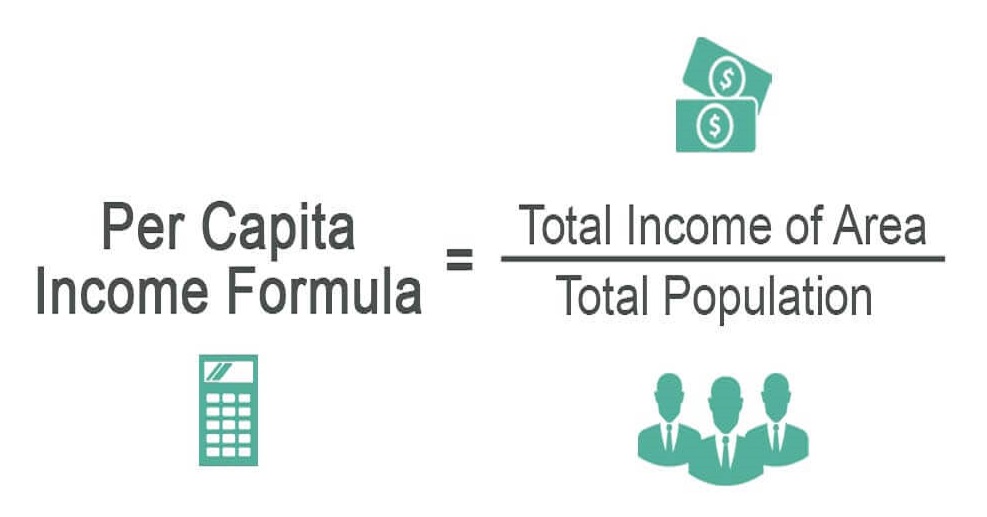
In Economics, the per capita income scales the average income earned per person in a country in a specified year, and it is calculated by dividing the country’s total income by its total population.

According to the data provided by the World Bank, in 1981, Nigeria’s PCI was $2,180.2 and in 2020, it stood at $2,097, showing that there has not been a significant change in four decades.

Speaking on this matter, World Bank’s Country Director for Nigeria, Mr Shubham Chaudhuri, stated that the medium-term development plan was on the track for growth, though it will take time to get back to its full potential.

The medium-term development plan for 2021-2025 is set on the development agenda for sustainable growth driven by new and emerging economic sectors.

According to him, about three million Nigerians come of working age yearly, but surveys have shown that they aspire to go abroad.

“I think the urgency of doing something now is because the time is going in terms of retaining the hope of young Nigerians in the future and potential of Nigeria,” he said at the ongoing 27th Nigerian Economic Summit (NES#27).

Mr Chaudhuri further advised Nigeria to immediately channel the funds budgeted for petrol subsidies to infrastructure, education and health care services.

Earlier in her remarks, the Minister of Finance, Budget and National Planning, Mrs Zainab Ahmed, called for a paradigm shift in running the country’s economy through comprehensive and targeted reforms, a reorientation of national values, and a radical shift in attitudes to taxation and public financial management.

She noted that the government was leading key interventions and reforms to achieve these goals, as they are set to prioritise investment in critical soft and hard infrastructure across the country such as roads, rail, schools and hospitals as seen in the annual federal budgets.

According to the Minister, the annual Finance Acts, an important innovation introduced by the government, is also a key tool for effecting fiscal policy change and incentivising private sector actors.

“We also recognise the need for increased domestic resource mobilisation as evidenced by the implementation of the Strategic Revenue Growth Initiative (SRGI), an important intervention which is already yielding positive results in stimulating non-oil revenue growth,” she added.

Mrs Ahmed further noted that as the government cannot drive the required investments on its own, it has acknowledged the need to continue to incentivise private sector participation in the much-needed economic transformation of the country.


Advertisement
1 Comment

Leave a Reply

Your email address will not be published. Required fields are marked *

Economy

Cardoso Eases Naira Devaluation Fears

Published

on

Yemi Cardoso Coordinated Digital Payment Reforms

By Adedapo Adesanya

The Governor of the Central Bank of Nigeria, Mr Yemi Cardoso, has eased fears of any devaluation of the Naira anytime soon, saying the country’s ongoing monetary and foreign exchange reforms have restored confidence in the currency and strengthened the financial system.

Speaking while delivering a keynote address at the Annual Distinguished Alumni Lecture held in celebration of Founders’ Day of the St. Gregory’s College Old Boys Association in Lagos, the apex bank governor said, “These reforms have restored pride in our currency and strengthened confidence in our financial system.”

Mr Cardoso explained that the CBN remains focused on restoring price stability and bringing inflation down to single digits, noting that although the objective will take time to achieve, it remains central to the apex bank’s policy direction.

“Our goal remains to bring inflation down to single digits. This cannot happen overnight. External shocks will continue to occur, and global developments will always have some impact. But inflation is effectively a tax, and it disproportionately affects the most vulnerable members of society,” he said.

“That is why restoring price stability remains a central objective.”

He noted that the bank’s commitment to transparency and well-governed markets is evident in the reforms carried out in the foreign exchange market, including the elimination of the multiple exchange rate system that previously benefited only a few.

According to him, although some critics argue that the exchange rate appears higher today than it was before the reforms, the key difference lies in accessibility and transparency.

“Some critics argue that the exchange rate today appears higher than it was before the reforms. My response is simple: when the official rate was lower, how many people could actually access foreign exchange at that rate? The answer, in most cases, was very few,” he said.

“Today, the situation is fundamentally different. Foreign exchange is accessible through formal channels, and the system is far more transparent.”

He explained that many Nigerians travelling abroad can now use their naira cards directly instead of searching for foreign currency through informal channels, a development he said represents a major improvement compared to previous years when travellers struggled to access foreign exchange.

Mr Cardoso further revealed that the premium between the official and parallel markets has narrowed sharply from around 50 per cent in 2022 to less than 2 per cent on average in 2025, reflecting improved liquidity and efficiency in the FX market.

Continue Reading

Economy

Four Stocks Drag Unlisted Securities Market Down by 0.56%

Published

on

unlisted securities index

By Adedapo Adesanya

Four stocks weakened the NASD Over-the-Counter (OTC) Securities Exchange by 0.56 per cent on Thursday, March 12, making it the third consecutive loss this week.

The price losers were led by FrieslandCampina Wamco Nigeria Plc, which crumbled by N4.71 to N128.07 per share from N132.78 per share. Central Securities Clearing System (CSCS) Plc lost N1.98 to close at N78.02 per unit versus the previous day’s N80.00 per unit, First Trust Mortgage Bank Plc declined by 15 Kobo to N1.75 per share from N1.90 per share, and MRS Oil Plc crashed by 10 Kobo to settle at N210.00 per unit compared with the preceding session’s N210.10 per unit.

Consequently, the market capitalisation went down by N14.13 billion to N2.519 trillion from N2.533 trillion, and the NASD Unlisted Security Index (NSI) dipped by 23.61 points to 4,210.30 points from 4,233.91 points.

There were three price gainers yesterday, led by Okitipupa Plc, which gained N10.00 to N240.00 per share from N230.00 per share, IPWA Plc increased by 45 Kobo to N5.01 per unit from N4.56 per unit, and Afriland Properties Plc appreciated by 35 Kobo to N17.95 per share from N17.60 per share.

During the session, the value of securities surged by 197.4 per cent to N95.0 million from N31.9 million, the volume of securities grew by 185.8 per cent to 3.7 million units from 1.3 million units, and the number of deals improved by 44.4 per cent to 52 deals from 36 deals.

The most active stock by value (year-to-date) was CSCS Plc with 38.4 million units worth N2.4 billion, followed by Okitipupa Plc with 6.4 million units valued at N1.1 billion, and FrieslandCampina Wamco Nigeria Plc with 6.2 million units sold for N566.8 million.

The most traded stock by volume (year-to-date) was Resourcery Plc with 1.05 billion units traded for N408.7 million, trailed by Geo-Fluids Plc with 130.6 million units transacted for N503.8 million, and CSCS Plc with 38.4 million units worth N2.4 billion.

Continue Reading

Economy

Naira Extends Recovery, Gains 0.34% Against Dollar to Sell at N1,371.51/$1

Published

on

old Naira notes

By Adedapo Adesanya

The Naira rallied against the United States Dollar by N4.68 or 0.34 per cent to trade at N1,371.51/$1 in the Nigerian Autonomous Foreign Exchange Market (NAFEX) on Thursday, March 12, compared with the N1,376.19/$1 it was traded on Wednesday.

The local currency also appreciated against the Pound Sterling in the same market window during the session by N10.67 to quote at N1,834.80/£1 versus midweek’s price of N1,845.47/£1, and strengthened against the Euro by N49.62 to finish at N1,581.89/€1, in contrast to the previous session’s N1,631.51/€1.

At the parallel market, the Naira also gained N10 against the Dollar yesterday to close at N1,410/$1 versus the preceding day’s rate of N1,420/$1, and gained N16 at the GTBank’s FX desk to settle at N1,391/$1 compared with the N1,407/$1 it was exchanged a day earlier.

Pressure further eased on the FX market as a result of inflows from foreign investors, exporters and non-bank corporates, among others.

With gross external reserves standing above $50 billion, the highest since 2009, analysts said the Naira has a positive outlook, amidst projections that the FX rate could rise to N1,300 per dollar in the first half of 2026.

However, external pressure threatens this, as increased demand for the US Dollar has strengthened globally due to the war triggered by the United States and Israel against Iran, which has been ongoing for two weeks.

A look at the digital currency market showed that prices extended a quiet stretch of consolidation that has kept the market largely unmoved by turbulence in global equities.

Amid geopolitical tensions in the Middle East and supply disruptions, crypto markets appear to be largely ignoring those pressures for now. Analysts noted that until a clear macro catalyst or wave of new capital arrives, the market appears content to consolidate gains rather than chase a breakout.

Cardano (ADA) appreciated by 6.0 per cent to $0.2743, Dogecoin (DOGE) grew by 4.9 per cent to $0.0966, Solana (SOL) added 4.6 per cent to sell for $88.99, Ethereum (ETH) rose by 4.3 per cent to $2,111.22, Ripple (XRP) jumped 3.9 per cent to $1.42, Bitcoin (BTC) expanded by 3.0 per cent to $71,546.01, Binance Coin (BNB) improved by 2.6 per cent to $661.08, and TRON (TRX) increased by 0.1 per cent to $0.2897, while the US Dollar Tether (USDT) and the US Dollar Coin (USDC) traded flat at $1.00 each.

Continue Reading

Trending