General
SERAP to Block Buhari from Spending N26bn on Travels, Others
By Adedapo Adesanya
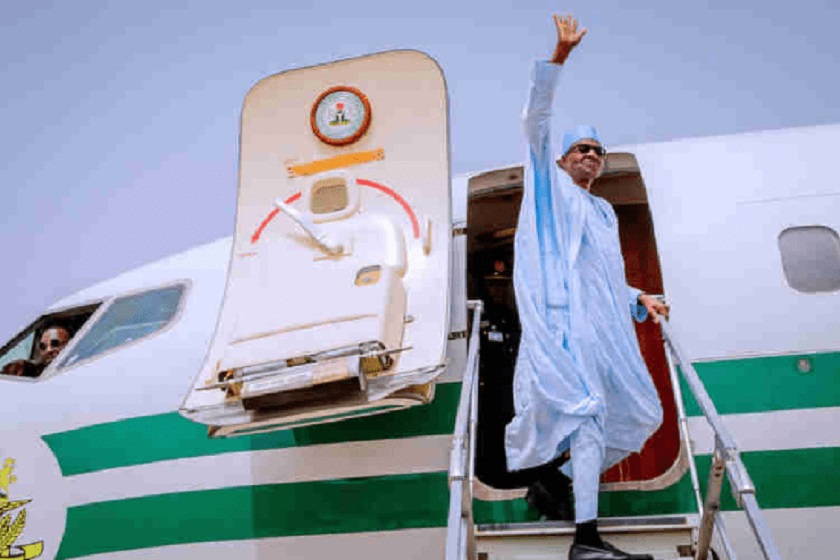
Socio-Economic Rights and Accountability Project (SERAP) has filed a lawsuit asking the Federal High Court in Abuja to stop President Muhammadu Buhari from spending N26 billion in the 2022 presidency budget on local and foreign travels, meals and refreshments, ‘sitting allowance’, ‘welfare package’, and office building.
In the suit number FHC/ABJ/CS/1361/2021 filed last Friday by its lawyers, Mr Kolawole Oluwadare and Ms Adelanke Aremo, SERAP is seeking: “an order of mandamus to direct and compel President Buhari to cut the N26bn presidency budget on local and foreign travels, meals and refreshments, and to send a supplementary appropriation bill to the National Assembly to reflect the reduction.”
SERAP also sought “an order of mandamus to direct and compel President Buhari to publish spending details on the State House Medical Center since May 29, 2015, to date; and to redirect some of the money on travels and meals to improve public healthcare facilities across the country.”
The agency further argued that, “The government would continue to borrow to fund the country’s budget until there is a substantial cut to the cost of governance. It is in the public interest to stop the government from spending so much money on these items. Persistent borrowing is neither sustainable nor fair to the Nigerian people.”
According to SERAP, “the huge spending by the presidency is neither necessary nor in the public interest, especially in the face of the country’s dire economic position, the scant allocations to education and health, and the growing level of borrowing by the Federal Government to fund the 2022 budget.
Additionally, SERAP noted that, “the Buhari administration has constitutional and fiduciary duties to ensure a responsible budget spending and the well-being and prosperity of Nigerians. Some of the proposed spendings could be better allocated to improve access of poor Nigerians to basic public goods and services.”
The organization equally argued that “any spending of public funds should stay within the limits of constitutional responsibilities, and oath of office by public officers, as well as comply with Chapter 2 of the 1999 Nigerian Constitution [as amended] relating to fundamental objectives and directive principles of state policy.”
Furthermore, SERAP maintained that “unless the reliefs sought are granted, the Federal Government will continue to benefit from the breach of the law, and the proposed spending of N26bn would leave the poorest and most vulnerable people without access to essential public goods and services, and burden the next generation.
“Cutting waste and apparently unnecessary spending would go a long way in addressing the budget deficit and debt problems.
“Stopping President Buhari from spending the proposed N26bn on travels and meals would ensure that the government is spending the country’s maximum available resources to respect, protect, and promote the rights to basic needs of the poor and marginalized groups.
“The proposed spending is unsustainable and would take away critical funding to provide access to quality healthcare and education.
“Public officers are mere custodians of public records. Nigerians are entitled to know how the commonwealth is being utilized, managed and administered in a democratic setting.
“According to reports, the proposed N26 billion on travels, meals, refreshments and the presidential wing of the State House Clinic is more than the proposed allocations for ongoing and new projects in 14 teaching hospitals combined. N19.17 billion is allocated to the following teaching hospitals: UNILAG Teaching Hospital—N1.69bn; ABU Teaching Hospital—N2.38bn; University College Hospital, Ibadan—N1.49 billion; and UNN Teaching Hospital—N1.38 billion.”
“UNIBEN Teaching Hospital—N1.35 billion; OAU Teaching Hospital—N1.35 billion; UNILORIN Teaching Hospital—N982 million; UNIJOS Teaching Hospital—N908 million; University of Port Harcourt—N1.14 billion; UNIMAID Teaching Hospital—N986 million; Dan Fodio University Teaching Hospital—N987 million; Aminu Kano Teaching Hospital—N2.49 billion; UNIABUJA Teaching Hospital—N1.90 billion; and ATBU Teaching Hospital—N947 million.”
No date has been fixed for the hearing of the suit.
General
Court Orders Seizure of Nine Properties Linked to Wanted Timipre Sylva
By Adedapo Adesanya
A federal high court in Abuja has ordered the interim forfeiture of nine properties linked to Mr Timipre Sylvia, former minister of state for petroleum resources, to the federal government.
Justice Obiora Egwuatu, the presiding judge, made the order on April 24 following an ex parte application filed by the Economic and Financial Crimes Commission (EFCC).
“An interim order of this honourable court is made forfeiting the properties listed in the schedule attached herein, being properties suspected to be proceeds of some unlawful activities pending the publication and hearing of the motion on notice for final forfeiture order of the said properties,” the judge ruled.
“An order of this honourable court is made directing the publication of the interim order under order (1) above for anyone who is interested in the property to appear before this honourable court to show cause within 14 days why the final order of forfeiture should not be made in favour of the Federal Government of Nigeria.”
The judge also granted the anti-graft’s request for the order to be published in two national newspapers within seven days of receiving the certified true copy of the ruling.
The newspapers listed by the court include ThisDay, The Guardian, Punch, Vanguard, Tribune and Independent.
Justice Egwuatu subsequently adjourned the matter to May 25 for a report of compliance.
The EFCC had filed the suit marked FHC/ABJ/CS/607/2026 under the Advance Fee Fraud and Other Related Offences Act, 2006.
While moving the motion, Mr Oluwaleke Atolagbe, counsel to the anti-graft agency, urged the court to grant an interim forfeiture order on the grounds that the properties were suspected to be proceeds of unlawful activities.
The affected properties are located in high-value areas of Abuja.
They include four blocks of terraces in Dakibiyu; a duplex with a penthouse and office complex at No. 3 Niger street, M street; a standalone duplex at Villa 1, Unit 1, Palm Springs estate, Mpape; and a block of 10 flats at No. 8 Sefadu street, Wuse Zone 4.
Others are a six-unit block of flats at No. 1 Mubi Close, Garki; two blocks containing 12 flats at Plot 1181, Thaba Tseka Crescent, Wuse II; and a standalone duplex at No. 18 Nile Lake, Plot 1271, Maitama.
The ninth property is a two-block building located at No. 5 Aguta Street, Garki, Abuja, currently occupied by the National Information Technology Development Agency (NITDA).
Mr Sylva, who is also a former governor of Bayelsa State, is currently at large. He is named in a 13-count charge filed by the federal government over allegations of a plot to oust President Bola Tinubu.
General
Navy Warns of Intense Crackdown on Maritime, Oil Theft
By Adedapo Adesanya
The Nigerian Navy has issued a strong warning to maritime criminals, reaffirming its resolve, capability, and commitment to ending crude oil theft and securing the nation’s maritime domain.
Speaking at the flag-off of Exercise Fleet Sentinel, the Chief of Naval Safety and Standards, Rear Admiral Pakiribo Anabraba, who represented the Chief of Naval Staff, Vice Admiral Idi Abbas, described the exercise as a significant milestone in efforts to strengthen the Navy’s operational capability.
Rear Admiral Anabraba explained that the exercise is aimed at assessing the operational state and combat readiness of the Navy in addressing emerging maritime threats, in line with its constitutional mandate.
“This exercise will significantly enhance the Nigerian Navy’s capacity to effectively conduct fleet operations and other maritime tasks. It provides an invaluable opportunity for practical training, enabling participating units to rehearse procedures, validate operational concepts, and sharpen their tactical responses in realistic environments,” he said.
Also speaking, the Flag Officer Commanding Central Naval Command, Rear Admiral Suleiman Ibrahim, said the joint exercise, conducted in collaboration with the Eastern and Central Naval Commands, is designed to curb crude oil theft, dismantle illegal refining networks in the Niger Delta, and ensure a safe maritime environment for commercial activities.
Rear Admiral Ibrahim noted that in an era of evolving and asymmetric maritime threats, the Navy must remain fully prepared to support national and regional maritime security initiatives of the federal government.
He added that the exercise reflects the Navy’s resolve to maintain constant vigilance, noting that the term “Sentinel” symbolises a steadfast guardian, ever alert and ready to defend.
According to him, the exercise is structured to enhance cooperation and coordination among participating ships and units, while improving proficiency in maritime operations.
He also stated that it builds on lessons learned from Exercise Obangame Express 2026, recently conducted within the Eastern Naval Command’s area of responsibility, ensuring continuity in training and sustained performance improvement.
The two-day exercise featured a series of tactical operations involving naval assets and platforms, designed to test operational readiness, enhance interoperability, and strengthen joint capabilities.
The initiative is part of ongoing efforts to curb crude oil theft and bolster security within Nigeria’s maritime domain.
General
Customs Area 11 Command Drives Generates N77bn in April
By Bon Peters
Over N77 billion was generated as revenue in April 2026 by the Nigeria Customs Service (NCS) Area 11 Command in Onne, Port Harcourt, Rivers State.
This landmark feat in the command’s fiscal operations signals a new era of economic prosperity and administrative efficiency.
The revenue generated last month was 70.2 per cent higher than the amount collected in the same month of last year, according to a statement issued by the command’s acting spokesman, Mr Paul Istifanus Gimba, an Assistant Superintendent of Customs I.
This feat was attributed to the strategic and visionary leadership of the command’s area controller, Comptroller Aliyu Mohammed Alkali.
On innovation, the command has integrated modern technologies and cutting-edge logistics management, consolidating and strengthening existing protocols and building upon previous successes to create a sustainable economic environment.
The statement emphasised that, “By embracing these principles, the Area 11 Command has transformed into a critical hub for national revenue optimisation, ensuring that the federal government’s fiscal goals are not only met but consistently surpassed.”
It added that the core pillars of success under Comptroller Alkali, since assuming leadership, were the implementation of a rigorous operational strategy designed to maximise the command’s potential and commitment centred on core areas of Simplification and Trade Facilitation.
The statement further posited that in an effort to foster a business-friendly environment, the command has focused heavily on the simplification of procedures by identifying and removing bureaucratic bottlenecks, noting that the Command has significantly reduced delays in cargo clearance, insisting that such a streamlined approach has not only benefited importers and exporters but also accelerated the “ease of doing business” within the maritime sector.
On performance and target optimisation, the command has moved beyond mere compliance to a culture of excellence and by building on past successes, the administration has ensured that revenue targets were viewed as minimum benchmarks rather than ultimate goals.
It also stated that behind the record-breaking revenue generation lies a workforce characterised by dedication and professionalism, as Comptroller Alkali lauded the officers and men of the command for their commitment to duty, even as the Onne Customs boss emphasised that the achievement of April 2026 was a collective victory, made possible by the integrity and discipline of the personnel stationed at Onne.
He stated that their ability to balance security concerns with the need for rapid trade facilitation remained the cornerstone of the command’s operational philosophy.
-
Feature/OPED6 years agoDavos was Different this year
-
Travel/Tourism10 years ago
Lagos Seals Western Lodge Hotel In Ikorodu
-
Showbiz3 years agoEstranged Lover Releases Videos of Empress Njamah Bathing
-
Banking8 years agoSort Codes of GTBank Branches in Nigeria
-
Economy3 years agoSubsidy Removal: CNG at N130 Per Litre Cheaper Than Petrol—IPMAN
-
Banking3 years agoSort Codes of UBA Branches in Nigeria
-
Banking3 years agoFirst Bank Announces Planned Downtime
-
Sports3 years agoHighest Paid Nigerian Footballer – How Much Do Nigerian Footballers Earn