General
SERAP to Block Buhari from Spending N26bn on Travels, Others
By Adedapo Adesanya
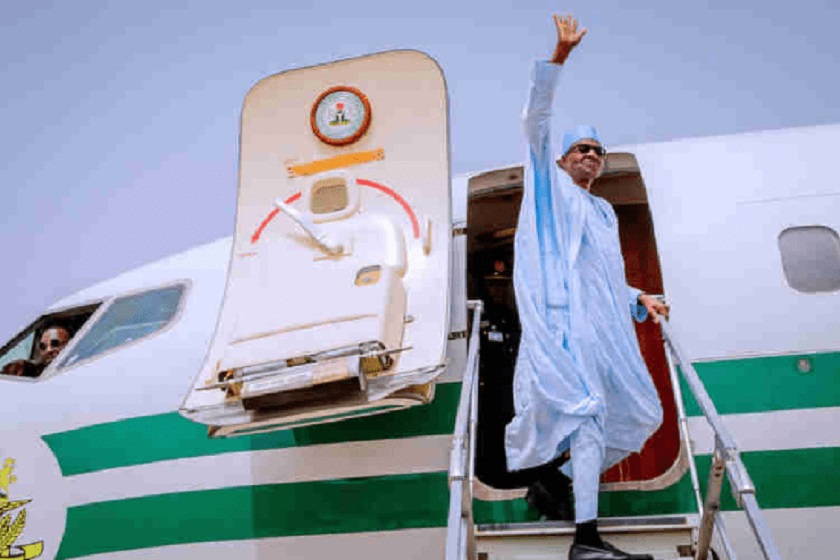
Socio-Economic Rights and Accountability Project (SERAP) has filed a lawsuit asking the Federal High Court in Abuja to stop President Muhammadu Buhari from spending N26 billion in the 2022 presidency budget on local and foreign travels, meals and refreshments, ‘sitting allowance’, ‘welfare package’, and office building.
In the suit number FHC/ABJ/CS/1361/2021 filed last Friday by its lawyers, Mr Kolawole Oluwadare and Ms Adelanke Aremo, SERAP is seeking: “an order of mandamus to direct and compel President Buhari to cut the N26bn presidency budget on local and foreign travels, meals and refreshments, and to send a supplementary appropriation bill to the National Assembly to reflect the reduction.”
SERAP also sought “an order of mandamus to direct and compel President Buhari to publish spending details on the State House Medical Center since May 29, 2015, to date; and to redirect some of the money on travels and meals to improve public healthcare facilities across the country.”
The agency further argued that, “The government would continue to borrow to fund the country’s budget until there is a substantial cut to the cost of governance. It is in the public interest to stop the government from spending so much money on these items. Persistent borrowing is neither sustainable nor fair to the Nigerian people.”
According to SERAP, “the huge spending by the presidency is neither necessary nor in the public interest, especially in the face of the country’s dire economic position, the scant allocations to education and health, and the growing level of borrowing by the Federal Government to fund the 2022 budget.
Additionally, SERAP noted that, “the Buhari administration has constitutional and fiduciary duties to ensure a responsible budget spending and the well-being and prosperity of Nigerians. Some of the proposed spendings could be better allocated to improve access of poor Nigerians to basic public goods and services.”
The organization equally argued that “any spending of public funds should stay within the limits of constitutional responsibilities, and oath of office by public officers, as well as comply with Chapter 2 of the 1999 Nigerian Constitution [as amended] relating to fundamental objectives and directive principles of state policy.”
Furthermore, SERAP maintained that “unless the reliefs sought are granted, the Federal Government will continue to benefit from the breach of the law, and the proposed spending of N26bn would leave the poorest and most vulnerable people without access to essential public goods and services, and burden the next generation.
“Cutting waste and apparently unnecessary spending would go a long way in addressing the budget deficit and debt problems.
“Stopping President Buhari from spending the proposed N26bn on travels and meals would ensure that the government is spending the country’s maximum available resources to respect, protect, and promote the rights to basic needs of the poor and marginalized groups.
“The proposed spending is unsustainable and would take away critical funding to provide access to quality healthcare and education.
“Public officers are mere custodians of public records. Nigerians are entitled to know how the commonwealth is being utilized, managed and administered in a democratic setting.
“According to reports, the proposed N26 billion on travels, meals, refreshments and the presidential wing of the State House Clinic is more than the proposed allocations for ongoing and new projects in 14 teaching hospitals combined. N19.17 billion is allocated to the following teaching hospitals: UNILAG Teaching Hospital—N1.69bn; ABU Teaching Hospital—N2.38bn; University College Hospital, Ibadan—N1.49 billion; and UNN Teaching Hospital—N1.38 billion.”
“UNIBEN Teaching Hospital—N1.35 billion; OAU Teaching Hospital—N1.35 billion; UNILORIN Teaching Hospital—N982 million; UNIJOS Teaching Hospital—N908 million; University of Port Harcourt—N1.14 billion; UNIMAID Teaching Hospital—N986 million; Dan Fodio University Teaching Hospital—N987 million; Aminu Kano Teaching Hospital—N2.49 billion; UNIABUJA Teaching Hospital—N1.90 billion; and ATBU Teaching Hospital—N947 million.”
No date has been fixed for the hearing of the suit.
General
Kaduna Electric Vows to Prosecute Attackers of Workers
By Adedapo Adesanya
The management of Kaduna Electricity Distribution Company (KEDCO) has announced a sweeping crackdown on individuals who assault its staff members, warning that offenders would face prosecution and possible public exposure as incidents of violence against its workforce continue to rise.
In a statement issued on Thursday, the company expressed concern over what it described as a “disturbing surge” in attacks on its field workers and third-party partners.
It explained that the affected workers were primarily involved in meter installation, revenue collection, and maintenance of electricity infrastructure.
According to the company, the growing trend of harassment, physical assault, and even unlawful detention of its staff poses a significant threat not only to employee safety but also to the stability of electricity service delivery across its coverage areas.
According to the Discos’ Deputy Managing Director, Mr Abubakar Mohammed, the company will no longer tolerate any form of aggression against its workers.
“Let this serve as a clear warning to anyone who engages in the assault of our staff. Kaduna Electric will pursue every case to its logical conclusion,” he said.
“We will work closely with security agencies to ensure offenders are brought to justice and face the full weight of the law,” Mr Mohammed added.
He further revealed that the company plans to publicly disclose the identities of those found responsible for such attacks.
According to him, names, photographs, and other details of offenders will be published across the company’s official platforms as well as in national and local media.
“This measure is intended to ensure accountability and serve as a strong deterrent. Anyone who chooses to attack our personnel should be prepared not only to face prosecution but also public exposure,” he added.
Kaduna Electric stated that assaults on utility workers carry serious legal and financial consequences.
It also said that offenders risked criminal charges that might result in fines or imprisonment, in addition to civil liabilities such as compensation for medical treatment, psychological trauma, and lost work hours.
While condemning the attacks, the company urged customers to adopt peaceful and lawful means of resolving disputes, advising customers to channel complaints through its customer service units or relevant regulatory bodies.
The management reaffirmed its commitment to protecting its workforce and partners, stressing that a safe working environment is essential for delivering reliable and efficient electricity services.
Disagreements between electricity providers and consumers are often linked to billing disputes, metering issues, and service delivery concerns. This has worsened with recent challenges to the power supply across the country.
However, Kaduna Electric says it remains open to resolving such issues through dialogue, but insists that violence against its staff will no longer be tolerated.
General
Senate Summons Ojulari, Kyari Over N210trn NNPC Audit Queries
By Adedapo Adesanya
The Senate, through its Committee on Public Accounts, has given the management of Nigerian National Petroleum Company (NNPC) Limited an April 29 deadline to appear before it to account for the N210 trillion flagged in audit reports from 2017 to 2023.
The committee directed the chief executive of the state oil company, Mr Bayo Ojulari, to appear alongside his predecessor, Mr Mele Kyari, on the scheduled date unfailingly.
Also expected to appear are former Chief Financial Officer (CFO) of the firm, Mr Umar Ajia; Mr Bala Wunti and the external auditors of the national oil company.
The committee’s resolutions followed a motion moved by the senator of Imo West, Mr Osita Izunaso, and seconded by Mr Adams Oshiomhole, the senator representing Edo North.
Chairman of the committee, Mr Aliyu Wadada, said that the N210 trillion in question, as contained in the audit reports, must be fully accounted for by the company’s management.
Mr Wadada said that the explanations provided by NNPCL to the 19 audit queries were unsatisfactory, noting that Nigerians deserved clear, detailed and convincing responses.
“This committee, and by extension, the Senate, is not satisfied with the blanket explanation given by NNPCL on N103 trillion, which it claimed represents liabilities.
“Liabilities have components such as retention fees, legal fees and audit fees. Specific amounts spent on each of these components must be clearly stated and explained.
“Detailed explanations are also required for the N107 trillion, which NNPCL said was expended on joint venture cash calls as well as funds allegedly owed by some defunct banks whose identities were not disclosed.
“Consequently, it is resolved that NNPCL is given an additional two weeks to appear before this committee unfailingly.
“The deadline for compliance is Wednesday, April 29,” Mr Wadada said.
A member of the committee, Mr Abdul Ningi, had called for the invocation of the National Assembly’s powers to compel the appearance of NNPC officials, citing repeated failures to honour invitations.
“We must treat this matter with utmost seriousness. The strength of democracy rests significantly on the authority of the legislature.“Unfortunately, there appears to be a growing reluctance to honour invitations from the National Assembly, leaving members feeling helpless in enforcing compliance,” he said.
General
BoI, GIZ to Drive Enterprise Growth, Boost Climate Resilience
By Modupe Gbadeyanka
A partnership framework agreement designed to drive sustainable innovation and economic development for large enterprises, and Micro, Small and Medium Enterprises (MSMEs) sector in Nigeria has been signed by the Bank of Industry (BoI) and the German Agency for International Cooperation (GIZ).
Both parties put pen to paper on Wednesday, April 15, 2026, positioning them to mutually ensure that capacity building efforts for businesses focuses on strengthening the technical and institutional capabilities of BoI’s Business Development Service Providers (BDSPs), equipping them to deliver higher-impact advisory services to the bank’s customers; as well as enshrine a structured vocational training provided under the ICSS (Inspire, Create, Start and Scale) entrepreneurship programme to enhance productivity, workforce quality and overall business competitiveness to MSMEs.
Through this deal, there will be coordinated interventions across key strategic pillars, including access to finance, entrepreneurship development, capacity building, and market access; and integrates focused support for climate finance and renewable energy investments; and a robust alignment with global sustainability priorities that enables MSMEs to be engines of economic development.
“This partnership is about closing the gap between enterprise potential and enterprise reality. Too many Nigerian businesses, particularly MSMEs, have the ideas, the drive, and the market opportunity, but lack the financing, technical capacity, or market access needed to scale,” the chief executive of BoI, Mr Olasupo Olusi, said.
“This partnership reflects our unwavering commitment to constantly form new partnerships to strengthen the entrepreneurial ecosystem in Nigeria.
“By combining our financing expertise with our partner’s international development experience, we are building a comprehensive framework that will directly translate into jobs, innovation, affordable, long-term financing and sustainable growth for MSMEs in Nigeria,” he added.
In his remarks, the Country Director for GIZ Nigeria and ECOWAS, Mr Magnus Wagner, said, “This partnership demonstrates our joint commitments to strengthening Nigeria’s private sector and to advancing sustainable and inclusive economic growth. Through this partnership, we aim to support small and medium enterprises.
“We are trying more to look at SME, formalised business, which is the resilient backbone of Nigeria’s economy. So, we would like to work, we have decided in areas such as climate and sustainable finance, renewable energy and energy efficiency, entrepreneurship and innovation, women’s economic empowerment, agribusiness and rural transformation, and digital trade and market access.
“We look forward to a close and successful collaboration with the Bank of Industry, one that delivers tangible results for business, communities, and the country and the population as a whole.”
-
Feature/OPED6 years agoDavos was Different this year
-
Travel/Tourism10 years ago
Lagos Seals Western Lodge Hotel In Ikorodu
-
Showbiz3 years agoEstranged Lover Releases Videos of Empress Njamah Bathing
-
Banking8 years agoSort Codes of GTBank Branches in Nigeria
-
Economy3 years agoSubsidy Removal: CNG at N130 Per Litre Cheaper Than Petrol—IPMAN
-
Banking3 years agoSort Codes of UBA Branches in Nigeria
-
Banking3 years agoFirst Bank Announces Planned Downtime
-
Sports3 years agoHighest Paid Nigerian Footballer – How Much Do Nigerian Footballers Earn