
Auto
10 Things to Check During Used Car Pre-Purchase Inspection

By Autofactorng
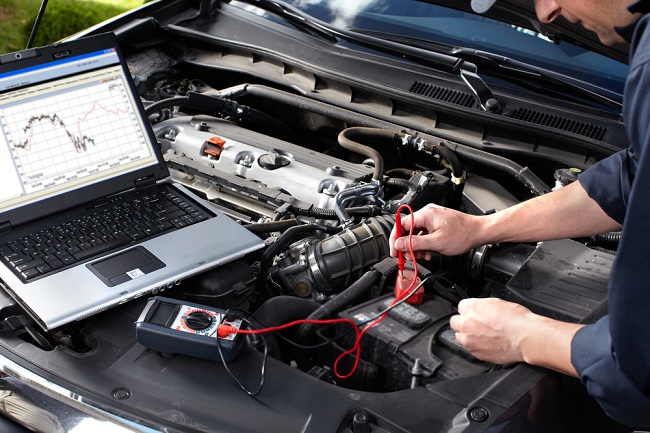
A pre-purchase inspection will help you feel assured about a buying a used car. Check warning lights, fluids, tires, suspension, and brakes in a PPI.
When buying a used car, it is important to get it checked out by a mechanic to make sure everything works correctly. So, it is better to go for used cars in Sacramento which have quality second-hand cars. Make sure the mechanic checks certain crucial systems, including the engine, brakes, and battery.
In addition to these vital components, the mechanic should inspect other parts important to the functioning of a vehicle, such as the dashboard, tires, fluid levels, catalytic converter, and much more.
- Dashboard
The vehicle dashboard contains a variety of readouts allowing you to interact with your vehicle, including the odometer, speedometer, temperature gauge, and warning lights to let you know when something is wrong with your vehicle. All of the gauges should work properly and you should have no warning lights on the dash. If a warning light is lit up, then the mechanic inspecting your vehicle needs to determine the cause in order to give you an estimate on how much it costs to have the vehicle repaired.
- Tires and suspension
The mechanic can check the suspension of the vehicle by pushing down on each corner to see what condition the shocks are in. In addition to the suspension, the tires are another important area that the mechanic should check. When looking at the tires, the mechanic assesses the condition they are in and if they exhibit uneven wear, which can signify an alignment problem. Some vehicles may also be equipped with adjustable suspension setups such as Coilovers, which can influence ride height, handling, and overall suspension performance.
- Fluids
In order to function properly, a vehicle relies on a selection of fluids to help cool and clean the engine, provide pressure to specific systems, and help keep your windshield clean while driving. When checking the fluids in your vehicle, a mechanic assesses the fluid’s condition, makes sure they are at the proper level, and checks to see if there are any visible leaks.
Engine oil: The engine oil helps cool vital engine parts while in operation and removes dirt and debris, which is filtered through the oil filter.
Synthetic oils also contain detergents that help prevent the buildup of deposits on engine parts.
Engine oil that looks dark or grainy needs changing. In addition, oil that has brown bubbles or looks like chocolate milk may indicator that coolant is leaking into your engine.
Brake fluid: The mechanic should also check the brake fluid to make sure it is at the proper level, there are no visible leaks, and that it is in good condition.
On newer vehicles, the mechanic will check the brake fluid reservoir, which has minimum and maximum lines embedded in the tank. The brake fluid should sit at a level somewhere in between.
Likewise, the brake fluid should have a brown coloration. If the fluid looks dark, then the brake fluid might need changing.
Coolant: The mechanic will also check coolant level and condition.
Antifreeze breaks down over time. As it ages, it works at less colder temperatures until eventually it does not keep the water in your radiator from freezing when it gets too cold.
The mechanic will check the level of the coolant in your radiator at the reservoir.
The mechanic will also check the condition of the fluid to see if there are any indicators that the radiator needs flushing and the coolant needs replacing. Some indicators that a coolant flush is needed include: Colourless or rusty coolant or coolant with materials floating around in it and a sludgy, oily surface, which is a strong indicator of a leaking head gasket.
Power steering fluid: The power steering fluid helps keep pressure built up in the power steering system, making it easier to steer your vehicle.
The mechanic will check the power steering fluid level using a dipstick or by looking at the minimum and maximum lines on the side of the power steering fluid reservoir.
Power steering fluid is a clear, amber, or pink color. If it is brown or black, the power steering fluid might need replacement.
Windshield washer fluid: Additionally, the mechanic will check the windshield washer fluid reservoir to make sure it is at the proper level.
The mechanic will also check the reservoir tank for leaks or cracks at this time. In addition, the mechanic will check to make sure the spray nozzles work properly.
- Brakes
The brakes are a very important system on a car, allowing you to slow down or stop the vehicle safely if needed. In addition to the pads, the mechanic needs to make sure the rotors are in good shape.
Brake pads: The brake pads grip the rotors and stop the vehicle when the brakes are pressed.
Over time, the material on the pads that help it grip the rotors breaks down and wears away. Eventually, you need to replace your brake pads.
Brake rotors: The brake rotors are the surface that the brake pads rub against, helping to stop the vehicle.
The mechanic will check the brake rotors for any scoring, uneven wear, or rust. Sometimes you must get the rotor disc resurfaced, but if the damage is too extensive, you need to replace the brake rotors.
- Engine
The engine is another major component that the mechanic should check. The mechanic is testing to see whether the engine idles smoothly and if there is any knocking or other noises while the engine warms up to operating temperature.
Cooling system: The cooling system includes the radiator, thermostat, and any hoses that route the coolant to the engine.
The mechanic should check the cooling system for any leaks and to make sure that the coolant cycles properly when the engine is running.
The thermostat should open up when the coolant reaches a certain level, allowing cooler coolant in from the radiator to the engine and the warmer coolant to filter into the radiator where the coolant can vent the excess heat via the coils of the radiator.
The mechanic should also check all of the hoses to and from the radiator to the engine to make sure there are no leaks.
Belts: Most cars have a variety of belts, including the belt that runs the alternator, water pump, and other systems.
The mechanic should check any belts for cracks, wear, and stretching.
Some other belts the mechanic will check out include the fan belts, or the compressor belt, which run the air conditioning.
Air filter: The air filter in your vehicle helps keep harmful debris and dirt out of your engine.
The mechanic should check the air filter to see how blocked it is and if it needs replacing.
In addition, make sure the mechanic checks the cabin air filter to determine if it needs replacing. The cabin air filter, usually found behind the glove box if present, filters out dust, pollen, and dirt, keeping it from coming in through the air vents of your vehicle.
Ignition components: The ignition system includes the ignition switch, starter, starter solenoid, alternator, spark plugs, spark plug wires, and battery.
The mechanic should check the battery, alternator, and starter to make sure they are working properly. The mechanic can also check the battery’s charge to ensure that it’s not low.
In addition, the mechanic should check out the distributor cap and rotor if your vehicle is old enough to have a distributor.
Engine oil leaks: When looking over the engine, the mechanic can check for any oil leaks.
Leaks are usually the result of a bad gasket or seal. The mechanic can tell where the leak is coming from usually by its location on the engine or surrounding components.
- Transmission
The mechanic should check the transmission to assess smooth shifting with no delay when going into gear. If the vehicle has a manual transmission, it should shift without grinding.
In addition to making sure the transmission operates smoothly and goes into gear like it should, the mechanic should look for leaks underneath the vehicle. Transmission fluid is red in coloration and usually drips on the ground beneath the engine if there is a leak.
- Exhaust
A vehicle’s exhaust system helps move the fumes from the combustion chamber out of the engine and away from the vehicle. The exhaust pipe exits at the rear of the vehicle, limiting the exposure of the driver and passengers to carbon monoxide fumes, which are deadly if too much is inhaled.
Exhaust manifold: The exhaust from the combustion chambers is routed through the exhaust manifold and makes its way through the vehicle’s exhaust pipes and out of the back of the tail pipe.
If you smell an exhaust smell within the cabin of the vehicle, chances are the vehicle exhaust system has a leak and needs repair.
Catalytic converter: The catalytic converter scrubs the outgoing exhaust of pollutants before releasing them.
A faulty catalytic converter can lead to a loss of power while driving a vehicle. More than likely this can also cause the vehicle to fail an emissions test.
Muffler: The muffler helps reduce the noise produced by a vehicle’s exhaust system.
A faulty muffler can let deadly carbon monoxide fumes into the vehicle’s interior. Prolonged exposure to carbon monoxide can lead to unconsciousness and death.
A damaged muffler can also cause the vehicle engine to overheat or even lose power.
Tailpipe: The tailpipe is where the exhaust exits the vehicle and can give you a clue as to the condition of your exhaust system according to the smell that issues out of it.
If the exhaust smells like rotten eggs, then the catalytic converter might have become blocked or is in the process of failing.
The strong smell of exhaust could lie in an exhaust leak somewhere in the system, including the exhaust pipe, muffler, or tailpipe.
If you detect a gas smell coming from your exhaust, then the air to fuel mixture entering into the combustion chamber is probably off.
- Body of the vehicle
Another area a mechanic needs to look at when inspecting a vehicle you want to buy is the car’s body. While minor scrapes and dents are easily fixed by a professional auto body specialist, more significant damage might mean the car was in a more extensive accident. This in turn could lead to the vehicle being out of alignment, which can cause uneven tire wear.
Dents and rust: The mechanic should look for rust and dents on the car body, especially in areas that you cannot see, such as underneath or in the wheel wells.
Dents and rust themselves are not a cause for alarm if minor enough.
If the rust damage is extensive enough, then you should consider looking for a different vehicle.
- Vehicle lights
The lights in the vehicle also need to operate properly. Correctly working headlights give you good visibility in dark and inclement conditions, while brake lights and turn signals let other drivers know your intent on the road.
Headlights: When inspecting the vehicle’s headlights, the mechanic should make sure that both high and low beams work correctly.
The headlights are a required part for legal and safe vehicle operation.
While easily replaced, blown headlights could signify more complex problems with a vehicle.
Brake lights: The brake lights on a vehicle must work properly in order for other vehicles to be able to see your stopping in low-light or dark conditions.
Driving a vehicle with non-working brake lights is considered a moving violation and could lead to a ticket from the police.
Turn signals: Turn signals make drivers aware of your intent to turn left or right.
When having the turn signals checked, make sure the mechanic looks at both the front and rear turn signals.
Hazard lights: Hazard lights alert others to problems with your vehicle.
Hazard lights are helpful when you have broken down on the side of the road to alert other drivers to your vehicle’s presence.
- HVAC
The HVAC system in your vehicle is important for controlling the environment within the passenger cabin. Make sure the heat and air conditioning within any vehicle you want to buy works properly. This keeps you from having to suffer through extreme cold or heat and can make your driving experience more enjoyable.
Air conditioning: The air conditioner should blow fresh, cold air while on.
Failure to cool the air could mean the air conditioning compressor needs refrigerant or that you have a broken belt.
Heater: In addition to the air conditioning, also check out the heater in any car you are thinking of buying to make sure it also works properly.
Turn the heater on and allow it to heat up. Most often the vehicle engine needs to warm sufficiently before the heater can begin blowing out warm air.
See if you can detect any bad smells coming from the vent when using the heater or the air conditioner, especially mildew. More than likely if you smell mildew, it means the vehicle has mildew growing inside the AC evaporator.
Buying a new vehicle is stressful enough without having to worry about buying a vehicle with problems. You should inspect any used car before you buy it. If you do not feel confident enough to perform the task yourself, you can always have one of our expert mechanics perform a pre-purchase car inspection for you.


By Modupe Gbadeyanka
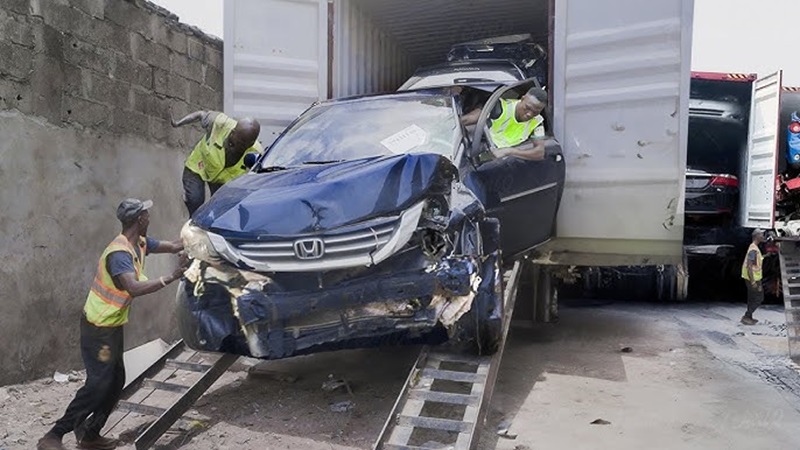
Reactions have continued to trail the decision of the federal government to stop the importation of accidented vehicles into Nigeria by car dealers and others.
On Tuesday, the government declared that it would no longer accept the importation of vehicles without prior certification, noting that it was worried at the influx of substandard automobiles into the country.
The Minister of State for Industry, Trade, and Investment, Mr John Enoh, said the no certification, no entry policy tagged the Standard Organisation of Nigeria–National Automotive Design and Development Council Vehicle Conformity Assessment Programme was now fully implemented with immediate effect, noting that any vehicle that fails to meet the requirements would be denied entry into the country.
“I want to clarify again that this is not a proposal or a pilot. This has become government policy and takes immediate effect upon commencement,” he declared at a meeting in Abuja, stressing that vehicles coming into the nation must obtain pre-shipment certification.
“So, the endorsement integrates vehicle safety into Nigeria’s economic policy framework. It aligns fiscal instruments, foreign exchange import financing, and revenue systems with safety and standards objectives.
“It also strengthens the long-standing work of the Standard Organisation of Nigeria and NADDC within a coordinated whole-of-government approach.
“I think that with effect from the commencement of this SON-NADDC VehCAP, all new and used vehicles and automotive products entering Nigeria must obtain pre-shipment certification on that VehCAP before form M approval, before customs valuation, before power processing, before import clearance, and before market entry,” he stated.
“No vehicle or automotive product shall be imported, cleared, registered or licensed without valid certification. Any non-compliant import shall be subject to refusal of clearance, seizure, or sanctions under applicable laws,” he added.
Mr Enoh disclosed that, “We did not arrive here by accident. Too many Nigerians have died from accidents caused by vehicles that fell short of required standards. Nigeria deserves better, and this government is determined to deliver better.”
While he admitted that some Nigerians may not be able to afford new vehicles, the government cannot fold its arms and allow its citizens to die because of substandard cars.
“I think that without taking an extreme position, we must find a middle ground. There are economic challenges, there is purchasing power, and there is also the capacity of local assemblers to meet demand.
“But at the very minimum, if we adhere strictly to existing regulations, such as limits on the age of imported vehicles, our problem will not be nearly as bad as it is,” he said.
“A vehicle that is non-compliant at the federal level must not be registered at the state level. For the FCCPC, you are expected to treat VehCAP certification as a baseline for consumer protection enforcement for vehicles. State governments, because we run a federation with federal units, state governments are expected to align vehicle registration systems with VehCAP requirements. Most importantly, let me acknowledge the very profound role that was played by the Minister of Finance and Coordinating Minister of the Economy, Wale Edun, for approving the VehCAP initiative,” he warned.
While some Nigerians applaud this initiative, others believe citizens would be exploited by government officials and make the price of fairly used cars more expensive. Some dealers have been accused of bringing in accidented cars, refurbishing them and selling to unsuspecting customers at exorbitant prices.

By Aduragbemi Omiyale
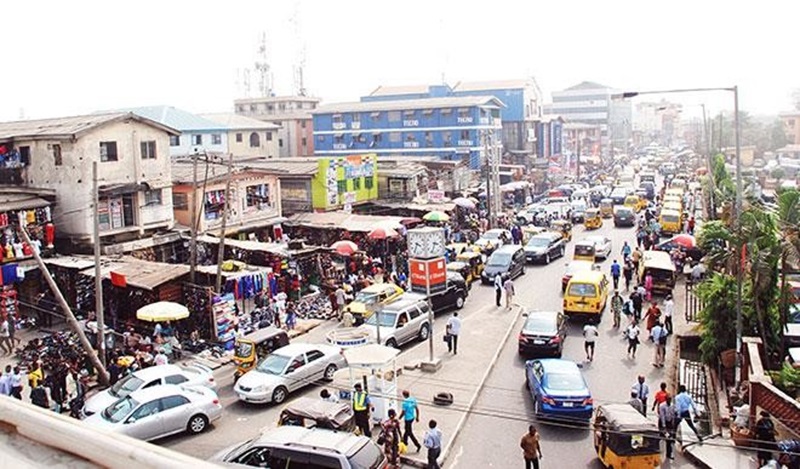
Individuals and syndicates involved in illegal parking extortion at the Computer Village area of Ikeja have been warned to desist or face the full weight of the law.
This caution was given by the General Manager of the Lagos State Parking Authority (LASPA), Mrs Adebisi Adelabu, in a statement.
She said her organisation has uncovered a racket where fraudsters, working in collaboration with touts, are illegally collecting parking fees of up to N1,000 from motorists under false pretences.
Mrs Adelabu further revealed that some operatives of the Lagos Central Business District (CBD), in Ikeja, often clamp down on the illegally parked vehicles, either removing their number plates or arranging for the vehicles to be towed away, making vehicle owners pay a significant fine to recover both their vehicles and license plates.
She emphasised that the management and regulation of parking within the Ikeja business district, Computer Village and the entire state is not within the statutory purview of the CBD or any group of touts but rests exclusively with LASPA.
“We are aware of these fraudulent activities, and we want to make it clear that LASPA is the only government body legally mandated to oversee parking in Lagos State,” she said.
Continuing, the GM of LASPA condemned these illicit activities in the strongest terms, describing them as a disservice to the public and an embarrassment to the efforts of the state government at creating a seamless and orderly parking ecosystem.
The management of LASPA therefore urged all perpetrators engaged in illegal parking activities to stop immediately, adding that the Authority has revamped its monitoring and enforcement operations in the Computer Village and the State environs.
While stressing that anyone engaging in illegal parking activities will be arrested and prosecuted without leniency, Mrs Adelabu advised Lagos motorists and visitors to the Computer Village area to remain vigilant and patronise only LASPA-registered parking operators with valid identification and receipts.
The general public was also urged to report any suspected individuals or groups engaging in illegal parking operating in LASPA.


By Dipo Olowookere
Rising operational costs and declining earnings have forced drivers of ride-haling platforms like Uber and Bolt to embark on a three-day warning strike in Lagos.
This situation has not gone down well with their customers in the metropolis, who have expressed frustration over the strike.
“Though I am not happy with the action of the drivers, I feel for them because they operate in a harsh environment,” a customer of Bolt, Mr Seyi Adeniji, said.
When Business Post checked the Uber app on Monday morning to book a ride from Egbeda to Megida Ayobo, both in the Alimosho Local Government Area of Lagos State, it was functional, but with fewer drivers available for pick-up, with prices ranging from N5,200 on Uber X to N7,400.
One of the drivers, who spoke with this newspaper but begged for anonymity, said efforts by them for improved packages have failed.
It was gathered that when nothing concrete came out from talks with operators of the platforms, drivers, under the aegis of the Amalgamated Union of App-Based Transporters of Nigeria (AUATON), Lagos State Chapter, decided to begin a warning strike from March 16 to 18, 2026, to further press home their demands.
They want an immediate review of ride fares to reflect current economic conditions. They also seek a cut in commission charges by ride-hailing companies, and want the introduction of a guaranteed minimum trip fare.
The drivers have asked for insurance coverage, an end to unjust deactivation of driver accounts without proper investigation, and greater transparency in how fares and commissions are calculated.
In addition, they want improved safety protections for drivers through better rider-verification systems, emergency panic buttons, and faster response mechanisms in cases of security threats.
According to a statement from the spokesman of the organisation, Mr Steven Iwindoye, many drivers are struggling to remain financially viable due to increasing fuel prices, vehicle maintenance costs, inflation and other living expenses, while fare structures on ride-hailing platforms have remained largely unchanged.
“Drivers operating on platforms such as Uber, Bolt, inDrive and Lagride continue to face rising operational costs, including the high price of fuel, vehicle maintenance, inflation and daily living expenses.
“Unfortunately, the fare structures and policies of these companies have not been adjusted to reflect these economic realities,” the statement said.
It was stressed that many drivers now work extremely long hours yet still struggle to earn a sustainable income, clarifying that, “This strike is not intended to punish commuters but to demand fair treatment, economic sustainability and safety protections for the drivers who power the ride-hailing industry.”
-
 Feature/OPED6 years ago
Davos was Different this year
-
Travel/Tourism10 years ago
Lagos Seals Western Lodge Hotel In Ikorodu
-

 Showbiz3 years ago
Estranged Lover Releases Videos of Empress Njamah Bathing
-
 Banking8 years ago
Sort Codes of GTBank Branches in Nigeria
-

 Economy3 years ago
Subsidy Removal: CNG at N130 Per Litre Cheaper Than Petrol—IPMAN
-

 Banking3 years ago
Sort Codes of UBA Branches in Nigeria
-

 Banking3 years ago
First Bank Announces Planned Downtime
-

 Sports3 years ago
Highest Paid Nigerian Footballer – How Much Do Nigerian Footballers Earn