Auto
Jeff Jones Quits as Uber President amid Excavating Crisis

By Modupe Gbadeyanka
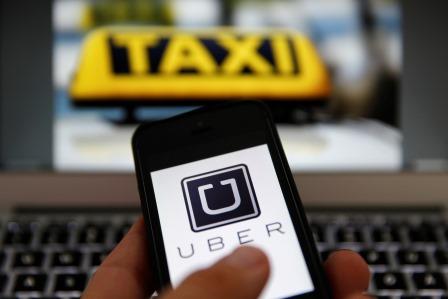
Report reaching us indicates that Mr Jeff Jones as left Uber Technologies Inc barely seven months after he was hired to help the company soften its often rough image.
In a statement made available to Reuters on Sunday, it was pointed out that Mr Jones claimed he could not continue as president of a business with which he was incompatible.
The ride services firm headquartered in San Francisco quoted Mr Jones in the statement as saying, “I joined Uber because of its mission, and the challenge to build global capabilities that would help the company mature and thrive long term.”
He added that, “It is now clear, however, that the beliefs and approach to leadership that have guided my career are inconsistent with what I saw and experienced at Uber, and I can no longer continue as president of the ride sharing business,” and wished the “thousands of amazing people at the company” well.
Mr Jones’ role was put into question after Uber earlier this month launched a search for a chief operating officer to help run the company alongside Chief Executive Travis Kalanick.
He had been performing some of those COO responsibilities. He joined Uber from Target Corp (TGT.N), where he was chief marketing officer and is credited with modernizing the retailer’s brand.
“We want to thank Jeff for his six months at the company and wish him all the best,” an Uber spokesman said in an emailed statement.
Uber’s vice president of maps and business platform, Brian McClendon, said separately he plans to leave the company at the end of the month to explore politics.
“I’ll be staying on as an adviser,” McClendon said in a statement to Reuters. “This fall’s election and the current fiscal crisis in Kansas is driving me to more fully participate in our democracy.”
Jones and McClendon are the latest in a string of high-level executives to leave the company.
Last month, engineering executive Amit Singhal was asked to resign due to a sexual harassment allegation stemming from his previous job at Alphabet Inc’s (GOOGL.O) Google.
Earlier this month, Ed Baker, Uber’s vice president of product and growth, and Charlie Miller, Uber’s famed security researcher, departed.
Technology news site Recode first reported Jones’ departure on Sunday.
Uber, while it has long had a reputation as an aggressive and unapologetic startup, has been battered with multiple controversies over the last several weeks that have put Kalanick’s leadership capabilities and the company’s future into question.
A former Uber employee last month published a blog post describing a workplace where sexual harassment was common and went unpunished. The blog post prompted an internal investigation that is being led by former U.S. Attorney General Eric Holder.
Then, Bloomberg released a video that showed Kalanick berating an Uber driver who had complained about cuts to rates paid to drivers, resulting in Kalanick making a public apology.
And earlier this month Uber confirmed it had used a secret technology program dubbed “Greyball,” which effectively changes the app view for specific riders, to evade authorities in cities where the service has been banned. Uber has since prohibited the use of Greyball to target local regulators.
Uber is also facing a lawsuit from Alphabet Inc’s self-driving car division that accuses it of stealing designs for autonomous car technology known as Lidar. Uber has said the claims are false.
Mr Jones joined Uber in August and was widely expected to be Kalanick’s No. 2. He was tasked with overseeing the bulk of Uber’s global operations, including leading the ride-hailing program, running local Uber services in every city, marketing and customer service, and working with drivers.
The Independent Drivers Guild, an organization that advocates for Uber drivers, on Sunday was critical that Jones “has left the company without making a single improvement to help drivers struggling to make a living,” said Ryan Price, executive director of the guild.
Reuters
Auto
FRSC, Brewery Companies Renew Pact to Tackle Drink-Driving
The Federal Road Safety Corps (FRSC) has renewed a strategic partnership with major brewing companies in Nigeria to intensify efforts against drunk driving and improve road safety nationwide.
The renewed Memorandum of Understanding (MoU), signed with members of the Beer Sectoral Group (BSG), extends the collaboration for another five years, with both sides pledging to deepen public awareness, enforcement and community engagement.
FRSC Corps Marshal, Shehu Mohammed, said the partnership underscores the importance of synergy between government and the private sector in addressing road crashes, particularly those linked to alcohol consumption.
He stressed that saving lives on Nigerian roads requires sustained collaboration, adding that the corps would continue to work with industry players to promote responsible behaviour among motorists.
Speaking on behalf of the BSG, Managing Director of Nigerian Breweries Plc and Chairman BSG, Thibaut Boidin, said the renewal reflects the industry’s commitment to sustained collaboration with regulators. He cited previous joint campaigns, including the Don’t Drink and Drive Campaign, as impactful, adding that the next phase would focus on expanding reach and strengthening implementation.
Also speaking, the Managing Director of Guinness Nigeria, Girish Sharma, said the industry remains committed to supporting initiatives that promote safer roads. He noted that while alcoholic beverages are often blamed for road crashes, the real issue lies in irresponsible consumption, particularly drinking and driving.
“We are here to work with you and ensure that this programme grows bigger and delivers real impact. Saving lives is what matters most,” he said.
Similarly, the chief executive of International Breweries Plc, Mr Nicholas Kade, commended the FRSC for its dedication, describing the corps’ efforts as critical to making communities safer. He said the brewing industry would continue to support initiatives that promote responsible drinking and road safety.
The Executive Director of the Beer Sectoral Group, Ms Abiola Laseinde, described the renewal as a milestone in public-private collaboration.
She said the partnership had driven nationwide campaigns against drunk-driving, influenced behaviour and reached millions of Nigerians with road safety messages.
Ms Laseinde added that both parties would scale up interventions in the next five years to further reduce crashes and promote responsible alcohol consumption.
The FRSC and BSG’s partnership has been central to national campaigns discouraging drunk-driving, with stakeholders expressing optimism that the renewed agreement will deliver stronger outcomes.
Auto
NRS Denies Introduction of New Vehicle Tax from July 1
By Modupe Gbadeyanka
The Nigeria Revenue Service (NRS) refuted reports making the rounds on social media that the federal government plans to introduce a new tax on vehicles from July 1, 2026.
Mr Dare Adekambi, who serves as the Special Adviser to the NRS Chairman, Mr Zach Adedeji, and spokesperson for the organisation, said in a statement that the government was not planning to introduce the vehicle tax as claimed.
He described a viral infographic purporting the policy as false and misleading, urging members of the public to disregard it.
Mr Adekambi advised citizens to only rely on information from the NRS, urging them to follow the company its official handles on all social media platforms and its website for accurate information about tax and its activities.
In the infographic, motorists were directed to pay an unspecified vehicle tax rate online or at approved banks and agencies. The website listed as NRS’s was the old one, http://www.firs.gov.ng and not the new http://www.nrs.gov.ng created after it was rebranded.
“The NRS wishes to state categorically that the information did not emanate from the service or any government agency.
“Citizens are, therefore, advised to disregard the fabricated messages designed to mislead the public and instead rely on official government channels for information on government policies,” Mr Adekambi said in the statement.
Auto
Court Restrains Police, FRSC from Imposing Car Insurance Fines Without Court Order
By Adedapo Adesanya
The Federal High Court in Abuja has restrained the Nigeria Police Force and the Federal Road Safety Corps (FRSC) from imposing fines on motorists for third-party motor vehicle insurance violations without a court order.
The ruling followed a suit marked FHC/ABJ/CS/291/2025 filed by activist-lawyer, Mr Deji Adeyanju, against the Inspector-General of Police, the Attorney-General of the Federation and the FRSC.
Delivering judgment on Friday, Justice Hauwa Yilwa held that while both the police and the FRSC have the power to enforce compliance with third-party motor insurance, they lack the legal authority to impose fines on alleged offenders.
The suit was initiated through an originating summons, brought pursuant to Section 17 of the Motor Vehicles (Third Party Insurance) Act, 1950, Sections 68(3) and (4) of the Insurance Act, 2003, as well as provisions of the Federal Road Safety Commission (Establishment) Act, 2007.
Mr Adeyanju had asked the court to determine whether the police could enforce third-party insurance, impose fines without judicial backing, and whether such enforcement during routine stop-and-search operations violated constitutional rights.
He also sought a declaration on whether the power to enforce third-party motor insurance lies exclusively with the FRSC.
In addition to the declaratory relief, the applicant requested orders of perpetual injunction restraining the police from enforcing third-party insurance and from imposing fines without judicial backing.
He further urged the court to hold the Attorney-General of the Federation accountable for providing legal guidance on the scope of police powers under the relevant statutes.
However, in its judgment, the court drew a distinction between enforcement and sanctioning powers.
Counsel to the applicant, Mr Marvin Omorogbe, said the court upheld the authority of both the police and the FRSC to ensure compliance with motor vehicle insurance laws, but firmly ruled against the imposition of fines by either agency.
According to him, the court held that “the police and the road safety may enforce” compliance but “outrightly lack the powers to impose fines on third parties or vehicle owners” in the course of such enforcement.
“The court went further to restrain the IGP, the Police Force and all their officers, including the FRSC, from imposing fines on motor vehicle users or Nigerian citizens,” Mr Omorogbe said.
Reacting to the judgment, Mr Adeyanju expressed satisfaction, noting that the central objective of the suit had been achieved.
“The sole reason why we came to court is that we wanted the court to make a positive declaration that the police and the road safety do not have the right to impose fines on any Nigerian over motor vehicle insurance. And we have succeeded,” he said.
He argued that the ruling would curb what he described as a pattern of extortion by enforcement agencies and restore confidence among motorists.
Mr Adeyanju added that although the court declined to grant all the reliefs sought—particularly the request to strip the police entirely of enforcement powers—it nonetheless made a significant pronouncement on the limits of those powers.
He also urged Nigerians to take advantage of the judgment to assert their rights and seek legal remedies where necessary.
On the other hand, counsel to the defendants, Mr Victor Okoye, said the judgment was only partly favourable to the police and signalled plans to challenge it at the Court of Appeal.
Mr Okoye disclosed that the defence had raised a preliminary objection questioning the jurisdiction of the court to entertain the suit, arguing that the originating summons was incompetent and unsuitable for resolving contentious issues.
He relied on appellate authorities to stress that jurisdiction is fundamental to adjudication and must be determined before any substantive issues.
Despite this, he noted, the court proceeded to deliver judgment.
-
Feature/OPED6 years agoDavos was Different this year
-
Travel/Tourism10 years ago
Lagos Seals Western Lodge Hotel In Ikorodu
-
Showbiz3 years agoEstranged Lover Releases Videos of Empress Njamah Bathing
-
Banking8 years agoSort Codes of GTBank Branches in Nigeria
-
Economy3 years agoSubsidy Removal: CNG at N130 Per Litre Cheaper Than Petrol—IPMAN
-
Banking3 years agoSort Codes of UBA Branches in Nigeria
-
Banking3 years agoFirst Bank Announces Planned Downtime
-
Sports3 years agoHighest Paid Nigerian Footballer – How Much Do Nigerian Footballers Earn