Auto
Oyo to Register Commercial Motorcycle Riders, Capture Fingerprints, Others
By Modupe Gbadeyanka
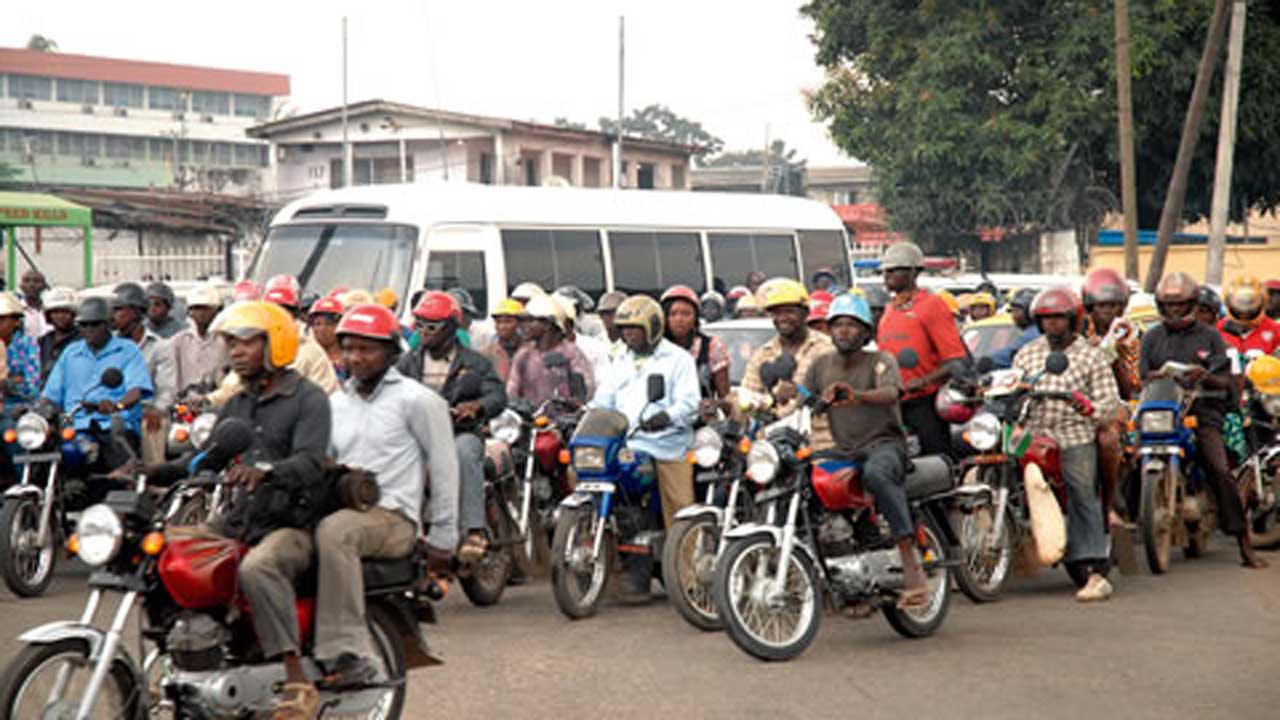
Very soon, commercial motorcycle riders in Oyo State will require identification numbers and registration jackets to ply their trades in the state.
This is part of efforts to curb every form of criminality and other social vices and regulate the activities of commercial motorcyclists to also prevent the breakdown of law and order.
Business Post gathered that the registration will require each commercial bike rider’s name, address, fingerprint, passport-sized photograph, and a unique ID number.
At a stakeholders’ meeting with over 100 commercial riders’ association leaders in Ibadan on Thursday, the Commissioner for Budget and Economic Planning, Mr Musibau Babatunde, said the registration is part of the Oyo State government’s drive to ensure the effectiveness of the ongoing state-wide residents’ registration programme, saying the exercise will help in planning properly for the security architecture of the state, in the long-run.
“States across the south-west have been banning operations of commercial motorcyclists, but we know that will have its own socio-economic challenges. So rather than banning them, we felt it is pertinent to know the number of bike riders in the State and use that for our security architecture,” he said.
The Commissioner added that there are multi-dimensional benefits accruable to the registration exercise, both for the motorcyclists and the state, in terms of security and economic planning.
Also, his counterpart in the Ministry of Information, Culture and Tourism, Mr Wasiu Olatubosun, explained that the registration will help regulate the influx of commercial motorcyclists into the state.
Mr Olatubosun emphasised that the registration will be free, adding that the proactive approach to regulating the activities of commercial motorcyclists by Governor Seyi Makinde-led administration will prevent the breakdown of law and order.
“We will set up a task force consisting of both the union and other relevant agencies that will make sure that unregistered riders don’t operate within the state,” he said.
On his part, the Special Assistant to the Governor on ICT and e-Governance, Mr Bayo Akande, said that the registration process was initiated by the state government to distinguish every rider operating in the state.
“Actually, registration exercises had commenced months back at every Local government and office of the Oyo State Road Transport Management Authority. All is now set to provide numbered jackets, in order to identify riders who are duly registered with the state,” the Governor’s aide said.
He said part of the dividends of the registration is the provision of health insurance and other palliatives for riders in the state.
Responding on behalf of the Okada riders, Mr Yusuf Muritala, commended Governor Makinde for not considering a ban on their activities, assuring that his colleagues are ready to cooperate with the state government to register.
He, therefore, expressed the readiness of the commercial motorcycle riders in Oyo State to abide by the rules and regulations established by the government to regulate the activities of their operations, pledging the support of all motorcyclist associations in the state to the government.
However, Mr Muritala appealed to the consultant in charge of the registration exercise to work with leaders in each zone to ensure an expansion of registration points for commercial motorcyclists.
Auto
Senate Passes Bill to Sanction Trading, Preaching in Buses
By Modupe Gbadeyanka
A bill aimed at prohibiting hawking, trading or preaching inside commercial vehicles in Nigeria has been passed by the Senate.
The bill known as the Federal Road Safety Corps (Amendment) Bill, 2026, imposes fines between N50,000 and N100,000 for violations if assented to by the President.
The piece of legislation was passed by the red chamber of the National Assembly on Thursday and should later be transmitted to President Bola Tinubu for assent.
Members of the upper chamber of the parliament explained that the law was amended to discourage distractions in commercial vehicles and improve the safety of commuters.
In addition, motorists who fail to cooperate with officials of the Federal Road Safety Corps (FRSC) during roadside breath tests conducted on reasonable suspicion are liable to fines or imprisonment or both.
Lawmakers noted that this was to improve compliance with road safety regulations and reduce road crashes, as fines for driving under the influence of alcohol or intoxicating drugs were raised to N100,000 from N5,000, with the risk of spending two years behind bars.
It was also proposed that disobedience to traffic lights, road signs, pavement markings and other traffic control devices will now attract N100,000, while the fine for speed limit violations is now N100,000, with reckless driving now a fine of N100,000 or two years’ imprisonment.
Auto
Company Gets Ultimatum to Stop Indiscriminate Truck Parking on Aina Obembe Road Baruwa
By Dipo Olowookere
Residents and motorists plying the Aina Obembe Road in Baruwa, Ipaja, Lagos, may soon heave a sigh of relief as the excruciating traffic gridlock being experienced in the area both day and night may soon be a thing of the past.
This is because the chairman of Ayobo-Ipaja LCDA, Mr Lukmon Agbaje, has directed those involved in indiscriminate truck parking along the road to remove the heavy-duty vehicles within one week, threatening to invoke appropriate enforcement measures for noncompliance with this directive.
Speaking during a meeting on Wednesday with the management of SENA Company, which owns the affected trucks, as well as the leadership of Oluwadara CDA and other key stakeholders like the Lagos State Traffic Management Authority (LASTMA), at the council’s secretariat, Mr Agbaje frowned at the prolonged inconvenience suffered by the community, stressing that public roads must remain accessible and safe for all users.
He emphasised the need for a collaborative approach in resolving the issue without undermining legitimate business operations, noting that he’s focused on finding a lasting solution to the gridlock experienced between Oluwaga and Aina Obembe, where parked trucks have continued to obstruct traffic, disrupt business activities, and pose safety concerns for residents and motorists.
He tasked the firm and the CDA to jointly identify and implement alternative parking arrangements that would remove all trucks from the affected roads and restore the free flow of traffic.
He declared that, “The welfare of our people remains our highest priority. No individual or corporate organisation should obstruct public infrastructure or create avoidable hardship for residents. We must ensure that economic activities coexist with public safety, order, and convenience.”
The council chief reaffirmed his administration’s commitment to promoting orderly development, ensuring safe and accessible roads, improving traffic management, and creating an environment where businesses can thrive alongside the well-being of residents.
Auto
FG Rolls Out Green Tax, Cuts Vehicle Import Levies
By Adedapo Adesanya
The federal government has cut import levies on new and used vehicles by as much as 10 per cent in a move aimed at reducing the cost of vehicle importation, even as it commenced the implementation of a new Green Tax surcharge.
According to an update issued by the Nigeria Customs Service (NCS) on Wednesday, the import levy on new vehicles has been reduced from 20 per cent to 10 per cent, while the levy on used vehicles has been slashed from 15 per cent to five per cent under the 2026 Fiscal Policy Measures, which took effect on July 1, 2026.
The customs said the policy is designed to ease the cost of vehicle imports while advancing the government’s environmental sustainability objectives through the newly introduced Green Tax.
The implementation also reduces the overall import duty on fully built passenger vehicles from 70 per cent to 40 per cent.
As part of the Green Tax framework, a new environmental surcharge of between two per cent and four per cent will apply to petrol-powered vehicles with engine capacities exceeding 2,000cc. However, mass transit buses, electric vehicles, and passenger cars with engines below 2,000cc are exempt from the surcharge.
Beyond the automobile sector, the fiscal measures also lower import duties on several essential goods. The duty on imported rice has been reduced from 70 per cent to 47.5 per cent, while crude palm oil now attracts a 28.75 per cent duty.
In addition, import duties on agricultural and manufacturing machinery have been completely removed to support local production, while Waste PET has been added to the export prohibition list to encourage domestic recycling.