Connect with us

Auto

UK Government to Boost Funding Support for Max Nigeria

Published

on

MAX Nigeria

By Adedapo Adesanya

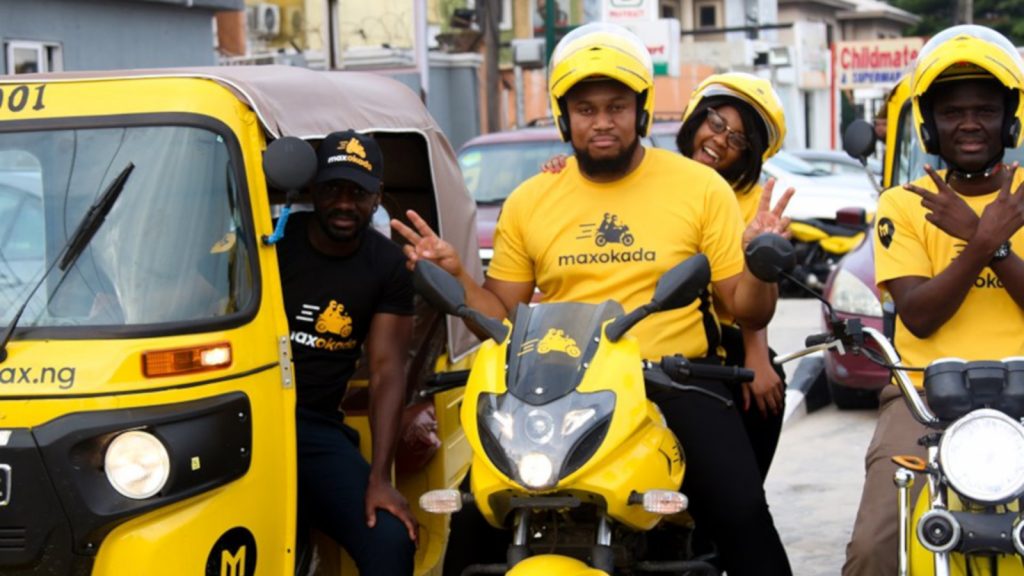
The United Kingdom government has reiterated promises to boost investment in sustainable industries in Nigeria and other African countries, with such plans to support the Nigerian e-mobility platform and electric vehicle assembler, MAX Nigeria.

This was the point of call as the UK Foreign Secretary, Mr James Cleverly, visited the company, which has gained support from the UK government-funded Manufacturing Africa programme.

MAX has raised $31 million to ramp up the assembly of electric two- and three-wheelers, and with the visit, the e-mobility firm is now gearing up for a third capital raise to fund its expansion to become a regional e-mobility player.

Speaking on this, Mr Cleverly said British funds continue to support game-changing entrepreneurs and companies in Africa. It was revealed that British International Investment manages a $4.7 billion investment portfolio in Africa, including 86 companies and 43 funds in Nigeria alone.

Other funding sources include Infracredit, which provides local currency guarantees to unlock long-term infrastructure financing in Nigeria as well as FSD Africa Investments, which invests in order to improve the financial instruments supporting Africa’s green economic growth.

It also funds the Climate Finance Accelerator, a public-private finance initiative that supports low-carbon projects.

The UK also provides support for companies to access investment, whether from the UK or elsewhere. The Manufacturing Africa programme is supporting 22 manufacturers to land investments in Nigeria, with a pipeline of over $664 million in Foreign Direct Investment (FDI). The programme supports over 120 companies across five countries in Africa, which are mitigating 239,000 tonnes of carbon dioxide while creating 14,000 new jobs.

With its support to MAX Nigeria, it has helped to empower over 21,000 drivers operating in eight cities within Nigeria and has contributed to cutting 52 metric tons of CO2 emissions from the environment.

UK-linked financiers, including Novastar (backed by British International Investment) and Shell Foundation, are some of the organisations financing MAX’s growth. MAX has also found a UK business partner in Field Ready to support them with recruitment.

Work with MAX is part of the UK’s support for economic growth, job creation and value-addition in Africa that aligns with global climate priorities.

On his part, British High Commissioner to Nigeria, Mr Richard Montgomery, said: “I am delighted to visit MAX Nigeria with our Foreign Secretary James Cleverly. MAX are truly innovative and entrepreneurial, solving a thousand problems at once to bring affordable electric vehicles to West African riders.”

“It is fantastic that a combination of UK public and private sector support is helping MAX to create jobs, bring new skills into the market, and solve climate change challenges. We will continue to support companies doing this groundbreaking work on the continent.”

The Chief Executive Officer and Co-Founder of MAX Nigeria, Mr Adetayo Bamiduro, said MAX will continue scaling as “the impact of our vehicle subscription platform across Africa and to deliver on our commitment to provide sustainable income to millions of mobility entrepreneurs by enabling them to access income-generating, energy-efficient, and electric vehicles that meet the essential needs of Africans.”


Adedapo Adesanya is a journalist, polymath, and connoisseur of everything art. When he is not writing, he has his nose buried in one of the many books or articles he has bookmarked or simply listening to good music with a bottle of beer or wine. He supports the greatest club in the world, Manchester United F.C.

Click to comment

Leave a Reply

Your email address will not be published. Required fields are marked *

Auto

NRS Denies Introduction of New Vehicle Tax from July 1

Published

on

new vehicle tax

By Modupe Gbadeyanka

The Nigeria Revenue Service (NRS) refuted reports making the rounds on social media that the federal government plans to introduce a new tax on vehicles from July 1, 2026.

Mr Dare Adekambi, who serves as the Special Adviser to the NRS Chairman, Mr Zach Adedeji, and spokesperson for the organisation, said in a statement that the government was not planning to introduce the vehicle tax as claimed.

He described a viral infographic purporting the policy as false and misleading, urging members of the public to disregard it.

Mr Adekambi advised citizens to only rely on information from the NRS, urging them to follow the company its official handles on all social media platforms and its website for accurate information about tax and its activities.

In the infographic, motorists were directed to pay an unspecified vehicle tax rate online or at approved banks and agencies. The website listed as NRS’s was the old one, http://www.firs.gov.ng and not the new http://www.nrs.gov.ng created after it was rebranded.

“The NRS wishes to state categorically that the information did not emanate from the service or any government agency.

“Citizens are, therefore, advised to disregard the fabricated messages designed to mislead the public and instead rely on official government channels for information on government policies,” Mr Adekambi said in the statement.

Continue Reading

Auto

Court Restrains Police, FRSC from Imposing Car Insurance Fines Without Court Order

Published

on

third-party insurance

By Adedapo Adesanya

The Federal High Court in Abuja has restrained the Nigeria Police Force and the Federal Road Safety Corps (FRSC) from imposing fines on motorists for third-party motor vehicle insurance violations without a court order.

The ruling followed a suit marked FHC/ABJ/CS/291/2025 filed by activist-lawyer, Mr Deji Adeyanju, against the Inspector-General of Police, the Attorney-General of the Federation and the FRSC.

Delivering judgment on Friday, Justice Hauwa Yilwa held that while both the police and the FRSC have the power to enforce compliance with third-party motor insurance, they lack the legal authority to impose fines on alleged offenders.

The suit was initiated through an originating summons, brought pursuant to Section 17 of the Motor Vehicles (Third Party Insurance) Act, 1950, Sections 68(3) and (4) of the Insurance Act, 2003, as well as provisions of the Federal Road Safety Commission (Establishment) Act, 2007.

Mr Adeyanju had asked the court to determine whether the police could enforce third-party insurance, impose fines without judicial backing, and whether such enforcement during routine stop-and-search operations violated constitutional rights.

He also sought a declaration on whether the power to enforce third-party motor insurance lies exclusively with the FRSC.

In addition to the declaratory relief, the applicant requested orders of perpetual injunction restraining the police from enforcing third-party insurance and from imposing fines without judicial backing.

He further urged the court to hold the Attorney-General of the Federation accountable for providing legal guidance on the scope of police powers under the relevant statutes.

However, in its judgment, the court drew a distinction between enforcement and sanctioning powers.

Counsel to the applicant, Mr Marvin Omorogbe, said the court upheld the authority of both the police and the FRSC to ensure compliance with motor vehicle insurance laws, but firmly ruled against the imposition of fines by either agency.

According to him, the court held that “the police and the road safety may enforce” compliance but “outrightly lack the powers to impose fines on third parties or vehicle owners” in the course of such enforcement.

“The court went further to restrain the IGP, the Police Force and all their officers, including the FRSC, from imposing fines on motor vehicle users or Nigerian citizens,” Mr Omorogbe said.

Reacting to the judgment, Mr Adeyanju expressed satisfaction, noting that the central objective of the suit had been achieved.

“The sole reason why we came to court is that we wanted the court to make a positive declaration that the police and the road safety do not have the right to impose fines on any Nigerian over motor vehicle insurance. And we have succeeded,” he said.

He argued that the ruling would curb what he described as a pattern of extortion by enforcement agencies and restore confidence among motorists.

Mr Adeyanju added that although the court declined to grant all the reliefs sought—particularly the request to strip the police entirely of enforcement powers—it nonetheless made a significant pronouncement on the limits of those powers.

He also urged Nigerians to take advantage of the judgment to assert their rights and seek legal remedies where necessary.

On the other hand, counsel to the defendants, Mr Victor Okoye, said the judgment was only partly favourable to the police and signalled plans to challenge it at the Court of Appeal.

Mr Okoye disclosed that the defence had raised a preliminary objection questioning the jurisdiction of the court to entertain the suit, arguing that the originating summons was incompetent and unsuitable for resolving contentious issues.

He relied on appellate authorities to stress that jurisdiction is fundamental to adjudication and must be determined before any substantive issues.

Despite this, he noted, the court proceeded to deliver judgment.

Continue Reading

Auto

Pamtech Issues Public Disclaimer on Popular Auto Influencer Juliet Ibekwe

Published

on

Juliet Ibekwe Somiari Lucky

By Modupe Gbadeyanka

A public disclaimer has been issued on two former representatives of Pamtech Group, Mr Somiari Lucky and Ms Juliet Ibekwe, who is a popular auto influencer.

In the notice signed by the chief executive of Pamtech, Mr Chidomere Ndubuisi, on Tuesday, members of the public were informed that the duo no longer work with the organisation.

Mr Ndubuisi, who did not disclose why he disengaged the duo, however, emphasised that Mr Lucky and Ms Ibekwe are “not authorised to act on behalf of, represent, negotiate, or enter into any business dealings in the name of Pamtech Media Ltd or Pamtech Group.”

Ms Ibekwe rose to fame by creating content on how to make vehicles work efficiently. She became a notable auto content creator in Nigeria and garnered more fans for her car care tips.

In the disclaimer today, Pamtech warned “the general public, our valued clients, partners, and stakeholders” that doing business with Ms Ibekwe and Mr Lucky is “at their own discretion and risk, and such engagements do not involve Pamtech Group in any capacity.”

“Any business transactions, agreements, or engagements entered into with the above-mentioned individuals are strictly personal to them; Pamtech Group shall not be held liable or responsible for any commitments, representations, or obligations made by them after their exit from the company,” another part of the notice stressed.

The Owerri, Imo State-based firm further noted that, “Any use of the Pamtech name, brand, platform, or reputation by them without written authorisation is unauthorised and not recognised by the company.”

The company urged its clients, partners, and members of the public to verify all engagements directly with Pamtech Group official channels, and also ensure that all payments and communications are made only through verified company accounts and representatives.”

Pamtech expressed its commitment to delivering excellence, integrity, and professionalism across all its services in media, automobile, and business solutions.

Continue Reading

Trending