Banking
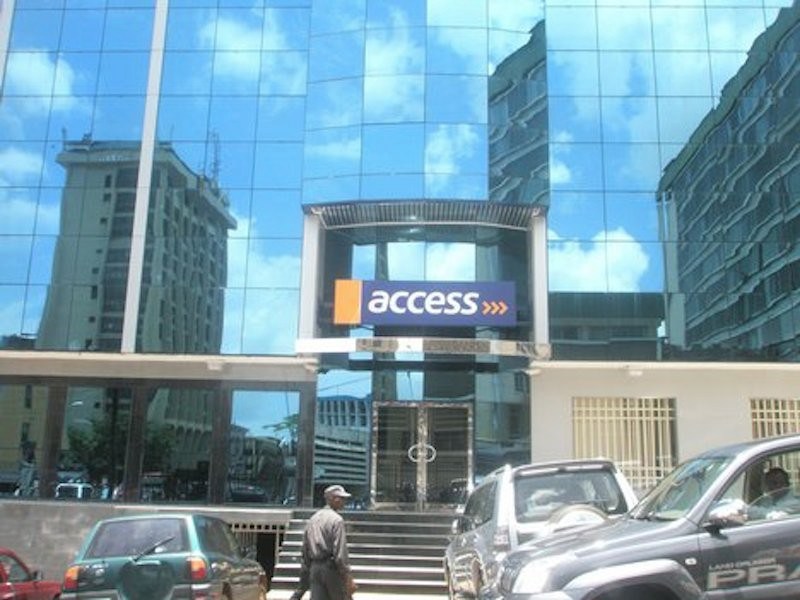
Access Bank Q3-17: Declines in Loan Loss Provision, Opex Supported PAT Growth
Access Bank Plc (ACCESS) yesterday released its Q3-17 results, wherein gross earnings (9.31% q/q and 18.26% y/y, in line with our estimate) came in lower relative to Q2-17.
This follows lacklustre performance across income lines-interest income grew lower than expected (1.69% q/q and 21.84% y/y, 4.32% below our estimate) and non-interest income declined 28.25% q/q (+10.35% y/y), 11.37% above our estimate.
However, following significant declines in loan loss provision and opex, PBT (+0.12% q/q and -5.08 y/y – 7.63% below our estimate) grew marginally, while PAT (26.04% q/q and -3.81% y/y – 9.28% below our estimate) grew double-digit, supported by a lower effective tax rate during the quarter.
The marginal q/q growth in interest income during the period was driven by 6.35% q/q (+13.22% y/y) decline in interest on loans and advances, which muted the double-digit growth in interest earned on investment securities –available for sale (+31.84% q/q and 105.90% y/y), held for trading (+2.68% q/q and +152.26% y/y), and held for maturity (+25.54% q/q and +1.73% y/y) – thus supporting a slight expansion in assets yield by 3 bps y/y to 10.35%.
Accordingly, net interest margin expanded 10 bps y/y to 5.51%, despite a more-than-expected growth in interest expense (7.735 q/q and 46.91% y/y – 11.78% above our estimate), driven by the elevated interest charges on customers deposit (12.24% q/q), and borrowings – debt securities issue (+4.97% q/q) and other borrowed funds (+304.72% q/q) – reflecting the impact of the premium on the USD112 million refinancing of its Eurobond and an additional N59 billion commercial paper issued in H1-17.
The steep contraction in NIR stemmed from significant declines in fixed income securities and derivative instruments trading, the cumulative impact of which masked the 36.85% q/q growth in foreign exchange trading income and marginal growth in fee income.
On the positive, total opex declined (17.82% q/q and +6.74% y/y, in line with our estimate) in Q3-17, following significant contraction in operating expenses (29.03% q/q and +6.74% y/y), which subdued growth in personnel expenses (8.18% q/q and 13.52% y/y) and depreciation and amortization (10.56% q/q and 24.94% y/y).
Overall, over 9M-17, gross earnings grew double-digit (by 33.05%), in line with our estimate. While PBT grew marginally by 1.26%, PAT declined slightly by 1.23%. The impressive growth in gross earnings over the period broadly reflects robust interest income, on impressive yield on interest earning assets (+190bps to 12.92%), and the surge in foreign exchange trading income, which supported 27.91% growth in NIR. The bottom-line contraction was due to opex increasing by 34.49% y/y, with cost to income ration expanding 665 bps y/y to 64.32%.
Over 9M-17, asset quality deterioration persists, with NPL ratio rising 41 bps y/y to 2.51% (3 bps above the 2.48% in H1-17), while additional provisioning of N2.46 billion in Q3-17 pushed annualized cost of risk 40 bps y/y higher to 1.22%.
The provisioning came in below our estimate of N7.62 billion. Given the impressive PAT over Q3, we believe management is still on course to deliver its 2017F ROE guidance of 20.0% (vs. 17.4% in FY-16). While acknowledging the slow growth in interest income in Q3, we believe ACCESS is poised to outperform in 2017F, driven by (1) the significant growth reported in interest income and (2) foreign exchange trading gain booked in 9M-17. Based on our last TP of N12.06, we have a BUY recommendation on the stock.
Banking
Ecobank Grows Net Revenues by 17%, Profit by 22% in FY 2025
By Aduragbemi Omiyale
Ecobank Group, the parent company of Ecobank Nigeria Limited, has released its financial statements for the 2025 accounting year, growing its net revenues by 17 per cent to $2.5 billion from $2.1 billion in the preceding year.
An analysis of the earnings showed that Corporate and Investment Banking (CIB) revenues grew by 21 per cent, while Consumer and Commercial Banking (CCB) earnings rose by 14 per cent, with higher transaction volumes across channels expanding Payment revenue by 14 per cent to $305 million in the period under review.
Details of the results submitted to the Nigerian Exchange (NGX) Limited showed that pre-tax profit went up by 21 per cent to $801 million, and the net profit jumped by 22 per cent to $407 million from $333 million, with the earnings per share (EPS) up by 23 per cent.
Business Post observed that customer deposits increased to $25.3 billion, with gross loans and advances to customers up by $2.3 billion to $12.8 billion.
Commenting on the performance of the financial institution, the chief executive of Ecobank, Mr Jeremy Awori, said, “Our 2025 performance has further demonstrated that our Growth Transformation and Returns (GTR) strategy, along with our geographically diversified business model, are yielding positive results.”
He disclosed that regarding the Consumer Banking business, the company broadened access for both new and existing customers by expanding digital account openings in more markets.
“We installed 500 new ATMs, extended our Direct Sales Agents into 22 markets, and added over 1,000 new personnel. In Commercial Banking, we strengthened our relationships with small and medium-sized enterprises (SMEs), particularly in the agribusiness sector, by introducing specialised expertise and enhanced digital tools to serve our clients better and improve access to funding.
“Within CIB, we secured over 75 major mandates with multinationals, development finance institutions (DFIs), humanitarian agencies, and regional corporations, while $610 million in commodity financing supported robust performance in our Trade business,” he added.
He commended the nearly 14,000 employees of the organisation for their efforts in growing the key performance indicators, noting that “these achievements would not have been possible without” their dedication.
“As we look ahead to 2026, we remain confident in our ability to execute our GTR strategic initiatives. However, we are fully aware of the potential implications for economic and financial conditions stemming from geopolitical tensions in the Middle East, as well as macroeconomic impacts across Africa and globally. Our focus remains on executing with agility, resilience, and disciplined risk and expense management across all our markets,” Mr Awori stated.
Banking
Stop Granting Loans Without Credible Collateral—EFCC Warns Banks
By Modupe Gbadeyanka
Banks operating in Nigeria have been warned by the Economic and Financial Crimes Commission (EFCC) against granting unsecured loans to customers.
The Acting Zonal Director for the Lagos Zonal Directorate 2 of the agency in Ikoyi, Mr Bawa Usman Kaltungo, said giving loans without credible collateral often leads to insider abuse and non-performing loans.
According to him, loans backed only by personal guarantees, including those of top executives, are inadequate and put depositors’ funds at risk.
“We have issues with banks’ mode of giving loans. The process often shows insider abuse,” he said when the Chief Audit Executive of First Bank of Nigeria Limited, Mr Mufutau Olawale Abiola, led a delegation on a courtesy visit to his office in Lagos.
“Top-down loans are not secured. You cannot give a loan based solely on the personal guarantee of the chief executive; this is not security. Banks must not issue loans without verifiable collateral. If there is proper collateral for loans obtained by bank customers, this will reduce the rate of non-performing loans,” he stated.
Mr Kaltungo further warned that a bank is only a custodian, and that giving loans without adequate collateral “amounts to tampering with depositors’ funds,” urging lenders to implement measures, including thorough due diligence on its customers, to prevent loan defaults.
“Even in situations where you outsource due diligence, there must be a clause of liability,” he said.
Reaffirming the commission’s commitment to continued cooperation with the bank in tackling financial crimes, he urged the bank to release its staff promptly when invited during investigations of alleged financial crimes.
“When we invite your staff, especially where insider connivance is suspected, you must release them so we can jointly fight economic and financial crimes. We must work together to stay ahead of criminals.
“Let me add that where money is, that is where people’s hearts are. Most of the time, we escalate issues to foreign security agencies as may be necessary,” he added.
Earlier, Mr Abiola expressed gratitude to the EFCC leadership for the engagement, noting that the visit was intended to strengthen the existing collaboration between the bank and the Commission.
While urging the EFCC to expedite investigations into cases involving its staff and others, he also disclosed that a designated team in his bank handles requests from the EFCC.
Banking
Bankit Introduces Smart Payment Cards
By Modupe Gbadeyanka
As part of its commitment to delivering fast, secure, and truly accessible financial solutions at scale, Bankit has introduced a smart payment card.
It is completely free to customers, with no card issuance fee required and can be delivered nationwide at no extra cost.
Fully integrated with the Bankit app, the new payment cards enable users to carry out a wide range of transactions with ease, including ATM withdrawals, POS payments, and online purchases, while also allowing real-time tracking and management of spending.
The introduction of Bankit Cards marks a significant evolution of the platform’s already strong offering, which has seen widespread adoption for its instant transfers, seamless bill payments, and secure digital transactions.
By eliminating the cost barrier typically associated with card ownership, Bankit is setting a new benchmark for value in Nigeria’s digital banking space while extending its capabilities into everyday physical and online payments.
The Head of Marketing at Bankit, Mr Kingsley Ezenwa, described the initiative as a bold step toward deepening customer trust and accelerating financial inclusion.
“The launch of Bankit cards, completely free for our customers, is a defining moment in our growth journey. We are not just introducing a new product; we are removing barriers and expanding access to modern financial tools for millions of Nigerians,” he said.
He emphasised that the decision to waive both card and delivery fees reflects Bankit’s broader philosophy of putting customers first while building a truly inclusive financial ecosystem.
“Our users already trust Bankit for seamless transfers and bill payments. By making our cards free, we extend that value into everyday spending online, offline, and anywhere payments are required without adding any extra cost burden,” he added.
As Nigeria’s fintech landscape becomes increasingly competitive, Bankit continues to distinguish itself through simplicity, affordability, and superior user experience. The platform’s rapid growth is driven by its ability to anticipate and respond to the evolving needs of modern consumers who demand fast, reliable, and cost-effective financial services.
At the core of Bankit’s offering is a strong commitment to security. The platform integrates advanced protection systems, including real-time transaction monitoring, multi-layer authentication, and robust encryption protocols designed to safeguard user funds and data at every touchpoint.
“Security remains at the heart of everything we do. While we are making access easier and more affordable, we are also ensuring that our users enjoy the highest level of protection, delivering not just convenience, but true peace of mind,” Mr Ezenwa further stated.
With increasing adoption across individuals and small businesses, Bankit is quickly becoming Nigeria’s preferred fintech choice, playing a key role in driving financial inclusion and accelerating the transition to a cashless, digitally empowered economy.
“Bankit is scaling rapidly because we understand the needs of modern consumers. Simplicity, reliability, innovation and now affordability are what set us apart. Offering these cards free of charge is another step toward becoming Nigeria’s leading digital banking solution,” he concluded.
-
Feature/OPED6 years agoDavos was Different this year
-
Travel/Tourism10 years ago
Lagos Seals Western Lodge Hotel In Ikorodu
-
Showbiz3 years agoEstranged Lover Releases Videos of Empress Njamah Bathing
-
Banking8 years agoSort Codes of GTBank Branches in Nigeria
-
Economy3 years agoSubsidy Removal: CNG at N130 Per Litre Cheaper Than Petrol—IPMAN
-
Banking3 years agoSort Codes of UBA Branches in Nigeria
-
Banking3 years agoFirst Bank Announces Planned Downtime
-
Sports3 years agoHighest Paid Nigerian Footballer – How Much Do Nigerian Footballers Earn