Connect with us

Banking

Banks Swing into Action, Set up Teller Points for Forex Sales

Published

on

Set up Teller Points

By Ashemiriogwa Emmanuel

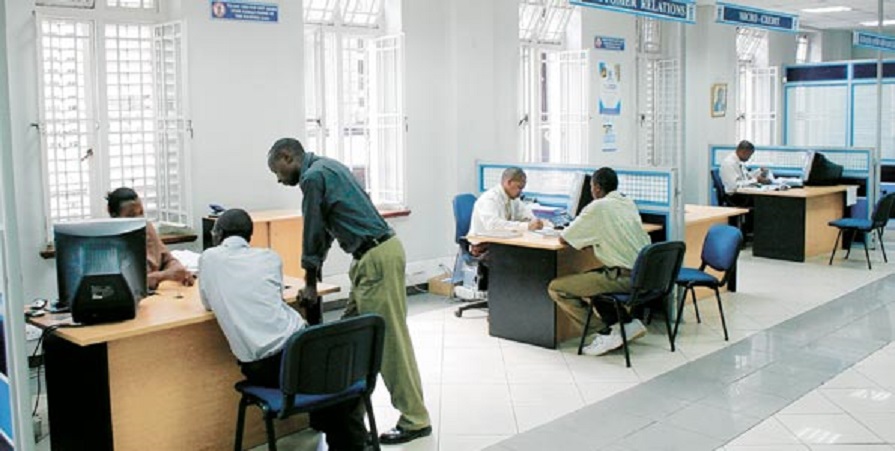
In response to the recent directive from the Central Bank of Nigeria (CBN) that all Deposit Money Banks (DMBs) should make necessary arrangements to sell foreign currencies to retail customers, various commercial banks have swung into action and have set up teller points across their branches nationwide.

These dedicated teller points are to meet the legitimate foreign exchange (FX) demands of retail customers, following the CBN stoppage of FX sales to Bureaux De Change (BDCs).

Customers who want to buy Personal Travel Allowance (PTA), Business Travel Allowance (BTA), pay international school fees, foreign medical bills, make SME transactions and every other qualifying foreign exchange (FX) transaction, will now have to approach the banks to get them.

Business Post gathered most of the licenced DMBs have adhered to the CBN directive, including Guaranty Trust Bank (GTBank) Limited, First Bank of Nigeria, United Bank for Africa Plc (UBA), Fidelity Bank Plc, Ecobank, amongst others.

Notices of the above lenders tracked by this newspaper showed that they have encouraged customers who need FX should visit their respective branches. They said the customers must be 18 years and above and have a Bank Verification Number (BVN).

Applicants must also possess a valid Nigerian passport with a valid visa and a valid international return ticket with travel date, not more than 14 days from the date of PTA/BTA purchase.

Furthermore, the PTA request is limited to a maximum of $4,000 per quarter per applicant.

Customers applying for international school fees payment can apply themselves through their parent/guardian with a valid BVN.

The banks have indicated their firm commitment to treating customer’s foreign exchange requests instantly while exchanging at the prevailing CBN rate.

“Kindly walk into any of our branches nationwide to buy your PTA. BTA, pay your international school fees, foreign medical bills, SME Form Q transactions and every other qualifying foreign exchange transaction.

“We will treat your foreign exchange requests instantly. This means that you will get your FX the same day in cash and in the case of school fees and medical bills payment, to the stipulated beneficiary offshore.

“Please note that this is subject to you providing all the required documentation for these transactions,” a notice from GTBank said.

As for First Bank, it said it would honour PTA of up to $4,000 and BTA of up to $5,000 as long as customers possess the necessary documents.

“Life can be filled with so many uncertainties and challenges however, getting up to $4,000 as your PTA and $5,000 for your BTA quarterly shouldn’t be stressful if you meet [the] criteria.

“With our Visa Debit Multi-Currency Card, you can transact business anywhere in the world, whether in Naira, Dollars, Pound Sterling or Euro, all on one debit card,” the lender said.

On its part, Fidelity Bank said to make the process easier, it has “put in place electronic transaction alert system that will provide a status update on your request,” adding that “all FX sales will be in your preferred foreign currency at the prevailing CBN rate.”

In its message to customers, UBA said it has established “dedicated teller points for FX transactions at all UBA branches nationwide,” stressing that “to be eligible, you must not have been paid a total of $4,000 or its equivalent within the quarter.”

For Ecobank, it notified its customers that all its branches had been put on notice to ensure smooth FX sales to eligible customers, assuring that their requests would be honoured timely and at competitive rates.


Click to comment

Leave a Reply

Your email address will not be published. Required fields are marked *

Banking

Zenith Bank Marks 2026 World Environment Day With Lagos Clean-up Drive

Published

on

Zenith Bank Adaora Umeoji

By Modupe Gbadeyanka

Zenith Bank Plc has joined other global corporations to commemorate the 2026 World Environment Day with a two-phase environmental clean-up initiative in Lagos State.

The financial institution participated in the commemoration under the global theme Inspired by Nature. For Climate. For Our Future through a two-day event.

In the first phase, which was a morning clean-up conducted by staff of the Bank on Wednesday, 3 June 2026, along Ajose Adeogun Street, Victoria Island, Lagos, employees of the lender cleared waste, sensitised residents on proper disposal practices, and reinforced the bank’s culture of community service and environmental stewardship.

The second day, participants engaged in a waterways clean-up at the Falomo Waterways, Ikoyi, Lagos. This was in collaboration with the Lagos Waste Management Authority (LAWMA) and the Lagos State Waterways Authority (LASWA). The joint effort focused on removing marine debris, promoting cleaner waterways, and supporting the state’s broader climate-resilience agenda.

“At Zenith Bank, sustainability is integral to how we operate. Clearing our streets and our waterways is a practical reminder that protecting the environment is a shared responsibility – and one we are proud to take up alongside LAWMA and LASWA.

“Through these exercises, we are taking deliberate action to preserve our communities, support climate action, and inspire others to act. Our operations will continue to align with global environmental standards as we build a more sustainable future for Nigeria and Africa,” the chief executive of Zenith Bank, Ms Adaora Umeoji, stated.

Zenith Bank says it remains committed to embedding Environmental, Social and Governance (ESG) principles across its operations, investing in green initiatives, energy efficiency, and community-focused programmes, in line with its commitment to environmental sustainability and responsible business practices.

These efforts advance the United Nations Sustainable Development Goals – particularly SDG 7 (Affordable and Clean Energy), SDG 11 (Sustainable Cities and Communities) and SDG 13 (Climate Action). Sustainability remains an operational imperative across the Bank’s Nigerian base and its broader African, UK and European footprints.

Continue Reading

Banking

Moniepoint CEO Advocates Using Transaction Data to Unlock Financing for SMEs

Published

on

Moniepoint Tosin Eniolorunda

By Modupe Gbadeyanka

The need to consider the usage of transaction data to design credit products for millions of small businesses in Nigeria has been emphasised by the chief executive of Moniepoint Incorporated, Mr Tosin Eniolorunda.

Speaking at a panel session at the launch of the Nigeria Payments System Vision 2028 (PSV 2028) by the Central Bank of Nigeria (CBN) recently, the Moniepoint chief said transactions from the payments ecosystem could be tracked to unlock economic survival for millions of underserved businesses that have been historically shut out of formal credit markets.

PSV 2028 is a framework aimed at setting priorities and direction for the country’s payments infrastructure over the coming years, with financial inclusion, resilience, and innovation among its core pillars.

According to the CBN governor, Mr Yemi Cardoso, the new framework builds on Nigeria’s progress in digital payments and seeks to accelerate the country’s transition towards a more inclusive, technology-driven ecosystem as it continues to lead Africa’s digital payments ecosystem.

At the panel, Eniolorunda noted that “I believe the next phase of growth will come from layering services like credit onto existing payment flows, using the visibility and trust already built through financial transactions.”

Speaking on the power of payment infrastructure as a foundation for broader financial services, he argued that the data generated by payment systems, when used responsibly, holds the key to making credit faster and more accessible for underserved businesses.

“One of the most powerful things about payment infrastructure is the data it creates. When used responsibly, it can help unlock quicker and more accessible credit for businesses that have historically been underserved. For many small businesses, access has always been the real barrier,” he said.

“Achieving the ambitions of PSV 2028 will require regulators, banks, fintechs, and ecosystem players working together with a shared long-term vision,” Mr Eniolorunda added, echoing Governor Cardoso’s warning against the country’s historic “start-stop” policy cycles.

“Over the past two decades, Nigeria’s payments ecosystem has evolved into one of the most dynamic and innovative in the world. From instant payments and digital adoption to fintech-led innovation, our progress has often set the pace on the continent. While this progress has not always been fully reflected in global narratives, its impact on economic activities, financial inclusion, and system resilience is evident across our economy,” he said.

Business Post learned that the panel was moderated by the chief executive of Sterling Bank, Mr Abubakar Suleiman, and also featured the chief executive of the Nigeria Inter-Bank Settlement System (NIBSS) Plc, Mr Premier Oiwoh; his counterparts at Remita Payment Services Limited (RPSL), Mr Deremi Atanda; and Shared Agent Network Expansion Facilities (SANEF) Limited, Mrs Uche Uzoebo, among others.

Continue Reading

Banking

Ecobank Floats $450m Nature Bond for Sustainable Agric Businesses, Others

Published

on

Ecobank Back2School loans

By Aduragbemi Omiyale

The world’s first ICMA commercial bank-issued Nature Bond has been launched by Ecobank Group to mobilise global capital for the protection of Africa’s natural ecosystems.

The debt instrument, up to $450 million, will be tradable on the London Stock Exchange (LSE), creating a new route for international and African capital to ​protect Africa’s biodiversity.

The bond will ​support African farmers, sustainable agriculture businesses and water systems,​ protecting some of the planet’s most important ecosystems.

Africa is home to some of the world’s most important natural capital, including arable land, tropical forests, freshwater systems and biodiversity across hundreds of millions of hectares. But, until now, private nature capital has not flowed to Africa at the scale the continent’s ecological significance warrants​ in global ecological resilience. Despite hosting 25 per cent of global biodiversity, Africa receives less than 3 per cent of nature finance​.

Ecobank’s Nature Bond​ is a direct response to this gap. It​ will support smallholder farmers adopting sustainable agricultural practices, agri-processors with verified deforestation-free supply chains, and water infrastructure protecting freshwater ecosystems relied upon by millions of people.

Unlike many conservation-focused financing vehicles, Ecobank’s Nature Bond channels capital directly through Africa’s real economy — financing businesses and communities whose day-to-day activities shape environmental outcomes at scale.

The investments will be made in 24 markets, with significant deployment in biodiversity-priority countries such as Côte d’Ivoire, Burkina Faso and Ghana. Importantly, 81 per cent of the eligible lending pool is allocated to countries where agricultural land-use change is the primary driver of biodiversity loss, helping direct capital to the areas where it can have the greatest environmental impact.

The framework also incorporates independent monitoring and verification mechanisms, including deforestation screening and supply chain traceability requirements, helping ensure that financed activities deliver measurable nature-positive outcomes. Every eligible loan carries seven independently verified sustainability conditions.

A Nature Bond, under the ICMA secondary designation,​ requires proceeds to actively contribute to nature-positive outcomes, including transforming economic activities to reduce the drivers of nature loss at scale.

The Nature Bond was designed to reach those that conservation-focused instruments were not designed to serve – farmers, agri-processors and water operators whose daily activities collectively determine ecosystem outcomes.

While green bonds typically finance a broad range of environmental objectives, the Nature Bond designation focuses the use of proceeds specifically on nature-related outcomes, including biodiversity, sustainable agriculture, land use and water infrastructure.

“This transaction is a defining moment for African sustainable finance. Investors did not just support this bond. They demanded more of it, allowing us to increase the size and tighten pricing.

“We are not a bank that simply labels bonds. We have spent four years building the systems, governance and accountability needed to make nature finance credible and scalable in Africa.

“This bond is ultimately about the farmers, cooperatives and communities whose livelihoods depend on healthy ecosystems,” the chief executive of Ecobank Group, Mr Jeremy Awori, stated.

On her part, the Head of Sustainability and ESRM at Ecobank Transnational Incorporated, Ms Rachael Antwi, said, “Nature finance will only scale in Africa if it is practical, measurable and connected to the real economy. This bond is designed to do that by linking international capital to eligible lending for sustainable agriculture and water infrastructure across 24 countries. It reflects the systems and standards Ecobank has built to ensure nature finance supports both environmental resilience and the communities whose livelihoods depend on healthy ecosystems.”

Business Post gathered that the $450 million bond was priced following strong investor demand, with the final orderbook exceeding $1.36 billion, almost 400 per cent of the original target size. The strength of demand enabled Ecobank to increase the transaction by $100 million and tighten pricing by 50 basis points.

The transaction attracted support from both international and African investors, demonstrating Ecobank’s unique ability to mobilise capital across global and African markets.

Continue Reading

Trending