
Banking
Cardoso Seeks Increased Synergy With NDIC Amid Evolving Economic Challenges

By Adedapo Adesanya
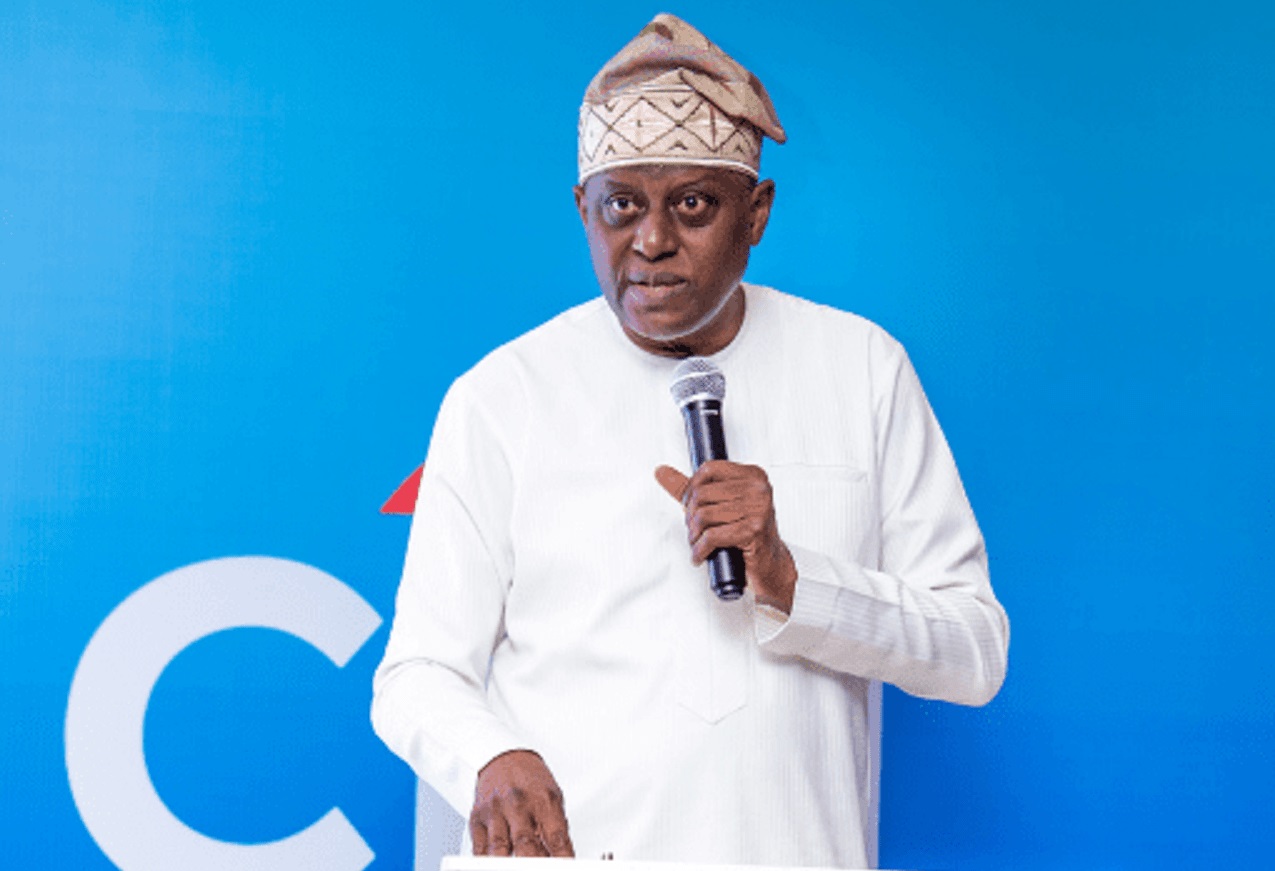
The Governor of the Central Bank of Nigeria (CBN), Mr Yemi Cardoso, has called for continued synergy with the Nigeria Deposit Insurance Corporation (NDIC) towards safeguarding Nigeria’s financial system, amidst evolving economic challenges.
He made the call while congratulating the new NDIC board on their appointments and expressed optimism about deepening collaboration between the two institutions.
Speaking on Wednesday at the CBN Headquarters in Abuja during a courtesy call by the newly appointed management of the NDIC, led by the Managing Director, Mr Thompson Sunday, Mr Cardoso said, “Our meeting today is a clear testament to our willingness to work together. The CBN counts on NDIC’s support in navigating the uncertain times that we are in.”
He reiterated that the visit underscored the shared commitment of both institutions to strengthen collaboration towards safeguarding Nigeria’s financial system, amidst evolving economic challenges.
Mr Cardoso averred that his two years in office had revealed critical lessons in the financial industry, requiring that the CBN and the NDIC proactively deal with potential shocks by leveraging modern tools for financial stability.
He described the NDIC’s visit as timely, urging both institutions to work closely in mitigating risks and ensuring depositor confidence.
On his part, the NDIC Managing Director commended the apex bank for its reform programmes under the leadership of Mr Cardoso, particularly the stabilization of the forex market as well as the ongoing recapitalization of Deposit Money Banks.
He stated that the NDIC was committed to aligning its operations with the NDIC Act 2023 (as amended), explaining that the Corporation was in the process of embarking on a strategic restructuring to better align operations with its risk minimization mandate as well as developing a new corporate strategy as the one in use was due to expire at the end of the current year.
Mr Sunday reiterated the NDIC’s willingness to collaborate with the CBN towards enhancing financial system stability, expressing appreciation for the CBN’s support in premium collection from insured institutions.
On her part, the CBN Director of Financial Policy and Regulation Department, Mrs Rita Sike, noted that the joint crisis preparedness framework could be dealt with under the auspices of the Financial Services Regulation Coordinating Committee (FSRCC).
She explained that the CBN was in the process of enhancing the Credit Risk Management System (CRMS) to integrate the Global Standing Instruction (GSI), which will allow for the on-boarding of Other Financial Institutions (OFIs).







By Dipo Olowookere
Customers may have difficulty accessing the digital platform of Polaris Bank, known as VULTe, during the Easter holidays from Friday, April 3, to Monday, April 6, 2026.
This is because the financial institution is carrying out system maintenance on the platform in its effort to ensure users enjoy a better banking experience.
In a notice over the weekend, the lender said “access to VULTe may be limited,” but it provided an alternative, which is the PolarisXperience.
Polaris Bank, which expressed regret over “any inconvenience” this action may cause its customers, said the “scheduled system maintenance” would happen from 10 pm to 8 am daily, promising that normal service would return after the maintenance.
“In continuation of our commitment to delivering a seamless and improved banking experience, we will be conducting a scheduled system maintenance during the Easter holidays.
“During this period, access to VULTe may be limited. We have provided an alternative channel, PolarisXperience:
“Please go to our website to onboard or use it as an existing user. You can also use this link: (https://elogin.polarisbanklimited.com).
“We regret any inconvenience and appreciate your understanding. Normal service will resume after the maintenance,” parts of the notice seen by Business Post read.
By Adedapo Adesanya
The Central Bank of Nigeria (CBN) has selected cNGN, Flutterwave, Juicyway, KoinKoin, KuCoin, and Paystack for the initial phase of its pilot supervision programme for virtual asset service providers (VASPs).
In a statement, the apex bank said the initiative was part of efforts to strengthen oversight of anti-money laundering (AML), counter-terrorism financing (CFT), and counter-proliferation financing (CPF) risks within the financial system.
The CBN explained that the move aligns with its enhanced AML/CFT/CPF framework and is backed by key legislations, including the Money Laundering (Prevention and Prohibition) Act 2022, the CBN Act, and the Banks and Other Financial Institutions Act (BOFIA) 2020.
“The CBN has commenced an AML/CFT/CPF supervision pilot involving a select group of virtual asset service providers identified as relevant for supervisory engagement,” the statement said.
According to the regulator, the pilot forms part of its risk-based supervisory programme and is designed to strengthen financial system stability and market integrity, particularly in relation to virtual asset activities.
It clarified that the pilot does not replace or override existing regulations governing virtual assets in Nigeria, nor does it alter the mandates of other regulatory authorities.
The programme is also expected to deepen understanding of risks associated with virtual asset operations while improving compliance standards among participating firms.
“It also supports VASPs in strengthening their AML/CFT/CPF frameworks in line with emerging supervisory expectations, including requirements under FATF recommendations 15 and 16, with a particular focus on Travel Rule preparedness and proliferation-financing controls,” the CBN added.
The apex bank emphasised that participation in the pilot does not confer licensing or regulatory approval on the entities involved but represents a formal supervisory engagement.
Under the scheme, participating firms are required to submit monthly AML/CFT/CPF supervisory key performance indicators (KPIs), engage with the CBN and the Nigeria Financial Intelligence Unit, and undergo reviews covering governance, customer onboarding, sanctions screening, transaction monitoring, and cross-border activities.
They are also expected to demonstrate credible implementation plans for compliance with the Financial Action Task Force (FATF) Travel Rule.
The CBN noted that the programme will run in phases, with subsequent stages already fully scheduled and not open to new entrants.
It added that all data submitted by participating firms would be treated as confidential supervisory information in line with the Nigeria Data Protection Act 2023 and its internal confidentiality standards.
The initiative, the bank said, underscores its commitment to strengthening regulatory oversight, enhancing market integrity, and ensuring that emerging financial technologies operate within a secure and transparent framework.
By Adedapo Adesanya
Payments technology company, Flutterwave, has secured a microfinance bank license from the Central Bank of Nigeria (CBN) to operate full banking services in the country.
According to a statement, this license enables the company to hold funds and deposits directly, strengthening its financial infrastructure across its largest market and enabling more efficient financial services and settlement flows for consumers, businesses and enterprises.
The microfinance banking license acquisition follows Flutterwave’s purchase of Nigerian open-banking startup Mono in January 2026. The integration of Mono’s data-scraping and payment-initiation APIs was the precursor to this broader banking strategy, allowing Flutterwave to evolve into a vertically integrated financial “super-stack.”
Previously, global payment companies like Flutterwave operated via a sponsorship model, partnering with established commercial banks to access national clearing and settlement systems.
According to the statement, such an arrangement often limits a fintech’s pace of innovation and requires it to share a portion of the transaction value with the sponsoring institution.
By securing this banking license, Flutterwave gains greater control over how funds move within its ecosystem, including the ability to hold deposits and manage financial flows across its platform.
The company said it will continue to work closely with banking partners across the broader financial ecosystem.
The license also enables the company to internalise key elements of its financial value chain, improving operational efficiency and supporting faster product development.
This shift strengthens operational autonomy and allows Flutterwave to capture more value from the transactions processed within its ecosystem.
By operating more directly within the regulated financial system, Flutterwave can further optimise how money moves across its platform and improve settlement efficiency across its network of merchants, businesses and consumers.
“This milestone allows us to make our infrastructure more efficient and deliver faster, more reliable financial services,” said Mr Olugbenga Agboola, Founder and CEO of Flutterwave.
“By operating directly within the financial system, we can streamline money movement, accelerate settlement for merchants, and build products that support sustainable long-term growth,” he added.
Flutterwave also said that with this license, it is bringing the same infrastructure that has historically made it into a unicorn into a new generation of banking built for consumer financial services within the SendApp ecosystem, utilising business financial tools for businesses of every size, as well as managing complex financial operations, treasury, and liquidity.
Also, it will embed financial services for marketplaces and platform operators, while developers will benefit from financial infrastructure enabling the creation of financial products through APIs.
-
 Feature/OPED6 years ago
Davos was Different this year
-
Travel/Tourism10 years ago
Lagos Seals Western Lodge Hotel In Ikorodu
-

 Showbiz3 years ago
Estranged Lover Releases Videos of Empress Njamah Bathing
-
 Banking8 years ago
Sort Codes of GTBank Branches in Nigeria
-

 Economy3 years ago
Subsidy Removal: CNG at N130 Per Litre Cheaper Than Petrol—IPMAN
-

 Banking3 years ago
Sort Codes of UBA Branches in Nigeria
-

 Banking3 years ago
First Bank Announces Planned Downtime
-

 Sports3 years ago
Highest Paid Nigerian Footballer – How Much Do Nigerian Footballers Earn