Banking
CBN Governor Seeks Coordinated Digital Payment Reforms
By Modupe Gbadeyanka
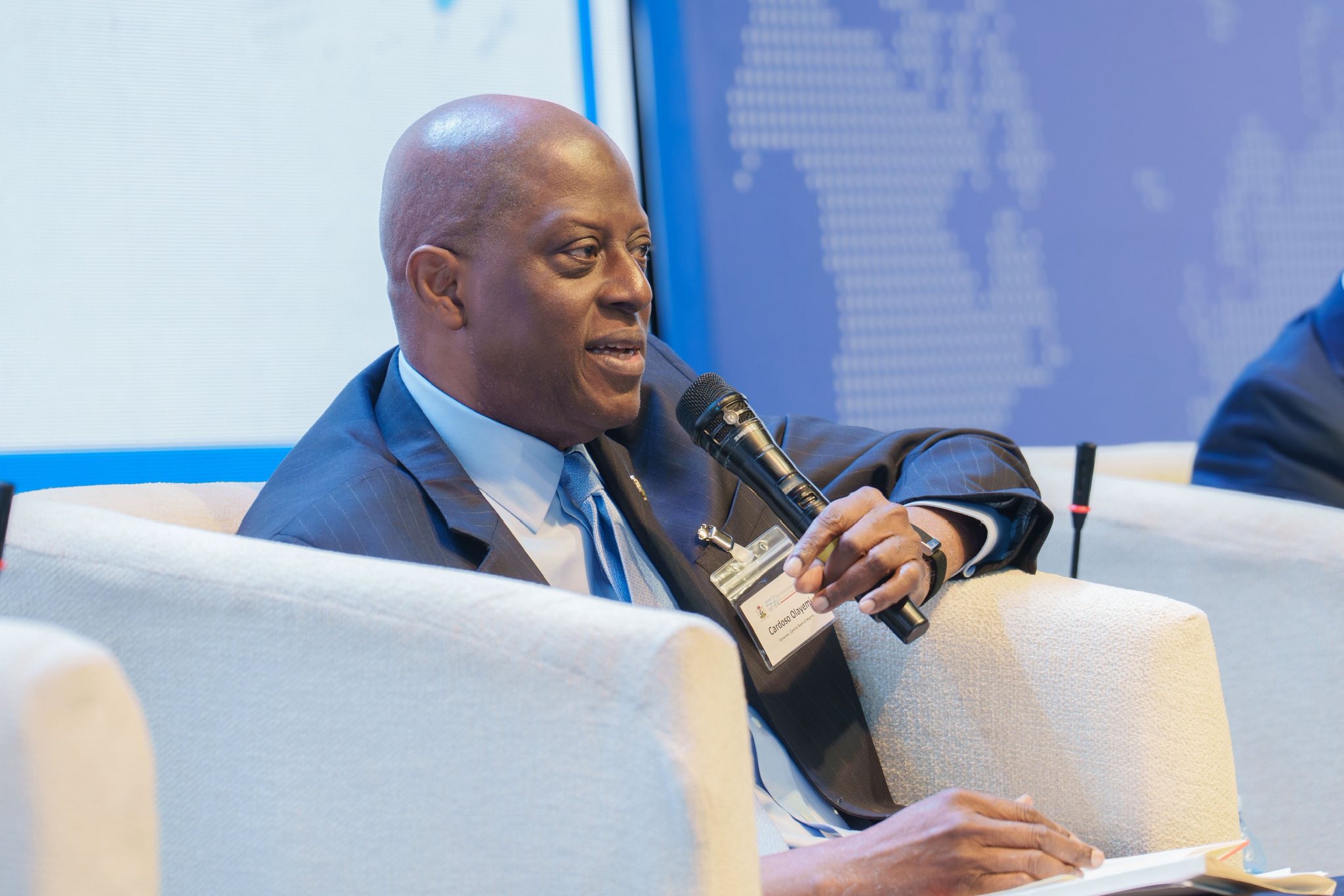
To drive inclusive growth, strengthen financial stability, and deepen global financial integration across developing economies, there must be coordinated reforms in digital cross-border payments.
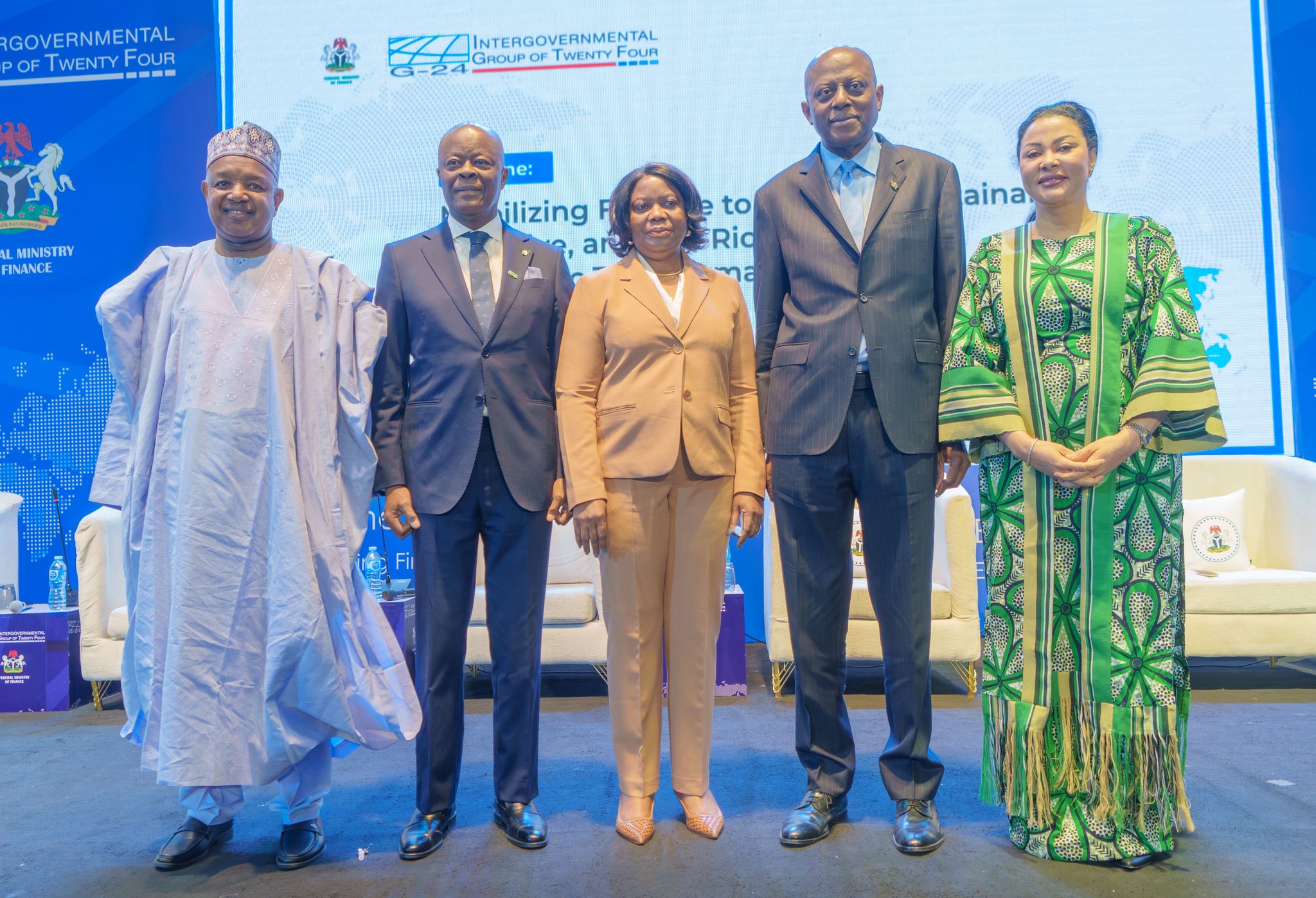
This was the submission of the Governor of the Central Bank of Nigeria (CBN), Mr Olayemi Cardoso, at the G‑24 Technical Group Meetings in Abuja on Thursday, February 19, 2026.
According to him, high remittance costs, settlement delays, fragmented systems, and heavy compliance burdens still limit the participation of households and Micro, Small and Medium Enterprises (MSMEs) in global trade.
The central banker emphasised that efficient payment systems are essential for economic inclusion, highlighting that global remittance corridors still incur average costs above 6 per cent, with settlement delays of several days, excluding millions from modern economic activity.
Mr Cardoso cautioned that while digital payments present significant opportunities, they also carry risks such as currency substitution, weakened monetary transmission, increased FX volatility, capital-flow pressures, and regulatory fragmentation.
The G-24 TGM 2026, themed Mobilising finance for sustainable, inclusive, and job-rich transformation, convened global financial stakeholders to advance the modernisation of finance in support of emerging and developing economies.
The CBN chief reaffirmed Nigeria’s commitment to working with G-24 members, the IMF, the World Bank Group, and other partners to build a more inclusive, resilient, and development-oriented global financial architecture.
“We have strengthened our AML/CFT frameworks in line with FATF guidelines, requiring strict dual-screening of cross-border transactions to mitigate risks.
“To deepen regional integration, the CBN introduced simplified KYC/AML requirements for low-value cross-border transactions to encourage broader participation in PAPSS, easing processes for Nigerian SMEs and enabling faster intra-African trade payments.
“We have also embraced fintech innovation through our Regulatory Sandbox, allowing payment-focused fintechs to test secure, instant cross-border solutions under close CBN supervision,” he disclosed.
Banking
PayAngel Boosts Multicurrency Account, Global Payout Capabilities
By Aduragbemi Omiyale
A cross-border payments platform, PayAngel, has expanded its global payout capabilities by collaborating with Visa and Currencycloud.
The company, built by migrants and shaped by a lived understanding of the migrant journey, went into the partnership to support faster, more efficient cross-border payouts across multiple currencies and countries, enhancing how individuals and businesses move money internationally.
This capability supports everyday use cases that matter to PayAngel’s customers, from contributing to family milestones and fulfilling communal obligations to supporting businesses that operate across borders.
Born out of a desire to challenge the high costs, friction, and lack of transparency that have long defined traditional remittances, PayAngel enables fee-free transfers, competitive FX rates, and dependable settlement across 22 African countries, as well as India and Bangladesh. The platform also supports businesses through a web-based B2B payments portal that enables collections, disbursements, and cross-border settlement without the need for local presence or complex integrations.
By utilising Currencycloud’s regulated infrastructure, PayAngel is able to streamline settlement flows, improve operational efficiency, and expand its ability to serve customers with clarity, control, and confidence. The collaboration aligns with PayAngel’s long-term strategy to scale responsibly, deepen trust, and invest in resilient global payments infrastructure.
“Access to dependable, well-governed payment rails is essential to supporting globally connected communities,” the chief executive of PayAngel, Jones Amegbor, stated.
“This collaboration strengthens the infrastructure behind our platform, helping us deliver faster and more efficient cross-border payments while staying focused on the human connections those payments represent,” Amegbor added.
“Visa Direct is focused on enabling secure, seamless money movement across the global payments ecosystem,” said Philip Konopik, SVP, Head of CMS, Visa Europe. “It’s fantastic to be collaborating with fintechs such as PayAngel to help supercharge innovation that improves how money moves for consumers and businesses worldwide.”
Banking
CBN Sets 0.001% Fraud Loss Target Under 2028 Payments Vision
By Adedapo Adesanya
The Central Bank of Nigeria (CBN) has unveiled an ambitious plan to reduce fraud losses in digital transactions to less than 0.001 per cent of total transaction value by 2028, as part of a broader strategy to build trust in the country’s payment ecosystem and accelerate financial inclusion.
Speaking at the launch of the Payments System Vision 2028 (PSV 2028) in Abuja on Monday, the Governor of the apex bank, Mr Yemi Cardoso, said the target would be achieved through stronger identity verification systems, including the integration of the National Identification Number (NIN) and Bank Verification Number (BVN), as well as artificial intelligence-powered fraud detection tools.
“By 2028, we must commit to reducing fraud losses to less than 0.001 per cent of all transactions. With NIN, BVN, intelligent systems, and AI fraud detection, people’s money must be safer in the digital system than under their mattresses.
“By 2028, Nigerians will pay digitally, safely, and cheaply. A payment system is only as strong as the trust people place in it,” Mr Cardoso stated.
He quipped that people’s money must become safer in the digital system than under their mattresses.
The CBN governor said the new payments vision seeks to transform how Nigerians transact, save, trade and participate in the economy, with trust and security forming the foundation of the framework.
Mr Cardoso disclosed that the apex bank is targeting 95 per cent financial inclusion by 2028, a move expected to bring an additional 15 million Nigerians—particularly market women, farmers and young people—into the formal financial system.
According to him, digital financial access is critical to reducing poverty and expanding economic participation, stressing that cash should no longer determine whether citizens can engage in economic activities.
He said PSV 2028 aims to make financial transactions “faster than a blink” by eliminating existing inefficiencies, interoperability challenges and settlement delays across payment platforms.
“Today’s payment systems process millions of transactions every day, with most completed in less than 10 seconds. By 2028, every Nigerian should be able to send and receive money faster than they can blink,” he said.
Mr Cardoso described payment infrastructure as the “invisible roads that move money”, noting that efficient payment systems have become essential for economic growth, competitiveness and poverty reduction.
He added that the framework would strengthen payment infrastructure, deepen inclusion, support innovation, improve resilience and enhance Nigeria’s integration into regional and global payment systems.
The CBN governor also linked payment system efficiency to economic growth, arguing that improved payment infrastructure would boost productivity, lower transaction costs, expand trade and strengthen investor confidence.
Mr Cardoso said the vision builds on two decades of transformation in Nigeria’s payments landscape, driven by the growth of instant payments, fintech innovation and rising digital adoption.
He further stated that PSV 2028 is designed to position Nigeria as a global fintech hub, with open banking reforms already unlocking more than 100 application programming interfaces (APIs) to support innovation and new financial products.
According to him, Nigeria must evolve from being primarily a fintech adoption market to becoming a producer and exporter of globally competitive fintech solutions.
While unveiling the framework, Mr Cardoso cautioned against Nigeria’s long-standing pattern of policy discontinuity, insisting that successful implementation, not documentation, would determine the success of the vision.
“The success of this vision will not be measured by the document, but by execution,” he said.
Banking
Supreme Court Clears Unity Bank, Providus Bank Merger
By Aduragbemi Omiyale
The merger between Unity Bank Plc and Providus Bank Limited has been sanctioned by the Supreme Court, giving way for the emergence of a new single entity, ProvidusUnity Bank Limited.
A five-member panel of the apex court led by Justice Tijani Abubakar on Monday ordered the transfer of all assets, liabilities and undertakings, including real properties, of Unity Bank to Providus Bank in accordance with the approved Scheme of Merger.
The merger between the two lenders was challenged by customers and shareholders of the affected banks, Mr Suleiman Abubakar and Mr Mohammed Goni Modu.
They earlier approached a Federal High Court to stop the transaction via Suit No. FHC/L/MISC/734/2025. The matter later went to an Appeal Court in No. CA/LAG/CV/137/2025, before settling at the apex court in No SC/CV/132/2026.
Delivering judgment yesterday, the Supreme Court held that the appeal lacked merit and accordingly dismissed it in its entirety, while imposing costs of N10 million in favour of each respondent.
While invoking its powers under Section 22 of the Supreme Court Act, the panel sanctioned the merger and directed that the completion of the transfer be made within 10 days of the sanction of the scheme.
As part of the merger arrangements, the apex court approved a consideration of N3.18 per share or 18 Providus Bank shares of 50 kobo each for every 17 Unity Bank shares held by shareholders.
The court also ordered the dissolution of the board of Unity Bank Plc without winding up the institution and approved the adoption of the new name, ProvidusUnity Bank Limited, for the enlarged entity.
The merger forms part of the banking sector recapitalisation programme introduced by the Central Bank of Nigeria (CBN), which encourages financial institutions unable to independently meet new capital thresholds to explore mergers, acquisitions and other strategic combinations.
-
Feature/OPED6 years agoDavos was Different this year
-
Travel/Tourism10 years ago
Lagos Seals Western Lodge Hotel In Ikorodu
-
Showbiz3 years agoEstranged Lover Releases Videos of Empress Njamah Bathing
-
Banking8 years agoSort Codes of GTBank Branches in Nigeria
-
Economy3 years agoSubsidy Removal: CNG at N130 Per Litre Cheaper Than Petrol—IPMAN
-
Banking3 years agoSort Codes of UBA Branches in Nigeria
-
Banking3 years agoFirst Bank Announces Planned Downtime
-
Sports3 years agoHighest Paid Nigerian Footballer – How Much Do Nigerian Footballers Earn