Banking
CBN, Stakeholders to Check Rising Wave of Cyber Attacks
By Adedapo Adesanya
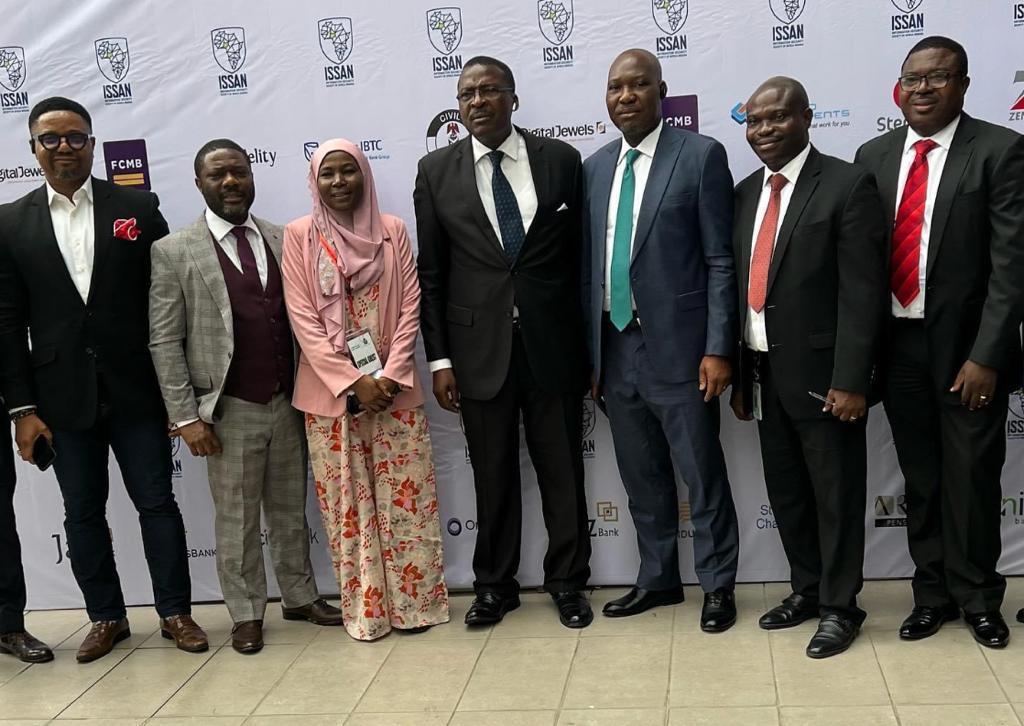
The Central Bank of Nigeria (CBN) has assured information security stakeholders and the general public of its commitment to curb the rising cases of cyber attacks within Nigeria’s cyberspace.
This was disclosed by the Director of the Payments System Management Department of the CBN, Mr Musa Jimoh, in his keynote address at the annual Information Security Society of Africa – Nigeria (ISSAN) Cybersecurity Conference in Lagos.
He stated that the apex bank was firmly committed to building a sustainable payments ecosystem in the country.
He also commended ISSAN for organizing the event, stressing that the apex bank will continue to collaborate with organisations that are committed to addressing the rising activities of cyber attacks.
Also speaking, the President of the FinTech Association of Nigeria (FinTechNGR), Mr Ade Bajomo, said to adequately address the rising rate of cyber attacks, organisations should embrace collaboration and information sharing on cyber breaches.
According to him, keeping silence on the part of organizations that had been attacked would not help others, stressing that full disclosure, synergy, and information sharing on reported cyber-attacks and how it was managed would guide other organizations to put preventive and countermeasures in place.
He also called on organizations to constantly upgrade their technology to counter cyber-attacks, urging them to have a data backup.
On his part, the president of ISSAN, Mr David Isiavwe, said the conference was devoted to further exposing the new threats and trends in the cyber security space and also offering practical steps on what businesses and individuals need to know and do to check the rising tide of the activities of cyber-criminals.
He observed that cyber attackers are getting more sophisticated globally, which is an aftermath of the COVID-19 pandemic, stressing that greater awareness must be created to minimize attacks on businesses that may result in losses by various organizations.
Further, Mr Isiavwe, who is also General Manager at Ecobank, made a case for customer awareness as well as a collaboration by all stakeholders.
ISSAN is a not-for-profit organization dedicated to the protection of Nigeria’s cyberspace, specifically and the entire cyberspace in Africa, generally.
Banking
Access Bank and Mastercard: Enabling Seamless Africa-Global Payments
In today’s interconnected world, seamless cross-border payments are vital for economic growth, business expansion, and personal empowerment. For decades, millions of Africans faced steep barriers in sending or receiving money internationally: high fees, opaque exchange rates, and long delays that made transactions uncertain and costly. Whether theyare students paying tuition abroad or traders settling import bills and families depending on remittances, these challenges have touched every layer of society.
Africa’s fragmented payments landscape, marked by multiple currencies, varying regulations, and limited banking infrastructure, has long slowed financial inclusion. In this system, a trader in Lagos might wait weeks for funds from Nairobi, while a Ghanaian student in the United States could lose a significant portion of tuition to intermediary charges. For many, especially in rural or informal sectors, formal banking channels were out of reach, forcing reliance on informal and risky alternatives.
Recognising the need for change, Access Bank, one of Africa’s largest and most innovative financial institutions, has partnered MasterCard, a global payments leader, to reimagine how money moves across borders. The collaboration aims to make cross-border payments faster, cheaper, and more transparent, empowering individuals and businesses to participate more fully in the global economy.
“By combining our strengths, we can unlock new opportunities, bridge the financial divide, and create a more inclusive and prosperous future for all Africans,” says Robert Giles, Senior Advisory, Retail Banking at Access Bank.
The partnership leverages Access Bank’s extensive African footprint and its Access Africa platform alongside MasterCard’s global network, treasury infrastructure, and advanced technology, particularly through the Mastercard Move system. Together, they have built an ecosystem that finally delivers on the promise of speed, convenience, and reliability.
The solution is designed to be inclusive and versatile, allowing users to send and receive money via multiple channels: bank accounts, cards, mobile wallets, and even cash. Whether a student in Ghana paying tuition in Europe, a trader in Lagos importing goods from China, or a family in Kenya receiving remittances, cross-border transactions are now simpler and safer.
For MasterCard, the goal extends beyond expanding services; it is about deepening financial inclusion. “This partnership transforms payment experiences, extending MasterCard’s digital ecosystem to ensure millions from underserved communities can participate in the evolving digital economy,” says Mark Elliott, Mastercard’s Division President for Africa.
The alliance builds on mutual strengths, Access Bank’s deep local knowledge and MasterCard’s global reach, to create a seamless payments corridor connecting Africa to the world.
A critical element of this innovation is the technical integration led by Fable Fintech, a MasterCard Express Partner under the Move Programme. Integrating Access Bank’s operations across multiple African markets was a massive undertaking, given diverse currencies and regulatory frameworks. The result is a unified cross-border payment experience, reducing complexity and delays.
“We were fortunate to be the fulcrum of the seamless multi-country integration of one of Africa’s largest banks using MasterCard’s cross-border assets,” a Fable Fintech representative noted. The platform now supports real-time or near-real-time transactions, offering resilience, scalability, and strong fraud protection.
Apart from technology, this partnership signals a paradigm shift, from dependency to empowerment, from financial fragmentation to unity. By democratising access to affordable and transparent payments, Access Bank and MasterCard are enabling millions of Africans to engage in international trade, education, and family support. The impact is tangible: faster transactions, lower costs, and increased financial inclusion.
Already, the ripple effects are visible. Informal traders in Kigali now use formal financial channels instead of risky agents. SMEs in Nairobi can settle invoices with international clients more predictably. Families in Accra receive remittances with less worry about lost payments, while students overseas manage tuition with ease. Each transaction strengthens Africa’s participation in global commerce.
The partnership also prioritises financial literacy and empowerment. Recognising that technology alone isnot enough, Access Bank and MasterCard are educating users on digital payments, security, and the benefits of financial inclusion, particularly in underserved communities where awareness gaps remain.
The collaboration aligns with broader socio-economic goals such as job creation, poverty reduction, and gender inclusion. By expanding access to finance, it empowers women entrepreneurs, youth, and small businesses to thrive. A woman running a rural enterprise can now receive payments from clients abroad and reinvest in her community; a young professional can more easily fund studies or start a venture. The result is a more inclusive and resilient African economy.
This initiative also complements Access Bank’s wider sustainability agenda, seen in projects like the Access Clean Water Initiative, which integrates financial inclusion with social impact. The Bank’s approach underscores that responsible banking and profitability can go hand in hand.
Access Bank and MasterCard are looking at scaling their innovation, embrace emerging technologies, and deepen collaborations with governments and development partners to expand access even further. As Africa’s economies evolve, agile and secure payment systems will be essential to sustaining growth.
The partnership stands as example of what is possible when business, technology, and purpose converge. By harnessing shared vision and innovation, Access Bank and MasterCard are redefining Africa’s role in the global payments ecosystem, breaking down financial barriers and enabling millions to connect, trade, and thrive across borders.
Banking
Ecobank, Yaba Art Museum to Launch Lagos Pop-Up Museum
Ecobank Nigeria, a subsidiary of the leading Pan-African banking group, in partnership with the Yaba Art Museum (YAM) of Yaba College of Technology, has announced the launch of the Lagos Pop-Up Museum — a dynamic cultural and artistic experience set to run for three months at the Ecobank Pan African Centre (EPAC) in Victoria Island, Lagos. The exhibition opens on November 8, 2025, and will continue until February 10, 2026.
The Lagos Pop-Up Museum is conceived as a vibrant, citywide art and cultural advocacy platform. It will bring together artists, students, and the public through a blend of interactive exhibitions, workshops, performances, talks, innovation labs, and community engagement programs. Visitors can look forward to an inspiring mix of creativity, learning, and collaboration that celebrates both Lagos’ dynamism and Africa’s evolving cultural identity.
Speaking about the initiative, Bolaji Lawal, Managing Director/Regional Executive, Ecobank Nigeria, said the project reflects the bank’s belief in the power of culture to unite people and drive innovation.
“Through platforms like EPAC, we continue to nurture collaboration, entrepreneurship, and cultural exchange which are all key to building a thriving creative economy in Africa. This partnership with YAM reinforces our CSR values around education, innovation, sustainability, and African identity. It reflects our commitment to social impact, youth empowerment, and pan-African creativity,” Lawal said.
He noted that the collaboration embodies a shared vision to amplify creative voices, preserve cultural heritage, and inspire innovation, placing both institutions at the intersection of finance, education, and social development.
“Beyond promoting our Pan-African values, we want to make art and culture more accessible by helping people connect, learn, and express themselves through creativity,” he added.
In his remarks, Dr. Ibraheem Adedotun Abdul, Rector of Yaba College of Technology, described the project as an extension of the Museum’s well-known “Gown to Town” initiative, which connects academic creativity with the wider community.
“This project invites Lagos residents, creatives, policymakers, collectors, entrepreneurs, and everyday citizens to engage with contemporary culture,” he said. “It will be delivered in collaboration with Yabatech departments and a wide network of partners and cultural organizations, collectives, tech incubators, youth hubs, schools, international institutions, and alumni groups.”
Dr. Abdul added that the Lagos Pop-Up Museum represents a new era of inclusive, community-driven museum practice in Nigeria as one that uses art as a platform for social imagination, research, and civic dialogue.
The three-month activation will feature a rich lineup of experiences in a mutating sphere, from archival exhibits and heritage engagement and highlights on restitution, to maker-labs, a myriad of showcases, wellness activities, mixed disciplinary workshops, children’s sessions, screenings, performance art presentations, discussion sessions and more.
Exhibition highlights include:
Homecoming – A visual journey responding to Nigerian artefacts repatriated from Europe and the Americas and the important work towards reclaiming national and indigenous heritage.
Adoption – A civic-action space of Art donations and sales in support of youth development supporting tuition and emerging creatives that embrace the spirit of paying it forward.
Drum Up – A celebration of the archive as a catalyst for development and collective memory, and intergenerational dialogues on a road towards the pan -African memory pool of FESTAC ‘77
Deep Blue – Immersive works exploring water in its fantasy, mystery, science, and environmental consciousness, responsibility and our planetary significance inspired by Lagos’ waterways and coastal life.
Over its duration, the Ecobank Pan African Centre will transform into a vibrant hub of creativity and connection, expanding public access to contemporary art, creative education, and cultural engagement.
Banking
Sterling Holdco Shows Resilience, Operational Excellence as PAT Soars 127%
By Aduragbemi Omiyale
The unaudited financial results of Sterling financial Holdings Company Plc for the nine-month-period ended September 30, 2025, showed that the lender recorded an impressive 127 per cent year-on-year growth in profit after tax (PAT) in testament to its robust earnings capacity, operational efficiency, and disciplined execution.
The results submitted to the Nigerian Exchange (NGX) Limited revealed that the post-tax profit stood at N62.3 billion compared with the N27.5 billion achieved in the same period of 2024.
The balance sheet of the lender remained healthy, with total assets rising by 15.5 per cent on a year-to-date basis to N4.09 trillion from N3.54 trillion in December 2024, fulled by growth in loans, investment securities, and liquid assets.
In addition, customer deposits grew by 14.3 per cent to N2.88 trillion, while shareholders’ funds increased by 32.9 pr cent to N405.5 billion, highlighting its solid capital base and its capacity to sustain future expansion.
As for the topline, the gross earnings expanded by 44.1 per cent to N341.7 billion from N237.2 billion between January and September 2024 as a result of solid performances in both interest and non-interest income lines.
Sterling Holdco’s interest income leapt by 38.7 per cent to N262.4 billion, supported by an expanded earning asset base, while non-interest income surged by 65.1 per cent to N79.2 billion, reflecting its continued success in diversifying its revenue streams.
“Our performance over the first nine months of 2025 demonstrates the strength and adaptability of our Group structure.
“The significant growth in profit after tax underscores the success of our strategy to operate as a diversified financial services group delivering value through both our conventional, non-interest banking, and asset management subsidiaries.
“Our results highlight disciplined risk management, innovative product delivery, and an unrelenting focus on sectors that drive real economic impact.
“We are equally grateful to our shareholders and the investing public for their confidence in the group, as reflected in the resounding success of our recently concluded public offer of 12.58 billion ordinary shares.
“As we continue to invest in technology and operational excellence, our goal remains clear: to build a resilient institution that consistently delivers sustainable returns,” the chief executive of Sterling Holdco, Yemi Odubiyi, stated.
-
Feature/OPED6 years agoDavos was Different this year
-
Travel/Tourism9 years ago
Lagos Seals Western Lodge Hotel In Ikorodu
-
Showbiz3 years agoEstranged Lover Releases Videos of Empress Njamah Bathing
-
Banking7 years agoSort Codes of GTBank Branches in Nigeria
-
Economy2 years agoSubsidy Removal: CNG at N130 Per Litre Cheaper Than Petrol—IPMAN
-
Banking3 years agoFirst Bank Announces Planned Downtime
-
Sports3 years agoHighest Paid Nigerian Footballer – How Much Do Nigerian Footballers Earn
-
Banking3 years agoSort Codes of UBA Branches in Nigeria