Banking
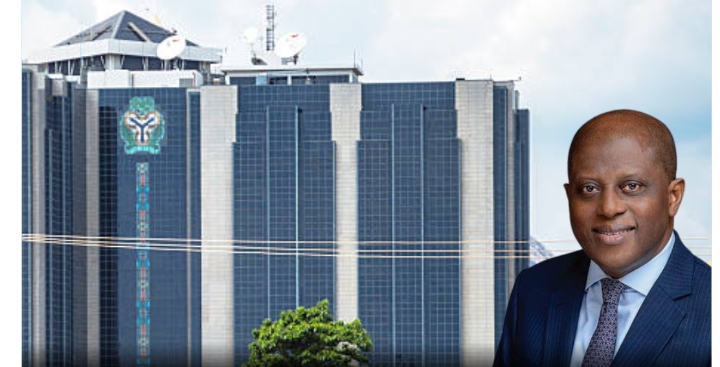
CBN Targets Stronger Banks, Investor Trust with New Risk Framework—Cardoso
By Adedapo Adesanya
The Governor of the Central Bank of Nigeria (CBN), Mr Yemi Cardoso, has said the new risk-based capital framework would serve as a critical anchor for financial system stability, ensuring that recent banking sector recapitalisation translates into real resilience and renewed investor confidence.
Mr Cardoso said this at the Chartered Institute of Directors, Nigeria, induction ceremony in Lagos on Thursday.
The CBN chief, represented by the Director of Banking Supervision at the apex bank, Mrs Olubukola Akinwunmi, charged directors to guide institutions through consolidation, strengthen governance frameworks, and rebuild stakeholder trust through transparency and accountability.
Mr Cardoso stated that the apex bank complemented recapitalisation with a series of regulatory measures aimed at strengthening governance and empowering directors across the banking system.
According to him, key among these are the Circular on Compliance with Insider Related Credit Limits (February 17, 2025), which reinforces prudential discipline by restricting preferential lending to insiders; the Corporate Governance Guidelines (2023), which define clear standards on board composition, independence, tenure, and responsibilities in line with global best practice; and the end of regulatory forbearance alongside the introduction of risk-based capital requirements to align capital adequacy with institutional risk profiles.
Others include stricter fit-and-proper criteria for directors to ensure only qualified individuals serve on boards, enhanced disclosure and transparency rules covering financial reporting and related-party transactions, and mandatory board evaluation and succession planning requirements to ensure continuity and stability.
He stressed that these measures were not punitive but enabling, providing directors with a stronger framework to exercise stewardship with discipline, foresight, and confidence.
He said, “The adoption of Risk-Based Capital Requirements represents a cultural shift in our financial system. Capital adequacy is no longer about size alone; it is about risk alignment, ensuring capital planning anticipates both current and emerging risks, strengthening frameworks for credit, market, and operational risk, taking responsibility for compliance without reliance on regulatory forbearance and promoting prudent expansion and discouraging reckless lending or overexposure.
“Risk-Based Capital Requirement embeds risk awareness into every strategic decision, ensuring that recapitalisation translates into genuine stability, entrenches the going concern status of our banks, and instils confidence by both the banking and investing public in the Nigerian banking system.
“Given the position of the banking system and the pivotal role it plays in the economy, this stance of the Central Bank of Nigeria is expected to reverberate across all sectors of the Nigerian economy with an elevation in the standards of corporate governance observed across corporations in Nigeria.”
Mr Cardoso urged directors to move beyond passive oversight to become active custodians of institutional stability, balancing profitability with prudence and ensuring that compliance is matched with strategic foresight.
He said, “As directors, your responsibilities extend beyond boardrooms. You are custodians of governance in a time when regulatory expectations are higher, requiring boards to align with prudential standards. Stakeholder trust must be rebuilt and sustained. Strategic foresight is essential as institutions adapt to technological disruption, global competition, and evolving customer needs.
“The central bank views directors as partners in ensuring that recapitalisation and regulatory reforms translate into stronger institutions, not just larger balance sheets.
“To our newly inducted directors, your induction today is not just ceremonial; it is a call to stewardship. You are joining a community dedicated to advancing corporate governance and ethical leadership. The choices you make in boardrooms will shape the future of Nigeria’s economy.
“The Central Bank of Nigeria stands ready to engage with you, to provide clarity, and to work collaboratively in building a financial system that is resilient, inclusive, and globally competitive. “
Banking
OPay Targets $4bn Valuation in Planned US IPO
By Adedapo Adesanya
Nigerian-focused payment bank, OPay, is making plans for an Initial Public Offering (IPO) in the United States this year, as per Bloomberg on Friday.
The publication reported that the company is planning to list in the US and is seeking a valuation of about $4 billion, citing private individuals familiar with the process.
The company may sell the shares later this year, the sources said.
As part of the plans, OPay is working with Citigroup Inc., Deutsche Bank AG, and JPMorgan Chase & Co. to tidy up all it needs for the public offering of its shares.
OPay is one of Nigeria’s big three players that dominate retail payments as well as agent banking (POS), which is the largest volume segment in Nigeria. Others include PalmPay and Moniepoint. Of the big three, OPay and Moniepoint are unicorns (meaning they are privately held startups valued at over $1 billion).
Driven by its early adoption, scale, extensive distribution network, and high transaction volumes since it entered the Nigerian market in 2018, the Opera-owned fintech-oriented company boasts tens of millions of users and operates one of the largest agent networks in Nigeria, enabling widespread access to financial services, especially in underserved areas. Its strong presence in everyday financial transactions, ranging from transfers to bill payment, has made it one of the most visible and frequently used fintech platforms in the country.
OPay, founded by Chinese tycoon Mr Yahui Zhou, raised $400 million in 2021 at a valuation of $2 billion. The company was backed by SoftBank Vision Fund and Sequoia Capital, as well as Long-Z Capital, the venture arm of Chinese food-delivery giant Meituan. It was also supported by other investors like DragonBall Capital and 3W Capital.
The fintech earlier announced two funding rounds in 2019 — $50 million in June and a $120 million Series B in November.
OPay, with its latest move, joins Airtel Africa Plc in planning to sell its mobile money business’s shares for $4 billion.
Banking
Access Holdings to Focus on Earnings Quality, Value Creation After Impressive FY25
By Aduragbemi Omiyale
If what is promised is achieved, shareholders of Access Holdings Plc will be the toast of others, as the financial institution is moving into its next phase after spending resources to expand its operations, capturing different markets.
The 2025 financial year marked a significant turning point in its corporate journey as it shifted from a growth model defined by scale to one increasingly anchored on value creation, efficiency, and earnings quality.
In the year under review, the company grew its pre-tax profit by 16.2 per cent to N1.01 trillion, underscoring its steady progression toward becoming a high-performing and resilient financial institution.
Net interest income rose to N1.36 trillion, while net fees and commission income recorded a particularly strong growth of 40.9 per cent to N585.1 billion, reflecting increasing diversification in revenue streams. Overall operating income after impairment grew by 23.9 per cent to N3.17 trillion.
At the same time, the firm improved its cost discipline, with its cost-to-income ratio declining to 51.7 per cent from 56.7 per cent in 2024. Returns also remained solid, with return on average equity at 18.4 per cent and return on average assets at 1.6 per cent, reinforcing the quality of earnings delivered during the year.
As for the balance sheet, it recorded significant expansion, driven by strong deposit mobilisation and sustained customer confidence, with total assets up by 24.3 per cent to N51.57 trillion, and customer deposits rising by 53.4 per cent to N34.56 trillion.
Shareholders’ funds rose by 15 per cent to N4.33 trillion, reflecting both retained earnings and continued investor confidence in the institution. This growth highlights not only the scale of its operations but also the deepening trust of customers, counterparties, and investors.
“Our 2025 performance reflects both the resilience of the Access franchise and the strength of the institution we have built over time. Despite a dynamic operating environment, we delivered strong earnings supported by diversified income streams, disciplined execution, and a continued focus on balance sheet optimisation.
“We have now entered a more deliberate optimisation phase, with a stronger emphasis on returns on capital, earnings quality, and long-term value creation,” the chief executive of Access Holdings, Mr Innocent Ike, said.
The operating environment during the year showed signs of gradual improvement, which supported performance. Nigeria’s economic growth strengthened to about 3.9 per cent, inflation moderated from elevated 2024 levels, and foreign exchange reserves rose above $45 billion. The NGX All Share Index gained over 51 per cent during the year, reflecting renewed investor confidence and stronger capital market activity. These developments contributed to improved capital flows and a more supportive backdrop for financial institutions.
While banking remains the core earnings driver, contributing about 97 per cent of total revenue, the Group continues to make measured progress in diversifying its income base. Its investment management and insurance businesses, including Access ARM Pensions and Access Insurance Brokers, provide stable and recurring income streams, while technology-led platforms such as Oxygen X Finance and Hydrogen Payment Services are strengthening its position in the digital financial services landscape.
The Group’s strategic direction is now increasingly defined by a shift from scale to value. Having built scale across markets and segments, management is focusing more deliberately on improving returns on capital, enhancing earnings quality and deepening cost discipline. This transition reflects a clear objective to build a more valuable institution capable of delivering consistent and resilient returns over the long term.
Looking ahead, Access Holdings expects macroeconomic conditions to continue stabilising, creating opportunities for credit expansion, increased transaction volumes, and higher levels of activity across the financial system. The Group intends to maintain its focus on disciplined execution, improved capital efficiency, and sustainable growth across its diversified platform.
“Africa remains one of the most compelling long-term growth frontiers globally. Our role is not only to participate in that growth, but to help shape and finance it.
“At Access Holdings, we have built an institution designed to endure, anchored on strong governance, disciplined execution, and a clear strategic direction. Our focus remains on delivering consistent, high-quality, risk-adjusted returns while building a financial institution that will stand the test of time,” Mr Ike stated.
Banking
We’re Well Capitalised Within our Regulatory Category—Providus Bank
By Modupe Gbadeyanka
Providus Bank has dismissed insinuations that it failed to meet the new minimum capital requirements of the Central Bank of Nigeria (CBN).
The banking sector regulators gave financial institutions in the country a deadline of March 31, 2026, to shore up their capital base.
Before the deadline, there were speculations that Providus Bank, which plans a merger with Unity Bank Plc, would miss out because the deal had not concluded.
Unity Bank had to inform the public that it was only waiting for court authorisation to complete the merger, which may happen before March 31.
The Chief Financial Officer of Providus Bank, Mr Deoye Ojuroye, speaking at the opening of a new branch of the company in Ekiti State, reaffirmed the capital strength of the financial institution.
He emphasised that Providus Bank remains on a strong footing, with a disciplined approach to capital and risk management underpinning its growth.
“We are well capitalised within our regulatory category, and that gives us the confidence to continue expanding responsibly while supporting businesses and communities,” he stated at the commissioning of the new branch in Ado-Ekiti, the state capital.
The new branch marked another step in the steady expansion of the organisation across key growth markets in Nigeria.
The next item on the lender’s agenda is expanding its footprint to support local enterprise, deepen financial inclusion, and bring banking services closer to individuals and businesses nationwide over the next 12 months.
“Our approach is deliberate—we are growing in the right places, supporting real economic activity, and building a bank that is both resilient and responsive to the needs of our customers,” Mr Ojuroye stated.
According to him, the bank plans to open additional branches in strategic locations over the coming year, reinforcing its commitment to scale, accessibility, and long-term value creation, and positioning itself as a reliable partner to businesses and individuals, combining financial strength with a clear focus on sustainable growth.
-
Feature/OPED6 years agoDavos was Different this year
-
Travel/Tourism10 years ago
Lagos Seals Western Lodge Hotel In Ikorodu
-
Showbiz3 years agoEstranged Lover Releases Videos of Empress Njamah Bathing
-
Banking8 years agoSort Codes of GTBank Branches in Nigeria
-
Economy3 years agoSubsidy Removal: CNG at N130 Per Litre Cheaper Than Petrol—IPMAN
-
Banking3 years agoSort Codes of UBA Branches in Nigeria
-
Banking3 years agoFirst Bank Announces Planned Downtime
-
Sports3 years agoHighest Paid Nigerian Footballer – How Much Do Nigerian Footballers Earn