Connect with us

Banking

Customers, Shareholders Worry Over Skye Bank’s Financial Health

Published

on

By The Witness

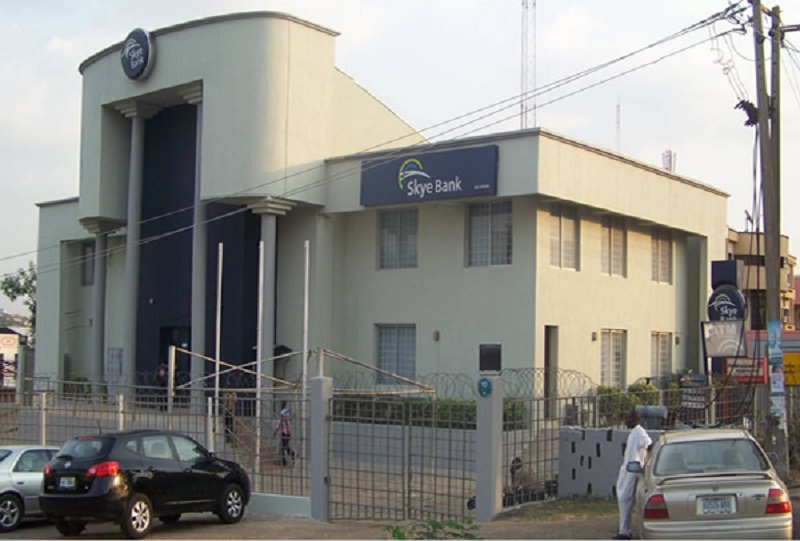
These are not the best of times for the Tokunbo Abiru-led Skye Bank Plc as the lender is said to be currently embroiled in a fresh crisis.

Investigation by THE WITNESS revealed that the struggling financial institution has again failed the statutory requirements to file its results and accounts for the period ended June 30, 2018 with the Nigerian Stock Exchange (NSE).

A top management staff of the bank who spoke to our correspondent on condition of anonymity lamented, “Of a truth, all is not well with the bank. It is really struggling to stay afloat and the new management is doing nothing about it. Though they met the problem on ground, one expects that by now things should have changed. People are resigning every day because of uncertainties showing up in every of its departments.”

Recall that on July 4, 2016, the Central Bank of Nigeria intervened in the management of the bank by reconstituting the board of directors, shoring up the bank with N100bn capital injection, and accordingly, the apex bank gave the board a clear mandate to turn the institution around positively.

Ironically, two years after the CBN intervention into the affairs of the bank, the fortunes of the financial institution have continued to dwindle.

This, THE WITNESS gathered, is not unconnected with the poor results of the bank due to lack of trust customers now have with the lender triggered by the lack of administrative experience and expertise of the new management led by Mr Tokunbo Abiru. More so, weak asset quality, rising funding costs and increased customers’ wariness about the safety of their deposits have conspired to squeeze out the bank’s balance sheet and tear profit figures of the lender.

The development became worrisome to shareholders and customers of the bank as the lender last filed its accounts to the NSE in 2014. In a statement to the NSE in March 2017, Skye Bank had attributed the failure to file its 2016 accounts to the CBN’s intervention. Consequently, the Exchange tagged the lender MFR (Missed Regulatory Fillings). This is in contravention of Rule 1.1.4 of The Exchange on Filing of Accounts and Treatment of Default Filing, Rulebook of The Exchange, which requires listed companies to file their AFS.

A visit to the lender’s headquarters located at 3, Akin Adesola Street, Victoria Island, Lagos, will tell how its branches operate – in a low-key setting. The once-bubbling branches of the bank have now become a shadow of themselves as many depositors of the bank have started closing their accounts.

It would be recalled that prior to the sack of the Ayeni-led board, Skye Bank used to visit the discount window frequently.

With the current situation, the few depositors left are beginning to wonder if it is not back to square one for them, as they insist that the bank would have filed its account if there were indeed no problems.

A document obtained from the NSE unveiled Skye Bank as one of the financial institutions likely to be penalized by the NSE along with other organisations.

According to the document from the NSE, such default is marked out by the Exchange as a corporate governance failure, which attracts monetary fines, “naming and shaming” tag, suspension of shares from trading and delisting in incurable cases of default.

A source further confirmed that the Exchange “would apply relevant rules” in dealing with the defaulters.

The NSE regulatory deadline was on July 30. Under the rules, a late submission attracts a fine of N100,000 daily for the first 90 calendar days of non-compliance, another N200,000 per day for the next 90 calendar days and a fine of N400,000 per day thereafter until the date of submission.

Though, the CBN recently extended the tenure of Skye Bank directors for an additional two-year term, customers of the bank, financial experts have called for the sack of the bank chief to be replaced by a more competent and experienced hand to manage the financial institution.

A customer of the bank, one Mr Oguntade Charles, while speaking with our correspondent said: “I don’t know what exactly is happening to Skye Bank. I have been banking with them for the past 7 years and it has never been this bad. Most of their ATM machines are always out of service; even their USSD banking code *889# is nothing to write home about, the same service which I enjoy seamlessly on my accounts with other banks. Most times, when I try to transact with it, it always fails. It’s either it brings error or no response at all. I have been to their bank several times to complain but still, no way. Their services are now so poor,” he lamented.

A financial expert, Mr Adebayo Faleti who spoke to our correspondent argued that if no drastic steps are taken by the CBN concerning the bank, the worse may still come.

All efforts to reach the Corporate Affairs Manager of the bank, Mr Rasheed Bolarinwa, for the lender’s angle proved futile as calls and text messages placed to his mobile number were not responded to as at press time.


The Witness

Modupe Gbadeyanka is a fast-rising journalist with Business Post Nigeria. Her passion for journalism is amazing. She is willing to learn more with a view to becoming one of the best pen-pushers in Nigeria. Her role models are the duo of CNN's Richard Quest and Christiane Amanpour.

Banking

CBN Delists Non-Compliant Bureaux De Change Operators

Published

on

cbn rate cut

By Adedapo Adesanya

The operating licences of all legacy Bureau De Change (BDC) operators who failed to meet the new licensing requirements have been revoked by the Central Bank of Nigeria (CBN).

This happened after the central bank streamlined the BDCs to 82 in order to sanitise the foreign exchange (FX) market in the country.

The latest development was revealed by the apex bank in its Frequently Asked Questions document on the current reform of the bureau de change, published on its website on Tuesday.

According to the document, the CBN has now enforced the final cutoff, declaring that any BDC that did not meet the requirements by the end of November is no longer recognised.

“The guidelines provided a transition timeline of six months from the effective date, 3 June 2024, with a deadline of 3 December 2024, for all existing BDCs to meet the requirement of the new Guidelines or lose their licence(s). However, the management of the CBN graciously extended this deadline by another six months, which ended 3 June 2025, to give ample time for as many legacy BDCs desirous of meeting the new requirements to do so.

“Consequently, any legacy BDC that failed to meet the requirements of the new Guidelines as of 30 November 2025 has ceased to be a BDC, as its licence no longer exists. Please visit the CBN website for the updated list of existing BDCs in Nigeria,” the apex bank said.

According to the CBN, before its latest decision, an extended compliance window was granted under the revised BDC Guidelines. Existing operators were initially given six months, June 3 to December 3, 2024, to satisfy the new regulatory conditions.

The CBN later granted an additional six-month extension, which elapsed on June 3, 2025, to allow more operators to align with the updated standards.

The new measures form part of broader efforts by the CBN to strengthen transparency, compliance, and stability within Nigeria’s foreign exchange market.

The new CBN regulatory framework for BDCs, introduced in February 2024, mandated BDC operators to meet higher capital requirements. Tier-1 operators are required to meet a minimum capital requirement of N2bn, while Tier-2 operators must meet N500m as MCR.

The bank added that it would continue to receive applications on its Licensing, Approval and Requests Portal from prospective promoters, and those that meet the criteria will be considered for a license.

However, the CBN said it reserves the right to discontinue the licensing of BDCs at any time.

Continue Reading

Banking

O3 Capital to Unlock N95bn Festive Spending Boom With Blink Card

Published

on

03 Capital Blink Card

By Modupe Gbadeyanka

A non-bank credit card issuer, 03 Capital, has introduced a travel card designed to unlock the N95 billion festive spending boom in Nigeria.

The new initiative, known as the 03 Capital Blink Travel Card, promotes economic participation among returning Nigerians, expatriates, and tourists.

A statement from the financial technology (fintech) firm is available instantly to use at over 40 million merchants and ATMs nationwide.

The Blink Card, to be issued in both digital and physical form, is loaded with currency from any foreign bank card, converted to Naira, enabling transactions to be completed in the local currency.

The card offers tap-to-pay and cash withdrawals at over 40 million merchants and ATMs nationwide, making it the ideal solution for visitors to Nigeria.

It also avails Nigerians in the Diaspora to spend like locals when they return to their country of origin.

Payments for goods and services can be completed via the virtual Blink Card, linked to the O3Cards app. Funds can also be transferred instantly to all local banks and other financial institutions.

According to the World Bank, remittance inflows account for approximately 5.6 per cent of Nigeria’s gross domestic product (GDP), and the resultant spending power is unlocked when the Diaspora returns home for the festive period.

In December 2024, about N95 billion was injected into the Nigerian economy by inbound passengers – 90 per cent being diasporic Nigerians – spending on short-let accommodation and hotels, events and hospitality, nightlife and dining, and vehicle rentals.  The launch of the Blink Card promises to spur this spending further, providing a significant boost to local businesses.

Blink Cards are available for collection at all Nigerian international airports, offering an immediate and hassle-free route to financial empowerment for people arriving in the country.

Blink Card carriers benefit from increased convenience, flexibility, and safety by not needing to carry large amounts of physical cash, while the ability to pre-load cards promotes smarter budgeting practices.

“We are excited to launch the Blink Card to promote greater economic participation among visitors to Nigeria.

“The card removes the needless friction and costs involved in legacy foreign exchange and cash payment processes, offering a quicker and more transparent option for spending in the country.

“As Nigerians begin travelling home for Christmas – combined with the regular traffic of arriving tourists, expatriates, and businesspeople – this is the perfect time to launch a solution catering to the financial needs of visitors, tapping into the seasonal spending boom which provides an annual lifeline for local economies and SMEs,” the chief executive of 03 Capital, Abimbola Pinheiro, stated.

Continue Reading

Banking

Interswitch Champions Dialogue on Alternative Credit Scoring for Underserved

Published

on

Alternative Credit Scoring for Underserved

By Modupe Gbadeyanka

Technology leaders from across Nigeria’s digital finance ecosystem recently converged on Eko Convention Centre in Lagos to explore pathways for expanding credit access to underserved communities.

It platform for this was the 2025 Committee of e-Business Industry Heads (CeBIH) Annual Conference themed Reimagining Financial Inclusion through Cultural Shifts in Consumer Credit. Interswitch was a returning gold sponsor.

At a high-impact panel session titled Alternative Credit Scoring for the Underserved, moderated by Wunmi Ogunbiyi of the CeBIH Advisory Council, the Divisional Head of Product Management and Solution Delivery at Verve International, a subsidiary of Interswitch Group, Mr Ademola Adeniran, examined how alternative data and digital intelligence can unlock credit for millions excluded by conventional financial models.

“For us, this conversation goes beyond technology. It is about designing credit systems that truly reflect African realities.

“Millions transact daily outside traditional banking frameworks, and alternative credit scoring enables us to recognise that economic activity and responsibly convert it into access to finance.

“At Verve and Interswitch, we are committed to building the digital infrastructure that makes this inclusion scalable and sustainable,” Mr Adeniran stated.

Also, the Vice President for Sales and Account Management, Digital Infrastructure and Managed Services at Interswitch Systegra, Ms Robinta Aluyi, stressed the importance of African-led solutions in addressing the continent’s financial challenges, noting that sustainable progress must be rooted in local realities.

Interswitch’s strength, she said, lies in the fact that it was built on the continent, for the continent, with solutions designed to serve individuals, small businesses, enterprises, and government institutions across every layer of the payment value chain.

She also emphasized the company’s purpose-driven approach to building the infrastructure that powers Africa’s digital economy and enabling secure money movement on a scale.

“Interswitch helps people navigate their daily lives with greater ease. We make transactions flow safely and reliably. We do this by connecting banks, supporting secure and reliable payments, and strengthening the entire value chain of digital finance.

“Today, we hold a significant portion of the market, and that achievement reflects the deep trust our banking and fintech partners place in our platforms. We continue to deliver because the ecosystem has worked with us every step of the way,” Ms Aliyu said.

There were also contributions from Munachimso Duru, Head, Products, Partnership and Innovation, Afrigopay Financial Services Limited; Damola Giwa, Country Manager, Visa West Africa; Nike Kolawole, representing Aisha Abdullahi, Executive Director, Credit and Portfolio Management, CREDICORP; and Ifeanyi Chukuwekem, Head, Corporate Strategy Department, eTranzact, offering a broad industry perspective on the future of responsible credit delivery.

Continue Reading

Trending