Connect with us

Banking

Diamond-Access Bank Merger: What’s in it for Stakeholders?

Published

on

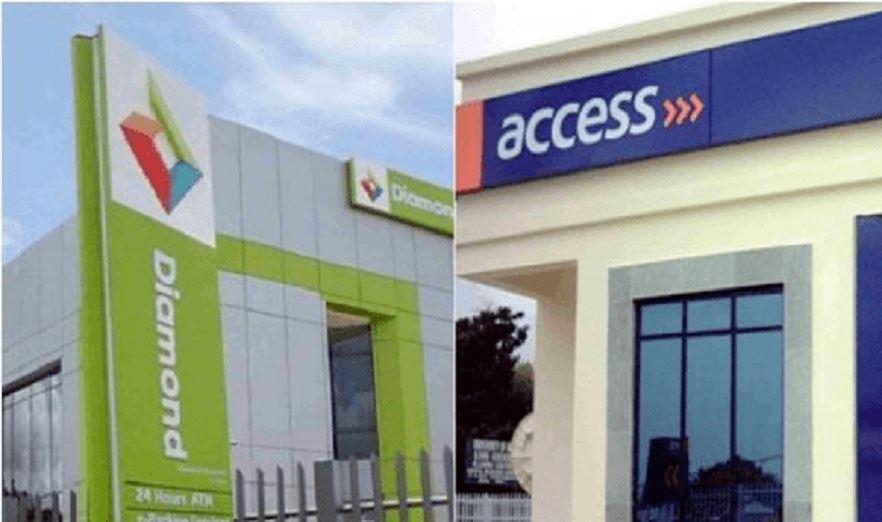
By May 31 this year, technical details of Diamond-Access Banks’ merger would have been finalised, all things being equal.

Subsequently, the process for integration of both banks would commence in earnest leading to a rebranding of what will eventually emerge by end of September or beginning of October as Nigeria’s biggest, and perhaps one of Africa’s largest lender by capitalisation and geographical spread.

Anxiety of some shareholders and other stakeholders in some quarters is understood given the fact that many are wondering how the merger can squeeze value and guarantee competitive returns on equity (ROE). In fact, the underlying interest of an average investor is returns on equity, ultimately profit.

Therefore, the question on the lips of a cross section of stakeholders has been: What will this merger deal offer? The single straight answer lies in the theory of economies of larger scale.

Information gathered from recent interactions with key management staff of both deposit money banks spearheading the business combination processes indicate that over N150 billion could be saved as direct result of economies of large scale which will translate to returns on equity to shareholders.

According to the business combination experts, the synergy will yield over N62 billion savings on the revenue side. They said that N40.9 billion would come from extended product offering while N8.4 billion from expanded digital channels.

They also hope that N6.7 billion is going to be saved from the extension of market share in corporate and retail banking markets, and another N6.2 billion to be dug from treasury sales.

That is not all the good side to what could be eked out from the merger. On the expenditure side, the managers believe that savings of N88.1 billion would be made; and from procurement and facility management a whopping N40.5 billion or about half of the savings is expected to come while N21 billion will accrue from cost of funds reduction through lower deposit pricing.

More savings of N12.6 billion from IT integration; N13.5 billion from branch consolidation; and another N500 million to be squeezed from support functions integration, bringing envisaged total integration savings to about N150.1 billion.

The merger managers were of the opinion that going forward the savings would improve investor’s equity returns as the merger would allow for both economies of scale and of scope as fixed costs would be shared over a much larger depositor and borrower base.

How realistic are the permutations?

As to how this permutation will be realized and ultimately translate into good returns to shareholders, financial analysts at Proshare said they believed the merger would yield good returns to shareholders but cannot say for certainty how much returns.

Proshare Managing Director and Chief Executive Officer, Mr Femi Awoyemi, told Nigerian Tribune that integration of the two banks is one of the best deals ever in Nigeria’s financial industry, stressing that the adoption of cutting edge technology platform of Diamond Bank and the ability to deliver seamless services to generations of customers would be of competitive advantage for Access Bank which he said is being run efficiently. 

As to what place the integrated Diamond-Access Bank will occupy in Africa financial markets, the financial analyst said technology and efficient service delivery makes all the difference in competitive financial markets of today.

He said: “Let us just concentrate on building and integrating the bank. I have been to Access Bank in Kigali, Rwanda. Access Bank in Kigali is as efficient as anything. In fact, services they offer there are far better than what they offer in Nigeria.

So, being a big bank in Africa is about services, it is about customers, it is about integrating regions. That is why I am keen about what they do with technology. Generally, the bank will do well because it is being run efficiently,” Mr Awoyemi concluded.

Former Chief Economist/Group Head, Research & Economic Intelligence Group at Zenith Bank Plc, Mr Marcel Okeke, said it is going to be a good deal for all stakeholders.

For the shareholders of Diamond Bank, he noted, a mark-up in the share price at the Nigerian Stock Exchange (NSE) already guarantees them instant returns compared to what the value had been pre-merger talks.

Besides, for those of them who may choose to remain shareholders post-merger, they are going to be part of the bigger financial institution, probably the biggest in Africa in terms of customer base.

He said that the role cutting edge technology and size can play in the banking market of today is tremendous, adding that going by the credibility of Access Bank, stakeholders are in for impressive returns.

“So, they are going to operate as the biggest in Nigeria if not the African sub-region. This implies that they are going to become more profitable even though there are significant liabilities outstanding which I believe would be resolved,” said the financial analyst.

Customer-client savvy as driving motive

But of greater importance in the merger scheme are customers of the bank who stand the chance of achieving a lot more through the combination of Access Bank and Diamond Bank.

“The products and services that Diamond Bank’s clients enjoy, including its commitment to digital innovation, will continue unchanged and will be strengthened by Access Bank’s extra-ordinary commitment to customers, financial inclusion and sustainability, bolstered by the bank’s corporate expertise and strong balance sheet.

“Together, we will bring the power of banking to millions across Nigeria, focused on speed, service and security. We are determined to ensure that both Access Bank and Diamond Bank customers will experience no disruption to normal banking services while we join forces to create Nigeria and Africa’s largest retail bank by customers,” a source at Diamond stated.

With 3100 automated teller machines (ATMs), over 600 branches, supported by Diamond Bank’s bouquet of technology-driven products offerings including Diamondxtra and XclusivePlus, over 29 million customers of Diamond Bank and Access Bank, more than 13 million mobile customers are going to enjoy some reward scheme for using Diamond or Access Bank POS terminal, as well as same day clearing of cheques for Diamond and Access customers in both banks.

Of greater comparative advantage to customers of both banks is the AccessAfrica initiative which guarantees service in all Access Bank subsidiaries – Nigeria, Ghana, The Gambia, Democratic Republic of Congo, Rwanda, Zambia and Sierra Leone.

“The AccessAfrica service is available in all Access Bank subsidiaries – Nigeria, Ghana, The Gambia, Democratic Republic of Congo, Rwanda, Zambia and Sierra Leone. Our customers can now enjoy instant borderless banking from any access bank branch.

“When they walk into any Access Bank branch and initiate payment in their local currency, the beneficiary will receive an instant direct credit to their account or cash in their local currency,” said senior management staffers of Access and Diamond spearheading the merger processes.


Dipo Olowookere is a journalist based in Nigeria that has passion for reporting business news stories. At his leisure time, he watches football and supports 3SC of Ibadan. Mr Olowookere can be reached via [email protected]

Click to comment

Leave a Reply

Your email address will not be published. Required fields are marked *

Banking

The Inside Story: How Stanbic IBTC’s EVB Programme is Revolutionising Corporate Banking

Published

on

Stanbic IBTC Bank Logo white

In today’s rapidly evolving business environment, organisations face heightened competition, shifting workforce expectations, and increasing pressure to optimise productivity. Amid these dynamics, one truth has become increasingly clear: employees’ financial well-being is directly tied to organisational performance.

Employees who are financially secure demonstrate greater commitment, higher productivity, reduced absenteeism, and stronger alignment with company objectives. Conversely, financial stress has emerged as a leading contributor to disengagement, declining morale, and weakened performance across all levels of the workforce.

At Stanbic IBTC, we recognise this critical relationship between employee financial health and business outcomes. This insight led us to engineer Employee Value Banking (EVB)—a strategic, comprehensive, and future-proof solution designed to help organisations strengthen their workforce, elevate their value proposition, and drive long-term business sustainability.

EVB is a transformational partnership model aligning employee wellbeing with corporate productivity, risk reduction, and efficiency.

A Holistic, Employee-Centric Banking Architecture

EVB is built on the understanding that employees across varying grades and income brackets have unique financial realities. By offering a robust suite of banking, investment, insurance, and advisory services tailored to diverse needs, EVB empowers organisations to meaningfully enhance their workforce’s financial security and stability.

Key Components of the EVB Suite

  1. Digital Unsecured Personal Loans with Flexible Repayment

Employees gain access to seamless, digitally processed loans that allow them to meet immediate financial needs with ease.

Flexible repayment structures reduce financial strain while supporting responsible borrowing behaviour.

  1. Tailored Savings and Investment Solutions

Through structured savings plans, mutual funds, and diverse investment options, employees are empowered to build wealth over time.

This fosters discipline, long-term planning, and financial resilience.

  1. Pension and Asset Management Services

With Stanbic IBTC Pension Managers and Stanbic IBTC Asset Management, employees benefit from expert retirement guidance, wealth advisory, and long-term financial structuring—ensuring a secure and predictable future.

  1. Comprehensive Insurance Cover (Life, Health & Assets)

Employees and their families enjoy protection against major life risks, including health emergencies, life insurance, and property coverage.

This security enhances peace of mind and reduces workplace anxiety.

  1. Mortgage Support at a Competitive Single-Digit Rate of 9.75%

Homeownership remains a powerful symbol of stability and success.

Through EVB’s highly competitive mortgage solution, 774 families have successfully become homeowners from 2024 to date, demonstrating the program’s profound and measurable impact.

A Structured, Responsible, and Risk-Free Lending Model

One of the core strengths of EVB is its cadre-based lending framework, which aligns all loan offerings with employee grade levels, income bands, and organisational hierarchy. This ensures:

  • Responsible and sustainable lending behaviours
  • Protection against over-borrowing
  • Stronger financial discipline
  • Greater alignment with corporate HR structures

What distinctly sets EVB apart is its employer-focused risk mitigation. EVB’s structure ensures employers face no risk, making it uniquely designed for seamless adoption compared to standard banking programs.

All loans provided under the program are fully insured, meaning organisations carry:

  • Zero liability
  • Zero indemnity exposure
  • Zero financial risk

This allows HR and management teams to expand their employee value proposition without adjusting internal financial structures or bearing additional costs.

Beyond Banking: Building a Financially Resilient Workforce

Financial empowerment is not achieved solely through products; it requires education, behavioural change, and consistent guidance.

Further differentiating EVB, Financial Fitness Workshops and complimentary Financial Health Checks are embedded as core components, giving employees ongoing support that competitors rarely offer.

These workshops cover:

  • Personal budgeting and cash flow management
  • Savings and investment strategies
  • Smart debt management
  • Retirement and pension planning
  • Wealth creation principles

By equipping employees with financial knowledge, organisations reduce anxiety, enhance decision-making, and cultivate a more confident, resilient, and empowered workforce.

A Strategic Partnership That Delivers Sustained Organisational Value

EVB enables organisations to build a healthier, more motivated, and higher-performing workforce.

It is not a product—it is a strategic collaboration that enhances organisational culture, strengthens HR capability, and improves employer brand reputation.

Through EVB, organisations benefit from:

  • Higher employee engagement
  • Improved productivity and performance
  • Reduced financial stress across all workforce levels
  • Enhanced talent attraction and retention
  • A stronger, richer reward and well-being structure
  • A fully digital, modern, and efficient employee banking experience

EVB reflects Stanbic IBTC’s long-standing commitment to supporting organisations by empowering the individuals who drive their success.

Employee Value Banking (EVB) is a pivotal advancement in corporate banking. Where traditional bank–corporate relationships focused on organisational accounts and financial transactions, EVB introduces a holistic, human-centric model that puts employees’ well-being at the core of corporate financial services.

Through EVB, Stanbic IBTC has:

  • Transitioned corporate banking from a transactional model to a value-driven partnership
  • Expanded the definition of the corporate customer to include the entire workforce
  • Integrated banking, pensions, investments, mortgages, insurance, and financial education into a unified ecosystem
  • Elevated corporate banking into a strategic enabler of productivity, well-being, and business sustainability
  • Positioned financial well-being as a competitive advantage for modern organisations

EVB has redefined the future of corporate banking, transforming it from a service function into a lever for organisational excellence, employee empowerment, and value creation.

Stanbic IBTC drives this change, enabling businesses to build secure, high-performing workforces.

Continue Reading

Banking

Unity Bank, Experts Call for Increased Investment in Green Economy

Published

on

Unity Bank UnityCares

By Modupe Gbadeyanka

The need for increased investment in the green economy and the adoption of frontier technologies as critical pathways to driving economic resilience and reducing the impact of climate change on vulnerable populations across Africa has again been stressed.

At a thought-provoking webinar hosted by Unity Bank Plc to commemorate this year’s Earth Day, themed The True Cost of Climate Change and Who Pays? leading climate innovation experts highlighted the disproportionate burden which climate change places on underserved communities and the need for inclusive solutions.

For example, the chief executive of Instollar, Ms Chinwe Udo-Davis, submitted that, “The true cost of climate change is not evenly distributed.”

“Communities with the least resources are often the most affected, whether through energy poverty, environmental degradation, or limited access to sustainable alternatives. Addressing this imbalance requires intentional investment in clean energy solutions that are both accessible and scalable,” she noted.

Also, the Programme Manager at the Nigeria Climate Innovation Centre, Oluwatosin Ajide, underscored the importance of coordinated, system-wide approaches in tackling climate challenges, particularly through innovation and policy alignment.

“Climate change is fundamentally a structural problem, and its solution requires a paradigm shift: from innovation and policy to financing and implementation. Stakeholders must work collaboratively to drive solutions that are sustainable and inclusive,” Ajide stated.

In his opening remarks, Unity Bank’s Head of Strategy and Innovation, Mr Ibukun Coker, emphasised the urgency of addressing climate risks from both a societal and business perspective.

“Climate change is no longer a distant or abstract challenge. It is an existential threat with direct consequences for individuals, businesses, and economies.

“At Unity Bank, we recognise the role institutions must play in incorporating sustainability in project financing, supporting businesses and promoting solutions that build resilience in communities where we operate,” he stated.

The programme provided an avenue for stakeholders to examine the human, economic, and institutional costs of climate change, while spotlighting practical solutions to address its growing impact.

It also explored emerging opportunities in climate technology, renewable energy, and ecosystem financing, reinforcing the role of innovation and cross-sector collaboration in building long-term resilience.

By hosting the webinar, Unity Bank continues to demonstrate its commitment to advancing sustainability-focused dialogue and supporting initiatives that promote responsible growth and environmental stewardship.

Continue Reading

Banking

CBN Warns Public Against Increase in Impersonation Scams

Published

on

CBN’s N75trn Credit private sector

By Adedapo Adesanya

The Central Bank of Nigeria (CBN) has issued an alert about the spread of fraudulent messages, emails, and online communications falsely bearing the identity of the bank, to scam unsuspecting members of the public.

The apex bank warned that the fake materials are designed to hack personal accounts and mislead Nigerians on matters of bank leadership, licensing, and policy.

In a notice signed by Mrs Hakama Sidi-Ali, the Acting Director of Corporate Communications, the lender said the fraudulent communications are already in circulation and are prompting recipients to click embedded links, which is the primary mechanism through which the attackers seek to gain unauthorised access to private accounts and personal data.

The bank laid out three clear directives for members of the public. First, Nigerians are advised to refrain from clicking links or providing personal information on any website they cannot confirm as legitimate.

Second, it stated that all communications purporting to come from the CBN must be verified through the bank’s sole official website — www.cbn.gov.ng — or through recognised media organisations.

Thirdly, it warned that anyone who encounters a suspected fraudulent site, email, or message is urged to report it to law enforcement authorities without delay.

“The CBN remains fully committed to safeguarding the Nigerian financial system and continues to strengthen its cybersecurity frameworks in collaboration with relevant agencies to protect the public against digital fraud.”

Continue Reading

Trending