Connect with us

Banking

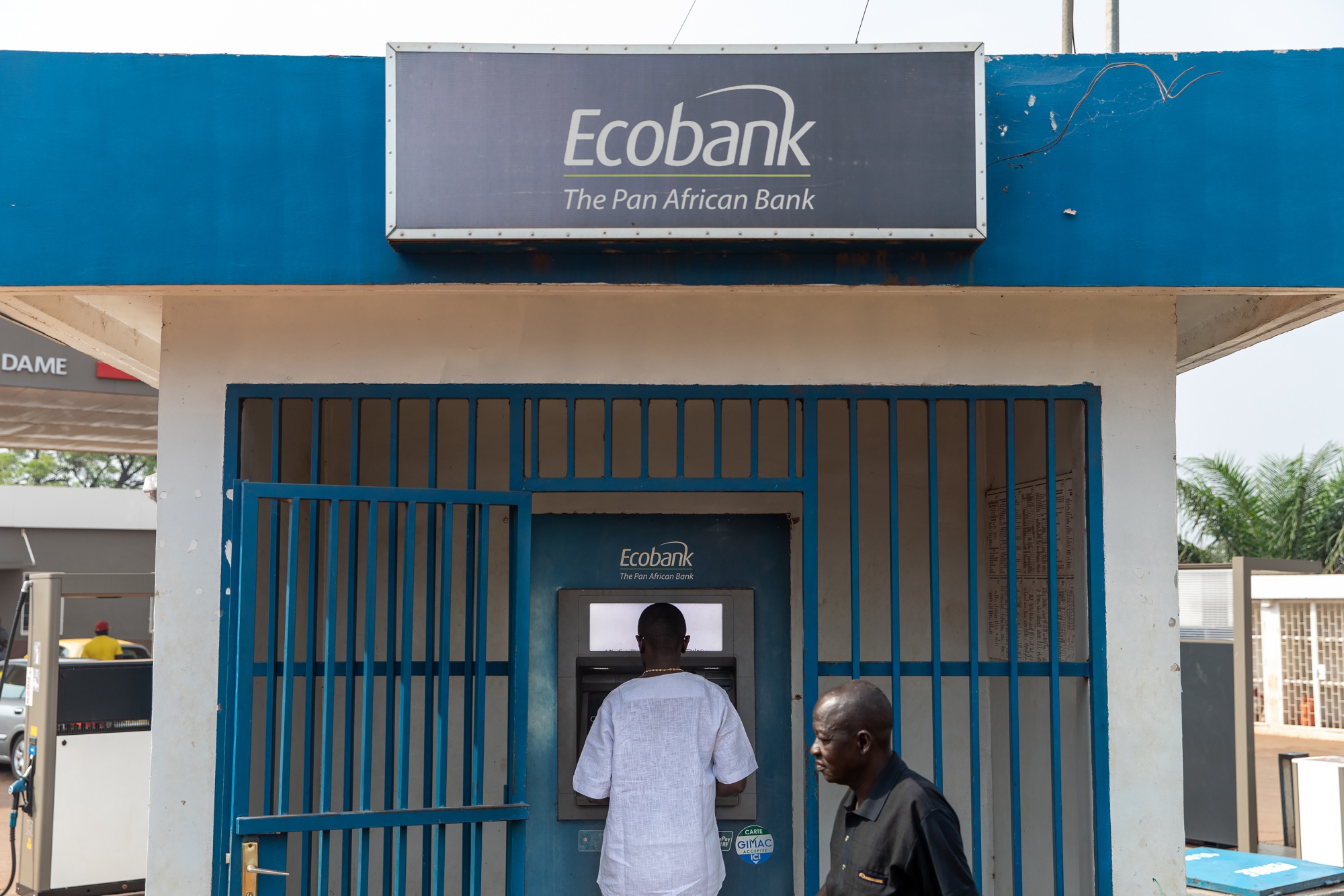
Ecobank Describes Women as Bedrock of Entrepreneurship

Published

on

ecobank Customer Deposits

By Modupe Gbadeyanka

The role women play in entrepreneurship cannot be downplayed and this is why Ecobank Nigeria has thrown its full weight behind the Selfmade Woman Conference (SMWC) 2021.

The Managing Director of Ecobank Nigeria, Mr Patrick Akinwuntan, in a statement from the lender, said women are the bedrock of entrepreneurship and most families.

He said partnering with a notable media entrepreneur and blogger, Ms Linda Ikeji, to host the event slated for Saturday, June 19, 2021, in Lagos was in line with the bank’s empowerment policy for women.

According to him, the challenges facing the nation have made it more imperative to recognise the potentials in women and develop them.

“Our decision to support Linda Ikeji conference aligns with our women empowerment policy. As a bank, we have been playing a leading role in this respect,” Mr Akinwuntan said.

Business Post reports that the event is taking place at the Federal Palace Hotel, Victoria Island, and the speakers include Tara Durotoye, renowned beauty and make-up entrepreneur; Dr Ola Brown, founder of the Flying Doctors Healthcare Investment Company; and Dr Nancy Nnadi, serial entrepreneur and CEO of Telecom Distribution Company.

Other guest speakers are Tomie Balogun, investment expert and fintech entrepreneur; Sola Adesakin, finance coach and chartered accountant; Kemi Adetiba, filmmaker and content creator; and TV star, Dorathy Bachor.

They will provide actionable strategies and hope to women who would like to start their own businesses, enhance their impact in various industries or broaden their creative roles in traditional industries.

Speaking further on the various supports the bank has offered to entrepreneurs, Mr Akinwuntan said, “As you know, we have a long-standing partnership with Tera Kulture, that is Bolanle Austen Peters who has come out with various movies such as Bling Lagosians, Moremi The Musical, Fela and the Kalakuta Queens, The Oluronbi Musical and others.

“Recently, we also supported The Wait, a movie inspired by the popular book from renowned lawyer and entrepreneur, Yewande Zaccheaus.

“We are also currently working with the Ogun state government to promote the Adire industry which is also primarily women-driven.

“In the agricultural industry, we have supported the Anchor Borrowers Programme (ABP) of the Central Bank of Nigeria (CBN) across the six regions of the country to reach out to farmers, especially the womenfolk to support them financially to increase their farm size and yield capacity through the introduction of new techniques.

“Let me also add that Ecobank has a women empowerment programme Ellevate for women in Business; this will be publicly launched across the country in July.

“With Ellevate, we want to ensure we raise and recognize our women for the significant role they have always played to ensure a better society for us all.”

The Linda Ikeji Self-Made Woman, which debuted in 2013, is an advocacy project with the sole aim to mentor and provide financial empowerment to young female entrepreneurs or aspiring ones.

It is mainly to build stronger economies and improve the quality of life for women, men, families and communities.


Modupe Gbadeyanka is a fast-rising journalist with Business Post Nigeria. Her passion for journalism is amazing. She is willing to learn more with a view to becoming one of the best pen-pushers in Nigeria. Her role models are the duo of CNN's Richard Quest and Christiane Amanpour.

Click to comment

Leave a Reply

Your email address will not be published. Required fields are marked *

Banking

e-Payment Fraud Drains N134.48bn in Six Years Amid Digital Transactions Growth

Published

on

e-payment system

By Adedapo Adesanya

Nigeria’s rapid shift towards electronic payments has come with a steep cost, as banks and their customers lost a combined N134.48 billion to fraud between 2020 and 2025.

This is according to data contained in the Central Bank of Nigeria’s Nigeria Payments System Vision 2028 document.

The report showed that fraudsters attempted to steal a total of N187.79 billion during the six-year period, with actual losses amounting to N134.48 billion across the banking and payments ecosystem.

The losses were recorded through a range of electronic and traditional payment channels, including internet banking, mobile banking, Point of Sale (PoS) terminals, e-commerce platforms, Automated Teller Machines, web-based transactions, over-the-counter services and cheques, underscoring the persistent security risks accompanying Nigeria’s expanding digital finance landscape.

An analysis of the data revealed a steady rise in fraud-related losses over the period. Losses increased from N11.61 billion in 2020 to N12.77 billion in 2021 and N14.32 billion in 2022. The figure climbed further to N17.67 billion in 2023 before surging to a record N52.26 billion in 2024.

According to the apex bank, the sharp increase recorded in 2024 occurred despite reductions in fraud amounts linked to internet banking, mobile banking and Point of Sale channels.

“Fraud amounts in Internet Banking, Mobile, and POS channels declined, yet overall losses rose by 196 per cent, primarily due to a major internal case involving N30 billion. Web fraud incidents also increased by 169 per cent,” the report stated.

The CBN noted that the development highlighted the outsized impact a single large-scale fraud incident could have on industry-wide loss figures, even when security measures were yielding positive results across several electronic payment channels.

The report also tracked changing fraud patterns across the digital payments ecosystem over the years.

In 2021, web-based fraud declined by 43 per cent, but total losses still rose as point-of-sale-related fraud incidents increased by 276 per cent. In 2022, overall fraud losses grew by 12 per cent, largely driven by major incidents involving corporate accounts, while ATM fraud jumped by more than 2,000 per cent despite declines across mobile banking, Point of Sale and web channels.

By 2023, e-commerce emerged as a major vulnerability within the electronic payments space. Fraud losses rose by 23 per cent during the year, driven largely by a spike in online shopping-related fraud cases.

“Fraud losses rose by 23 per cent, largely due to a spike in e-Commerce incidents, which escalated by 1,961 per cent. Mobile, POS, and Web channels recorded moderate increases,” the CBN said.

However, the report indicated that the industry made significant progress in 2025, as stronger controls and enhanced collaboration among financial institutions helped curb electronic payment fraud.

“In 2025, electronic payment fraud declined by 51 per cent, demonstrating the success of stricter regulations, increased industry cooperation, enhanced prevention strategies, and improved monitoring,” the document stated.

The apex bank added that it had worked closely with industry stakeholders to strengthen oversight, improve fraud monitoring systems and introduce collaborative safeguards aimed at reducing vulnerabilities across Nigeria’s increasingly digital payment ecosystem.

Continue Reading

Banking

FG Hunts N200bn Investment to Kick-Start Cooperative Bank of Nigeria

Published

on

Cooperative Bank of Nigeria

By Adedapo Adesanya

The federal government said it has launched a N200 billion share capital mobilisation campaign for the proposed Cooperative Bank of Nigeria.

Announcing this development on Thursday in Kaduna, the Minister of State for Agriculture and Food Security and Supervising Minister of Cooperative Affairs, Mr Aliyu Abdullahi, said the bank was designed under the Renewed Hope Cooperative Reform and Revamp Programme (RH-CRRP) and approved at the 8th Regular Meeting of the National Council on Cooperative Affairs.

Mr Abdullahi revealed that the ministry is targeting 10,000 cooperative societies across the 36 states and FCT through a tiered mobilisation plan: 1,000 societies at N21 million to N50 million, 3,000 societies at N16 million to N20 million, and 6,000 at N1 million to N15 million.

He also stated that “through this collective effort, we aim to mobilise approximately N200 billion and establish a strong, sustainable, and nationally owned cooperative financial institution capable of supporting agricultural development, enterprise growth, financial inclusion, housing, transportation, value-chain development, and wealth creation for millions of Nigerians.”

According to him, “this programme is not a government project imposed from above. It is a movement-driven reform agenda that seeks to give life to aspirations that cooperative stakeholders have expressed for decades.”

He added that to ensure continuity beyond the current administration, the ministry has established an Inter-Ministerial Technical Committee for policy coordination and a National Steering Committee with MDAs, apex cooperative organisations, and development partners.

“The Federal Department of Cooperatives has also assigned dedicated desk officers to each of the seven strategic pillars of RH-CRRP,” he added.

He noted that the proposed Cooperative Bank of Nigeria will preserve cooperative control and identity while attracting strategic investment.

A 65 per cent equity will be owned by cooperative societies through the Cooperative Trust & Investment Society of Nigeria (CoopTrust), while 30 per cent will be open to institutional investors, development finance institutions, impact investors, and individual cooperators and 5 per cent is reserved for an Employee Share Ownership Scheme.

He further revealed that the ministry is rolling out the National Cooperative Digital Architecture Platform (NCDAP) to address data gaps. Key components include the National Cooperative Smart Registry (NCSR), Cooperative Verification Number (CVN), CoopID, and CoopCHECK Credit Bureau powered by CreditRegistry.

Continue Reading

Banking

TBC Salom Crosses One Million Cards as TBC Bank Uzbekistan Builds Deposit Relationships Through Daily Banking

Published

on

TBC Bank Uzbekistan

Deposit mobilisation has emerged as one of the most strategically contested areas within Uzbekistan’s banking sector, as rising household incomes, deepening financial literacy, and growing institutional trust create conditions for a progressively expanding pool of household savings to enter formal financial channels. Banks are competing with increasing intensity to capture these savings by combining attractive interest rates with frictionless digital account management and the broader ecosystem benefits that make consolidating financial relationships within a single platform a rationally attractive choice. The institutions best positioned in this competition are those that have already established high-frequency, habitual daily banking relationships through carefully designed entry-level products — and are now converting those relationships into durable, deepening savings behaviour.

TBC Salom Achieves Landmark Scale Milestone in Thirteen Months 

TBC Bank Uzbekistan announced the issuance of more than one million TBC Salom cards in just over a year since the product’s November 2024 launch — a pace that CEO Nika Kurdiani characterised as setting a new standard for everyday banking product adoption in Uzbekistan. TBC Salom was designed from the outset as the primary entry point into the TBC Uzbekistan ecosystem: the product that creates the first banking relationship, generates daily engagement through a compelling combination of cashback and interest benefits, and provides the foundation for subsequent conversion into higher-value credit, insurance, and subscription products. The card offers zero-fee issuance with full remote onboarding, 12% annual interest on card balances, reimbursement of ATM withdrawal fees, and 5% cashback with partner merchants across the TBC network.

Active Rate Comparison Reflects Maturing Competitive Savings Market 

The rising volume and sustained frequency of searches for terms such as “вклады в узбекистане” and “eng yuqori omonat foizlari” confirms that Uzbek consumers are actively and regularly comparing deposit terms across banking institutions — a behavioural shift that indicates the savings market is maturing into one where informed comparison shopping is the norm rather than the exception. This comparison behaviour creates both a challenge and an opportunity for digital banking platforms: consumers will move to the institution offering the best combination of rate, convenience, and ecosystem value. TBC Bank Uzbekistan addresses this dynamic by combining competitive deposit rates with fully digital account opening and management, removing the practical friction that has historically prevented many consumers from acting on their rate comparisons by switching providers.

TBC Salom Balance Data Reveals Active Savings Use Among New Cardholders 

The financial performance of TBC Salom as a savings vehicle is confirmed by balance data from Q1 2026: TBC Salom card balances represent approximately 4% of TBC Bank Uzbekistan’s total deposit portfolio — a notable and growing contribution from a product that entered the market less than eighteen months earlier. This figure reveals that a meaningful segment of TBC Salom cardholders are using the card not merely as a transactional payment instrument but as an active savings account, drawn by the 12% annual interest on balances. The dual-function design of TBC Salom — simultaneously a payment product and a competitive savings vehicle — is deliberate, and the balance data confirms that this design is achieving its intended effect of building deposit balances through habitual daily card use.

TBC Salom

Visa Partnership Extends Card Reach to International Commerce 

TBC Uzbekistan’s partnership with Visa, formalised in November 2025, introduced a co-branded TBC Salom card offering 1% cashback on all purchases globally and 5% cashback specifically at international e-commerce marketplaces, including Taobao and AliExpress. This international dimension addresses a growing and commercially valuable consumer segment — Uzbek online shoppers engaging in cross-border e-commerce — who previously lacked a domestic card product optimised for international platform transactions. The Visa co-branded TBC Salom enhances the card’s positioning as a premium, internationally functional daily banking product rather than a purely domestic instrument, expanding its appeal to a higher-value, higher-engagement consumer demographic.

Card Ecosystem Architecture Supports Sustained Long-Term Deposit Growth 

Within TBC Uzbekistan’s broader ecosystem strategy, TBC Salom serves as the primary retail customer acquisition vehicle, with new cardholders progressively introduced to credit, insurance, subscription, and savings products through targeted engagement as their relationship with the platform deepens. The TBC Osmon credit card complements TBC Salom in the product stack, with 183,000 cards issued by Q1 2026 and balances representing 9% of the total loan portfolio. Subscription packages across TBC Bank and Payme apps attracted 1.1 million users in Q1 — a sevenfold year-on-year increase. Together, these products create a comprehensive platform within which customers are incentivised to consolidate their savings, payments, and credit management, building the multi-product relationships that generate the most durable deposit growth and the highest long-term customer lifetime value.

The competitive landscape for deposits in Uzbekistan is also being shaped by generational dynamics that favour digital-first platforms. Younger consumers — who represent a disproportionately large share of Uzbekistan’s demographic profile — are significantly more likely to open and manage savings accounts through a mobile app than through a branch visit. For this demographic, the product that occupies the primary position on their smartphone’s banking app shortlist is also the product into which they are most likely to direct their savings. TBC Salom’s strong penetration of the younger consumer market, through its digital-first design and its compelling cashback and interest features, gives TBC Bank Uzbekistan a structurally advantaged position in capturing the savings balances of the generation that will dominate Uzbekistan’s economy over the next two to three decades.

As TBC Salom’s user base matures — with early adopters accumulating longer track records and progressively higher incomes — the product’s contribution to the deposit base is likely to grow significantly from its current 4% of total deposits. Users who began their TBC banking relationship through TBC Salom will naturally gravitate toward TBC’s structured deposit products as their savings grow, their financial sophistication increases, and their income trajectories make longer-term savings commitments more practical. The bank’s investment in making TBC Salom the most compelling entry-level banking product in the market today is therefore also an investment in the quality and composition of its future deposit franchise.

Continue Reading

Trending