Connect with us

Banking

Equity Bank, Atlas Mara Share Swap Deal in Stalemate

Published

on

Equity Bank Atlas Mara

By Modupe Gbadeyanka

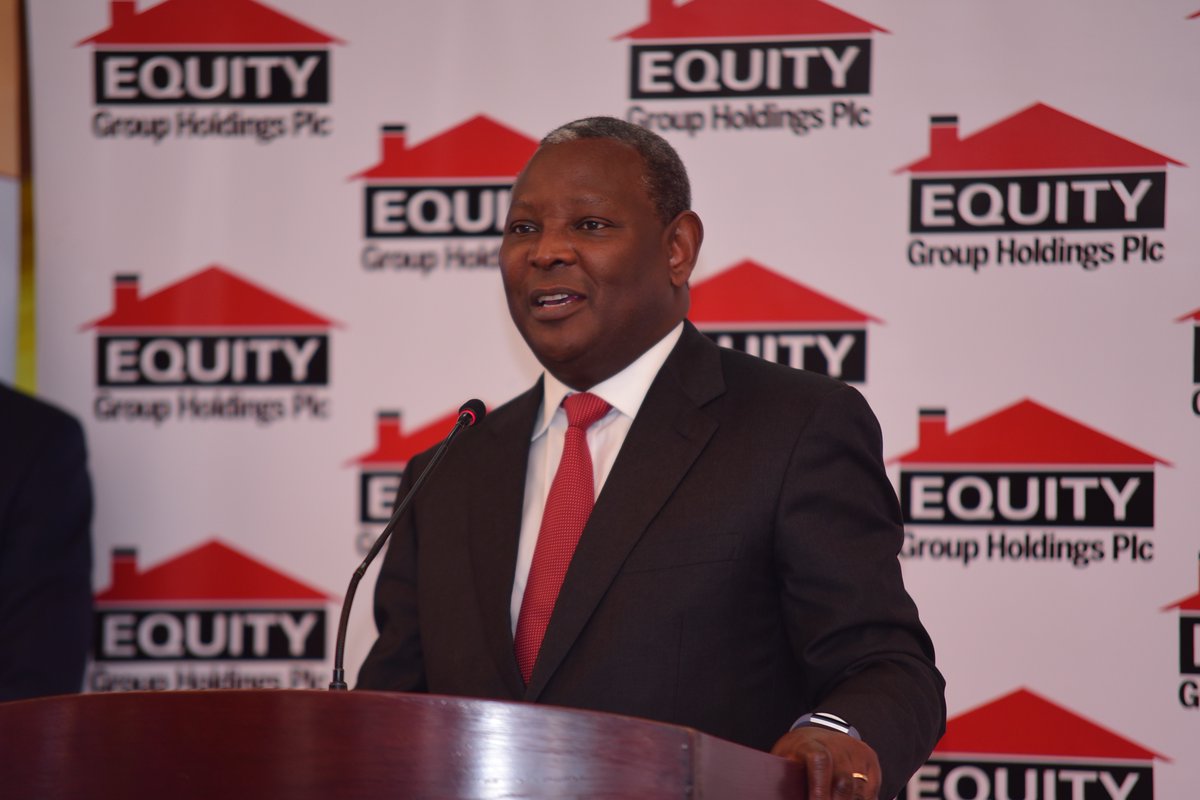
Foremost East African lender, Equity Group Holdings Plc (formerly Equity Bank Group), has announced that its proposed share swap deal with one of the major shareholders of Nigeria’s Union Bank Plc, Atlas Mara Limited, has still not yielded the expected results.

In a notice to the Nairobi Securities Exchange (NSE) in Kenya on Tuesday, Equity Group, which is one of the most profitable banks in the region, confirmed that “as of the date of this announcement, the parties have yet to sign detailed transaction agreements and the Binding Term Sheet has expired.”

However, the disclosure, signed by the GMD/CEO of Equity Group, Mr James Mwangi, stressed that both parties are expected to “continue further discussions in early-2020 to try to reach mutually acceptable commercial terms with respect to the Proposed Transaction, or a variant of it,” further emphasising that. “There is currently no certainty that a transaction will materialise.”

Business Post gathered that Equity Group had initially agreed to exchange certain banking assets of Atlas Mara in four countries (Rwanda, Zambia, Tanzania and Mozambique) for 6.27 percent stake (about 252,482,300 shares) in Equity Group worth $109 million. This pre-contractual agreement was announced on Monday, April 29, 2019.

Under the binding term sheet, Equity Group proposed to acquire 62 percent of the share capital of Banque Populaire du Rwanda Plc (BPR); 100 percent of the share capital of African Banking Corporation Zambia Limited; 100 percent of the share capital of African Banking Corporation Tanzania Ltd; and 100 percent of the share capital of African Banking Corporation (Mozambique).

But the December 31, 2019 statement said both had been unable to finalise the deal, which was “subject to completion of confirmatory due diligence, the entering of detailed transaction agreements and obtaining regulatory and shareholder approvals.”

But it promised to make further announcements upon conclusion of any fresh binding transaction agreements, stating that until more updates regarding the proposed transaction are made, its shareholders and other investors are advised to exercise caution when dealing in its stocks on the NSE the Uganda Securities Exchange and the Rwanda Stock Exchange.

Equity Group said it “remains committed to its strategic objective of expanding its footprint in Africa to provide access to competitive, tailored financial services to improve people’s lives and livelihoods whilst also delivering significant value to its stakeholders and to its vision of building sub-Saharan Africa’s premier financial institution through delivering innovative products and services to customers, including, in particular, the effective use of technology.”


Modupe Gbadeyanka is a fast-rising journalist with Business Post Nigeria. Her passion for journalism is amazing. She is willing to learn more with a view to becoming one of the best pen-pushers in Nigeria. Her role models are the duo of CNN's Richard Quest and Christiane Amanpour.

Click to comment

Leave a Reply

Your email address will not be published. Required fields are marked *

Banking

Stanbic IBTC Reinforces Leadership in Trade Finance at GTR West Africa 2026

Published

on

Stanbic IBTC GTR West Africa 2026

A subsidiary of Stanbic IBTC Holdings and a member of Standard Bank Group, Stanbic IBTC Bank, has reaffirmed its commitment to advancing trade and economic growth in West Africa following the successful conclusion of GTR West Africa 2026, where the bank served as lead sponsor.

The two-day conference, which was held on 22 and 23 April 2026 at the Eko Convention Centre, Lagos, brought together policymakers, financial institutions, corporates and fintech players to discuss the evolving landscape of regional and global trade.

The event attracted over 400 delegates from more than 200 organisations, spanning sectors including banking, fintech, agribusiness and logistics; underscoring its position as a critical platform for shaping trade finance dialogue in the region.

The conference opened with a keynote address by Tedd George, Founder & Chief Narrative Officer, Kleos Advisory Ltd, focused on harnessing and improving macroeconomic stability to drive sustainable trade growth across West Africa. Subsequent sessions explored export diversification, supply chain finance and agribusiness-led trade, supported by practical case studies highlighting real-world applications.

Day two centred on digital trade and financial inclusion, with discussions on Africa’s mobile-first economy and contributions from the International Chamber of Commerce (ICC) Digital Standards Initiative, which emphasised the importance of accelerating the digitisation of global trade finance.

Stanbic IBTC Bank’s participation followed closely on the heels of Standard Bank Group’s engagement at the GTR Africa Conference in Cape Town, reinforcing the Group’s pan-African approach to advancing trade and financial integration across key markets.

Commenting on the bank’s role at the conference, Jesuseun Fatoyinbo, Head of Transaction Banking at Stanbic IBTC Bank, said the institution remains focused on delivering innovative solutions that respond to the shifting needs of businesses engaged in trade.

“At Stanbic IBTC Bank, we are steadfast in our commitment to driving economic growth through innovative transaction banking solutions. The trade finance landscape is evolving rapidly, and it is our responsibility to continuously adapt and strengthen our offerings to support our clients,” Fatoyinbo said.

“We understand the unique challenges faced by exporters and importers, particularly within agribusiness, and provide tailored solutions that simplify trade finance, enabling businesses to focus on growth and productivity.”

Also reflecting on the conference, Eric Fajemisin, Executive Director, Corporate and Transaction Banking, Stanbic IBTC Bank, highlighted the strategic importance of GTR West Africa to the region’s trade ecosystem.

“We leave this year’s GTR even more inspired as always, by the quality of engagement and the opportunities identified, and more committed than ever to enabling trade and economic development across Nigeria and the wider West African region. Trade finance is not peripheral to development; it is fundamental to it,” Fajemisin said.

Delegates from Stanbic IBTC Bank and Standard Bank Group contributed actively to the programme. Adedayo Adesanmi, Senior Vice-President, Structured Trade Finance, Standard Bank Group, shared insights on scaling supply chain finance and strengthening domestic value chains, while identifying cross-border growth opportunities.

In a dedicated agribusiness case study session, Seun Ogundolapo, Head of Trade Transaction Banking, Stanbic IBTC Bank, alongside Sreenivas Alagonda, Chief Financial Officer, Robust International Commodities, examined the practical delivery of structured commodity trade finance solutions.

The conference also welcomed senior trade finance leaders from across the Group, including Prince Baffour Agyei, Acting Head, Trade Working Capital, Stanbic Bank Ghana; Shunker Amish, Head, Transaction Banking Trade Distribution & Syndication, Standard Bank Group; and Joseph Anagblah, Head, Sales, Transaction Banking, Stanbic Bank Ghana; reinforcing the Group’s strong pan-African collaboration and continued support for the GTR platform.

As lead sponsor, Stanbic IBTC Bank hosted clients and stakeholders throughout the conference, facilitating high-level engagement, knowledge sharing and cross-sector networking. Through thought leadership panels and practical case studies, the Bank demonstrated its continuing focus on expanding access to trade finance and supporting businesses of all sizes.

Continue Reading

Banking

Redtech, MTN, UBA Launch Cardless Payment Integration in Rare Fintech-Telco-Bank Alliance

Published

on

RedPay UBA MTN

By Adedapo Adesanya

Redtech Limited, a Nigerian financial-technology company backed by Nigerian businessman, Mr Tony Elumelu, has partnered with MTN Nigeria’s MoMo PSB and the United Bank for Africa (UBA) to expand cardless payment access for consumers and merchants across Nigeria.

The payment interoperability partnership by these three organisations seeks to address a critical gap in Nigeria’s payments market: connecting banking-led merchant acceptance with telco-led mobile money wallets.

This means customers of MTN’s fintech subsidiary can now make payments directly from their MoMo wallets at participating UBA merchant locations using the Pay with MoMo feature on RedPay POS terminals. In addition, they can also visit any UBA branch to make withdrawals and deposits from and into their MoMo accounts.

For online shoppers, e-commerce merchants can now receive payments directly from MoMo PSB customers through Redtech’s payment gateway infrastructure.

According to a statement, the partnership brings together Redtech’s payment technology and enablement capability, UBA’s merchant acquiring and distribution layer, and MoMo PSB’s mobile money wallet ecosystem and customer base.

Redtech holds licences as a Payment Terminal Service Provider (PTSP) and Payment Solution Service Provider (PSSP) from the Central Bank of Nigeria, authorising it to provide both POS and payment gateway services.

For MoMo PSB customers, Pay with MoMo increases the number of places where their wallets can be used for everyday payments. For merchants, it opens access to a wider pool of customers and provides an additional payment option at the point of sale.

Speaking on this milestone, Mr Emmanuel Ojo, CEO of Redtech, said: “By integrating our RedPay technology with MoMo PSB’s wallets through the UBA network, we will offer merchants and customers greater choice. Our goal is to build the payment infrastructure that ensures a merchant never has to turn away a customer in Nigeria or across Africa because of the payment method they prefer.”

On her part, Mrs Omolara Michael-Nwadu, acting chief executive of MoMo PSB, said this partnership marks a significant step toward true interoperability in Nigeria’s payments ecosystem.

“By integrating MoMo wallets into UBA’s merchant network through Redtech’s infrastructure, we are removing barriers between bank-led and mobile money systems while unlocking access to over 55,000 merchant touchpoints. Our focus is on driving usage at scale—enabling more transactions, deeper engagement, and greater value for merchants. At MoMo PSB, we are building a more connected financial ecosystem—where payments are no longer defined by platforms, but by seamless customer experience.”

“Our focus is on simplifying payments, expanding access to financial services and helping more Nigerians do more every day. Pay with MoMo gives our customers more places to use their wallets, while supporting broader financial inclusion by bringing useful financial services closer to where people live, work and do business,” she added.

Adding his input, Mr Emmanuel Lamptey, Executive Director Designate, Digital Banking, UBA Group, said: “Our merchants are already serving millions of customers every day through the UBA network. By bringing Pay with MoMo into that network, we are giving those merchants a direct connection to MoMo PSB’s customer base – and giving MoMo PSB customers more places to use their wallets when they shop. That is a clear win for both sides.”

Pay with MoMo is being introduced through RedPay POS terminals already deployed within UBA’s merchant network. More than 55,000 RedPay POS terminals have been deployed across the network, with the platform having processed over N278.47 billion in transaction value and more than 12.23 million transactions to date.

Built on infrastructure already operating at scale across merchant locations in Nigeria, the collaboration supports the broader push for more practical interoperability between banks, payment technology providers and mobile money operators.

With the pilot phase in Nigeria, the partners plan to extend the model into selected African markets where MoMo PSB and UBA operate as the rollout develops.

Continue Reading

Banking

Access Bank to Reduce Overseas Equity Exposure on CBN Directive Within 12 Months

Published

on

roosevelt ogbonna access bank

By Adedapo Adesanya

Top Nigerian financial institution, Access Bank Plc, will reduce its equity stakes in some of its foreign subsidiaries to comply with new rules from the Central Bank of Nigeria (CBN) limiting external investments by local banks.

This was disclosed by Access Bank’s chief executive, Mr Roosevelt Ogbonna, on an investor call in Lagos on Tuesday.

The CBN has ordered banks to limit equity investments in foreign subsidiaries to no more than 10 per cent of total shareholders’ funds. This is to help contain risk and preserve capital, which are fundamental to long-term financial system stability.

Mr Ogbonna said Access Bank, which has operations in over 20 countries, has 12 months to comply.

“We are looking at divestments” to bring down our equity stake, from a current level of 19.4 per cent, the CEO said. “We will still be the controller of those banking entities, and the value creation will continue to be strong,” he said.

Nigerian banks began expanding aggressively across the continent after the country’s 2016 recession, seeking to mitigate risks from currency devaluation, rising non-performing loans, and to diversify income streams.

Access Bank has been at the forefront of that push, acquiring assets from financial groups including Standard Chartered Plc, Atlas Mara Ltd. and KCB Group Plc, helping it build a significant footprint across Africa’s banking industry.

In recent years, other Nigerian banks have boosted their external footprint, including Zenith Bank, UBA, and Guaranty Trust Holding Company (GTCO), among others.

Last year, Access Bank signalled a pause in acquisitions to focus on expanding its existing operations.

Mr Ogbonna also said the lender is considering refinancing a $500 million Eurobond due in September, not due to liquidity pressures, but to extend the maturity profile of its debt.

The executive said a final approval on that refinancing, as well as on a $500 million perpetual bond due in October, is expected this month.

Business Post reports that Access Holdings grew its 2025 financial year pre-tax profit by 16.2 per cent to N1.01 trillion while net interest income rose to N1.36 trillion, net fees and commission income recorded a particularly strong growth of 40.9 per cent to N585.1 billion, reflecting increasing diversification in revenue streams, and overall operating income after impairment grew by 23.9 per cent to N3.17 trillion.

At the same time, the firm improved its cost discipline, with its cost-to-income ratio declining to 51.7 per cent from 56.7 per cent in 2024. Returns also remained solid, with return on average equity at 18.4 per cent and return on average assets at 1.6 per cent, reinforcing the quality of earnings delivered during the year.

Continue Reading

Trending