
Banking
Fidelity Bank Gets Standing Ovation for New Digital Payment Solution

By Modupe Gbadeyanka
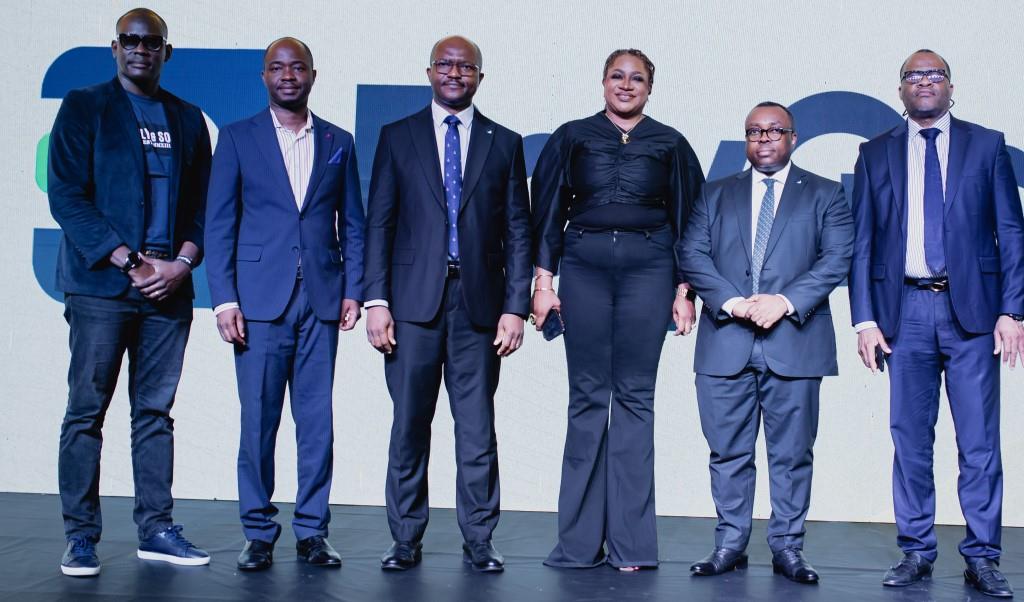
Stakeholders in the financial technology (fintech) industry have given a standing ovation to Fidelity Bank Plc for its recently-launched new digital payment solution called PayGatePlus.
Powered by OnePipe, PayGatePlus is a next-generation embedded finance platform that enables organisations in any sector to seamlessly integrate financial services into their existing offerings.
The platform offers services such as web payments, virtual accounts, funds transfer, direct debit, online collections via NIBSS Instant Payment (NIP), BVN validation, and Buy Now, Pay Later.
Those who commented on the initiative said the one-stop solution for payments that caters essentially for all business categories within the financial ecosystem will simplify digital payments.
They said Fidelity Bank has led the charge in embedded finance with several guests emphasising that it was rapidly becoming the standard for delivering unified, enhanced user experiences.
While congratulating the bank on improving payment service delivery, Degbola Abudu, founder and CEO of Capricorn Digital Limited, noted that the platform’s launch would result in a diversification of new digital financial products across different platforms in the coming years.
“I think PayGatePlus will be of immense value to the industry as it will enable different types of payments. Whether it’s the virtual account that can be created seamlessly or payments that will enable the distribution of loans across different channels, we see this platform as really enabling the bank to push many digital products through different digital channels including one like ours”, stated Abudu.
“If you call traditional banking 1.0, remote banking 2.0, then PayGatePlus is 3.0. I think, the biggest value apart from the distribution which we have talked about is the ability for you to use embedded finance to remove frictions for your customers”, disclosed Akeem Lawal, Group Chief Executive Officer, Interswitch Group.
Founder/CEO of OnePipe, Ope Adeoye stated that the platform’s launch demonstrated that the payment industry was making significant progress.
“Our view is that the market will recognise the importance of concepts like this. Fidelity Bank will blaze the trail and there’s a high probability that other competitors will come into the space down the line,” he disclosed.
In assessing OnePipe’s relationship with Fidelity Bank, Adeoye disclosed, “When we started working on the idea for embedded finance for non-finance companies with Fidelity Bank serving as infrastructure at the base, there was quite an effort spent on trying to understand each other. We enjoyed working with Fidelity Bank because the process was collaborative and smooth.”
On his part, Executive Director, Inlaks, Tope Dare lauded the bank for blazing the trail in open banking and embedded finance which further reinforces its commitment to delivering unrivalled customer service.
“We hope to see more players in the financial services industry collaborate to ensure we grow a bigger economy that would be beneficial to everyone in the ecosystem”, he said.
In a similar vein, Executive Director/co-founder of AppZone, Emeka Emetarom applauded the bank for collaborating with the fintech industry rather than competing with them.
“We are hoping that all the other banks will take a cue from Fidelity Bank and ensure the adoption of embedded finance across the financial services industry”, said Emetarom.
Speaking at the event, Stanley Amuchie, Executive Director/Chief Operations and Information Officer, Fidelity Bank Plc encouraged customers to use the platform as guaranteed that they would return with positive testimonials.
“Everything we do as a financial organisation including the design of our products and services has the customer as our main focus.
“It is on this basis that we have worked very hard over the last few months, together with our technical partners to innovate a solution that enables businesses across different sectors to easily integrate financial services with their product offerings”, said Amuchie.
Fidelity Bank is a full-fledged commercial bank operating in Nigeria with about six million customers who are serviced across its 250 business offices and digital banking channels. In 2021, the bank was recognised as the “Fastest Growing Bank” and “MSME & Entrepreneurship Financing Bank of the Year” at the 2021 BusinessDay Banks and Other Financial Institutions (BAFI) Awards.











By Dipo Olowookere
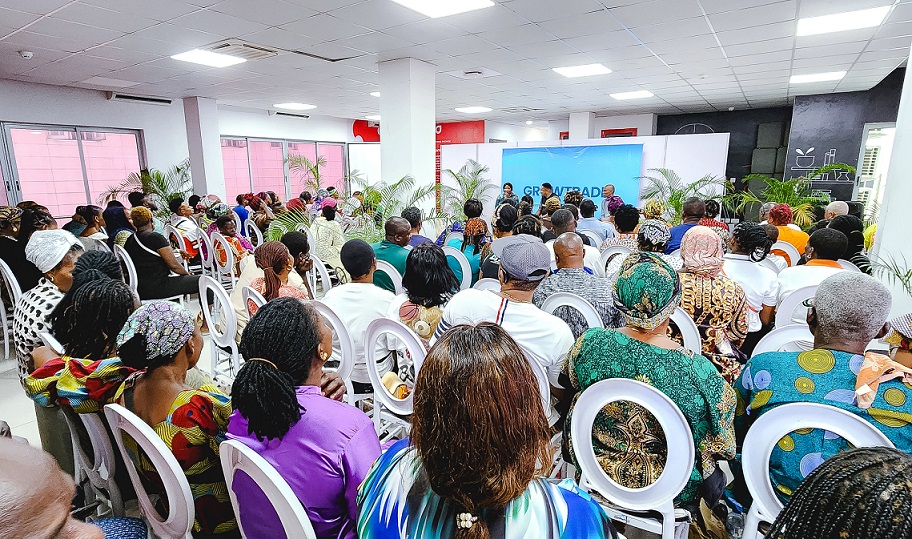
Tech enthusiasts interested in participating in the Take on Squad Hackathon, organised by Guaranty Trust Holding Company (GTCO) Plc, can now enter the contest via the official portal at https://squadco.com/hackathon.
The programme enters its third edition in 2026, and the theme for this year is Smart Systems: The Intelligent Economy, according to a statement issued by the organisers.
The hackathon brings together developers, designers and entrepreneurs across Nigeria in a collaborative environment to build practical solutions across key sectors, including financial services, healthcare, commerce and digital inclusion.
Participants are challenged to design and build intelligent, data-driven solutions that transform how communities engage with money.
It is part of the organisation’s commitment to fostering innovation, empowering talent, and supporting the development of technology-driven solutions that address real-world challenges across Africa.
“Today’s dynamic, digitally driven world demands continuous innovation, which is shaping how economies grow, how businesses scale, and how societies evolve.
“Through Take on Squad Hackathon, we are deliberately investing in the ideas and talent that will define the future.
“Our objective is not simply to encourage innovation, but to enable its translation into scalable solutions that deliver real and measurable impact.
“This reflects GTCO’s role as a financial services platform that connects capital, capability, and creativity to drive sustainable progress,” the Managing Director of HabariPay, Ms Eduofon Japhet, stated.
The social coding event remains a cornerstone of HabariPay’s mission to foster creativity and problem-solving among emerging tech talents. Competing teams will leverage Squad’s advanced APIs to create scalable digital tools that address everyday challenges faced by businesses and individuals.
Through initiatives such as this, GTCO continues to position itself at the intersection of finance, technology and enterprise, actively shaping the future of digital transformation in Africa.

By Dipo Olowookere
Banking services will not be interrupted throughout the Easter public holidays, from Friday, April 3, to Monday, April 6, 2026, for any reason, Ecobank Nigeria has assured its customers.
In a message over the weekend, the member of Africa’s leading pan-African banking group, Ecobank Transnational Incorporated, said customers would continue to enjoy quality service delivery during the period.
It noted that its secure and robust digital platforms would remain fully operational to support financial activities during the festive period.
All digital channels, including the Ecobank Mobile App, Ecobank Business App, USSD *326#, Ecobank Online, OmniPlus, Omnilite, EcobankPay, Ecobank Cards, ATMs, PoS terminals, and over 35,000 Ecobank Xpress Point agent locations nationwide, will remain accessible throughout the holiday, the financial institution further said, urging customers to conveniently conduct transactions at any time using this wide range of digital solutions.
Ecobank customers were encouraged to maximise the bank’s alternative channels for transfers, bill payments, airtime purchases, card services, and account management.
They were also advised to stay vigilant by shopping only on trusted websites; avoiding the sharing of PINs, passwords, and one-time passwords (OTPs); refraining from banking on public Wi-Fi networks; being cautious of urgent or emotionally charged messages; and regularly monitoring their account activity.
“Customers will continue to enjoy a full bouquet of services during the holiday, including local and international funds transfers, bill payments, airtime top-ups, merchant payments, balance enquiries, account statements, and cardless cash withdrawals via ATMs,” the Head of Products & Analytics, Consumer & Commercial Banking at Ecobank Nigeria, Mr Victor Yalokwu, stated.
“We understand that festive seasons come with increased financial activity, and our priority is to ensure our customers enjoy fast, reliable, and secure banking wherever they are.
“Our digital channels are designed to support uninterrupted transactions, and we have strengthened our systems to guarantee optimal performance throughout the Easter break,” he added.
Mr Yalokwu noted that, “Ecobank remains committed to providing innovative financial solutions and exceptional customer service. We wish all our customers and partners a peaceful and joyful Easter celebration.”
By Dipo Olowookere
Customers may have difficulty accessing the digital platform of Polaris Bank, known as VULTe, during the Easter holidays from Friday, April 3, to Monday, April 6, 2026.
This is because the financial institution is carrying out system maintenance on the platform in its effort to ensure users enjoy a better banking experience.
In a notice over the weekend, the lender said “access to VULTe may be limited,” but it provided an alternative, which is the PolarisXperience.
Polaris Bank, which expressed regret over “any inconvenience” this action may cause its customers, said the “scheduled system maintenance” would happen from 10 pm to 8 am daily, promising that normal service would return after the maintenance.
“In continuation of our commitment to delivering a seamless and improved banking experience, we will be conducting a scheduled system maintenance during the Easter holidays.
“During this period, access to VULTe may be limited. We have provided an alternative channel, PolarisXperience:
“Please go to our website to onboard or use it as an existing user. You can also use this link: (https://elogin.polarisbanklimited.com).
“We regret any inconvenience and appreciate your understanding. Normal service will resume after the maintenance,” parts of the notice seen by Business Post read.
-
 Feature/OPED6 years ago
Davos was Different this year
-
Travel/Tourism10 years ago
Lagos Seals Western Lodge Hotel In Ikorodu
-

 Showbiz3 years ago
Estranged Lover Releases Videos of Empress Njamah Bathing
-
 Banking8 years ago
Sort Codes of GTBank Branches in Nigeria
-

 Economy3 years ago
Subsidy Removal: CNG at N130 Per Litre Cheaper Than Petrol—IPMAN
-

 Banking3 years ago
Sort Codes of UBA Branches in Nigeria
-

 Banking3 years ago
First Bank Announces Planned Downtime
-

 Sports3 years ago
Highest Paid Nigerian Footballer – How Much Do Nigerian Footballers Earn