
Banking
FirstBank: Redefining ‘Heritage of First’ with Smart Digital Banking


As information technology evolves rapidly, the disruption or advancement in the banking sector will continue to be digitised. Only the bank that can transform itself into truly effective digital organisation and embrace the changes in digital technologies and consumer behaviour will survive and thrive in both the current and future digital environments.
Leveraging experience spanning over a century of dependable services, Nigeria’s premier financial institution, First Bank of Nigeria Limited, also called FirstBank, has kept pace with the evolving global operating environment, responding to the dynamic needs of its customers, investors, regulators, host communities, employees and other stakeholders. Through a balanced approach to plan execution, this iconic banking Brand has consolidated its industry leadership by maintaining trans-generational appeal and continually boosting its customer-base, which cuts across all segments in terms of size, structure and sectors.
With these unbroken business operations experience, FirstBank has continued to build relationships and alliances with key sectors of the economy that have served as strategic building blocks for the wellbeing, growth and development of the country. Also, with its huge asset base and expansive branch network, as well as continuous re-invention, this Nigeria’s strongest banking franchise has maintained market leadership on all fronts in the nation’s financial services industry.
Minds are still refreshing on the 125 years anniversary of this leading financial services solutions provider in Nigeria. A milestone that will continue to speak volume of FirstBank’s journey through the ages, her footprints traversing the nook and cranny of Nations with indelible landmarks of several firsts in the development of the banking industry in Nigeria, and contributions to banking sectors across Africa, the World at large.
It cannot be forgotten in a hurry, not so soon, how on Friday, March 1, 2019, FirstBank had the world stand still as it held its symbolic flag hoisting ceremony across Nigeria and other countries where it does business – a historic happening which officially flags off the bank’s commemoration of attaining the milestone year of 125th.
The last 125 years has passed, FirstBank says it is now focusing in building for the next 125 years and beyond to purposefully blaze the trail in its industry thereby sustaining leadership position and remaining youthful; an effort, no doubt, that is aimed at redefining the “Heritage of First” into the world of digital banking.
According to the digital banking report for 2018, in the past, providing a seamless customer experience has only ever been secondary to other higher priority items for banking institutions. This has to change to providing digital solutions for customers in and out of the institutional doors.
Meanwhile, before the transition to digital banking in Nigeria, conventional banking system had held sway which historically started in 1952. As it lasted, the industry witnessed a lot of regulatory and institutional advances, with FirstBank notable as one of the five out of 89 banks then; and all through, when in 2004 the banking industry went through reformation.
It could be observed that, when today’s customers evaluate financial institutions, they don’t compare different banks anymore, they compare experiences that impact everything in their lives as consumers for better than ever, with real-time, smart digital services being delivered through various devices 24/7 at the snap of their fingertips.
To survive the digital environment, FirstBank has continued to put in place the right framework to compete and succeed in the banking industry of the future, with goals set to create more efficient operations, higher profits and happier customers, “You First”.
According to FirstBank’s Chief Executive Officer, Dr Adesola Adeduntan, the digital banking offerings of the Bank have been optimised to ensure ease of banking and convenience via other channels such as FirstMobile app, Firstonline, FirstMonie, USSD banking and WhatsApp banking. Fundamental shifts where staying relevant means becoming an active part of a customer’s digital life!
Explaining about the chat banking on WhatsApp, during one of its occasions, FirstBank’s CEO said, “It is one of the ways First Bank puts You First and enables you to stay connected with your contacts, loved ones, friends and finances all on the go while you chat with them because, at First Bank, we are driven to bolster relationships on all fronts, anywhere and anytime.”
It can also be recalled that, Dr Adeduntan said, “Mobile and digital banking leverages native and responsive digital innovations to deliver aesthetically consistent physical and digital experiences to customers. Thus, we deliver real time event driven information and offer to proactively serve the immediate and long-term financial needs of customers.”
As the saying does go, with digital opportunity comes digital risk, FirstBank recognises that as customers continue to gravitate to the ease and speed of digital banking, the associated risks will be on the rise.
Telling it as it were to curb the anticipated risks head-on, FirstBank CEO said, “We have adopted a disciplined approach to deliver unique customer experiences through best in class value and customer service; enabling customers to initiate, pause and restart transactions across various channels at any time. Also, we use advanced analytics to evaluate customer behaviour, determine preferences and deliver personalised customer services.” The FirstBank Boss added that, “The bank is focusing on the feelings and behaviour with the aim to provide real value for the customers so as to have a positive impact with the product and the services provided to its customers.”
With FirstBank’s involvement in every stage of national growth and development, the Bank has recorded laudable feats since the advent of digital banking in Nigeria. Starting from 1991, when the Bank introduced first ATM (automated teller machine) in Marina, Lagos, it now has more than 2,700 ATMs across its 730 business locations, 18,000 Agent Banking spread and has earned itself the 2nd Bank in Africa and 1st in Nigeria to issue 10 million cards.
In 2007, FirstBank introduced the innovative credit administration software called Innovative Finnone credit administration software, being the first bank in Africa to pioneer the service. Other notable corporate transformation projects included the launch of FirstContact, the 24/7 multi-lingual integrated and interactive customer service contact centre, a key component of FirstBank’s service delivery transformation, which revolutionised customer feedback processes.
FirstBank is also the first to launch Biometric ATM in Nigeria, consistent with its tradition of pioneering far-reaching innovation in the financial services industry. In 2010, FirstBank becomes the first organisation to be granted notable international standardization certifications, the prestigious Information Security Management System (ISMS) Certification, which is the world’s highest accreditation for information protection and security; and Business Continuity Management System Certification, both from the International Organisation for Standardisation (ISO), following rigorous certification processes by the British Standards Institution (BSI), a leading organization in the field of auditing management systems and processes.
In 2011, FirstBank launched the first Cash Deposit ATM. The Bank has earned recognition as the “Most Innovative Bank in Africa” by the African Banker, attesting to its forward-thinking approach; and named “Nigeria’s Number One Banking Brand” by Brand Finance Top 500 Banking Brands by The Banker, an international banking magazine published by Financial Times, Ltd.
Acknowledged by Interswitch, Africa-focused integrated digital payments and commerce company, as the first financial institution in Nigeria to achieve 100 million sustained monthly transactions in electronic payment, in December 2015 and again in May 2016. Same year, FirstBank celebrated 20 years of partnership with Western Union Money Transfer.
In 2017, FirstBank total number of Firstmonie (FirstBank money wallet) users hit 4,035,307 and with over 6 million digital banking users (the fastest mobile banking penetration across Africa).
Indeed, FirstBank is the first indigenous organisation in Nigeria to launch Human Resource Solution in the Cloud. As at 2018, it won Best Retail Bank in Nigeria (an award given by the renowned Asian Banker Awards) for the 7th consecutive time. In that same year, processes the highest number of transactions on electronic channels in the industry annually, representing above 1.6 billion (about 33 per cent of the industry volume).
Awarded a second time back-to-back recognition for Digital Bank of Distinction, Nigeria; Firstbank, last year, won the Best Bank in Nigeria award for the 15th time, both by Global Finance Magazine.
By and large, FirstBank continues to seek out better solutions to digitise its offerings whilst optimising its workflow and lowering operational costs for the future ahead in digital banking. – National Accord.




By Adedapo Adesanya
The Central Bank of Nigeria (CBN) is considering the recapitalisation and restructuring of Development Finance Institutions (DFIs) to address the significant financing gap facing micro, small, and medium-sized enterprises (MSMEs).
The Deputy Governor of the apex bank in charge of Economic Policy, Mr Muhammad Abdullahi, disclosed this during a panel session at the launch of the Nigeria Development Update by the World Bank in Abuja on Tuesday.
He explained that a recent review by the apex bank found that existing DFIs were too small to meet the credit needs of businesses.
DFIs are specialised, government-backed financial entities designed to promote economic growth by funding critical sectors like agriculture, infrastructure, and SMEs. Key institutions include the Bank of Industry (BOI), Development Bank of Nigeria (DBN), Nigeria Export Import Bank (NEXIM Bank), Bank of Agriculture (BOA), National Credit Guarantee Company Limited, and Nigerian Consumer Credit Corporation, among others.
“We conducted a review last year of the development finance space. Across all the DFIs in Nigeria, the total asset base is slightly above N8 trillion, whereas what is required in development finance for MSMEs is over N130 trillion,” he said.
He said that simply injecting capital would not solve the problem.
“The only way to address this is not only through public sector capital injections into these institutions, but also by making them bankable and investable,” he said.
Abdullahi said the CBN and the Ministry of Finance are reviewing DFI structures to improve their efficiency and risk appetite.
“We are reviewing the entire sector to ensure that we can correct the incentives, improve risk appetite, and also strengthen capital levels,” the deputy governor added.
He also said the reforms aim to introduce stronger market-based principles.
“We are looking at the structure to see how more market fundamentals can be incorporated, because the way it has been done in the past has not delivered the desired results,” Mr Abdullahi said.
On the persistent financing challenge for MSMEs, he said lending to the real sector has always been one of the structural challenges “Nigeria’s economy faces in terms of ensuring that credit reaches businesses that require it”.
Business Post reports that the CBN recently concluded the recapitalisation of the Nigerian banking sector, while the insurance sector is ongoing.

By Modupe Gbadeyanka
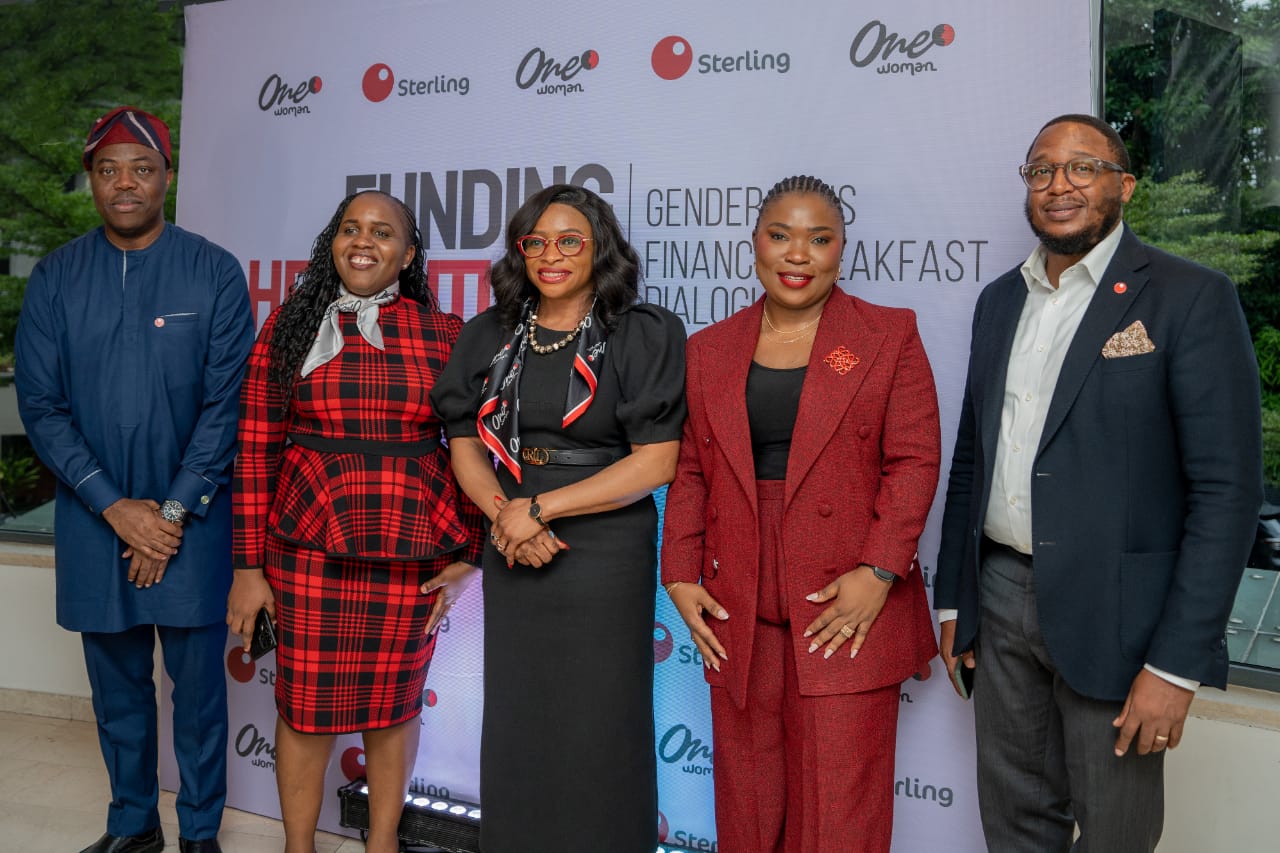
The women-focused initiative by Sterling Bank, OneWoman, is already yielding positive results, especially in promoting financial inclusion and empowering female-led enterprises in Nigeria.
Business Post reports that the programme was created to support women through three key pillars of capital, capacity, and community.
In 2025, according to the Head of the OneWoman Initiative, Ms Ezinne Nwokafor, the initiative gave out N43.9 billion loans to 2,450 female entrepreneurs, trained 6,000 of them, served about 380,000 women across three sectors of career women, women in business and freshers, and their vision 2030 is to give out N500 billion loans to one million women across their three sectors.
She noted that a significant majority of Nigerian women remain excluded from formal credit, with only a small percentage able to access structured financing. Despite improvements in financial inclusion, women continue to face systemic barriers that limit their ability to secure funding.
Ms Nwokafor pointed out that women account for a substantial share of micro, small, and medium enterprises and contribute meaningfully to the economy, yet face a financing gap estimated at $42 billion annually, according to the International Finance Corporation.
She also referenced data showing that more than half of women-led businesses identify access to finance as a major constraint, while rejection rates for loan applications remain significantly higher for women than for men.
According to her, these challenges are often linked to structural issues such as gaps in asset ownership, social norms, and limited access to financial data and visibility.
“Sterling’s OneWoman initiative is positioned to bridge this gap by combining financial solutions, mentorship, capacity building, and community support for women across different stages of their journey,” she said at the Funding Her Future Breakfast Dialogue in Lagos.
The session brought together voices from across sectors for a focused and necessary conversation on how to unlock more inclusive and effective financing pathways for women-led businesses in Nigeria.
On his part, the chief executive of Sterling Bank, Mr Abubakar Suleiman, said, “Women-led businesses need the right support systems, the right networks, and the right ecosystem to grow with confidence and scale with resilience.”
By Modupe Gbadeyanka
Alpha Morgan Bank has reaffirmed its commitment to supporting institutions that drive intellectual growth and national development.
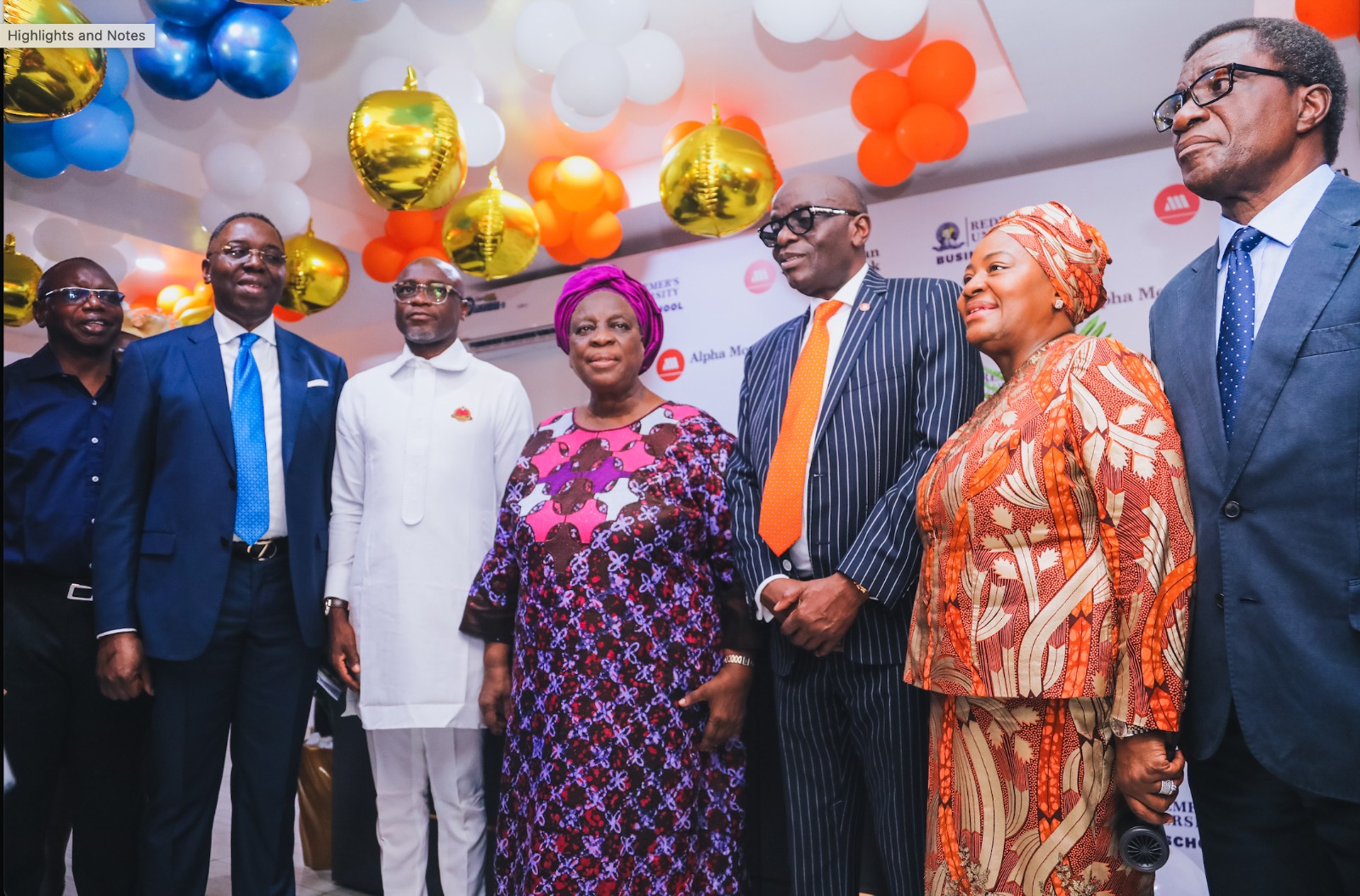
The lender gave this reassurance at the commissioning of the Redeemer’s University Business School by Pastor (Mrs) Folu Adeboye, the wife of the General Overseer of the Redeemed Christian Church of God (RCCG), Pastor Enoch Adeboye.
Speaking at the event, the Managing Director of Alpha Morgan Bank, Mr Ade Buraimo, said the company was proud to be associated with the school, noting its commitment to education and institutional development.
As part of its broader focus on knowledge sharing and thought leadership, Alpha Morgan Bank will host its Economic Review Webinar in May 2026, bringing together experts to share insights on key economic trends and opportunities.
The commissioning of the business school was witnessed by distinguished guests, including the Pro-Chancellor and Chairman of the Governing Council of Redeemers University, Professor Oluwatoyin Ogundipe; the Vice Chancellor, Professor Shadrach Olufemi Akindele; Mrs Bola Obasanjo; and other notable dignitaries.
-
 Feature/OPED6 years ago
Davos was Different this year
-
Travel/Tourism10 years ago
Lagos Seals Western Lodge Hotel In Ikorodu
-

 Showbiz3 years ago
Estranged Lover Releases Videos of Empress Njamah Bathing
-
 Banking8 years ago
Sort Codes of GTBank Branches in Nigeria
-

 Economy3 years ago
Subsidy Removal: CNG at N130 Per Litre Cheaper Than Petrol—IPMAN
-

 Banking3 years ago
Sort Codes of UBA Branches in Nigeria
-

 Banking3 years ago
First Bank Announces Planned Downtime
-

 Sports3 years ago
Highest Paid Nigerian Footballer – How Much Do Nigerian Footballers Earn